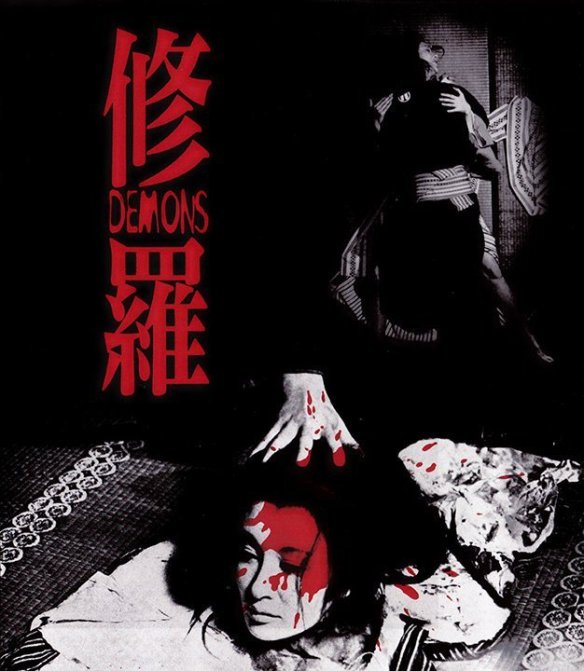
Some people believe in heaven and the afterlife while others are convinced that human life is temporal and when it ends nothing remains but a corpse. A dramatization of those opposing views in a film would be a challenging task for any director but Japanese director Akio Jissoji confronts a number of philosophical and religious matters by exploring Buddhist thought and practices versus human desire in Mujo (English title: This Transient Life, 1970). The result is a fascinating and visually innovative character study that manages to balance the sacred and the profane in one of the most overlooked Japanese films of the 70s which is finally starting to receive its due thanks to resurfacing on Blu-ray in recent years.
Continue readingTag Archives: Toshio Matsumoto
Oedipus Rex in Drag
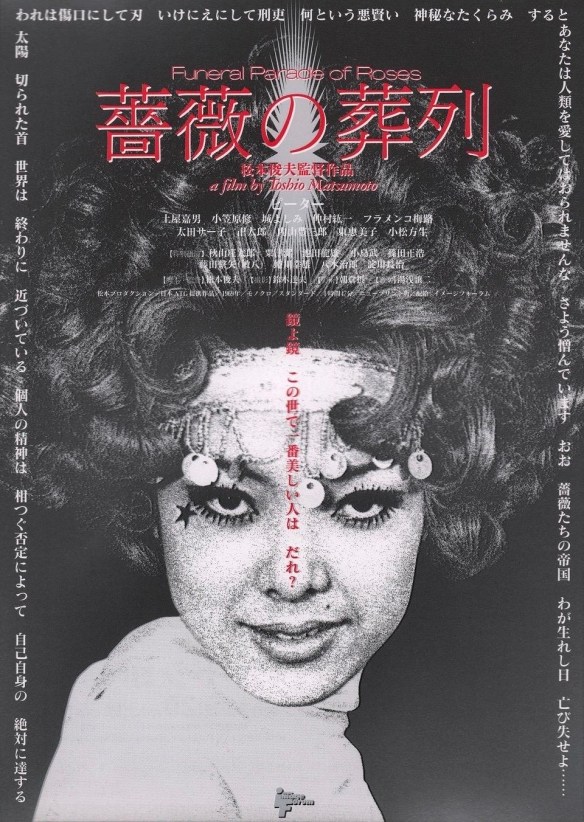
Next to William Shakespeare, Sophocles is probably the most enduring and internationally renowned dramatist in terms of his work still being adapted for the stage, television and cinema and I doubt you will find a more bizarre or outre version of his Greek tragedy Oedipus Rex than Funeral Parade of Roses. Directed by Japanese avant-garde filmmaker Toshio Matsumoto, this revelatory 1969 movie – it was his first feature film after several experimental shorts – is just as fresh and startling today as it was when it first appeared over fifty years ago. Continue reading
Pandemonium in the Dark
In Japanese cinema, the samurai film can be many things. It can be a ghost story (Ugetsu, 1953), a rousing adventure (The Hidden Fortress, 1958), a tragic romance (Gate of Hell, 1953), a sweeping historical epic (Tales of the Taira Clan, 1955), a Shakespeare adaptation (Throne of Blood, 1957) or even a revenge saga (Chushingura, 1962). The latter is my favorite sub-genre in the category and the best samurai revenge films are usually driven by the avenger’s sense of honor being defamed and/or moral outrage at personal injustice. This is certainly the motivation behind the heroine of Lady Snowblood (1973), played by Meiko Kaji, and its sequel, Lady Snowblood 2: Love Song of Vengeance (1974). It is also the central premise of Masaki Kobayashi’s Harakiri (aka Seppuku, 1962), which is more doom-laden and brooding than the kinetic action of the Lady Snowblood films but nevertheless explodes in a bloody, sword-wielding finale. But if you want to go deeper, darker and crueler, it is hard to top Toshio Matsumoto’s Demons (aka Shura aka Pandemonium, 1971) for pure malice. Continue reading