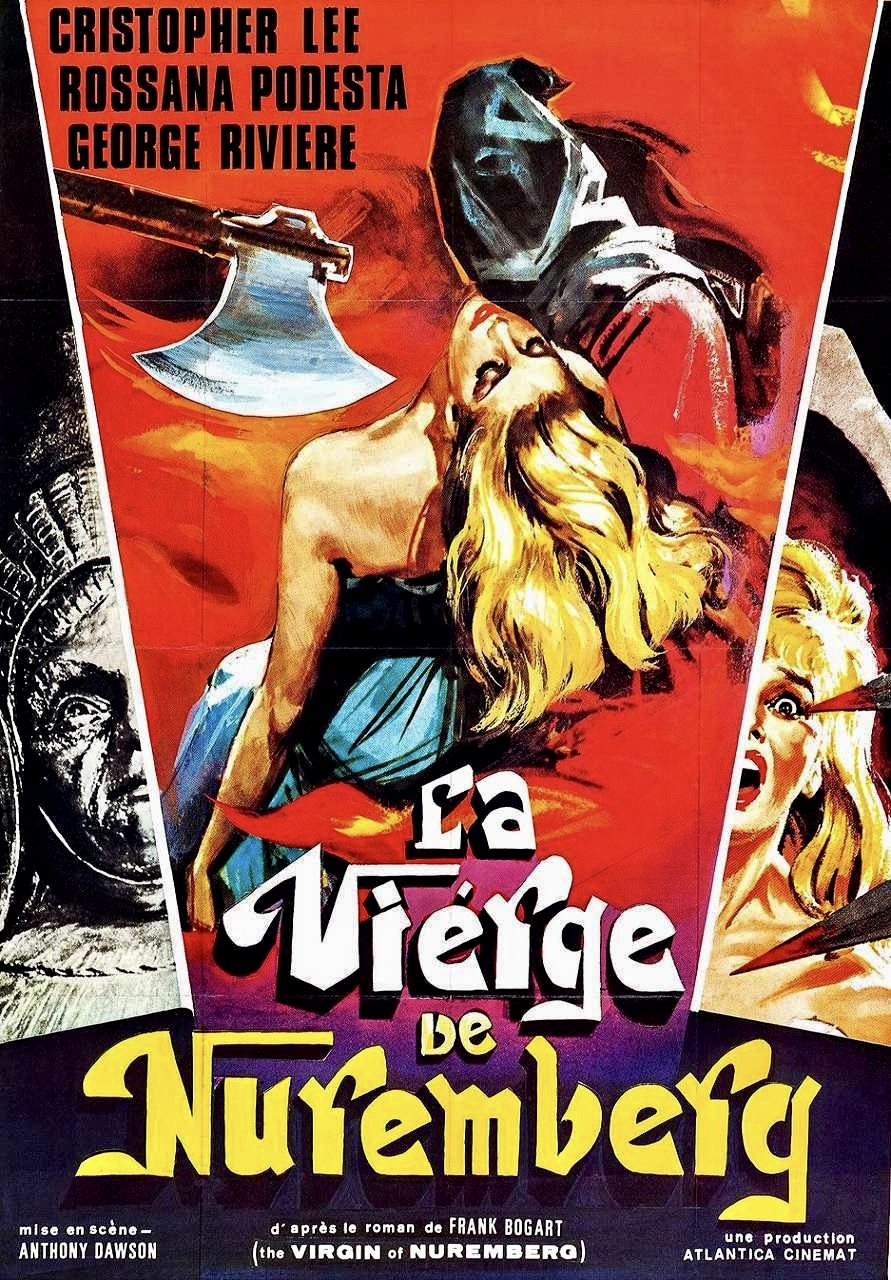
The Virgin of Nuremberg

The Italian film poster for THE VIRGIN OF NUREMBERG which is also known as HORROR CASTLE (1963), starring Rossana Podesta.

Mary, the wife of German aristocrat Max Hunter, is visiting her husband’s ancestral castle for the first time and is completely unsettled by the mansion’s violent past; 300 years earlier it was the home of “The Punisher”, a sadistic fiend who tortured and killed women deemed guilty of adultery. One room of the mansion even serves as a shrine to the past with its museum-like displays of the family implements of torture. The castle’s domestic staff is no less intimidating with Erich, a disfigured servant, and Marta, a grim-faced housekeeper with a flair for morbid stories, in constant attendance. Left alone by her husband while he conducts business away from home, Mary tries to suppress her mounting terror as reports of a missing servant girl lead to rumors of “The Punisher” and his return from the grave.
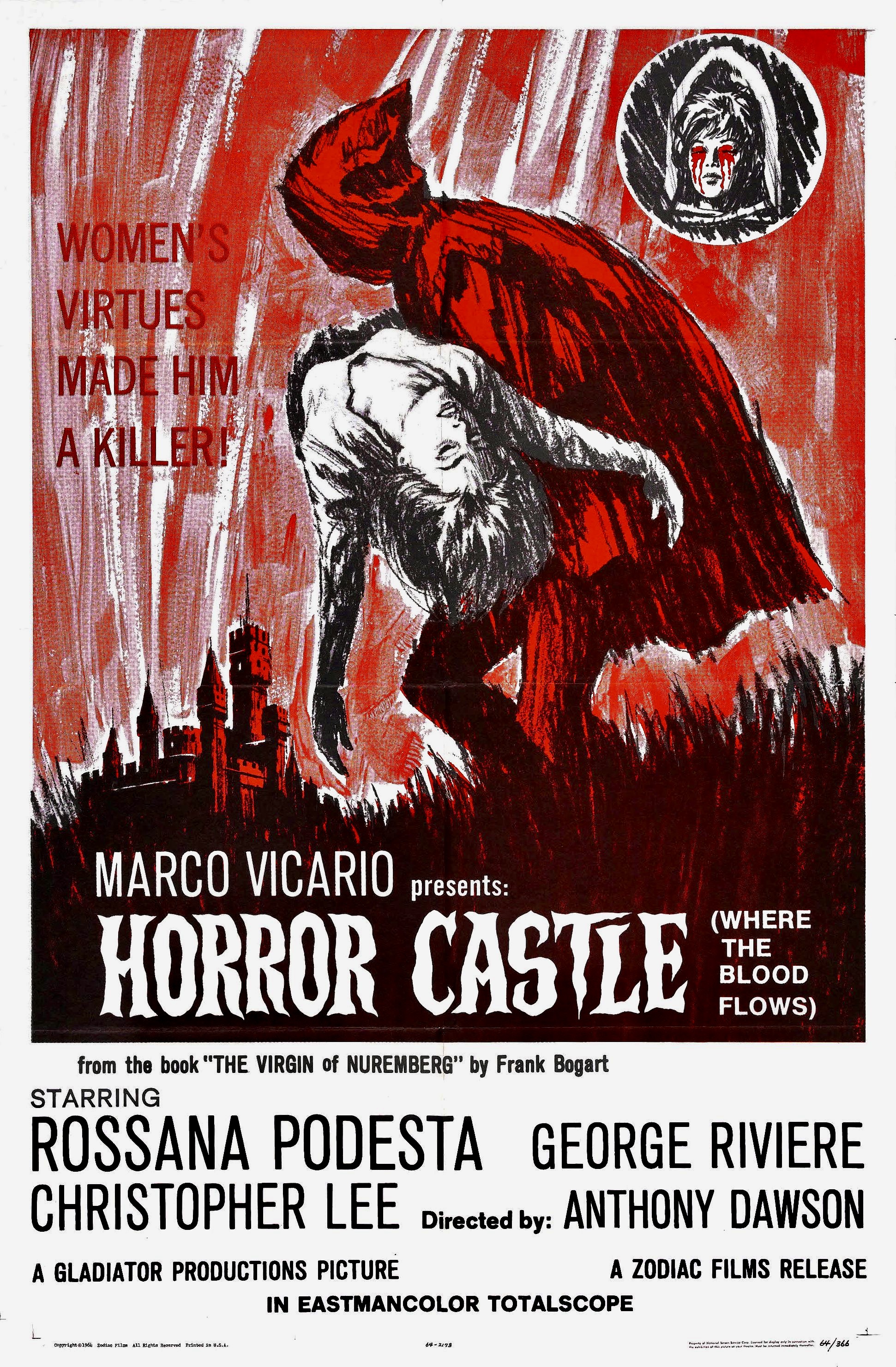
The opening sequence of the Italian film La Vergine di Norimberga (U.S. release title, Horror Castle (1963) could be a primer for Gothic horror films with every cliche of the genre on display. A dark, stormy night. A creepy castle. A frightened woman in a nightgown exploring the darkened corridors by candlelight. Where it departs from the predictable formula is in the dramatic payoff – the gruesome discovery of a mutilated woman locked inside an iron maiden, “The Virgin of Nuremberg” (the original Italian title of the film).

Continue reading
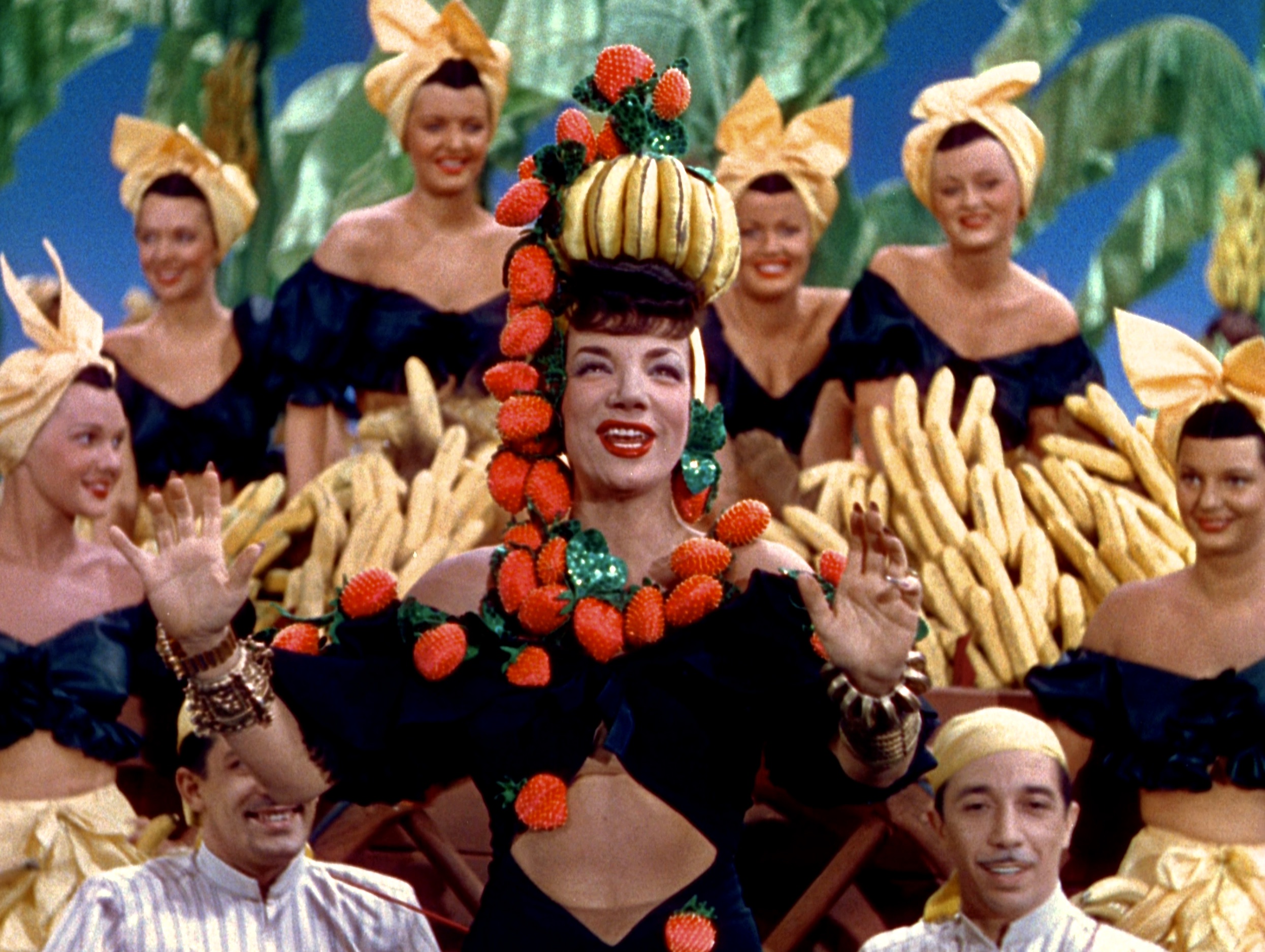
Going Bananas!

Carmen Miranda and chorus girls performing “The Lady in the Tutti Frutti Hat” from THE GANG’S ALL HERE (1943), directed by Busby Berkeley.

In the early 1970s midnight movies became a craze after the Elgin Theatre in New York discovered a surprise hit with Alejandro Jodorowsky’s El Topo (1970). Soon other theatres across the country launched their own midnight film series and movies like Night of the Living Dead (1968), Pink Flamingos (1972), The Harder They Come (1972) and Harold and Maude (1972) began to attract audiences that missed those movies during their limited initial release. Some of those early midnight movie choices were surprising and included Hollywood classics like Walt Disney’s Fantasia (1940), the rock ‘n’ roll satire The Girl Can’t Help It (1956) and the WW2 era musical The Gang’s All Here (1943). Yet, when you consider the fact that a lot of those early midnight movie screenings were attended by younger audiences, many high on pot or other substances, it starts to make sense. The Gang’s All Here, in particular, with its eye-popping dayglo Technicolor hues, surreal art direction and outlandish dance choreography is as psychedelic and mind-blowing as the “trip sequence” in Kubrick’s 2001: A Space Odyssey (1968).

Continue reading

Masks Are Powerful

The demonic mask featured in ONIBABA (1964), Kaneto Shindo’s classic tale of murder and retribution set in 14th century Japan.

There is one cinema gimmick that always works for me and can sometimes lift a movie out of the ordinary and take it somewhere unexpected. This usually occurs when someone either puts on a mask or appears in one. The simple act of doing this immediately brings something theatrical and visually arresting to the scene that taps into our subconscious on an almost primeval level.    

Continue reading

Heart of Darkness

The Pre-Code era of Hollywood when films were much more explicit, suggestive and racy is generally believed to be that period between 1929 and 1934, the year the Production Code was officially enforced. After that the studios had to comply with a long list of restrictions imposed on motion pictures by Joseph Breen (director of the PCA aka Production Code Administration) in terms of subject matter, situations and characters if the producers wanted their films to get a commercial release. Of course, film censorship in Hollywood existed before 1934 but it was not always enforced. Complaints from moral guardian groups and religious organizations like the Catholic Legion of Decency were crucial in pressuring Hollywood to reduce the amount of sex, violence and decadence in movies. Some of their earliest targets were three films from MGM, which were a collaboration between director Tod Browning and Lon Chaney – The Unholy Trio (1925), The Unknown (1927) and West of Zanzibar (1928). All three of the films contain perverse and unsettling storylines but West of Zanzibar tops them all in terms of shock value even by today’s standards.  

Continue reading

Rites of Manhood

The cover of the souvenir program to the 1926 MGM film TELL IT TO THE MARINES.

Most classic movie fans know that silent film star Lon Chaney was often associated with Tod Browning, who directed him in ten movies starting with The Wicked Darling (1919) and ending with Where East is East (1929). Among their most famous collaborations are the silent version of The Unholy Three (1925), The Unknown (1927) and London After Midnight (1927), which is now considered a lost film. Yet, two of Chaney’s most legendary roles were helmed by different directors. The Hunchback of Notre Dame (1923) was directed by Wallace Worsley and The Phantom of the Opera (1925) is credited to Rupert Julian; both films helped establish Chaney’s reputation for playing monstruous and tortured characters. What tends to be overlooked in his filmography is the fact that Chaney wasn’t always typecast as some kind of grotesque individual and Tell It to the Marines (1926), one of his biggest box-office hits for M-G-M, presents him as a gruff but patriotic Marine sergeant in a stirring romantic drama by director George W. Hill.

Continue reading