Assassination Games

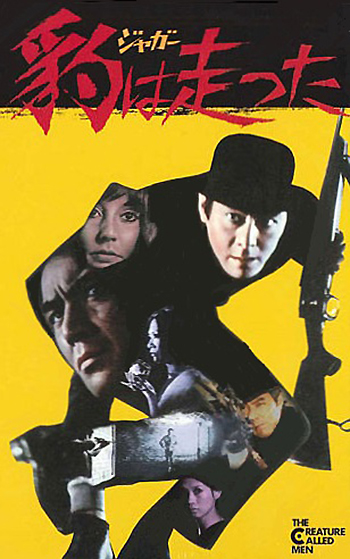
The film poster for JAGA WA HASHITTA (1970), a Japanese film that is also known as THE CREATURE CALLED MAN.

In the late 1960s and early 1970s Toho Studios began toying with some of its genre offerings by slipping some social or political references into the narratives while adding additional cinematic influences. A prime example of this is the 1970 Japanese film Jaga Wa Hashitta (English title: The Creature Called Man), an offbeat actioner about rival hit men with obvious references to the James Bond spy series as well as American crime thrillers.

Continue reading

The Rashomon Moment: Bob Dylan at the 1965 Newport Folk Festival

Bob Dylan performs for the crowd in Murray Lerner’s excellent 2007 documentary on the musician at the Newport Jazz Festival – THE OTHER SIDE OF THE MIRROR: BOB DYLAN AT THE NEWPORT JAZZ FESTIVAL, 1963-1965.

In the winter of 2007 moviegoers were given a choice to see numerous impersonations of the artist known as Bob Dylan in a semi-experimental biopic or experience the living legend in concert at the Newport Folk Festival circa 1963. The former was Todd Haynes’s I’m Not There featuring several faux-Dylans portrayed by Heath Ledger, Christian Bale, Cate Blanchett, Richard Gere and others in a dramatic attempt to capture the many phases and contradictions in the musician’s life. The latter was Murray Lerner’s riveting time capsule, The Other Side of the Mirror: Bob Dylan Live at the Newport Folk Festival, 1963-1965. The strange thing is that Lerner’s documentary featuring the real deal vanished after a brief theatrical run while Haynes’s film continues to enjoy wide exposure thanks to its release on DVD. I don’t know if this meant that the younger movie-going audience is more interested in popular actors playing Bob Dylan or that they have little interest in the sixties folk music scene that Dylan revitalized with his spectacular entry into it. 

Continue reading

The New Orleans Streetfighter

If you have never been tempted to see Charles Bronson in one of his many top-billed action vehicles, then you also probably wonder why he enjoyed superstar status on an international level. But put aside your skepticism for a moment and consider Hard Times (1975), a Depression-era tale about a mysterious drifter named Chaney who makes a living as a bare-knuckle streetfighter.

Continue reading

The Legend of Black Tiger

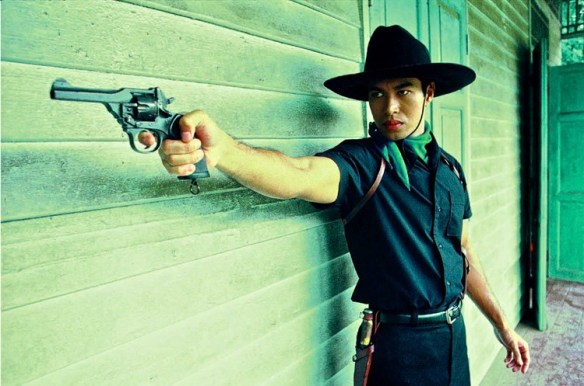
Chartchai Ngamsan stars as Thailand gunslinger Dum aka Black Tiger in the 2000 cult film, Tears of the Black Tiger.

When it first appeared in 2000, Tears of the Black Tiger (aka Fah Talai Jone), became an instant sensation at almost every film festival that programmed the directorial debut of Wisit Sasanatieng. One of the most ambitious productions to ever emerge from the Thai film industry, Tears of the Black Tiger seemed poised for international success upon its original release but got tangled up in distribution troubles and didn’t receive a U.S. theatrical release until seven years later, despite a great reception at the 2001 Seattle International Film Festival.    Continue reading

Tinto Brass Directs a Spaghetti Western

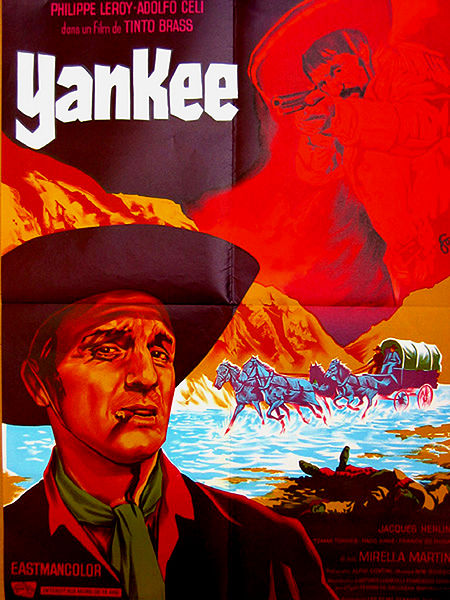
Yankee film poster 1966If U.S. moviegoers are familiar with the name Tinto Brass at all, it is probably due to the infamous 1979 epic Caligula which featured world renowned actors (Peter O’Toole, Helen Mirren, John Gielgud, Malcolm McDowell, etc.) and hardcore sex scenes (which were later added by producer/Penthouse tycoon Bob Guccione against the wishes of Brass who disowned the film). Brass had already established himself as a master of art house erotica/perversity with 1976’s Salon Kitty about a brothel in WWII Berlin where the prostitutes were undercover spies. But after Caligula, Brass seemed much happier directing more modestly budgeted, softcore adaptations of literary works like The Key (1983, based on the novel by Jun’ichiro Tanizaki) and Paprika (1991, inspired by the novel Fanny Hill), which showcased his increasing obsession with shapely female bottoms.

In retrospect, his early career is a contemplation of the paths not taken: documentary (Ca ira, il fiume della rivolta aka Thermidor, 1964), avant-garde cinema (L’urlo aka The Howl, 1970) and eccentric genre offerings such as Col cuore in gola aka Deadly Sweet, 1967). Of the latter, Yankee (1966), the only spaghetti western ever directed by Brass, is definitely worth a look.   Continue reading

Mining for B-Movie Gold

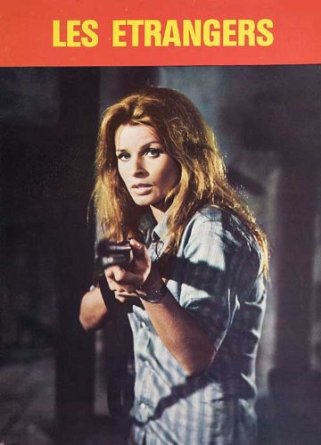
Senta Berger is in charge in Jean-Pierre Desagnat's Les Etrangers (1969)

Senta Berger is in charge in Jean-Pierre Desagnat’s Les Etrangers (1969)

It’s a rare thing when a crime thriller departs from the usual formulaic expectations and rewards the viewer with a much more unpredictable and entertaining twist on a familiar genre. Such is the case with Les étrangers (aka The Strangers, 1969), which begins with a carefully planned diamond heist in a remote desert town that goes spectacularly awry before transitioning into a deadly game of cat and mouse between a fleeing fugitive and a couple that offer him temporary shelter. This is a superior B-movie that feels like an A-picture with its iconic international cast of actors from France (Michel Constantin), Austria (Senta Berger), Spain (Julián Mateos) and South Africa (Hans Meyer), a spaghetti western-flavored score by Michel Magne and Francoise de Roubaix, and atmospheric cinematography by Marcel Grignon, who received an Oscar nomination for Is Paris Burning? (1967) and filmed such cult favorites as Roger Vadim’s Vice and Virtue (1963) and Walerian Borowczyk’s The Beast (1975).     Continue reading