
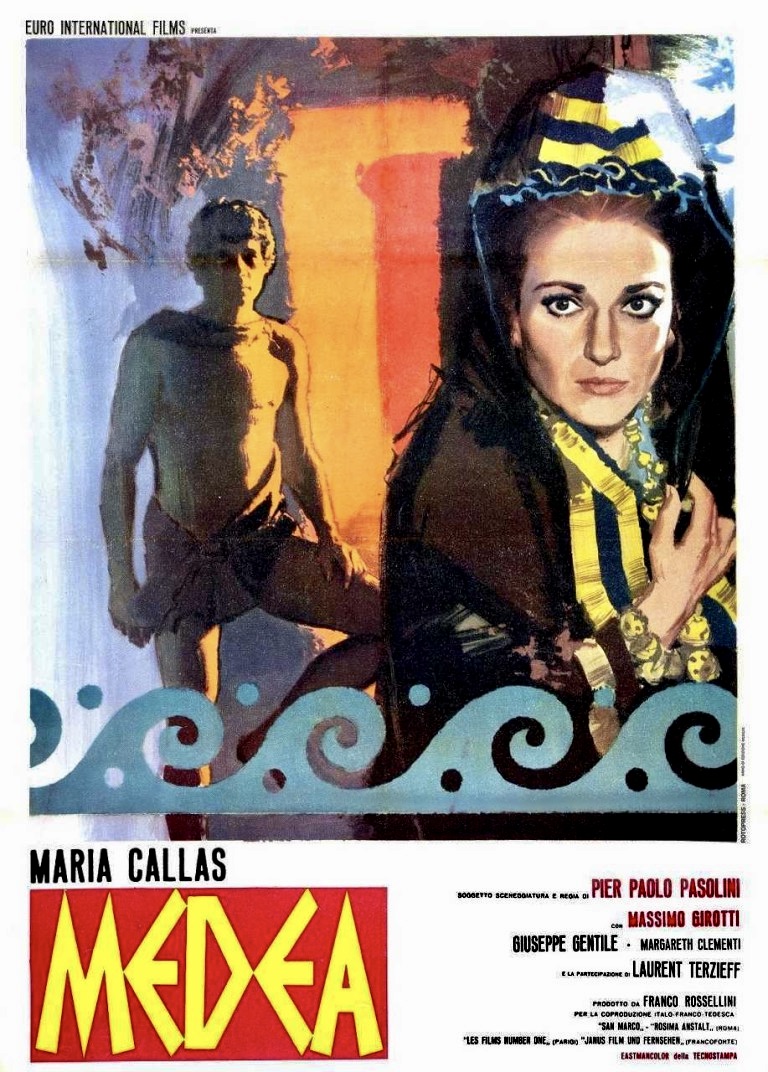
A Scorned Woman’s Wrath

Are you well versed in Greek mythology? You’ll need to be if you take a deep dive into Pier Paolo Pasolini’s 1969 version of Medea starring the world’s most famous opera diva Maria “La Divina” Callas in her only feature film role (and she doesn’t sing). Freely adapting narrative elements from the original Greek myth as well as Euripides’ play, which was first performed in 431 BC, Pasolini presents the tragic tale in the manner of a social anthropologist crossed with an experimental filmmaker dissecting an ancient case history of a marriage gone wrong. If you aren’t familiar with the story of Jason and Medea, this interpretation can be confusing, mysterious and inaccessible at times but it is also one of the most visually and aurally dazzling of the many versions produced on stage, TV or film over the years.

Continue reading
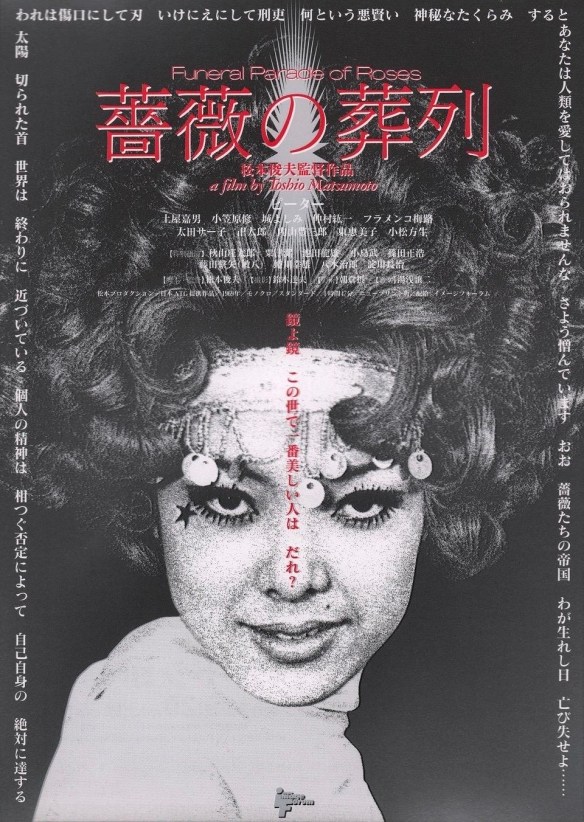
Oedipus Rex in Drag

Next to William Shakespeare, Sophocles is probably the most enduring and internationally renowned dramatist in terms of his work still being adapted for the stage, television and cinema and I doubt you will find a more bizarre or outre version of his Greek tragedy Oedipus Rex than Funeral Parade of Roses. Directed by Japanese avant-garde filmmaker Toshio Matsumoto, this revelatory 1969 movie – it was his first feature film after several experimental shorts – is just as fresh and startling today as it was when it first appeared over fifty years ago.    Continue reading

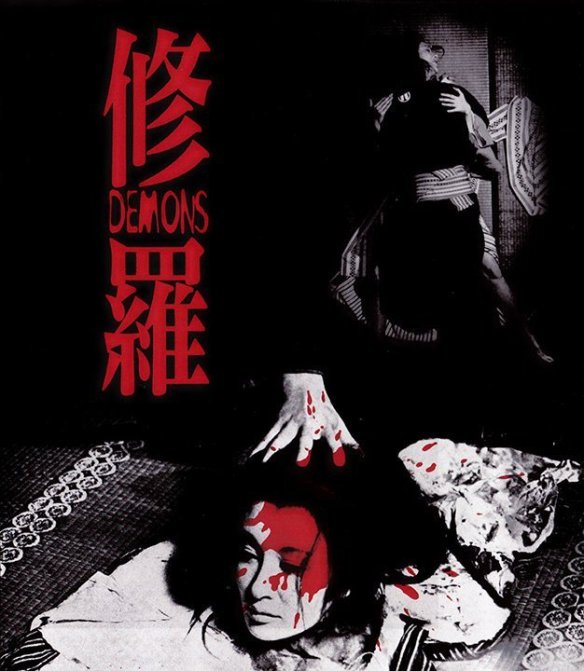
Pandemonium in the Dark

In Japanese cinema, the samurai film can be many things. It can be a ghost story (Ugetsu, 1953), a rousing adventure (The Hidden Fortress, 1958), a tragic romance (Gate of Hell, 1953), a sweeping historical epic (Tales of the Taira Clan, 1955), a Shakespeare adaptation (Throne of Blood, 1957) or even a revenge saga (Chushingura, 1962). The latter is my favorite sub-genre in the category and the best samurai revenge films are usually driven by the avenger’s sense of honor being defamed and/or moral outrage at personal injustice. This is certainly the motivation behind the heroine of Lady Snowblood (1973), played by Meiko Kaji, and its sequel, Lady Snowblood 2: Love Song of Vengeance (1974). It is also the central premise of Masaki Kobayashi’s Harakiri (aka Seppuku, 1962), which is more doom-laden and brooding than the kinetic action of the Lady Snowblood films but nevertheless explodes in a bloody, sword-wielding finale. But if you want to go deeper, darker and crueler, it is hard to top Toshio Matsumoto’s Demons (aka Shura aka Pandemonium, 1971) for pure malice.   Continue reading