Only a Pawn in Their Game

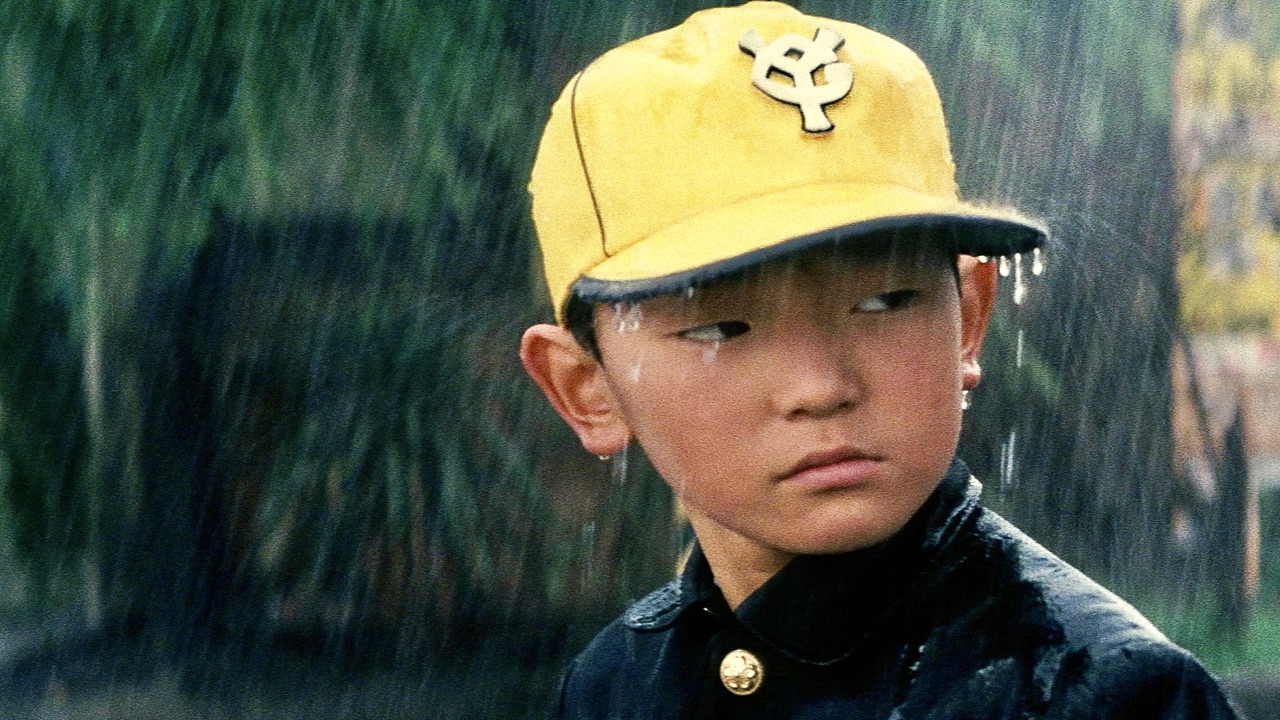
Tetsuo Abe in his only film role plays a ten-year-old boy who is used by his parents in a dangerous extortion scheme in Nagisa Oshima’s Shonen aka BOY (1969).

Not everyone has an idyllic childhood and some unfortunates don’t even have a childhood at all. That is certainly the case with Toshio (Tetsuo Abe), a ten-year-old who is being used by his father Takeo (Fumio Watanabe) and stepmother Takeko (Akiko Koyama) in an ongoing scam which entraps car drivers. The ploy involves stepping out into traffic, pretending to be hit by a car, and falling to the ground and feigning an injury. If the driver doesn’t offer to settle the incident on the spot with a cash payment, the fake victim threatens to call the police to settle the matter. In many cases, the drivers are only too happy to pay the scammers a cash settlement to avoid a lawsuit or court case. Toshio and his family of three (including a tiny tot named Peewee) have been on the move across Japan, enacting this scenario for some time with Takeko playing the fake accident victim. But the time has come for the parents’ ten-year-old to take on this role and he has little choice in the matter. So begins Nagisa Oshima’s Shonen (English title: Boy, 1969), a harrowing portrait of parental abuse and negligence, which was based on a true case that made national news in Japan in 1966.

Continue reading

Kiju Yoshida’s Escape from Japan

The Japanese poster for ESCAPE FROM JAPAN (1964)

The Japanese New Wave of the late 1950s/early 1960s introduced the world to a number of rising directors who are now icons of cinema like Nagisa Oshima, Hiroshi Teshigahara, Shohei Imamura and Masahiro Shinoda but it has only been in recent years that Yoshishige Yoshida aka Kiju Yoshida has started to receive the belated acclaim he deserves. His 220-minute masterpiece Eros + Massacre (1969), which told the parallel stories of two student activists and Sakae Osugi, an anarchist and free love advocate, startled critics with its radical take on sex and politics, not to mention a fragmented narrative approach with unusual camera compositions of widescreen black and white imagery. Long before that, Yoshida learned his trade at Shochiku Studio at a time when the company began making films about the disaffected post-war generation such as Oshima’s Cruel Story of Youth (Seishun Zankoku Monogatari, 1960) and Good-for-Nothing (Rokudenashi, 1960), Yoshida’s debut film about an aimless youth and his attraction to the secretary of a rich friend’s father. The director would eventually part ways with Shochiku over creative differences and start his own production company in 1964 but his final movie for the studio, Escape from Japan (Nihon Dasshutsu, 1964), shows Yoshida imposing his own aesthetic and stylistic approach to what is essentially a B-movie melodrama.

Continue reading

You Don’t Know What You’ve Got Till It’s Gone: Filmhouse in Edinburgh

One of the theaters housed inside Filmhouse, a 3-screen art house complex in Edinburgh, Scotland that was recently closed (photo by Ian Grundy).

Friday, October 7, 2022 was a black day for film lovers in Edinburgh and for anyone who has ever visited Filmhouse, a fantastic three-screen movie venue that also hosted the annual Edinburgh International Film Festival for years. Without warning, the Centre for the Moving Image (CMI), a charity which receives annual grants for the operation, abruptly closed its doors and laid off more than 100 employees. The shutdown also includes the Belmont Filmhouse in Aberdeen and the annual Edinburgh International Film Festival (EIFF), which was launched in 1947. The financial difficulties that led to this decision are only part of the problem. The impact of COVID on moviegoing in recent years plus the proliferation of so many entertainment streaming choices for the family household has taken a toll on attendance at movie chains but especially independent venues like Filmhouse. In the U.S., we have already seen the closure of the Cinerama Dome and the 14-screen ArcLight Hollywood in Los Angeles, the Lincoln Plaza Cinemas and Landmark’s Sunshine Cinema in New York City and so many others are in danger of vanishing like Facets in Chicago. If you care about the communal experience of a big screen movie experience, then please support your favorite film venue or risk losing it. The Filmhouse was certainly a world renowned shrine to cinema and here are my own memories of the venue from over twelve years ago.

Continue reading

Guilty Bystanders

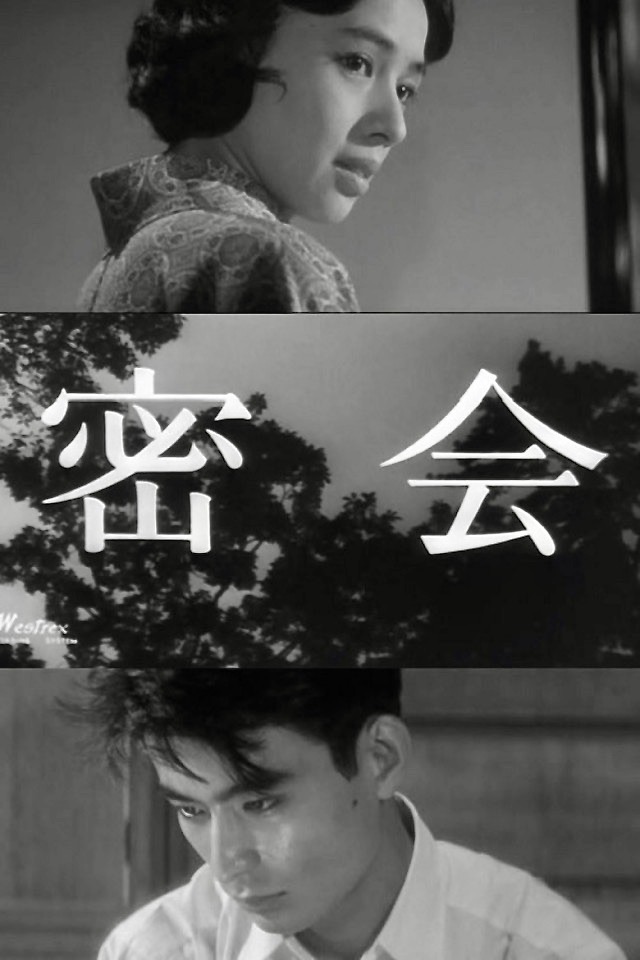
The Japanese film poster for Mikkai aka THE ASSIGNATION (1959), directed by Ko Nakahira.

A young couple are enjoying a romantic rendezvous in a hidden grove at a city park at twilight. It turns out to be an illicit affair. The woman is the married wife of a law professor and her lover is one of his students. Their privacy is interrupted by the arrival of a speeding taxi that crashes into an embankment nearby. Inside the driver is seen struggling with the backseat occupant. It ends badly with the driver murdered and his body dragged into the bushes. The killer flees and the young couple are faced with a dilemma. Should they go to the police and risk exposing their affair or remain silent? This is the pressing issue that drives the narrative of The Assignation (Japanese title: Mikkai, 1959), directed by Ko Nakahira. 

Continue reading

Oedipus Rex in Drag

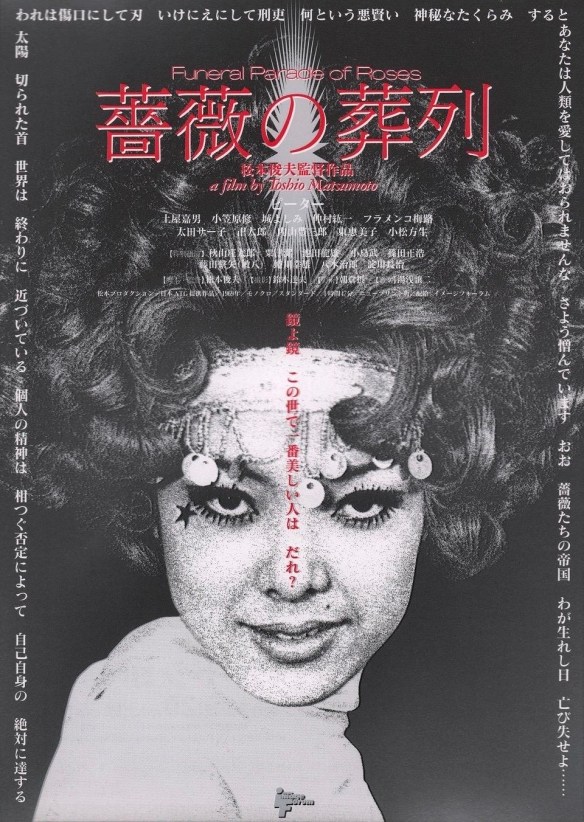
Next to William Shakespeare, Sophocles is probably the most enduring and internationally renowned dramatist in terms of his work still being adapted for the stage, television and cinema and I doubt you will find a more bizarre or outre version of his Greek tragedy Oedipus Rex than Funeral Parade of Roses. Directed by Japanese avant-garde filmmaker Toshio Matsumoto, this revelatory 1969 movie – it was his first feature film after several experimental shorts – is just as fresh and startling today as it was when it first appeared over fifty years ago.    Continue reading