Telluride Film Festival 2007 Flashback: The 34th Show

*This article originally appeared on Movie Morlocks, Turner Classic Movies’s official blog in September 2007 (The blog was discontinued years ago and is no longer available available)
The show banners have come down and the patrons have scattered in all directions but many thoughts and impressions linger from this year’s festival. As always, Telluride was the first to host U.S. premieres of several films which are being showcased in the Toronto Film Festival, which began Sept. 6th and runs through September 15th. Among them were the 2007 Cannes festival favorites, Secret Sunshine (South Korea), 4 Months, 3 Weeks and 2 Days (Romania), plus Jar City (Iceland), Persepolis (France), Juno (U.S.), Brick Lane (UK), Blind Mountain (China), The Band’s Visit (Israel), and several others.

Continue reading
On the Loose in Amsterdam

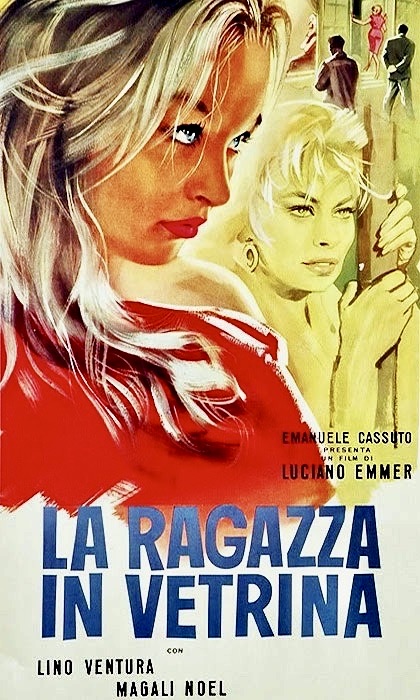
The Italian film poster for THE GIRL IN THE PICTURE WINDOW (1961), directed by Luciano Emmer.

The controversial problem of immigration in Italy has been a problem for decades, not just with internal migration of workers from the south to the north, but also with the influx of refugees from Africa and other areas around the Mediterranean. Not surprisingly, there have been numerous Italian films to address this situation over the years but only a handful of them have received praise and recognition outside their own country. Among them are Pietro Germi’s Il Cammino della Speranza (The Path of Hope, 1950), in which a group of Sicilian workers try to emigrate illegally to France, I Magliari (The Swindlers, 1959), Francesco Rosi’s drama about an out-of-work Italian miner (Renato Salvatore) in Germany, and Lina Wertmuller’s Tutto a Posto e Niente in Ordine (All Screwed Up, 1974), which focuses on immigrants from southern Italy trying to find work in Milan. To this short list, I would like to add Luciano Emmer’s rarely seen La Ragazza in Vetrina (The Girl in the Picture Window, 1961), a tale about two immigrant miners in Belgium who enjoy a weekend getaway in Amsterdam.

Continue reading

The Runaway Nuclear Physicist

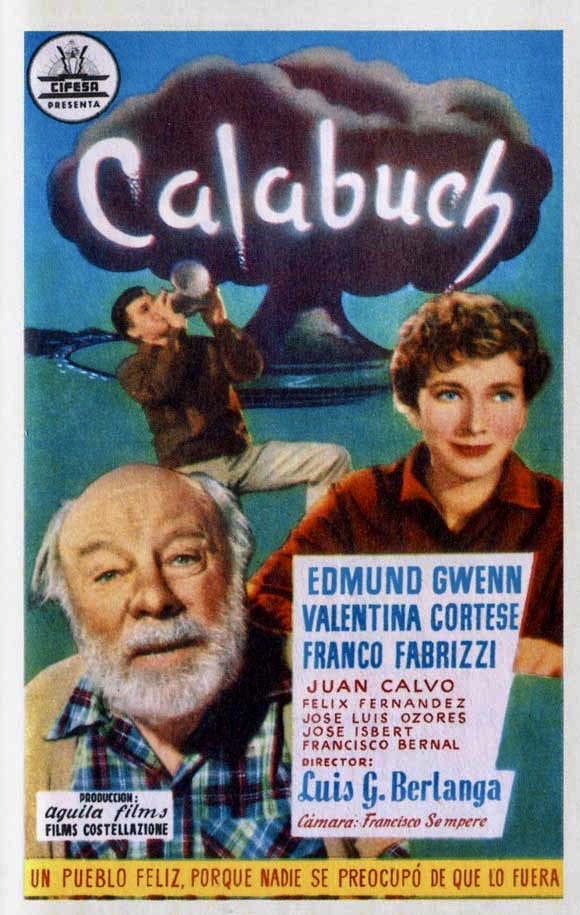
Often considered alongside Luis Bunuel as one of the most important and influential Spanish film directors of the 20th century, Luis Garcia Berlanga (1921-2010) and his work is still being discovered in the U.S. Bienvenido, Mister Marshall! (Welcome, Mr. Marshall, 1953), Berlanga’s post-WW2 satire of the European Recovery Plan aka the Marshall Plan, was the first of his films to receive wide distribution at art houses in America and went on to win the International Prize for Best Comedy Film at Cannes. Placido (1961), a black farce in which a homeless man is invited to a Christmas Eve dinner sponsored by a cookware corporation, was nominated for a Best Foreign Language Film Oscar. And El Verdugo (The Executioner, 1963) might be his most famous triumph with Nino Manfredi as an undertaker who is pressured into taking over his father-in-law’s profession as an executioner. The Criterion Collection released a special edition of it on Blu-ray and DVD in 2016, which helped introduce Berlanga’s satiric masterwork to new audiences. Less well known today but praised by critics during its original release in 1956 is Calabuch aka The Rocket from Calabuch, a seemingly gentle but subversive satire about life in a rustic seaside village which is disrupted by the arrival of an amiable but mysterious stranger.

Continue reading

Tarot Cards, Talismans, Seances and Telekinesis

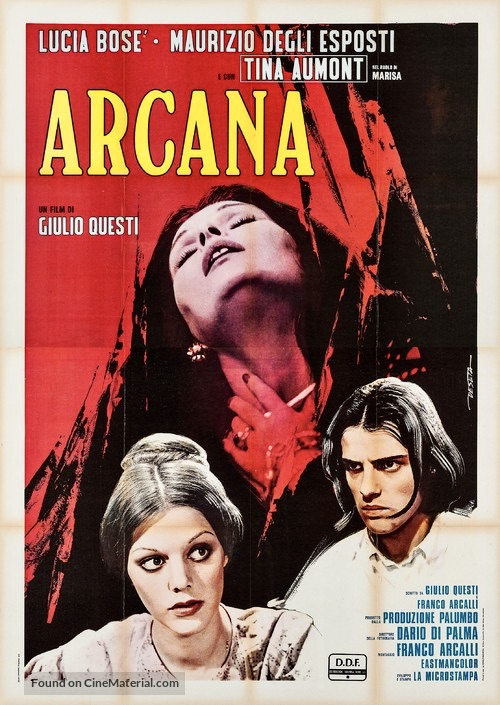
People usually have certain expectations when they invest the time to watch a movie, especially if it has been advertised as a genre film like a western, sci-fi or horror thriller. This must have been a perplexing problem for the distributors of Arcana (1972), Guilio Questi’s mysterious tale of a widow and her brooding son who use fortune telling, tarot cards and seances to con a gullible clientele. The film dabbles in the supernatural but it also flirts with other topics like voyeurism, incest, Macedonian rituals, neglected children, middle class despair and inept bureaucracies. Some critics have pigeonholed Arcana as a horror film and it is certainly horrific in tone and attitude but don’t expect the movie to conform to genre conventions. The director even issues a disclaimer at the beginning: “To the watchers: This movie is not a story but a game of cards. For this reason both its start and the epilogue are not believable. You are the players. Play smartly and you’ll win.” Make of that what you will, I think Arcana works best as a puzzle, even if it is an often inscrutable and unsolvable one that is presented in two acts. Continue reading

Vampire Machine

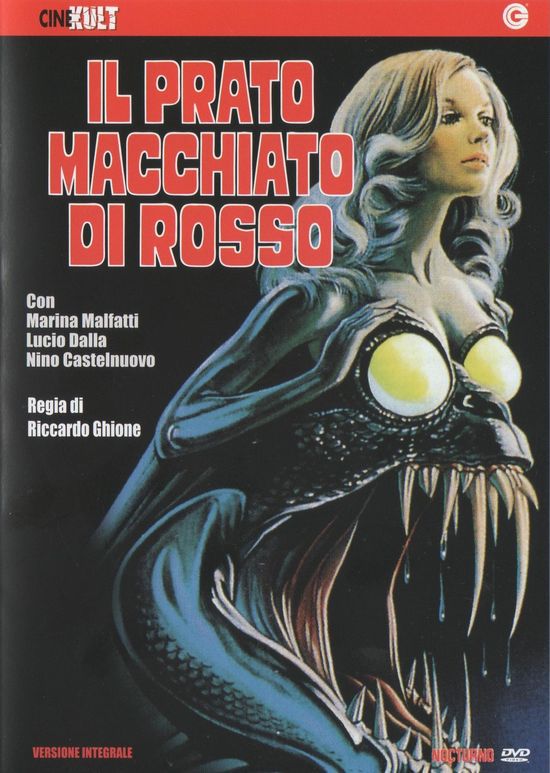
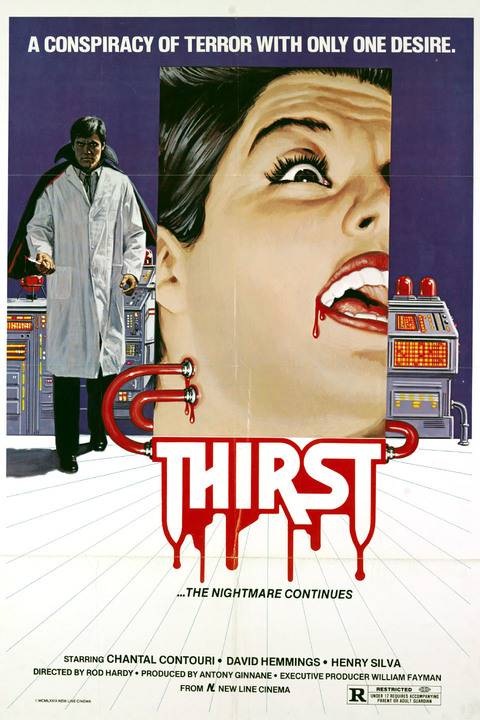
First, let me get this out of the way. The Bloodstained Lawn (Italian title: Il Prato macchiato di Rosso, 1973) is a haphazard mash-up of a genre film, but an entertaining one for Eurotrash completists. The English language title suggests it might be a giallo or a horror film or even a poliziotteschi (crime drama). Actually, it has some elements of those with some sci-fi flavoring added. The central premise involves a form of vampirism which is a complete departure from the old school mythology of Bram Stoker’s Dracula and much closer to the metaphorical horrors of Alain Jessua’s Shock Treatment (French title: Traitement de Choc, 1973) and Rod Hardy’s Thirst (1979). Oddly enough, director Riccardo Ghione seems much less interested in playing up the horrific aspects of the story than depicting bourgeois decadence and the exploitation of the disenfranchised as a quasi-political fantasy. Continue reading

Polyurethane Companion

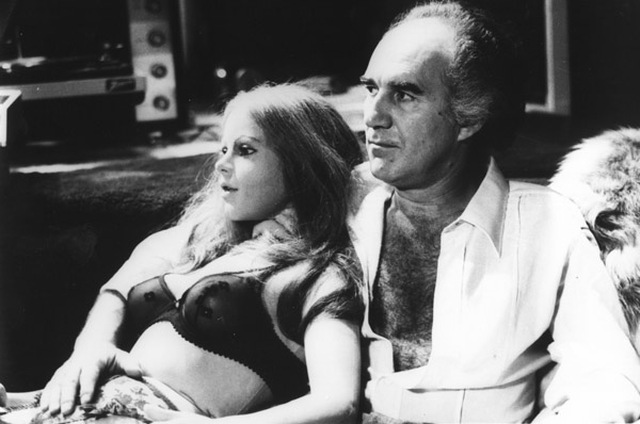
Michel Piccoli and his polyurethane companion in Luis Garcia Berlanga's Life Size (Grandeur Nature, 1974)

Michel Piccoli and his polyurethane companion in Luis Garcia Berlanga’s Life Size (Grandeur Nature, 1974)

The topic of men preferring lifelike dolls or mannequins to real women is nothing new in cinema and has been treated as poignant character study (Lars and the Real Girl, 2007), rom-com fantasy (Mannequin, 1987) and bleak psychological drama (The Doll aka Vaxdockan, 1962) to mention just a few examples of the different paths taken. Luis Garcia Berlanga’s Life Size (French title: Grandeur nature, 1974) takes a more ambiguous approach to its tale of a successful dentist and his new obsession and could be interpreted as a critique of misogyny, an attack on bourgeois values or a dark, perversely amusing character study.  Continue reading

Marco Ferreri’s Hairy Angel

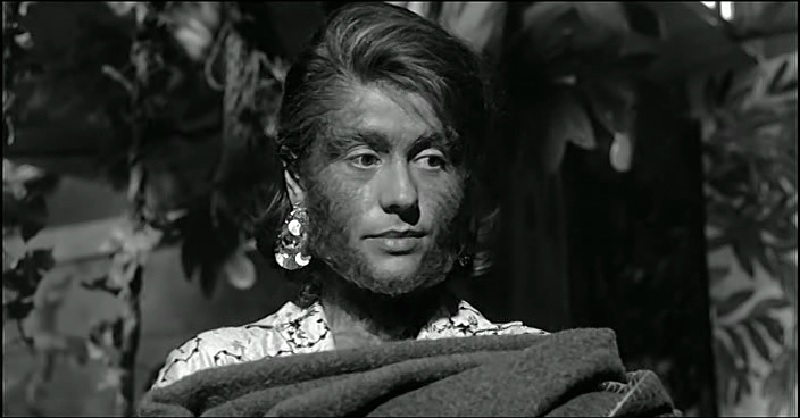
Annie Girardot in THE APE WOMAN (1964)

Annie Girardot in THE APE WOMAN (1964)

I can remember being fascinated with Marco Ferreri’s The Ape Woman (La donna scimmia) from the first time I saw a still from it in the May 1964 issue 28 of Famous Monsters of Filmland. A woman wearing eye makeup and sporting a beard and hairy legs poses provocatively for the camera while her mate, either a man in a tacky ape costume or a prop gorilla, rests his head in her lap. The photo description, “Beauty (?) and the Beast make a hairy horror pair in THE APE WOMAN,” was the only information offered about this upcoming release and, since it was being featured in FFofF, I assumed it qualified as fantasy cinema. Continue reading