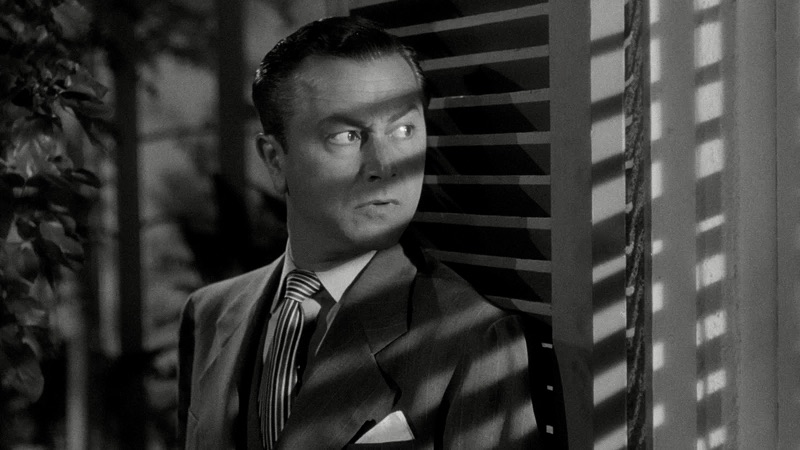
The Dark Side of Robert Young

Robert Young plays an embezzler and a womanizer whose luck runs out in THEY WON’T BELIEVE ME (1947), an underrated film noir.

When most baby boomers think of actor Robert Young, they probably recall his popular TV medical series Marcus Welby, M.D. (1969-1976) where he was the epitome of the kind, compassionate doctor or they remember Jim Anderson, the perfect dad in the all-American family sitcom Father Knows Best (1954-1960). He was also typecast as “Mr. Nice Guy” in most of his Hollywood films, playing cheerful romantic leads or the leading man’s best friend or some other debonair, noble or well-intentioned character who rarely made a strong impression compared to more assertive male leads like Clark Gable, Gary Cooper or Spencer Tracy. But there were several occasions when Young discarded his good guy image by playing shadowy characters, outright villains, or damaged human beings.  Among these atypical casting choices, Young is most memorable in Alfred Hitchcock’s Secret Agent (1936) as an undercover spy, a budding fascist in The Mortal Storm (1940), a shellshocked and physically maimed war veteran in The Enchanted Cottage (1945), a complete cad and accused murderer in the underrated film noir They Won’t Believe Me (1947), directed by Irving Pichel, and an architect who is suspected of being a dangerous criminal in The Second Woman (1950).
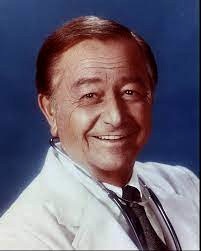
Robert Young as the star of the popular TV series, MARCUS WELBY, M.D. (1969-1976).
Continue reading

Autobiography of a Sleepwalker

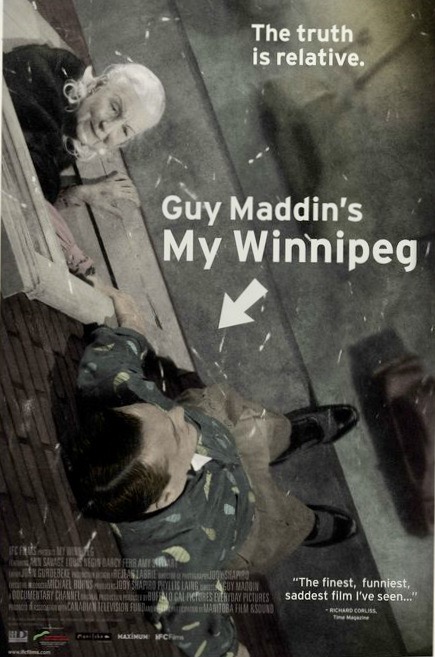
How does a filmmaker begin to craft an autobiographical film of his or her own life? Many renowned directors have tackled it but usually by using a fictionalized version of themselves under a different name though many of the incidents depicted are true. Francois Truffaut did it with The 400 Blows (1959) as did George Lucas with American Graffitti (1973) and Sam Fuller in The Big Red One (1980). Even more recently Steven Spielberg re-imagined his childhood and teenage years in The Fabelmans (2022). But no one has ever made a more personal and dreamlike meditation on their roots than what Guy Maddin accomplishes with My Winnipeg (2007), which is set in the city where the Canadian director was born and resided for much of his life. Narrated by Maddin in a voice that sounds half asleep, half awake, our somnambulistic guide creates his own mythology about himself, his family and his home town that is utterly unique. Plus, his narrator approach is totally fitting for a city that allegedly has more sleepwalkers among its residents than any other major city.

Continue reading

Bring It On

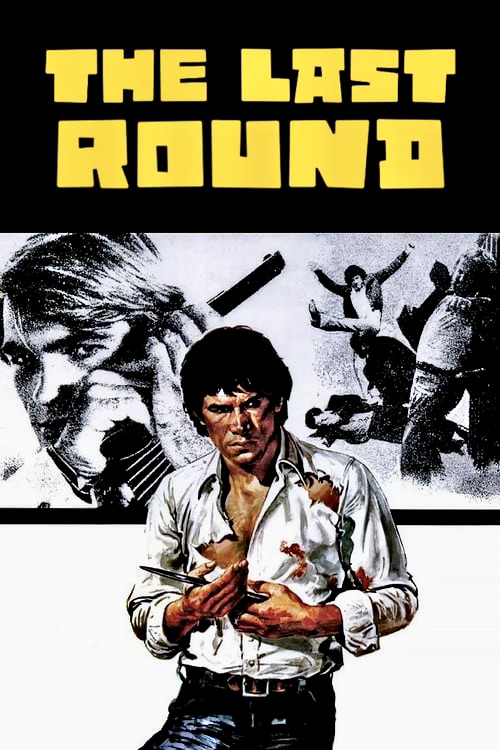
Revenge is a dish best served cold and the recipe is given a distinctly Italian flavor by director Stelvio Massi in The Last Round (Italian title: Il Conto e Chiuso, 1976), a blue collar reworking of Akira Kurosawa’s Yojimbo (1961) for the poliziotteschi genre, which was originally inspired by Dashiell Hammett’s 1929 novel Red Harvest.

Continue reading

Hot Nocturne

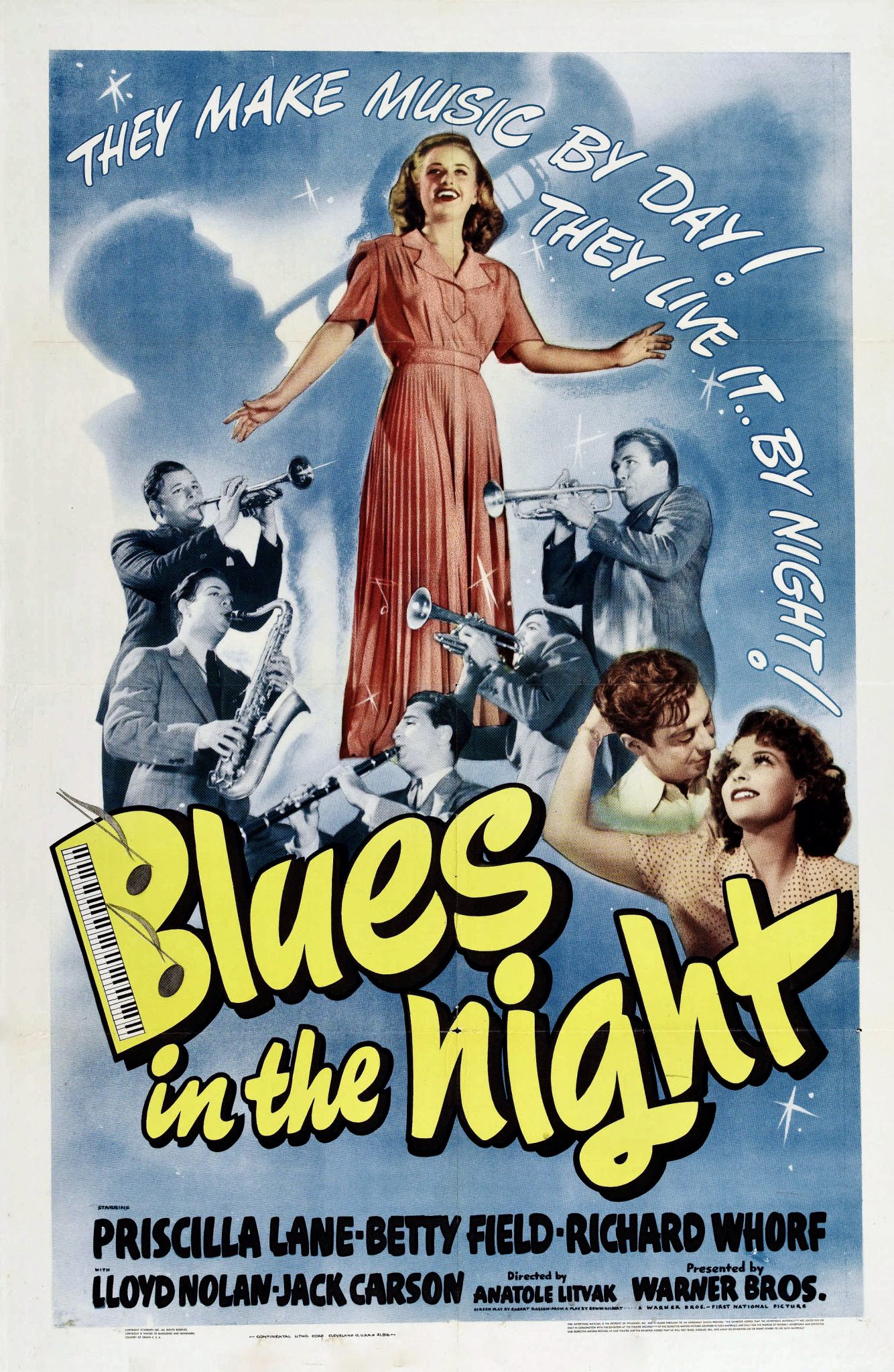
Most Hollywood films about musicians that were made during the studio era were usually biopics and focused on individual artists such as George Gershwin (Rhapsody in Blue, 1945) and Glenn Miller (The Glenn Miller Story, 1954). It was rare to see a feature film that detailed the ups and downs of an entire band and, in the case of 1941’s Blues in the Night, the featured jazz sextet was entirely fictitious. Originally titled Hot Nocturne, the name was changed just prior to its theatrical release to capitalize on the Harold Arlen-Johnny Mercer hit song that became its signature tune.

Continue reading

Wear the Face of Your Enemy

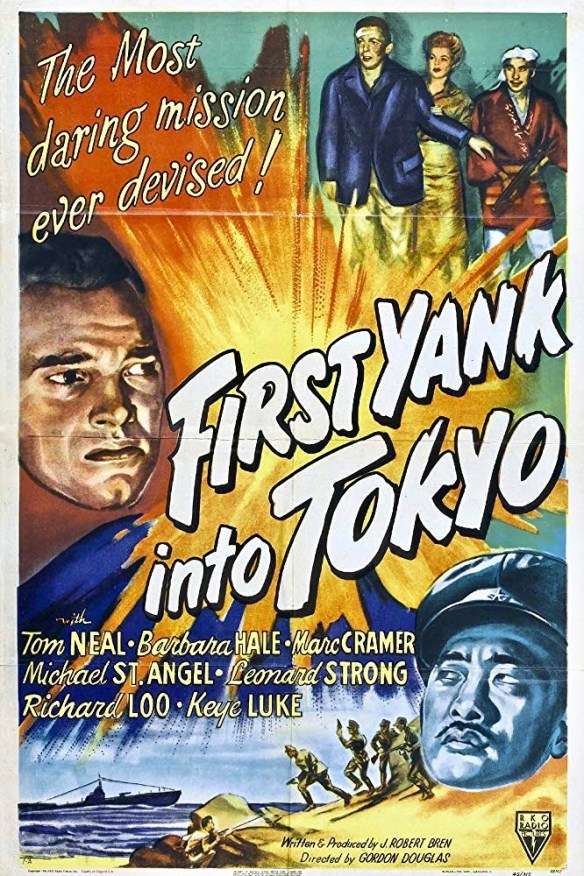
When the United States officially entered World War II after the bombing of Pearl Harbor, Hollywood got busy producing morale-boosting entertainments with a heavy accent on flag-waving patriotism and pro-American propaganda. One of the stranger efforts to emerge from this uncertain time in U.S. history was First Yank in Tokyo (1945), a B-movie espionage thriller directed by Gordon Douglas and set inside a Japanese concentration camp.  Continue reading

Degenerates at Large

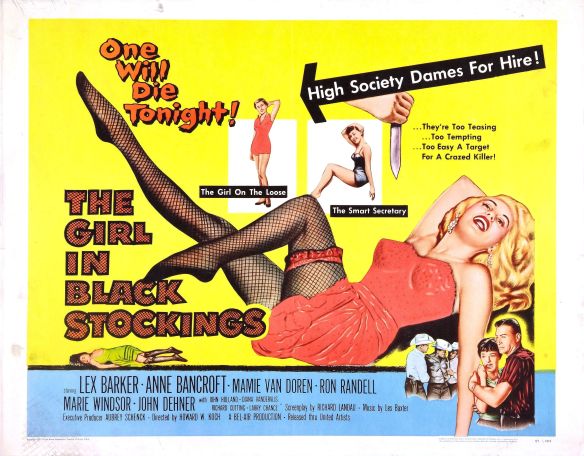
Long before it ever became available for the home video market, The Girl in Black Stockings would occasionally pop up on late night television screenings in unexpected places like Turner Classic Movies. Such a lurid, sensationalistic crime drama was a natural fit for the drive-ins of its era but it actually makes sense that TCM would air this rarely seen obscurity because The Girl in Black Stockings is a classic sleazefest and definitely several notches above the standard exploitation drive-in fare that tantalized audiences in the late fifties before the advent of more explicit films like Blood Feast (1963). Continue reading