Like a Bull in a China Shop

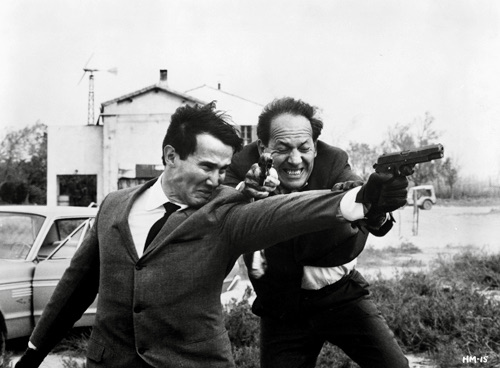
In 2016 the Cohen Media Group released My Journey Through French Cinema, written and directed by Bertrand Tavernier. It was not a traditional survey of French Cinema but a much more idiosyncratic and personal look at favorite films and directors from France in the eyes of Tavernier. In this way, it seemed inspired by Martin Scorsese’s 1999 documentary on Italian cinema, My Voyage to Italy, which shined a light on forgotten and underrated movies that deserved re-evaluation. Tavernier certainly covered some landmarks of French cinema in his overview but he also devoted time to specific directors like Jacques Becker and Jean-Pierre Melville while including favorite film composers and cinematographers as well. Some of Tavernier’s choice were fascinating obscurities and others were grade-B genre films that were so stylish and well-made that they served as superior examples of their craft such as Edmond T. Greville’s Le Diable Souffle aka Woman of Evil (1947) and Gilles Grangier’s Hi-Jack Highway aka Gas-Oil (1955). I was especially intrigued by film clips from the crime thriller Ca Va Barder (1955), which was directed by blacklisted American director John Berry (it was his first credited feature in France) and starred expatriate American actor Eddie Constantine as two-fisted itinerant adventurer Johnny Jordan. His rough and tumble character is as disruptive as a bull in a china shop.

Continue reading
The Lost Souls of Sao Paulo

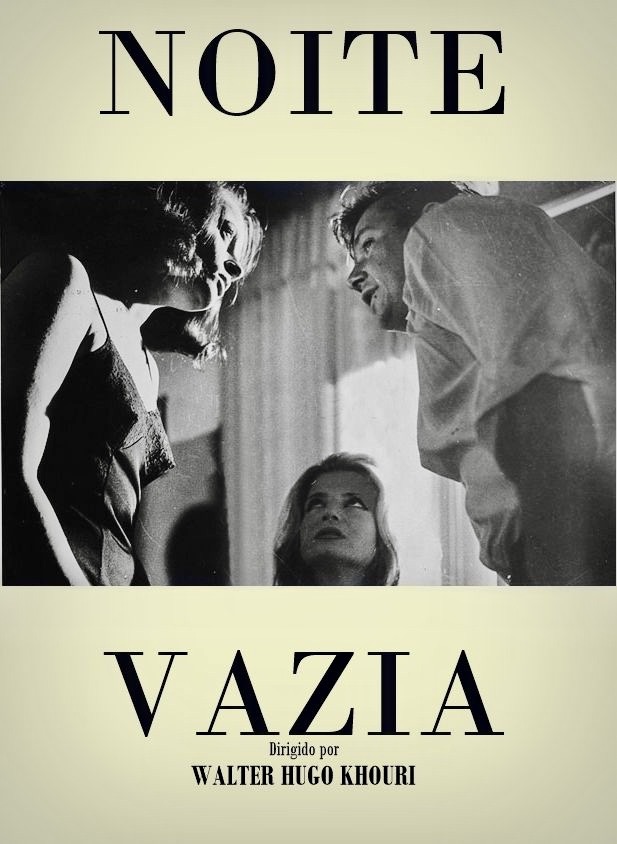
Long Day’s Journey into Night is the title of Eugene O’Neill’s Pulitzer Prize winning 1956 play but it could also serve as a succinct capsule description of numerous movies from the 1960s that were clearly influenced by Michelangelo Antonioni’s L’avventura (1960) and its themes of alienation and existential despair. Some examples include Giuseppe Patroni Griffi’s Il Mare (1962) which follows three strangers on the isle of Capri during a bleak winter season as they try to connect with each other. Jean-Luc Godard’s Alphaville (1965) depicts a dystopian futuristic society in which a detective finds himself out of place in a modernistic Paris controlled by an oppressive artificial intelligence. And Jacques Demy’s Model Shop (1969) uses the urban sprawl of Los Angeles and its smog-creating car culture as a backdrop to an unemployed architect’s search for meaning in his life. Yet, the most Antonioni-like film of all and the least known is probably Noite Vazia (1964) by Brazilian director Walter Hugo Khouri, which traces a dusk-to-down encounter between two men and two women amid the sterile cityscapes of modern Sao Paulo.

Continue reading

Thomas Schamoni’s Almost Forgotten 1970 Experiment from the New German Cinema Movement

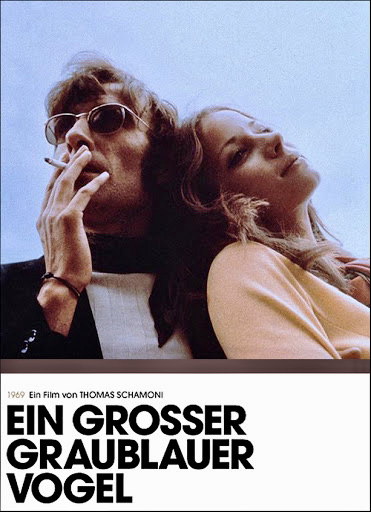
The New German Cinema of the late sixties-early seventies introduced the world to some of the most original and provocative filmmakers of the 20th century such as Rainer Werner Fassbinder, Wim Wenders, Werner Herzog and Volker Schlondorff, but some of pioneers never attracted much attention outside their own country and their films are in danger of being forgotten. Among them are Helma Sanders-Brahms, Peter Lilienthal, Hans W. Geissendorfer and Thomas Schamoni, who is probably the most obscure of them all. Schamoni worked for most of his career in television, turning out documentaries and made-for-TV movies, but in 1970 he directed his only feature film, A Big Grey-Blue Bird (German title: Ein grober graublauer Vogel). A lo-fi mashup of sci-fi and spy genre elements reminiscent of Jean-Luc Godard’s Alphaville (1965), it is a playful and surprisingly entertaining cinematic “experiment” that should have found a wider audience.

Continue reading

Cosa Nostra Bromance

Professional hit men Schaft (Henry Silva, left) and Phil (Jack Klugman) converge on their target in the Eurocrime cult favorite, Hail, Mafia (1965), directed by Raoul Levy.

Do hit men have a code of ethics? It might seem like a bit of an oxymoron to have hit men and ethics in the same sentence but in most movies about organized crime like The Godfather, The Public Enemy or Scarface, there does seem to be some sort of moral code observed among the rank and file of thugdom, regardless of how hypocritical it may seem. Rarely though do we see crime thrillers where hit men have philosophical discussions about their work and Hail, Mafia (1965) is not only fascinating for this reason but it’s also a criminally overlooked little B-movie. Taut, suspenseful, oddly funny at times and a road movie of sorts, the European produced movie stars Henry Silva and Jack Klugman as ill-matched assassins on a journey to silence their target, an expatriate American (Eddie Constantine) living in France.

Continue reading