Kay Kyser Meets the Three Horror Men

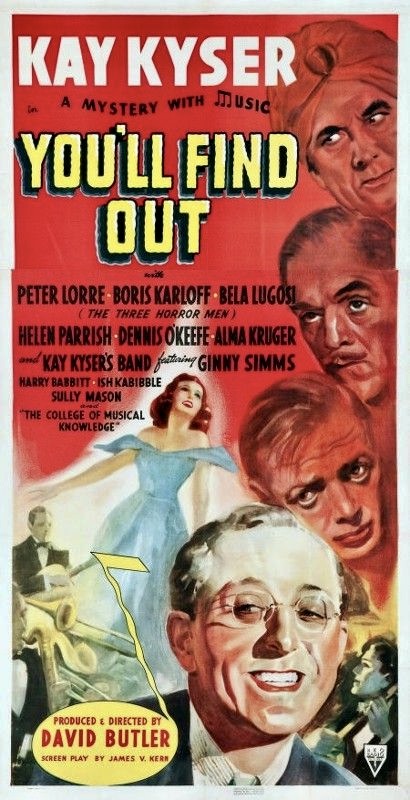
It’s hard to imagine what moviegoers today would make of Kay Kyser and his Kollege of Musical Knowledge, but during the late thirties and early forties the big band conductor was one of the most popular entertainers in America. Thanks to the medium of radio (which was at the height of its popularity during the WWII era), Kyser built up a huge fan base through his novelty act, a winning combination of music, humor and “kollege brainbuster questions” with a cash prize for the winner. Sporting wire-rim glasses, mortarboard and academic gown, Kyser created an eccentric bookworm persona for himself and surrounded himself with equally outlandish “colleagues,” one of the more famous being Ish Kabibble (the alter ego of musician M.A. Bogue). It was only a matter of time before Kyser took his act to Hollywood and, in 1939, RKO produced his first film, That’s Right, You’re Wrong. Its success led to a more ambitious second feature, You’ll Find Out (1940), which paired the bandleader with the triple threat team of Boris Karloff, Bela Lugosi and Peter Lorre.

Continue reading
A Nouvelle Vague Musical?

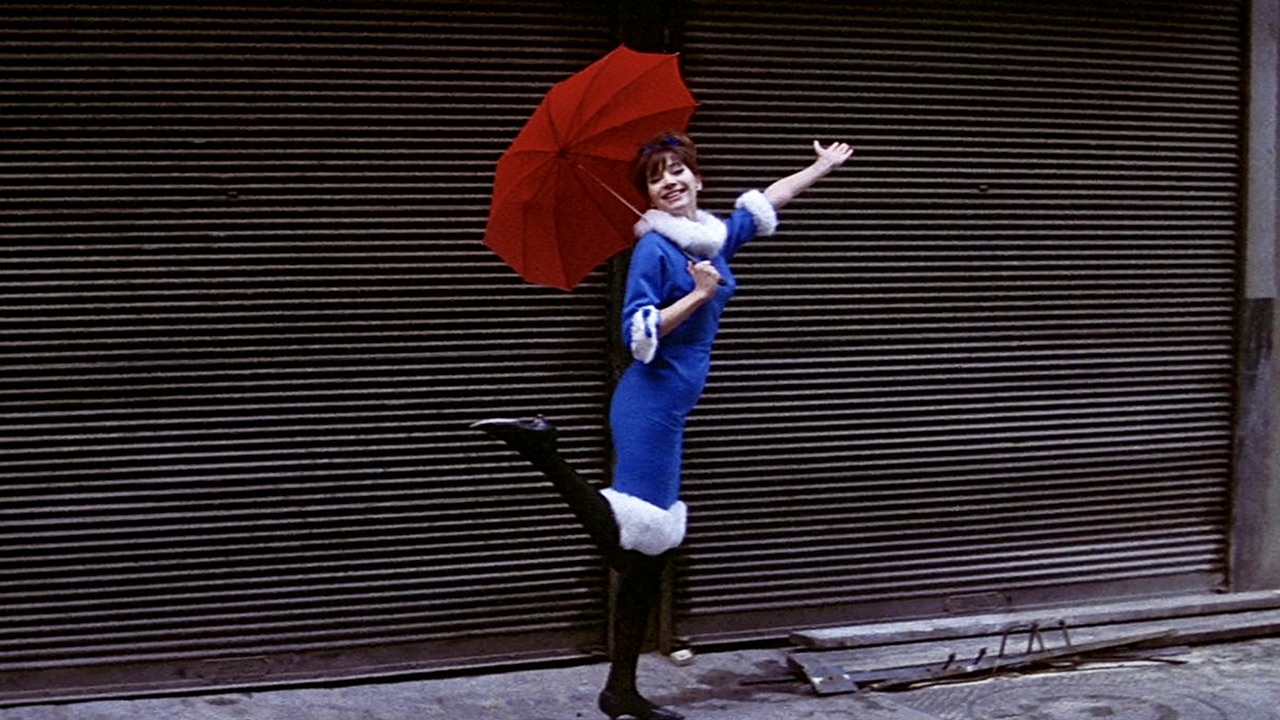
Angela (Anna Karina) imagines she is in a movie musical choreographed by Bob Fosse in A WOMAN IS A WOMAN (1961), directed by Jean-Luc Godard.

Of the more than 120 movies and short films in director Jean-Luc Godard’s oeuvre, there is really nothing like Un Femme est une Femme (English title: A Woman is a Woman, 1961). What other Godard creation could you describe as joyful, lighthearted and consistently playful? A homage to MGM musicals, romantic comedies a la Ernst Lubitsch and Hollywood productions shot in Cinemascope and Eastmancolor, A Woman is a Woman is essentially a valentine to Godard’s muse at the time, Anna Karina. It is also unlike any other musical ever made or even a Nouvelle Vague confection like Jacques Demy’s The Umbrellas of Cherbourg (1964).  Yet, for someone who has never seen a Godard film, it is an accessible entry point to his work and an example of why he was considered so innovative, daring and controversial for his time.

Continue reading

Johnny Rotten’s Alter Ego

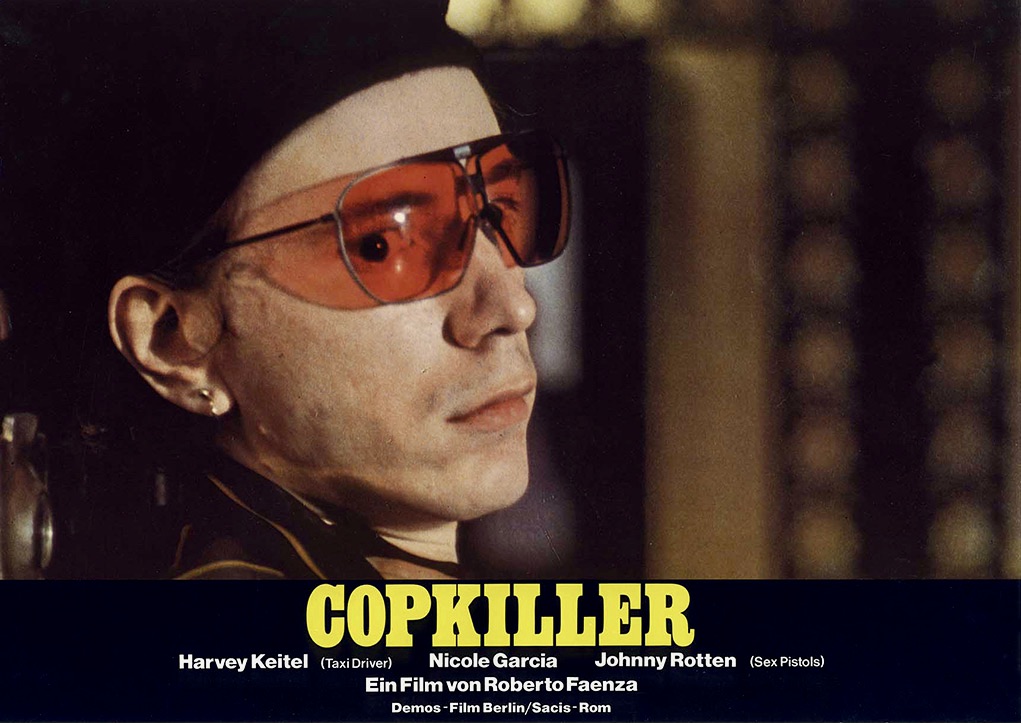
Some movies fall through the cracks and then are rediscovered years later by movie geeks who are amazed that such formerly “lost films” even exist. Such is the case with Corrupt (1983), which was also released in some markets as Copkiller and Order of Death, the title of the psychological thriller by novelist Hugh Fleetwood which was adapted for this film. An international production with Italian and French financing, the movie marked the dramatic film debut of John Lydon aka Johnny Rotten of The Sex Pistols fame (he had previously played a version of himself in Julien Temple’s The Great Rock ‘n’ Roll Swindle [1980], which was a semi-autobiographical/fantasy account of Malcolm McLaren and his promotion/management of The Sex Pistols). Corrupt also featured Harvey Keitel in the other major role and the music score was composed by Ennio Morricone.  Due to poor distribution and marketing (those alternate titles didn’t help), the film quickly vanished from theaters but it holds up today as a fascinating precursor to Abel Ferrara’s Bad Lieutenant (1992) while channeling some of the yin-yang duality of Donald Cammel & Nicolas Roeg’s Performance (1976).

Continue reading

Shattered Bodies, Shattered Souls

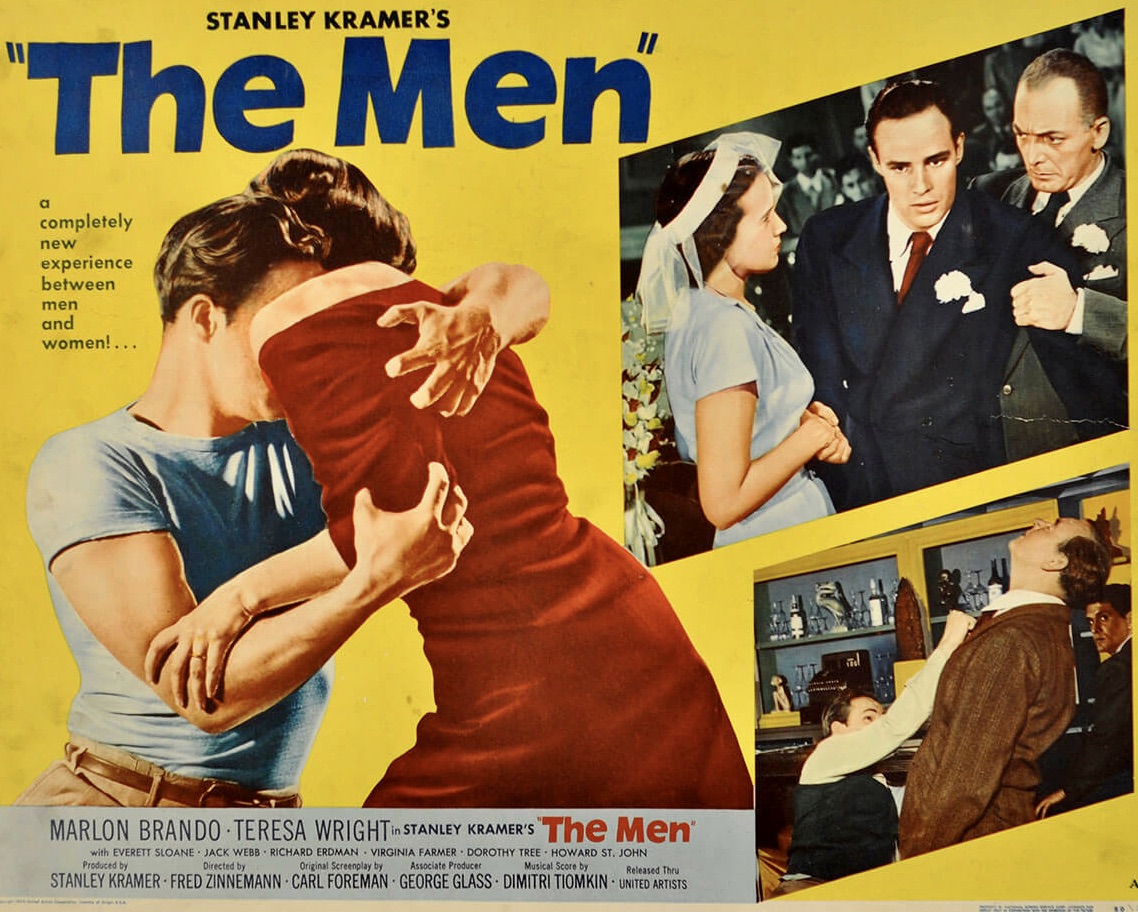
When director Fred Zinnemann left MGM Studios after his contract expired with Act of Violence in 1949, he embarked on a new career as an independent filmmaker. After trying to find a suitable movie project for almost a year, his search ended when two young filmmakers, Stanley Kramer and Carl Foreman, pitched him a story about paralyzed war veterans entitled The Men (1950). It was obvious that no major studio would tackle such an uncommercial subject but Zinnemann saw great possibilities in Carl Foreman’s screenplay and agreed to direct.

Continue reading

Joe Meek: Studio Recording Wizard

British record producer Joe Meek surrounded by photos of some of his acts in the 1991 BBC documentary THE VERY STRANGE WORLD OF THE LEGENDARY JOE MEEK.

Most record collectors and music lovers of the baby boom generation fondly remember some of the top forty hits created by such innovative producers like Phil Spector, Bob Crewe and Eddie Kramer during the 1960s. Another major talent also emerged in England during this time period who took a unique, hands-on approach to producing records – Joe Meek. With an arsenal of sound effects and recording devices he kept secret from everyone, Meek had a meteoric rise and fall between 1961 through 1967 but is still famous today for “Telstar,” performed by The Tornadoes. It was a monster hit in the U.K. and became the number one single in the U.S. on Billboard’s top 40 chart during the week of December 22, 1962. As a producer, Meek was not a one-hit wonder and had other best-selling singles such as “Johnny Remember Me,” a ghost ballad performed by actor turned pop star John Leyton, and “Have I the Right?” by the Honeycombs. Unfortunately, personal problems, poor financial management and competition with major labels contributed to his downfall (he committed suicide in February 1967). But a fascinating window into his life and career was produced for the Arena documentary series for the BBC in 1991 entitled The Very Strange Story of the Legendary Joe Meek.

Continue reading