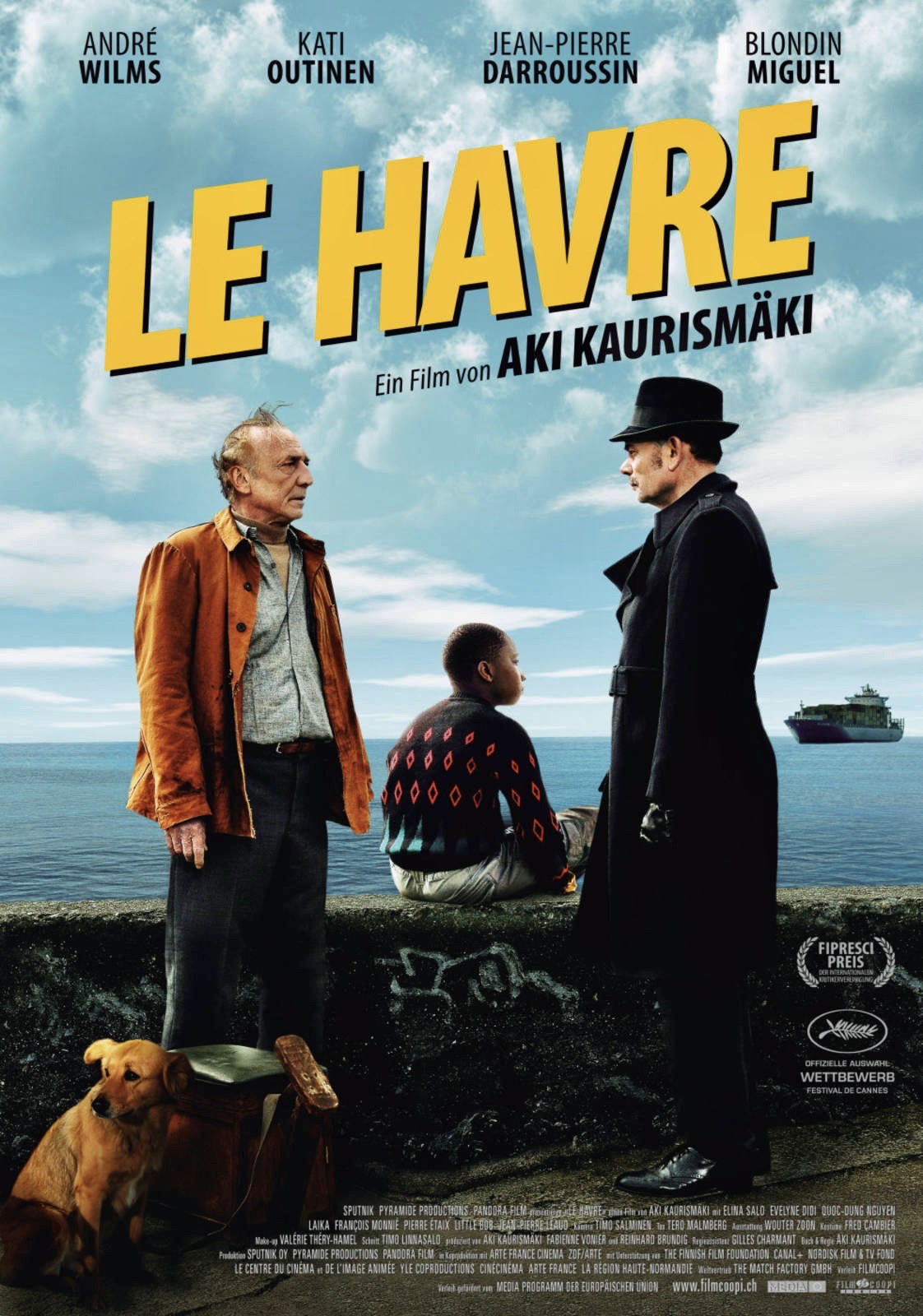
When did the immigrant situation become an international crisis? Anyone who follows the news knows that immigration has been on the rise for the last 20 years or more but, beginning in 2020, the number of fleeing people seeking asylum in Europe, the U.S. and other more affluent countries has tripled and is reaching catastrophic proportions. This situation was addressed in a small but personal way back in 2011 by the great Finnish auteur Aki Kaurismaki in his film Le Havre. Instead of trying to tackle the whole immigration problem, Kaurismaki uses it as the background for a story about Idrissa (Blondin Miguel), a young African immigrant, and how his plight spurs a working-class French community to protect and aid him during his journey.
Continue readingTag Archives: The Criterion Collection
Boy on a Mission
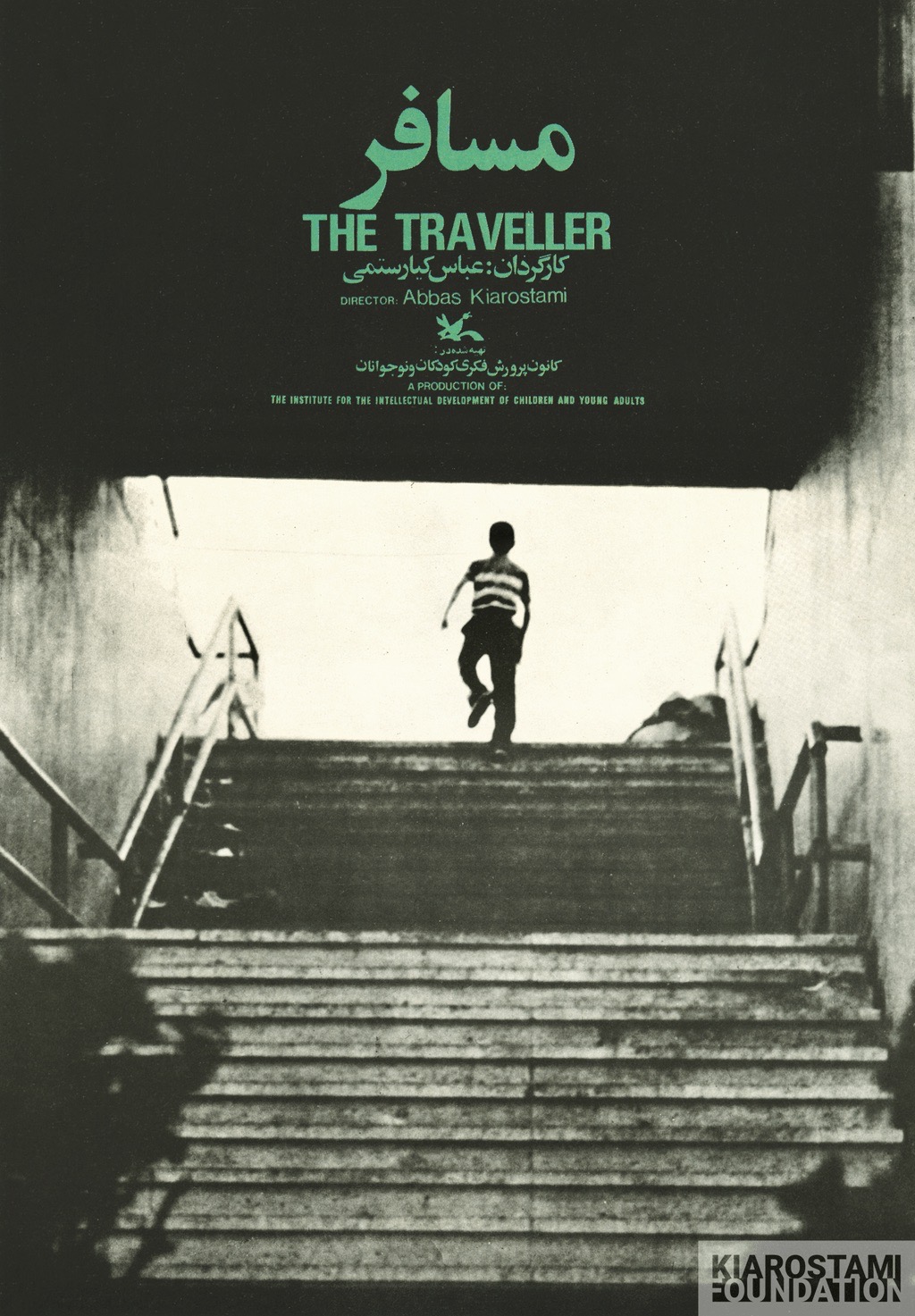
Qassam is a ten-year old living in the Iranian town of Malayer who is obsessed with soccer. When he isn’t skipping classes at school to play the game in back alleys, he is stealing money from his mother’s secret hiding place to buy soccer magazines. Considering the limited career choices available to Qassam after he finishes school, it is no wonder why soccer serves as the boy’s escape from reality. And his obsession becomes all-consuming when he learns that his favorite soccer team is coming to Tehran (which is approximately 385 miles away). He begins scheming of ways to raise the money required for the bus and game tickets. This is the basic premise of Abbas Kiarostami’s Mossafer (English title: The Traveler, 1974), which is both a parable about wanting something too much as well as an unsentimental portrait of an alienated and problematic kid in the tradition of Francois Truffaut’s The 400 Blows (1959).
Continue readingLily in Wonderland

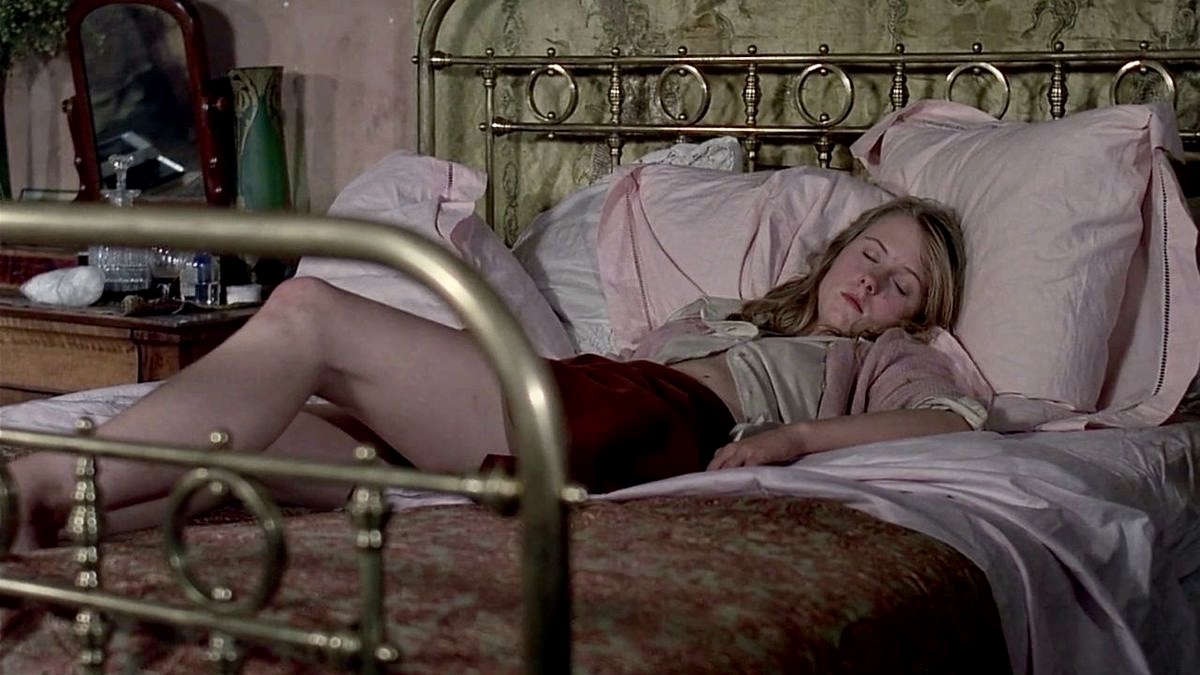
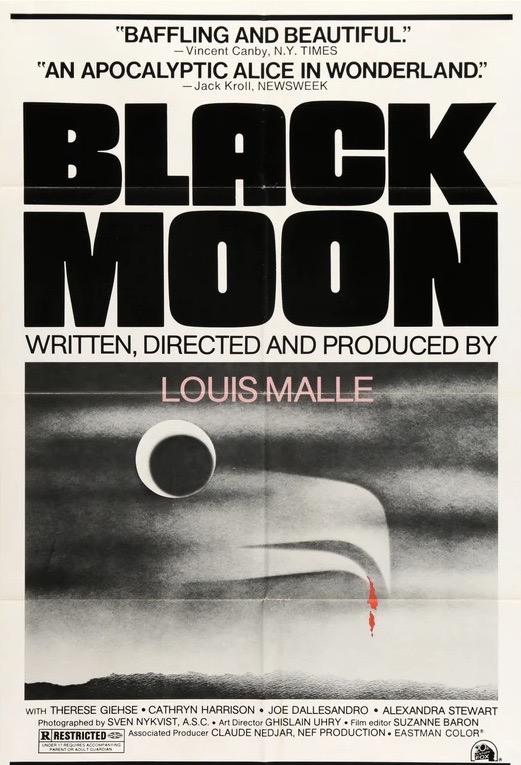
Louis Malle has never been the sort of filmmaker critics could easily pigeonhole in terms of his style and interests. He’s worked in practically every film genre (thriller, social satire, melodrama, documentary, etc.) and his restless curiosity has led him to explore a vast array of subjects from underwater life (The Silent World, 1956) to sexual liberation (The Lovers, 1958) to life under the Nazi occupation (Au Revoir, Les Enfants, 1987). Yet, for even an iconoclast like Malle, his 1975 film Black Moon is unlike anything he’s ever done before or since. “Opaque, sometimes clumsy, it is the most intimate of my films,” he once said. “I see it as a strange voyage to the limits of the medium, or maybe my own limits.”
Continue readingPietro Germi’s Sicilian Marriage Farce
One doesn’t usually expect a film about infidelity, divorce and murder to be a comedy but that’s one reason Divorzio all’italiana (English title: Divorce, Italian Style, 1961) directed by Pietro Germi, became an unexpected international hit. A caustic satire about the Italian male – or more specifically, Sicily’s male dominated culture – the film also poked fun at Italy’s hypocritical judicial system which can forgive crimes of passion but not legally recognize divorce as a solution for failed marriages. Another factor in the movie’s success was Marcello Mastroianni’s beautifully rendered portrayal of the preening, self-absorbed protagonist, a performance which not only won him an Oscar nomination for Best Actor (the first time in Academy Award history that the lead in a foreign language film received that honor) but still ranks as one of the actor’s key films, following closely on the heels of Fellini’s La Dolce Vita (1960) and Antonioni’s La Notte (1961).
Continue readingThe Cult of Kaze
There are good cults and bad cults and the cult of Kaze is a bit of both worlds. Not really a recognized cult, it is instead an informal club of ten women who are united in sisterhood over a common cause which they hope will result in their liberation from a certain Mr. Kaze, a handsome, successful executive in the television industry. The bad part of their mutual solidarity is that the women want Kaze to die and they aim to kill him. Why? Because nine of the women have had affairs with and been discarded by this man and the tenth woman, Futaba Kaze, is his wife and has suffered from his serial unfaithfulness for years. As you would expect from this set-up, Kuroi jûnin no onna (The English title translates as Ten Dark Women or Ten Women in Black), directed by Kon Ichikawa in 1961, is a feminist revenge film but it is also so much more than that.
Continue readingMister Total Irreverence
Among most Fields’ enthusiasts, The Bank Dick is considered one of his best films, right up there with It’s a Gift (1934). It’s also the only film in which Fields enjoyed full creative control and it would be his last. His final starring role in Never Give a Sucker an Even Break (1941) was an unhappy experience and turned into one long battle with the Universal top brass over scripting and censorship issues.
Continue readingThrough the Eyes of a Child
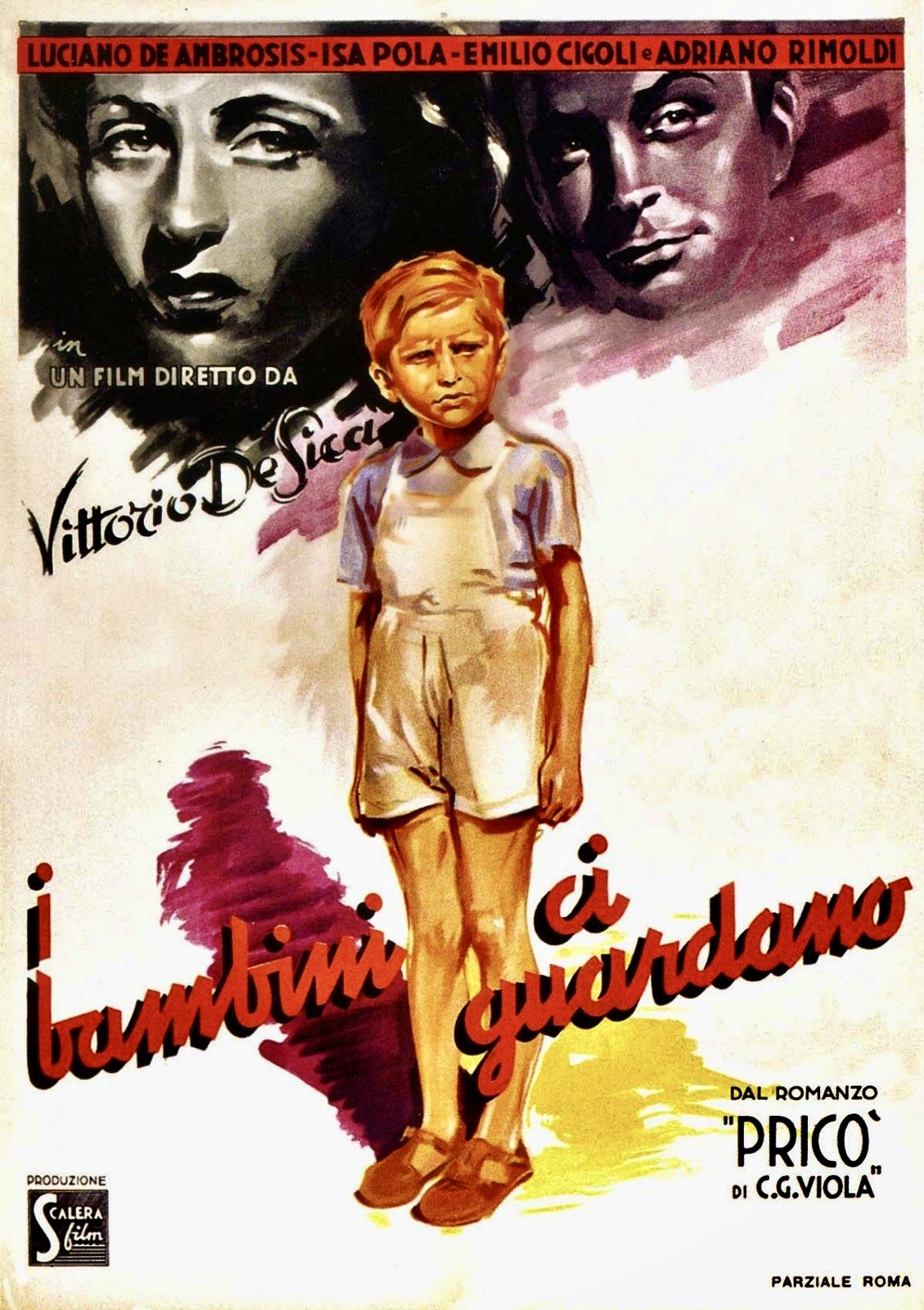
Roberto Rossellini’s Roma, Citta Aperta (Rome, Open City, 1945) is generally acknowledged as the film that ushered in the neorealism movement and set the tone and style for the postwar Italian films that followed. But the roots of neorealism can be traced back to Luchino Visconti’s Ossessione (1943) and Vittorio De Sica’s The Children Are Watching Us (1944, I bambini ci guardano), both of which were filmed in 1942 but encountered distribution problems upon their release in the fall of 1942 when the war finally came to Italy and the bombings began. Ossessione was also the victim of Fascist censorship which reduced the film to less than half of its original running time and for years it was denied distribution in the U.S. due to an infringement of copyright (it was an uncredited adaptation of the James M. Cain novel, The Postman Always Rings Twice). The Children Are Watching Us didn’t fare any better during its limited release and for years it was a difficult film to see in its original form, even in its own country.
Continue readingPlaylists for the Apollo Space Missions
July 20, 2021 will mark the 52nd anniversary of man’s first moon landing by Apollo 11 and the perfect way to celebrate the event is to watch Al Reinert’s 1989 documentary on the Apollo space program, For All Mankind (not to be confused with the 2019 TV series of the same name). For those who haven’t seen it, this is not your typical talking heads documentary. The film mixes together footage from all of the Apollo missions (as well as material from the Gemini missions) in a mesmerizing, impressionistic montage with a sound design of audio bites by various astronauts, mission control personal and newscasters (none of whom are identified on-screen) and eerie music by Brian Eno with the inevitable snippet of Richard Strauss’ “Also Sprake Zarathustra” and a rendition of Santo and Johnny’s “Sleepwalk,” performed by Lee DeCarlo and Peter Manning Robinson. The emphasis is on the fulfillment of a seemingly impossible quest and not so much the individuals involved but there is one fascinating segment of For All Mankind which reveals some of the music selections the astronauts carried to the moon and is probably still being enjoyed in some distant galaxy right now.
Continue readingPostcards from the Edge: Louis Malle in India

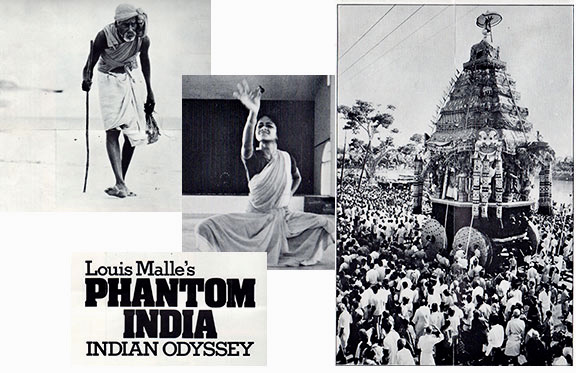
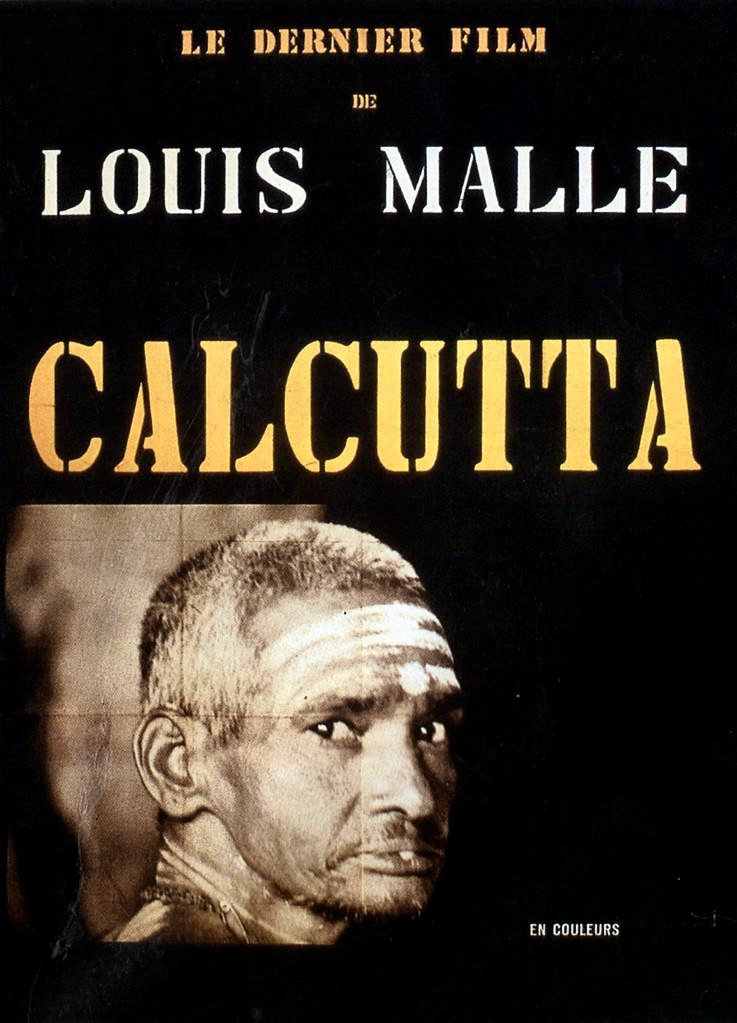
Unaccountably missing or overlooked on most reviewers’ top DVD releases of 2007 was a remarkable set from Eclipse (Criterion’s no frills, affordable editions division) – The Documentaries of Louis Malle. Among the 7 titles featured were the relatively obscure God’s Country [broadcast on PBS in 1986, but filmed in 1981], And the Pursuit of Happiness [1986, also made for television), Place de la republique [1974] featuring man-in-the-street interviews on a busy Parisian boulevard, Humain, trop humain [1974], a fascinating time capsule of French auto workers with industrial noise and Godard-like imagery and the 18 minute short Vive le tour [1962]. But the real highlights of the collection were Phantom India [1969], a 378 minute portrait of that nation that was distributed theatrically as a 7-episode series, and Calcutta [1969], which was filmed at the same time but released separately (It was nominated for a Golden Palm at the Cannes Film Festival). To call both films an overwhelming experience is an understatement to say the least.

The Fabulous World of Karel Zeman
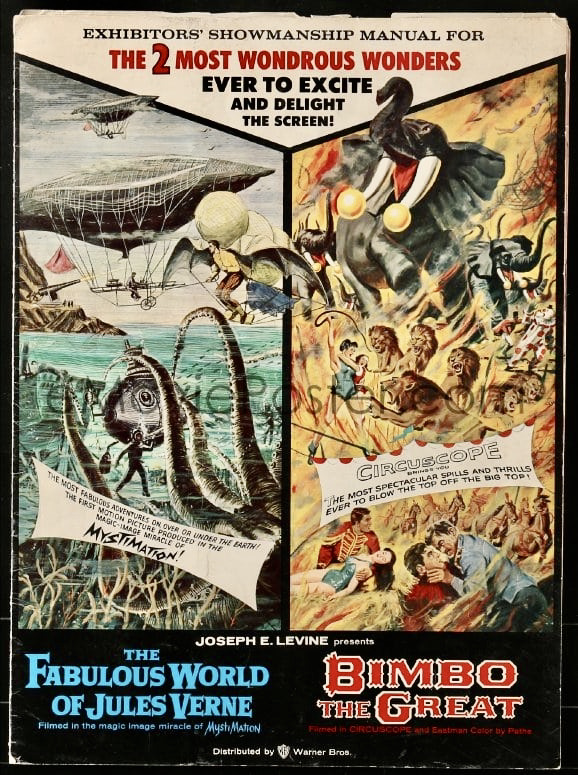
During the summer of 1961 a double feature aimed at children was being distributed in selected cities across the U.S.. If you saw the titles on a theatre marquee, you might think they were Walt Disney releases – Bimbo the Great and The Fabulous World of Jules Verne. But anyone who ventured inside the theatre immediately realized that these films were NOT made in Hollywood. And in the case of The Fabulous World of Jules Verne, it didn’t even look like the film was made in the 20th century!