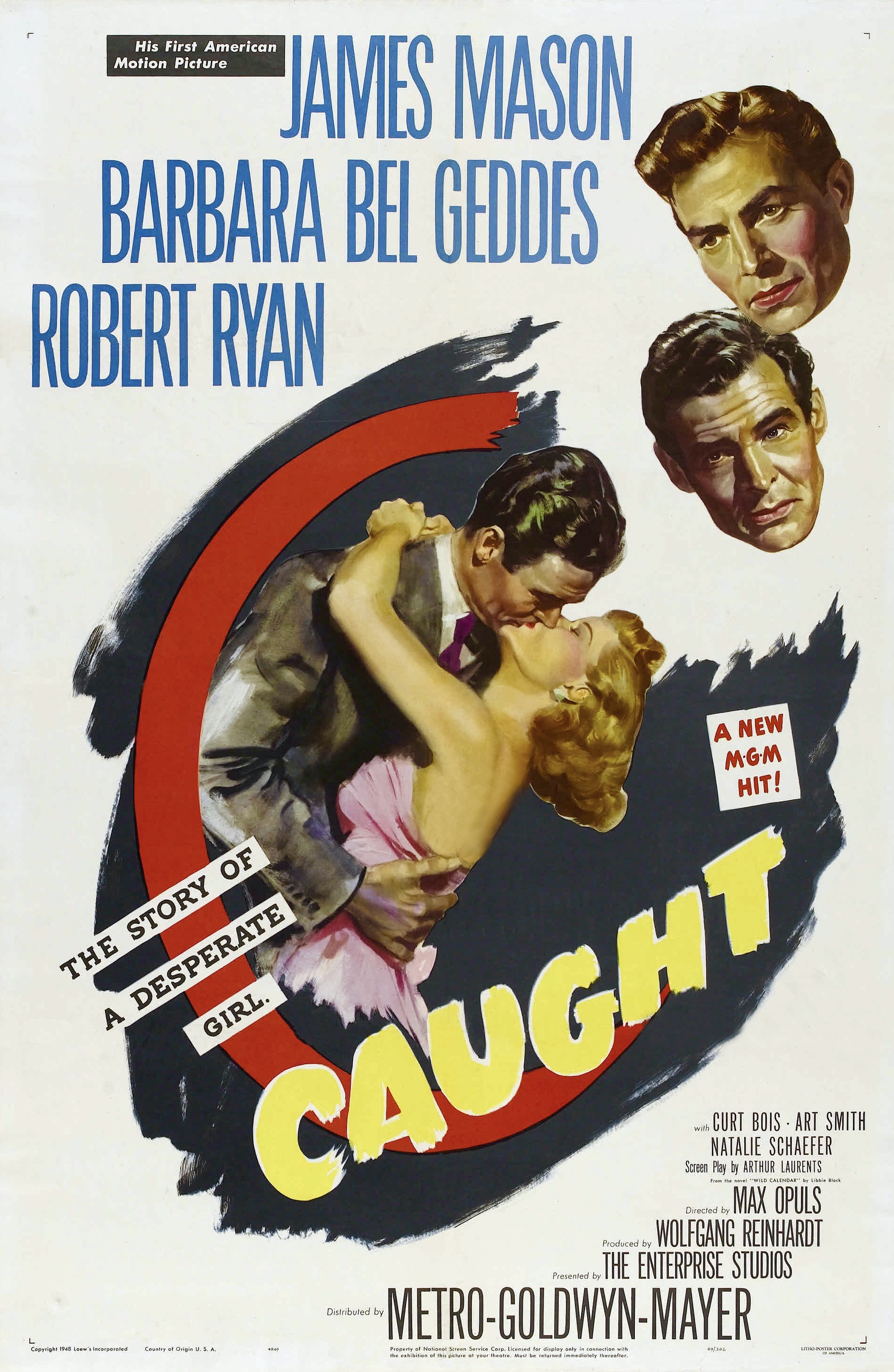
Max Ophuls’ Caught

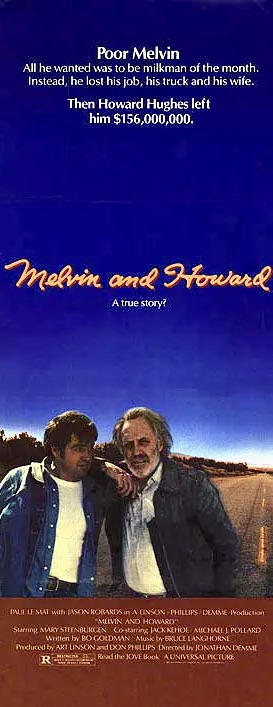
Over the years there have been numerous biographies written about aviation legend/studio mogul/eccentric billionaire Howard Hughes; everything from fake ones like Clifford Irving’s Autobiography of Howard Hughes to definitive accounts such as Howard Hughes: His Life and Madness by Donald L. Bartlett and James B. Steele. In contrast, there have been very few motion pictures about him. Martin Scorsese’s The Aviator (2004), based on the Bartlett & Steele biography, is the only feature film about his life to date. There was also a TV movie, The Amazing Howard Hughes (1977), with Tommy Lee Jones in the title role, and Jonathan Demme’s Melvin and Howard (1980), a quirky docudrama/comedy about Melvin E. Drummar (Paul Le Mat), a Utah man who claimed Hughes (Jason Robards Jr.) named him in his will after rescuing him in the Nevada desert.

Strangely enough, my favorite film about Howard Hughes isn’t a biopic at all but a noir-like melodrama featuring a character who was clearly inspired by the megalomaniac tycoon – Caught (1949), by German director Max Ophuls. Smith Ohlrig, the business tycoon modeled on Hughes, may not resemble him in terms of a biographical profile but on a psychological level he is the epitome of Hughes in the way he interacted with women, his employees and industry rivals.

Continue reading

Kay Kyser Meets the Three Horror Men

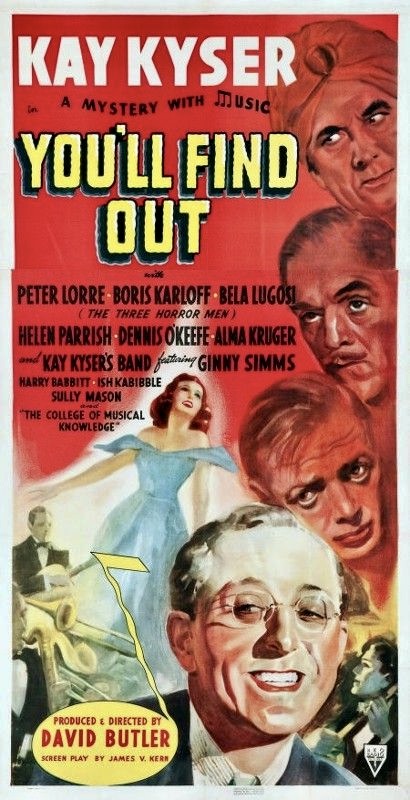
It’s hard to imagine what moviegoers today would make of Kay Kyser and his Kollege of Musical Knowledge, but during the late thirties and early forties the big band conductor was one of the most popular entertainers in America. Thanks to the medium of radio (which was at the height of its popularity during the WWII era), Kyser built up a huge fan base through his novelty act, a winning combination of music, humor and “kollege brainbuster questions” with a cash prize for the winner. Sporting wire-rim glasses, mortarboard and academic gown, Kyser created an eccentric bookworm persona for himself and surrounded himself with equally outlandish “colleagues,” one of the more famous being Ish Kabibble (the alter ego of musician M.A. Bogue). It was only a matter of time before Kyser took his act to Hollywood and, in 1939, RKO produced his first film, That’s Right, You’re Wrong. Its success led to a more ambitious second feature, You’ll Find Out (1940), which paired the bandleader with the triple threat team of Boris Karloff, Bela Lugosi and Peter Lorre.

Continue reading

Unlucky Horoscopes

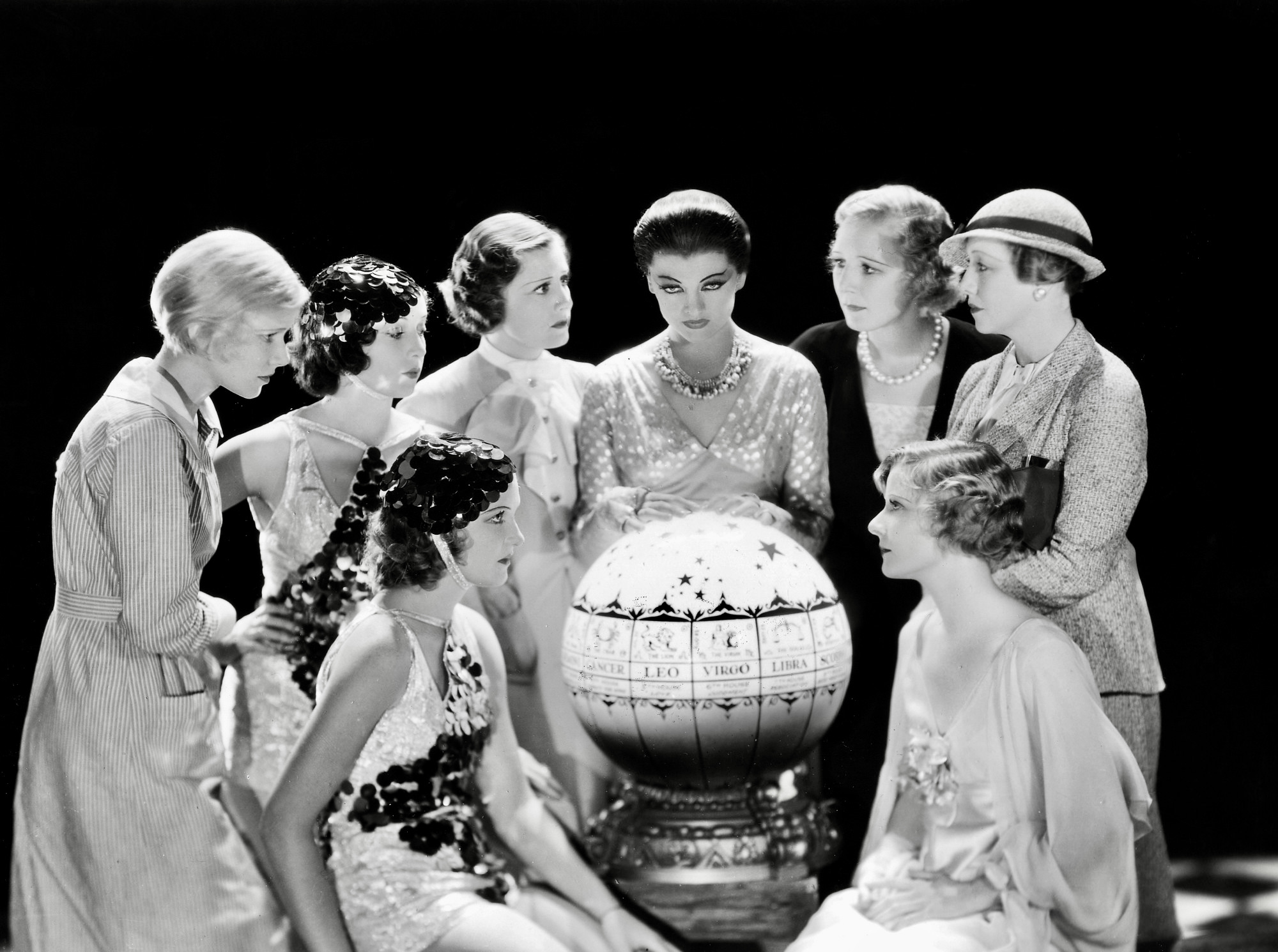
The cast of Thirteen Women consult with Ursula Georgi (Myrna Loy, center) over their horoscopes in this publicity photo from the 1932 melodrama.

Throughout most of the 19th century in America, astrology was considered an occult science embraced by a small but growing number of converts. It wasn’t until the mid-1920s that an interest in astrological signs and horoscopes crossed over from a cult phenomenon to more popular acceptance on a national scale. This was partially due to the success of The Bowl of Heaven (1924), an autobiography of famous astrologer Evangeline Adams and the influential periodical American Astrology, which began publishing in 1923. It was only a matter of time until Hollywood would capitalize on the movement’s popularity by using it as a plot device in Thirteen Women (1932), one of Myrna Loy’s least known and most peculiar roles.

Continue reading

Down the Noir Highway

What could make a reputable insurance instigator go bad? A beautiful woman? Lots of loot? A sense of empowerment? For Joe Peters (Charles McGraw), it’s all of these things but it’s definitely a femme fatale named Diane (Joan Dixon) who first ignites the copper’s lust and then his greed. Roadblock (1951) is a cleverly plotted, terse little film noir that has more twists and hairpin turns than a winding mountain road. What makes it stand out from other low-budget noirs produced at RKO is Charles McGraw’s compelling performance as an easily seduced sucker unlike his usual tough guy roles and Joan Dixon’s sultry presence.  Continue reading

Justice is Served

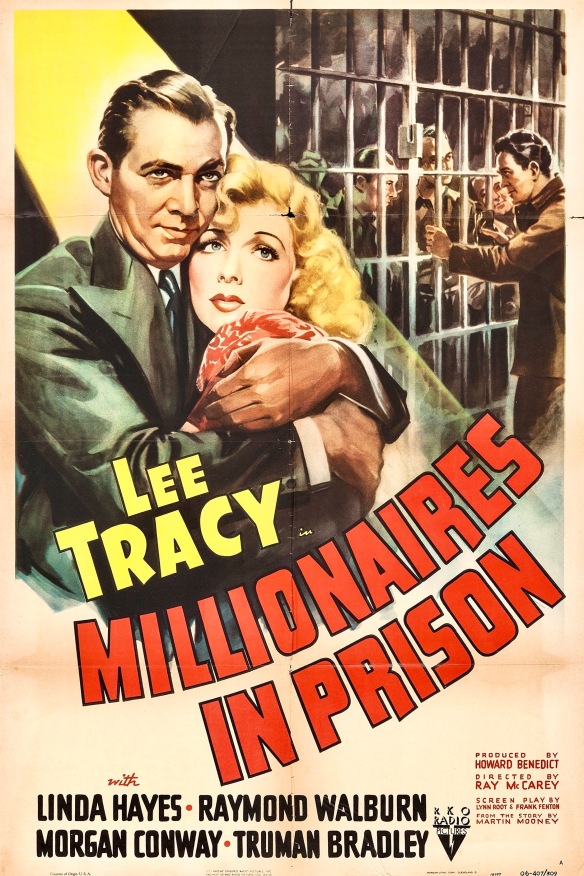
Now this is the sort of film title I’d like to see in an era where the rich are getting richer, the middle class is eroding and the poor are becoming a majority. But Millionaires in Prison (1940) is not in the muck-racking tradition of Inside Job (2010) or Capitalism: A Love Story (2009) or Enron: The Smartest Guys In the Room (2005). Instead, it’s a 1940 grade-B programmer from RKO which serves up two terrific premises but doesn’t quite deliver on either in the expected way. Still, it’s rather astonishing that the filmmakers were able to shoehorn two ambitious storylines along with a romantic subplot (two of the convict protagonists have girlfriends on the outside) into a 65-minute movie.   Continue reading

When Ginger Met Ronald

Chemistry between actors is a curious thing. It can result in some kind of indecipherable but wondrous alchemy that crackles and pops or a concoction that simply refuses to strike fire like soggy matches.  It works best or most memorably when the least likely actors are paired together in a movie and click beyond all expectations – Fonda and Stanwyck in The Lady Eve, Bogart and Hepburn in The African Queen or Lancaster and Kerr in From Here to Eternity. When it doesn’t work, you end up with something inert and lifeless like Laurence Olivier and Marilyn Monroe in The Prince and the Showgirl or Sophia Loren and Anthony Perkins in Desire Under the Elms. There is also that gray area in between where it both sparks and fizzles out simultaneously, allowing you to see the potential in a promising pairing. Such is the case with Lucky Partners (1940), which stars Ginger Rogers and Ronald Colman in a whimsical romantic comedy based on the 1935 French comedy written directly for the screen by the prolific dramatist/actor/director Sacha Guitry. That’s part of the problem right there.    Continue reading

Wear the Face of Your Enemy

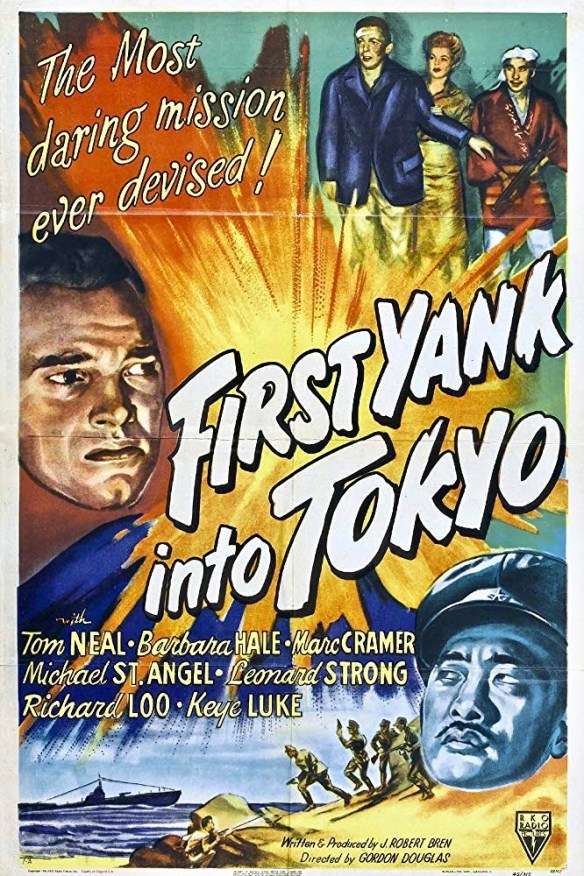
When the United States officially entered World War II after the bombing of Pearl Harbor, Hollywood got busy producing morale-boosting entertainments with a heavy accent on flag-waving patriotism and pro-American propaganda. One of the stranger efforts to emerge from this uncertain time in U.S. history was First Yank in Tokyo (1945), a B-movie espionage thriller directed by Gordon Douglas and set inside a Japanese concentration camp.  Continue reading

Divine Intervention

A political allegory that was one of the first films to openly address the problems resulting from the Great Depression, Gabriel Over the White House (1933), directed by Gregory La Cava, takes on such pressing issues as unemployment, homeless people and the rising crime rate in a storyline that comes across like a populist turned fascist fantasy. You also won’t see another Hollywood film from the 20th century in which our fearless leader is viewed by his constituents as either a madman or a messiah.  Continue reading

The Corporate Ladder and How to Climb It

Despite a long and prolific career, Douglas Fairbanks Jr. is more famous for being the son of the silent era superstar Douglas Fairbanks Sr., his Hollywood social connections (including ex-wife Joan Crawford) and a handful of films in which he’s overshadowed by his co-stars (Greta Garbo in A Woman of Affairs [1928], Edward G. Robinson in Little Caesar [1931], Katharine Hepburn in Morning Glory [1933], and Cary Grant in Gunga Din [1939]).  Continue reading

Jacques Tourneur’s Pulp Fiction Pipe Dream

RKO may have been seen as low on the totem pole in the Hollywood hierarchy compared to MGM, Warner Bros. and other larger studios but their importance in film history is assured by a remarkable roster of talent that at one time included such directors as Orson Welles, Alfred Hitchcock and John Ford. One of RKO’s most famous contractees was Jacques Tourneur who secured his reputation in the forties with Cat People (1942), I Walked With a Zombie (1943), The Leopard Man (1943) and Out of the Past (1947).

Tourneur’s work in the early to mid-fifties might not have matched his glory years at RKO but he still managed to turn out occasional gems like the underrated Joel McCrea western, Stars in My Crown (1950), a late period noir (Nightfall, 1956) and a cult horror classic, Curse of the Demon (1958). Even the less distinguished films from his final years are worth a look and Timbuktu (1958) is a genuine curiosity, flaws and all.  Continue reading