Child’s Play

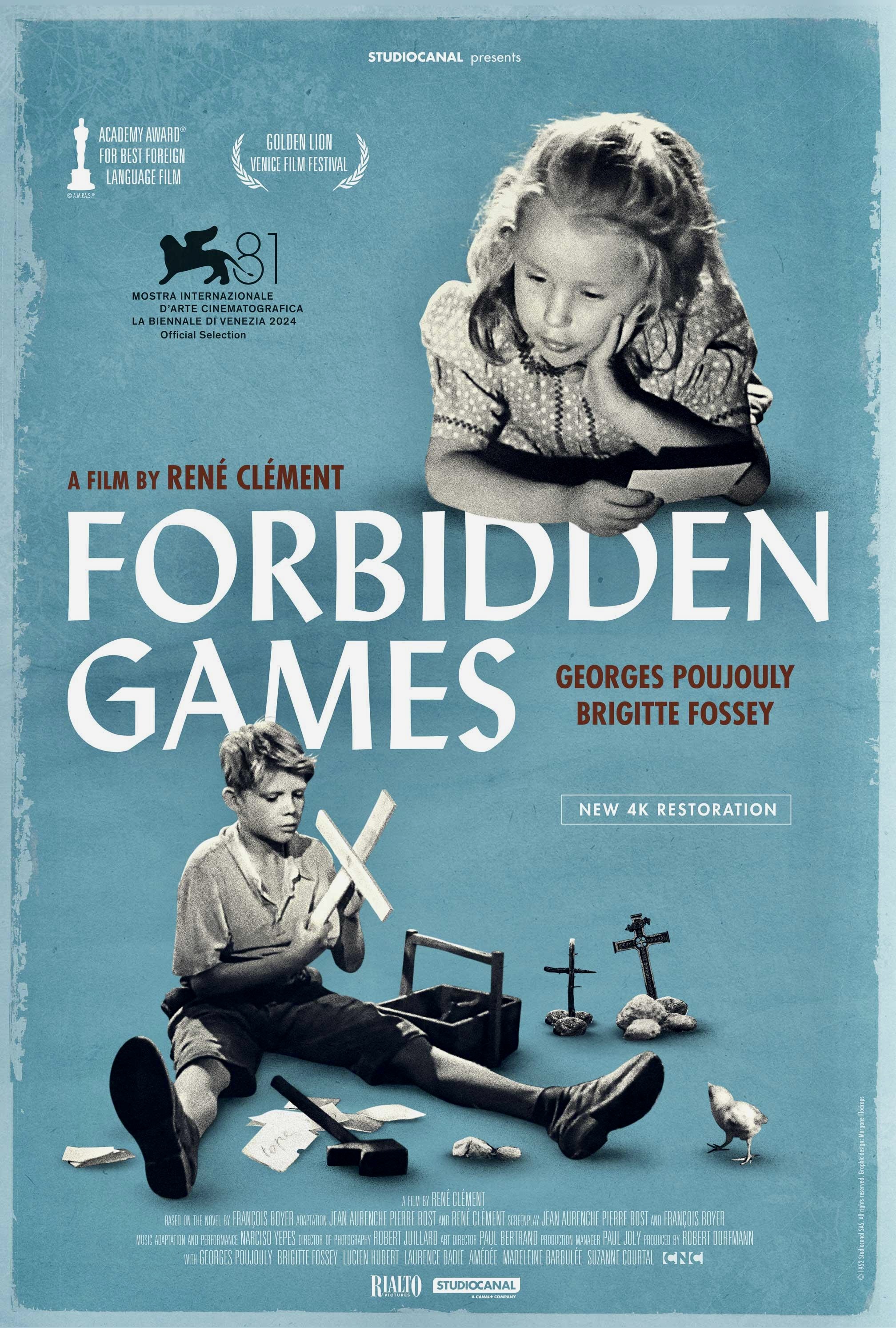
June 1940. A long line of French refugees flee Paris for the countryside during the German invasion of France in WW2. Among the evacuees are a young couple with their 5-year-old daughter Pauline and her pet dog Jock. When the couple’s car stalls on the road, angry refugees push it out of the way and down a hill. The family grab whatever they can carry from their stranded vehicle and return to the road as German aircraft start dropping bombs. In the confusion, Jock runs off and Pauline chases after him. Her parents follow in pursuit but the family is forced to take shelter again as aerial machine-gunners target the escaping Parisians. This time the parents and the dog are mortally wounded and Pauline is left abandoned. She wanders into the countryside clutching her dead pet, not really comprehending what has happened to her. All of this occurs in the few ten minutes of Jeux Interdits (English title: Forbidden Games), one of the most powerful war films of all time. Yet, it is unique within its specific genre because it does not focus on the war itself but the effects of the devastation on a young child. Directed by Rene Clement, the film became an international sensation and won a honorary Oscar as Best Foreign Film of 1952.
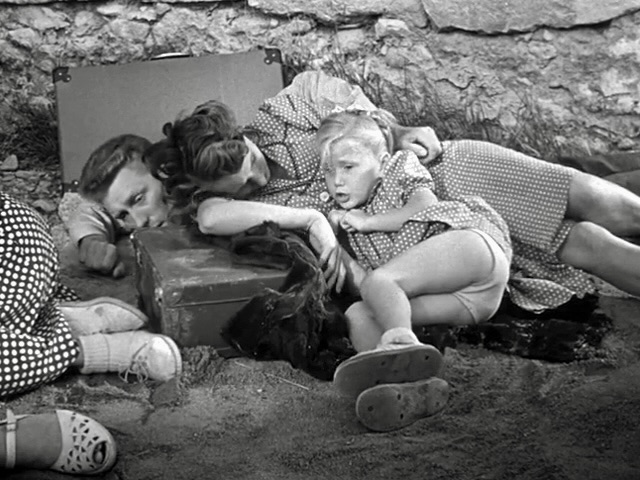
Paulette (five year old Brigitte Fossey) is left an orphan after her parents are killed in a German aerial raid in FORBIDDEN GAMES (1952).
Continue reading

Two Cats and a Mouse

When a movie is released under various titles it usually means there are problems. It could be confusion over how to market it or a simple case of a movie that doesn’t fit clearly into any designated genre or maybe it’s a star-driven, major studio release that’s too quirky for the average moviegoer but yields enough curiosity value to inspire various promotional approaches to finding the right audience. All of these could apply to Joy House (1964), an international production based on a pulp fiction paperback by American author Day Keene and filmed on the Riviera near Nice. It stars English-speaking (Lola Albright, Jane Fonda, Sorrell Booke, George Gaynes of Tootsie fame) and French-speaking actors (Alain Delon, Andre Oumansky, Annette Poivre, Marc Mazza) and is also known as The Love Cage and Les Felins (the original French title). Joy House was not a popular success at the time (most critics were unkind in their coverage) but it is a favorite film of mine, flaws and all.   Continue reading

A Childhood on the Run

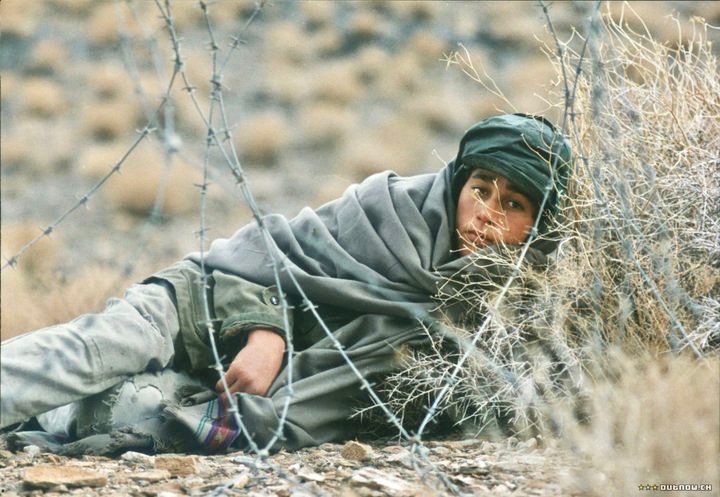
Kaim Alizadeh plays a 14 year old orphan on the run from border guards in Afghanistan in Delbaran (2001) from Iranian director Abolfazl Jalili.

Although released in 2001 and greatly admired by many prominent film critics, Delbaran, directed by Iranian filmmaker Abolfazl Jalili, is not nearly as well known as other Iranian prize winners such as Abbas Kiarostami’s The Wind Will Carry Us (1999) or Mohsen Makhmalbaf’s Kandahar (2001) but deserves to be. The story focuses on Kaim, a fourteen-year-old war orphan trying to survive in a desolate Iranian village near the Afghanistan border. And the film is in the grand tradition of other renowned classics that feature child protagonists caught up in the madness of war such as Rene Clement’s Forbidden Games (1952), Andrei Tarkovsky’s Ivan’s Childhood (1962) and Elem Klimov’s Come and See (1985). The difference is that Delbaran is much more austere and understated than those better known masterworks.

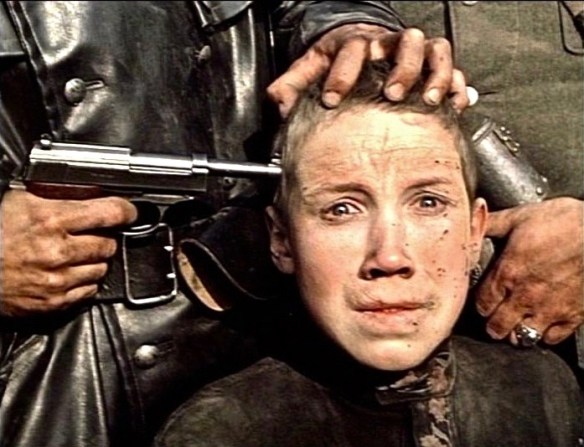
A Russian youth (Aleksey Kravchenko) is captured by German troops in the harrowing WWII drama Come and See (1985), directed by Elem Klimov.

Continue reading

Desert Rats

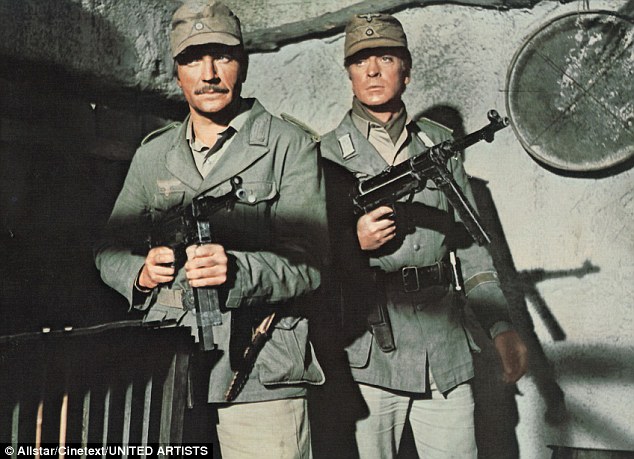
Nigel Davenport (left ) & Michael Caine in PLAY DIRTY (1969)

Nigel Davenport (left ) & Michael Caine in PLAY DIRTY (1969)

Underrated by critics and ignored by audiences upon its initial release in 1969, Play Dirty, directed by Andre de Toth, has slowly but surely acquired an appreciative fan base over the years thanks to high profile advocates of the film like Martin Scorsese who included it on a long list of guilty pleasures for the May-June 1998 issue of Film Comment. Unfortunately, this World War II drama starring Michael Caine had the misfortune to follow in the wake of Robert Aldrich’s box-office hit, The Dirty Dozen (1967), to which it was often unfairly compared. But, outside of a similar assemble-the-team concept which sends a group of criminals on a suicide mission, the film has very little in common with Aldrich’s blockbuster and there is absolutely no reason to feel any guilt over liking it either.  Continue reading