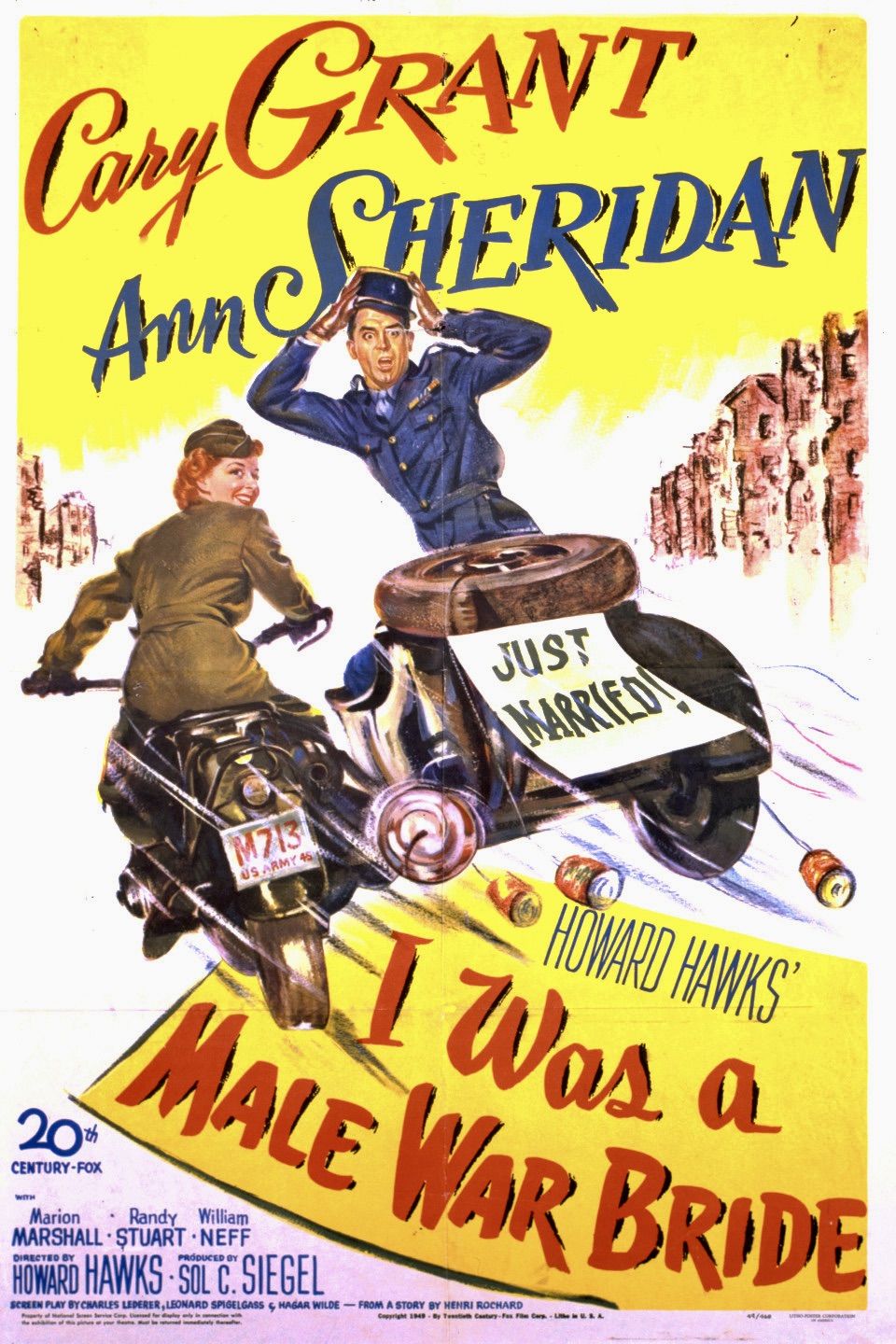
There are certain movie titles that make you pause and consider the mystery, allure or absurdity of their meaning. They can promise so much and deliver so little like Billy the Kid vs. Dracula (1966) or She Gods of Tiger Reef (1958). Or they can overdeliver on their promise to an astonished but grateful audience as in Russ Meyer’s infamous Faster, Pussycat! Kill! Kill! (1965). They can also mislead and confound you with wording so vague or fanciful that you have no earthly idea what it’s about as in Lord Love a Duck (1966), The Day the Fish Came Out (1967), or All the Fine Young Cannibals (1960), which inspired the name of the Brit pop trio that had a hit with “She Drives Me Crazy.” Then there are those completely frank and unambiguous titles that reveal the pure essence of the film in a no-nonsense manner – Teenagers from Outer Space (1959) and I Was a Male War Bride (1940). Or titles that are so much fun to say that you simply love saying them out loud just to hear the sound of them rolling off your tongue like Rat Pfink a Boo Boo (1966) or Puddin’ Head (1941).
Continue readingTag Archives: Marcello Mastroianni
On the Loose in Amsterdam
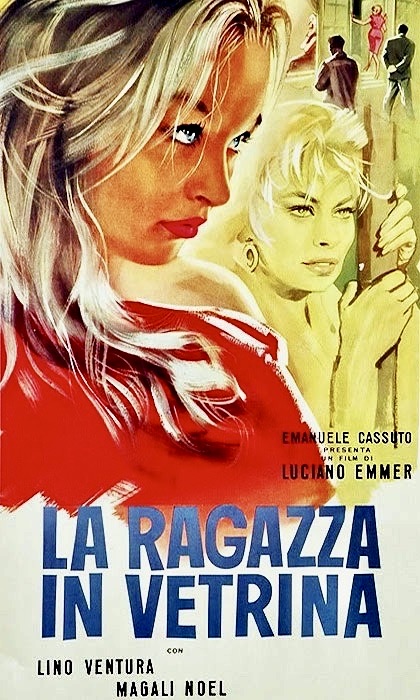
The controversial problem of immigration in Italy has been a problem for decades, not just with internal migration of workers from the south to the north, but also with the influx of refugees from Africa and other areas around the Mediterranean. Not surprisingly, there have been numerous Italian films to address this situation over the years but only a handful of them have received praise and recognition outside their own country. Among them are Pietro Germi’s Il Cammino della Speranza (The Path of Hope, 1950), in which a group of Sicilian workers try to emigrate illegally to France, I Magliari (The Swindlers, 1959), Francesco Rosi’s drama about an out-of-work Italian miner (Renato Salvatore) in Germany, and Lina Wertmuller’s Tutto a Posto e Niente in Ordine (All Screwed Up, 1974), which focuses on immigrants from southern Italy trying to find work in Milan. To this short list, I would like to add Luciano Emmer’s rarely seen La Ragazza in Vetrina (The Girl in the Picture Window, 1961), a tale about two immigrant miners in Belgium who enjoy a weekend getaway in Amsterdam.
Continue readingSenilità aka Careless (1962)

Italian novelist Italo Svevo was the pseudonym for Ettore Schmitz, a novelist and short story writer who was born in Trieste in 1861. After publishing two unsuccessful novels, he gave up writing until his English tutor James Joyce encouraged him to continue and he wrote a third novel in 1823, Confessions of Zeno (considered his masterpiece) and several short stories which were not published until after his early death from an automobile accident in 1928. Svevo never received the acclaim he deserved during his own lifetime but now he is considered one of Italy’s most famous authors and a pioneer of the psychoanalytical novel. His novels and some of his short stories were later adapted for film and television productions but the first one to hit the screen was Senelita (aka Careless, 1962), based on his second novel. The story of an insecure, self-absorbed office worker approaching forty who develops an obsessive love for a beautiful working class girl, the film was an impressive early masterwork for director Mauro Bolognini and helped launch Claudia Cardinale as an international star (The following year she appeared in Federico Fellini’s 8 ½, Luchino Visconti’s The Leopard and made her American film debut in The Pink Panther).
Continue readingPietro Germi’s Sicilian Marriage Farce
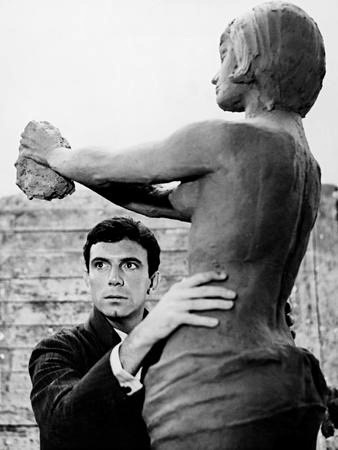
One doesn’t usually expect a film about infidelity, divorce and murder to be a comedy but that’s one reason Divorzio all’italiana (English title: Divorce, Italian Style, 1961) directed by Pietro Germi, became an unexpected international hit. A caustic satire about the Italian male – or more specifically, Sicily’s male dominated culture – the film also poked fun at Italy’s hypocritical judicial system which can forgive crimes of passion but not legally recognize divorce as a solution for failed marriages. Another factor in the movie’s success was Marcello Mastroianni’s beautifully rendered portrayal of the preening, self-absorbed protagonist, a performance which not only won him an Oscar nomination for Best Actor (the first time in Academy Award history that the lead in a foreign language film received that honor) but still ranks as one of the actor’s key films, following closely on the heels of Fellini’s La Dolce Vita (1960) and Antonioni’s La Notte (1961).
Continue readingMaster of Illusions

“Fellini’s work is like a treasure chest. You open it up and there, right in front of your eyes, a world of wonders springs up – ancient wonders, new ones, provincial wonders and universal ones, real wonders and fantastic ones.” – Martin Scorsese
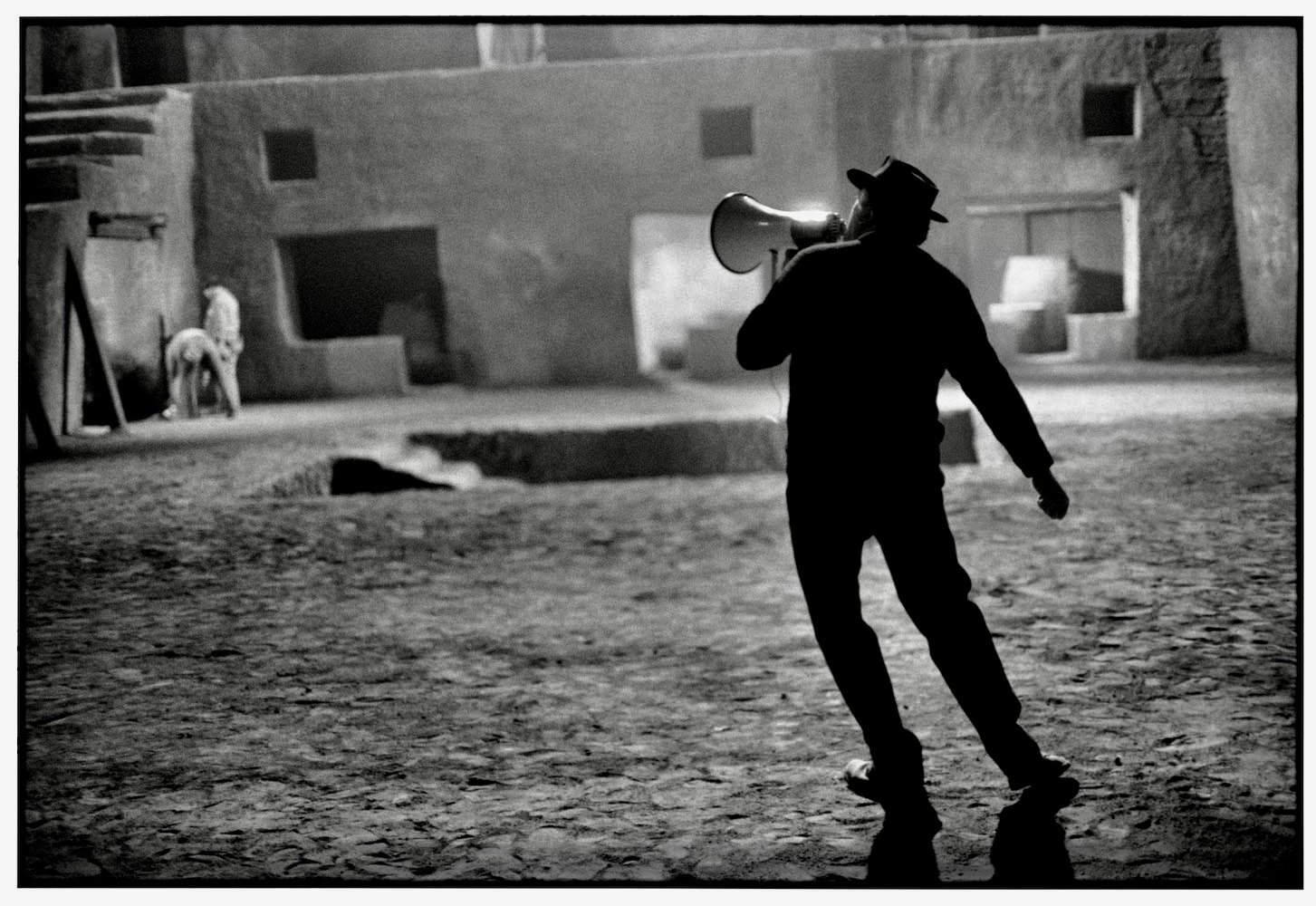
The Oscar nominated director of Raging Bull (1980) and Goodfellas (1990) is just one of the usual suspects (along with Woody Allen and Paul Mazursky) rounded up to pay homage to the great Italian director in The Magic of Fellini (2002), a 56-minute documentary written and directed by Carmen Piccini.
Continue readingBrigitte Bardot Plays Herself
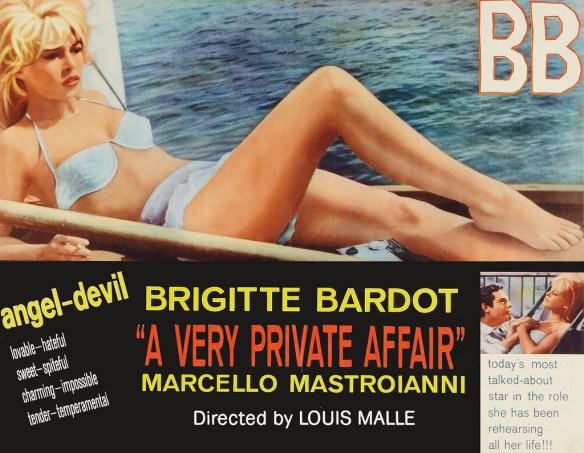
Before he had reached the age of thirty, French director Louis Malle (born in 1932) had already emerged as one of his country’s most critically acclaimed and internationally recognized filmmakers on the basis of his first three films – The Oscar®-winning documentary, The Silent World (1956), which he co-directed with Jacques-Yves Cousteau, the atmospheric noir Elevator to the Gallows (1958), and the controversial adultery drama, The Lovers (1958). Many film critics felt that his fourth film, Zazie dans le metro (1960), based on the novel by Raymond Queneau, was his most adventurous and impressive work to date but it failed to generate ticket sales and was a costly failure. Due to this, Malle felt pressured to make a more commercial feature and the result was A Very Private Affair (1962, French title Vie privée), starring Brigitte Bardot. Continue reading
The Neopolitan Trinity
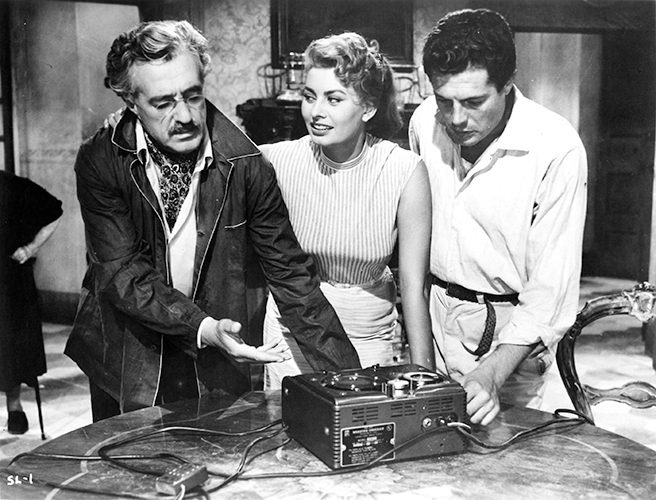
Often overlooked or dismissed as a minor comic trifle, Peccato che sia una canaglia (English title: Too Bad She’s Bad) has, in recent years, acquired a much more favorable reassessment from film scholars and film buffs due to occasional revivals on Turner Classic Movies and a 2004 DVD release from Ivy Video. It not only has a delightful, rakish charm and evocative on-location filming in Rome but showcases three of the most iconic names in Italian cinema directed by the legendary Alessandro Blasetti, whose career began in the silent era and spanned six decades. Also noteworthy is the fact that the film is based on the short story Il fanatico by Alberto Moravia, the celebrated Italian novelist who saw many of his novels turned into major films – la ciociara became Vittorio De Sica’s Two Women, Il disprezzo became Jean-Luc Godard’s Contempt and Il conformista became Bernardo Bertolucci’s The Conformist. Continue reading