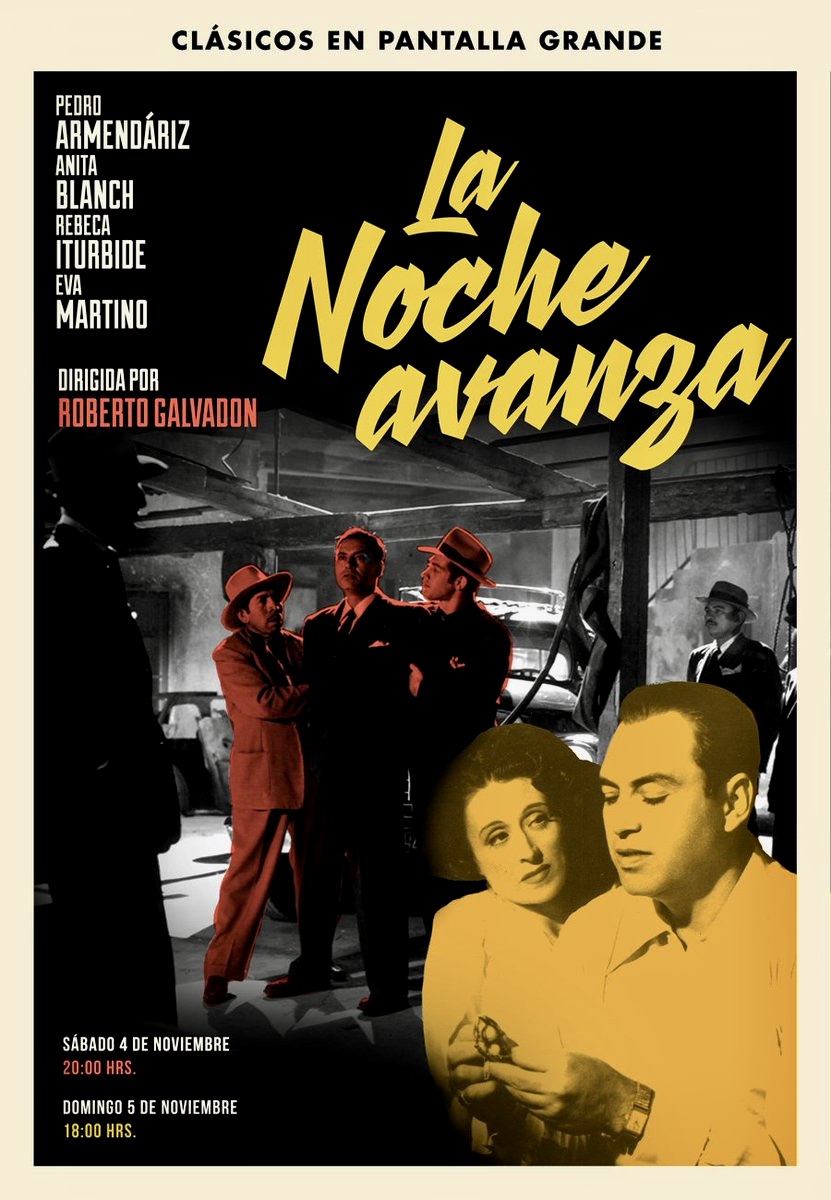
Men behaving badly could easily qualify as a cinema subgenre with such classic examples as Kirk Douglas in Champion (1949) and Robert De Niro in Raging Bull (1980) leading the pack but the athletic anti-hero of La Noche Avanza (English title: Night Falls or The Night Draws On, 1952) might even surpass them in terms of sheer toxic masculinity. Marcos (Pedro Armendariz) is Mexico’s most famous undefeated jai alai champion, a public hero and a sexually magnetic lure for women. He is also the epitome of an arrogant macho muchacho Latin male who considers everyone else inferior with boasts like “I’m one of the victorious, the strong…The weak don’t count.”
Continue readingTag Archives: John Ford
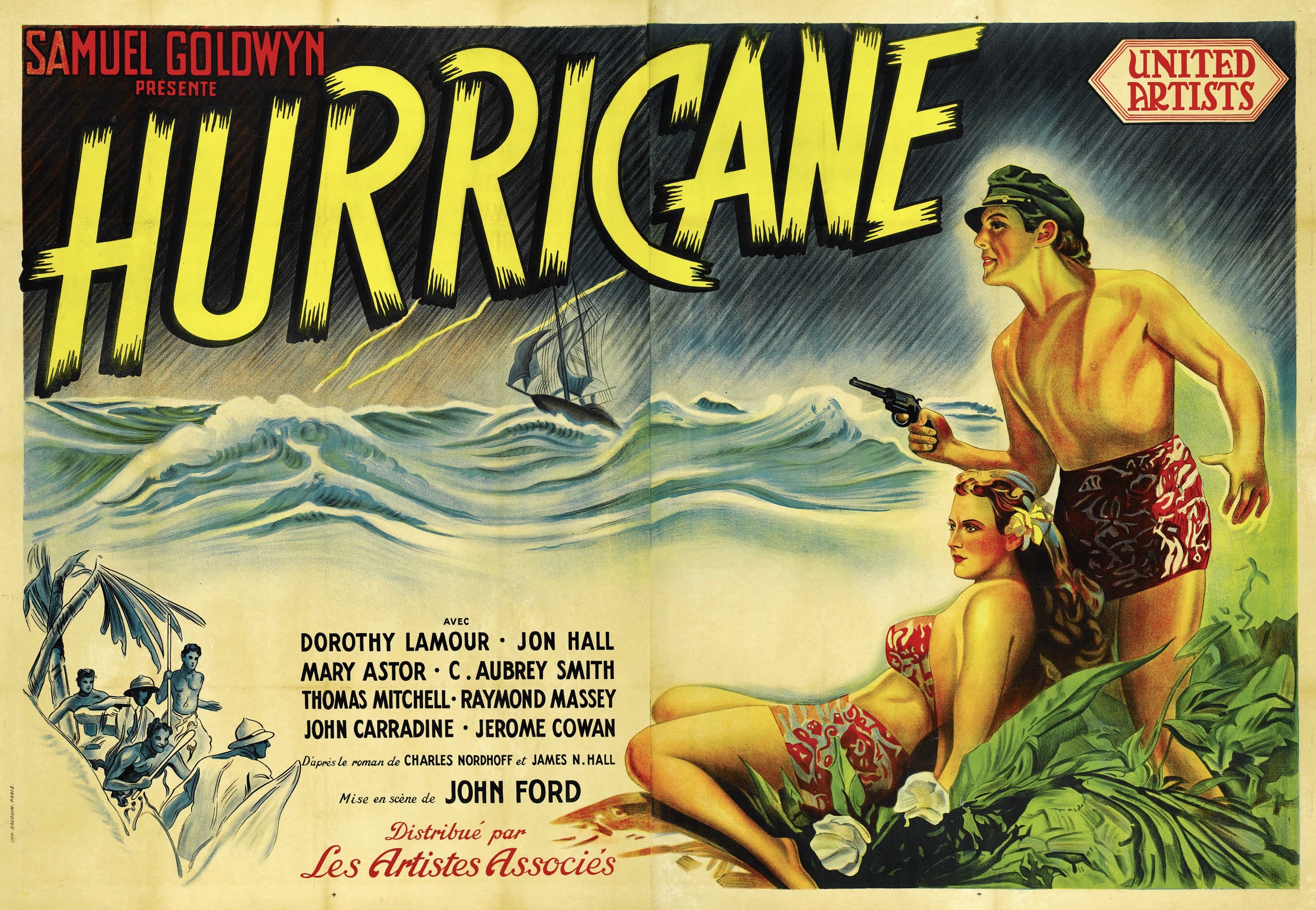
What’s Worse Than a Typhoon?
The 1970s may have been the era of the disaster film with such box office hits as Airport (1970), The Poseidon Adventure (1972), The Towering Inferno (1974) and Earthquake (1974) but the genre has been popular since the silent era when Noah’s Ark (1928) first awed moviegoers with its spectacular flood sequence. Certainly the most famous disaster film of the early sound era is San Francisco (1936) with its spectacular earthquake scenes but even more ambitious and almost overlooked today is The Hurricane (1937), directed by John Ford. While not on a level with the director’s later masterworks such as The Grapes of Wrath (1940), How Green Was My Valley (1941) or They Were Expendable (1945), this tale of colonial repression and injustice is set against the exotic background of the South Seas.
Continue readingThree Men and a Baby
Moviegoers often complain about the Hollywood practice of remaking a film that was popular the first time around so why make it again. The answer is obvious. A good story is worth retelling again and again and author Peter B. Kyne is one of those writers whose various novels and stories have been adapted to the screen more than 100 times, especially during the silent and early sound era. Many of these works were also adapted by screenwriters without his consent or any compensation from the studios but most film buffs will recognize his most popular creation, which was a 1913 novella entitled Three Godfathers (It first appeared in The Saturday Evening Post in November 1912). D.W. Griffith made a short silent version of it in 1913 with Harry Carey called The Sheriff’s Baby. There was a Universal silent version in 1916 which also starred Harry Carey, then a remake directed by John Ford in 1920 called Marked Men, and yet another remake by Ford in color and starring John Wayne in 1948 entitled 3 Godfathers. Other adaptations include a made-for-TV version entitled The Godson in 1974 and even a 2003 Japanese anime called Tokyo Godfathers from director Satoshi Kon as a homage to the original story. But one version that is often overlooked is Hell’s Heroes (1929) directed by William Wyler.
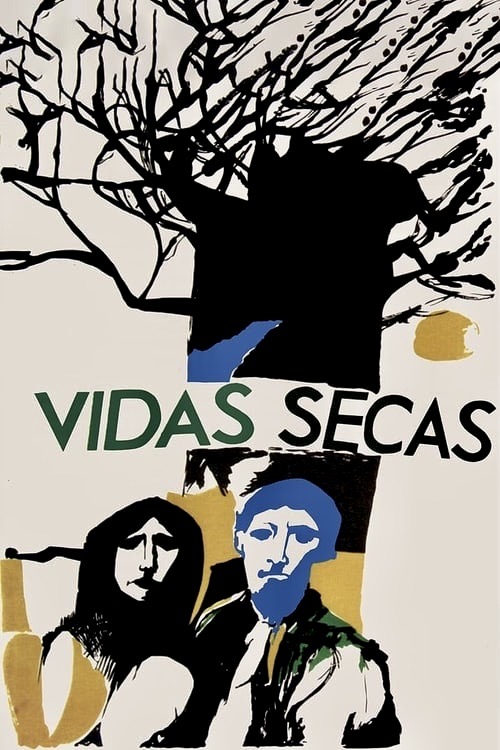
Continue readingScorched Earth
You don’t have to believe in climate change to experience and understand the devastating effects of a drought. The northeastern part of Brazil is no stranger to this condition which has plagued the region for decades yet people continue to live there. If you are a wealthy landowner, you can survive the seasonal hardships but if you are a poor migrant worker, life is a constant struggle. Vidas Secas (English title: Barren Lives, 1963), directed by Nelson Pereira dos Santos, is the portrait of a family of four and their dog as they wander the arid deserts and sun-baked landscapes of northwestern Brazil in search of work, water and food. Set in 1941 and covering a two-year period in their lives, the film is considered a landmark work in the Cinema Novo movement, which emerged in the late fifties and focused on marginalized communities and people, often using non-professional actors, real settings and black and white cinematography in the manner of Italian Neorealism.
Continue readingJohn Wayne in 3-D
Out of distribution for years, Hondo (1953), one of the key Westerns starring “The Duke,” was finally restored by the John Wayne Society in 1995 and made available for viewings again. It was said to be Wayne’s personal favorite of all of his Westerns and the storyline has a classic simplicity which captures the true spirit of the frontier: a cavalry scout (Wayne) comes to the aid of a homesteader (Geraldine Page) and her son (Lee Aaker) when the Apaches go on a rampage. Based on a novel by Louis L’Amour, Hondo was also surprisingly liberal in its attitude toward Native-Americans for its time and subtly addressed racial issues through the romance between the half-breed scout and the white heroine.
Continue readingWoody’s Benediction

His name was Woodrow Wilson Woolwine Strode and he was a football star, a professional wrestler, a WWII veteran and a famous Hollywood character actor who should have become a star. But the closest Woody Strode ever got to playing the leading role in an American film was Sergeant Rutledge (1960), in which he portrayed the title character but was fourth billed after Jeffrey Hunter, Constance Tower and Billie Burke. In an ironic twist that makes sense in a Pre-Civil Rights Hollywood, Strode had to travel to Italy to finally receive top billing and the only genuine leading role of his career in Black Jesus (1968) aka Seated at his Right (the Italian title is Seduto alla sua Destra). It is probably one of his least known films but easily his biggest role and possibly his best performance.
John Ford’s Up the River
If someone used the expression “up the river” in the early part of the 20th century, they usually weren’t referring to a location or direction; they meant prison time for some fool. Although there is nothing funny about going to jail, director John Ford decided to take a lighthearted approach to the topic in Up the River (1930), one of his earliest sound features. Continue reading
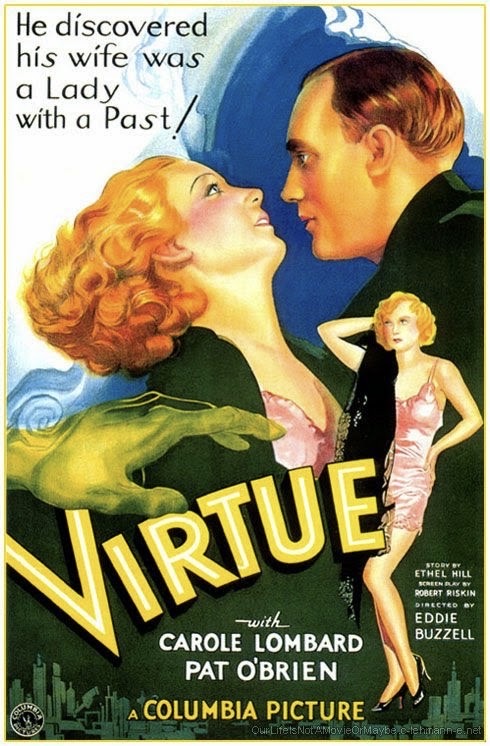
Carole Lombard: Shady Lady
Prior to her breakout role opposite John Barrymore in the screwball comedy Twentieth Century (1934), Carole Lombard was a struggling young contract player at Paramount Pictures where her talent was often squandered in mediocre projects and B-pictures like It Pays to Advertise (1931), No One Man (1932) and Supernatural (1933). There were exceptions, of course, and one of the better examples is Virtue (1932), which confirms Lombard’s promise as an actress in her pre-stardom years. Continue reading
The Age of Assassins (1967)
A paranoid conspiracy thriller delivered in a droll tongue-in-cheek style with generous helpings of black comedy and anti-establishment satire doesn’t really fit neatly into any genre and Kihachi Okamoto’s The Age of Assassins (1967 aka Epoch of Murder Madness; Japanese title: Satsujin Kyojidai) was generally dismissed by critics and avoided by audiences when it was first released in the late sixties. Like many of Okamoto’s films, it didn’t receive theatrical distribution outside of its own country and that’s a shame because the film has the essential goods to become a bona fide cult classic on the order of Seijun Suzuki’s Branded to Kill (1967) or Kinji Fukasaku’s Black Lizard (1968). The Age of Assassins arrived at the tail end of the secret agent craze but it is not really a James Bond parody. Think of it instead as a crazy quilt journey through an off-kilter, pop culture universe where no one is who they appear to be. Continue reading