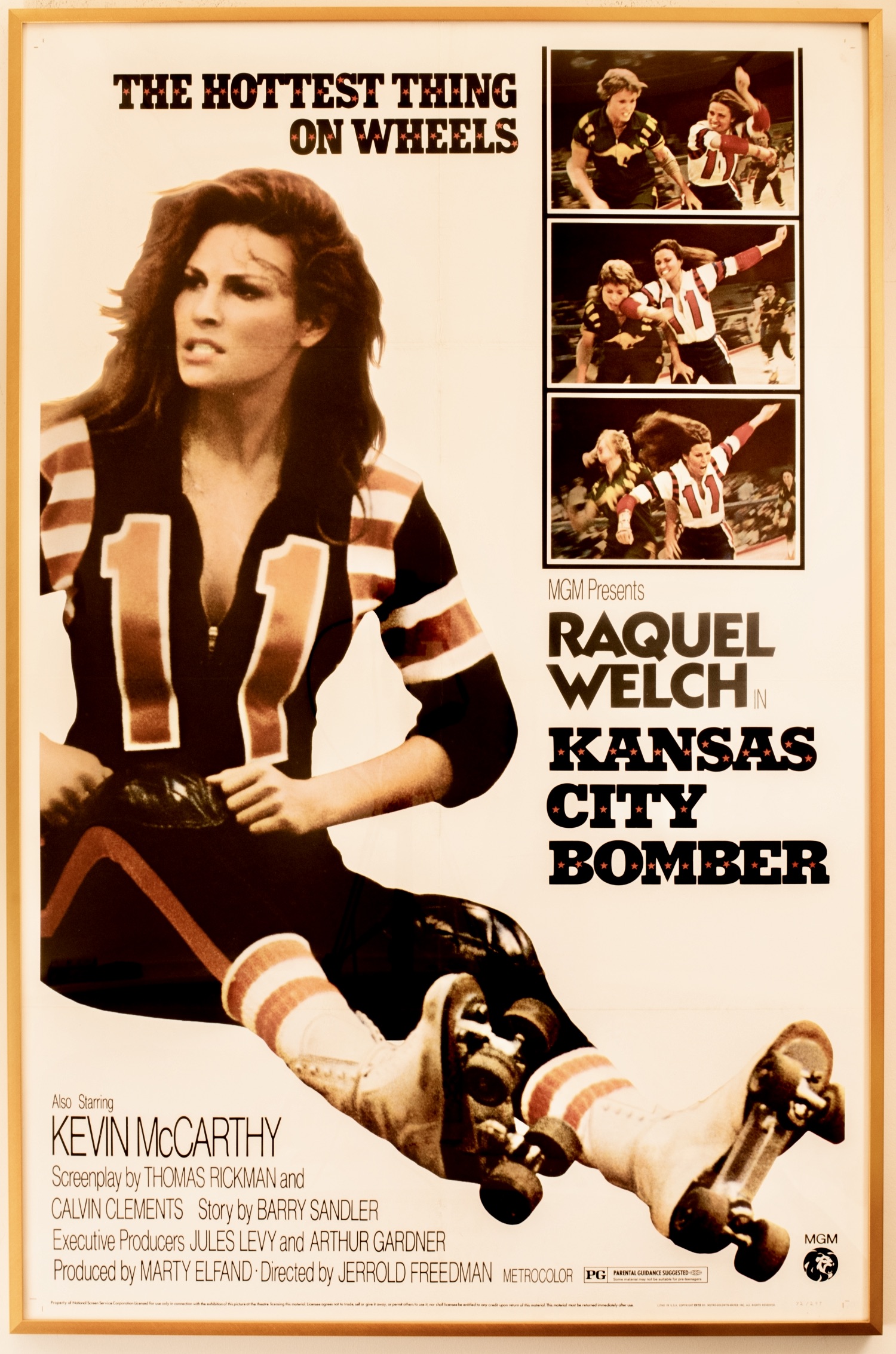
Raquel Welch. Not a name that conjures up Oscar-winning movies. Instead, a vision of a cavegirl in a bikini comes to mind. Or maybe a buff female fitness instructor with a video line for women with titles like Lose 10 Lbs. in 3 Weeks. Yet, there was a time when Raquel tried to break the Playboy playmate stereotype and prove herself as a dramatic actress. The year was 1972 and the film was Kansas City Bomber. An attempt to cash in on the then-popular roller derby craze, the film was also the actress’s first bona fide attempt to create a real flesh and blood character – a struggling, single mom of two trying to make ends meet by plying her skating talent in the sports arena.
In 1969 French actor Jean-Louis Trintignant had three films in competition at the Cannes Film Festival, Costa-Garvas’s Z, Giuseppe Patroni Griffi’s Metti, Una Sera a Cena (Love Circle) and Eric Rohmer’s My Night at Maud’s, with the actor garnering critical praise for his performance in all three movies. When asked by an interviewer how it felt to be a potential prize recipient, Trintignant replied, “I’m not an award winner. I don’t have that affect to win Best Actor. You need a mad scene or a drunken scene or something like that. And in the films selected I don’t have any like that. All these roles are rather underwhelming. They’re ambiguous. They are complex but not remarkable. I’m not remarkable.” Typical of Trintignant, his response was self-deprecating but also shrewdly self-aware. The irony is that he did win Best Actor at Cannes for Z that year for playing the steadfast, non-partisan investigator of a highly political case. In fact, he built a career playing characters who were often hard to read, repressed or quietly self-possessed, and he made them endlessly fascinating for the viewer. This is just one of many insights shared by director Lucie Caries in Trintignant by Trintignant, an intimate documentary portrait of the actor that was made for French television in 2021, the year before he died. Even though the documentary is barely an hour in length, it pulls from more than 70 years of archival material, photos, interviews, TV and film clips and comments by fellow actors and directors to help dissect the enigma that is Jean-Louis Trintignant.
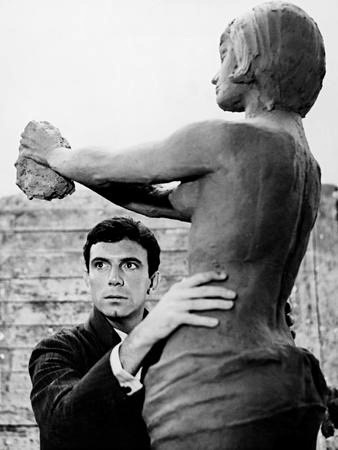
Anthony Franciosa plays a frustrated office worker pushing forty who develops an obsessive love for a young woman in SENILITA (1962), directed by Mauro Bolognini.
Italian novelist Italo Svevo was the pseudonym for Ettore Schmitz, a novelist and short story writer who was born in Trieste in 1861. After publishing two unsuccessful novels, he gave up writing until his English tutor James Joyce encouraged him to continue and he wrote a third novel in 1823, Confessions of Zeno (considered his masterpiece) and several short stories which were not published until after his early death from an automobile accident in 1928. Svevo never received the acclaim he deserved during his own lifetime but now he is considered one of Italy’s most famous authors and a pioneer of the psychoanalytical novel. His novels and some of his short stories were later adapted for film and television productions but the first one to hit the screen was Senelita (aka Careless, 1962), based on his second novel. The story of an insecure, self-absorbed office worker approaching forty who develops an obsessive love for a beautiful working class girl, the film was an impressive early masterwork for director Mauro Bolognini and helped launch Claudia Cardinale as an international star (The following year she appeared in Federico Fellini’s 8 ½, Luchino Visconti’s The Leopard and made her American film debut in The Pink Panther).
On September 6, 2021, France lost one of their biggest cinema icons of the 20th century with the death of Jean-Paul Belmondo at age 88. The actor attained international fame in 1960 for his charismatic performance in Jean-Luc Godard’s Breathless as an amoral car thief on the lam. He was the epitome of bad boy cool in that film and would enhance that screen persona in other crime dramas like Claude Sautet’s Classe Tous Risques (1960) and Jean-Pierre Melville’s Le Doulos (1962). Then, Belmondo reached an even wider international audience with the cross-over commercial hit, That Man from Rio (1964), which was even more accessible to the average moviegoer than Breathless, especially in America.
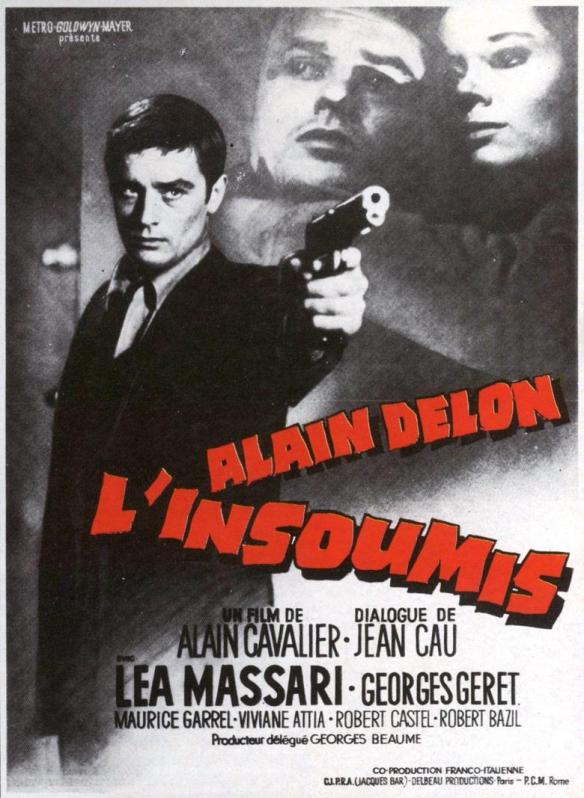
L’insoumis (1964) aka The Unvanquished is a relatively unknown but deeply compelling and haunting French film from director Alain Cavalier that aired several years ago on TCM in an English language version titled Have I the Right to Kill? (It was originally distributed by MGM in the U.S.) Shot in glorious black and white by master cinematographer Claude Renoir, the film plays like a politically-charged film noir and it could easily be the best of Alain Delon’s early performances. In the other key role, Lea Massari, the beautiful Italian actress who is best known as the warm, charismatic mother in Louis Malle’s Murmur of the Heart (1971), has rarely been more appealing. Continue reading →



 Cinema Sojourns