In 1969 French actor Jean-Louis Trintignant had three films in competition at the Cannes Film Festival, Costa-Garvas’s Z, Giuseppe Patroni Griffi’s Metti, Una Sera a Cena (Love Circle) and Eric Rohmer’s My Night at Maud’s, with the actor garnering critical praise for his performance in all three movies. When asked by an interviewer how it felt to be a potential prize recipient, Trintignant replied, “I’m not an award winner. I don’t have that affect to win Best Actor. You need a mad scene or a drunken scene or something like that. And in the films selected I don’t have any like that. All these roles are rather underwhelming. They’re ambiguous. They are complex but not remarkable. I’m not remarkable.” Typical of Trintignant, his response was self-deprecating but also shrewdly self-aware. The irony is that he did win Best Actor at Cannes for Z that year for playing the steadfast, non-partisan investigator of a highly political case. In fact, he built a career playing characters who were often hard to read, repressed or quietly self-possessed, and he made them endlessly fascinating for the viewer. This is just one of many insights shared by director Lucie Caries in Trintignant by Trintignant, an intimate documentary portrait of the actor that was made for French television in 2021, the year before he died. Even though the documentary is barely an hour in length, it pulls from more than 70 years of archival material, photos, interviews, TV and film clips and comments by fellow actors and directors to help dissect the enigma that is Jean-Louis Trintignant.
Continue readingTag Archives: Jean-Louis Trintignant
Too Chicken to Watch This Giallo?

Maybe giallo is too specific a film genre for this movie because it is in a class of its own and works as a violent crime thriller but also as an erotic melodrama, black comedy and a satire on scientific experimentation and marketing. If you tried to describe the movie to friends they’d probably swear you dreamed it or are running a high fever but no, this bizarre, fascinating and once obscure giallo actually exists in various titled versions. The original Italian release title was La Morte Ha Fatto L’uovo (1968), but it has been distributed under such monikers as Plucked!, A Curious Way to Love and Death Laid an Egg, which is the more common title. So what’s with the chickens? The film is set, for the most part, in a poultry factory where a new breed of chicken is being produced in an experimental lab. The opening credits, featuring science classroom footage of egg fertilization, embryos and microscopic life forms prepare you for this strange new world.
Continue readingUnder Surveillance

We will probably never know the exact number of Nazi war criminals who escaped from Germany in the aftermath of WW2 and made their way to South America but some of the more infamous ones are Adolf Eichmann, who was later captured in Buenos Aires, brought to trial in Israel and executed in 1962, and Josef Schwammberger, who was arrested in Argentina and returned to West Germany for a trial in 1992 (he was sentenced to life in prison and died there). At the same time, there have been reports that as many as 9,000 Nazi officers and collaborators found a safe haven in countries like Brazil and Paraguay under new identities and were never arrested for their war crimes. This unsettling realization inspires the narrative of Philippe Condroyer’s A Man to Kill (French title: Un Homme a abattre, 1967), a fictional espionage thriller that focuses on a suspected concentration camp officer who resurfaces in Barcelona years later as a low profile German architect.
Continue readingJeanne Moreau is Mata Hari

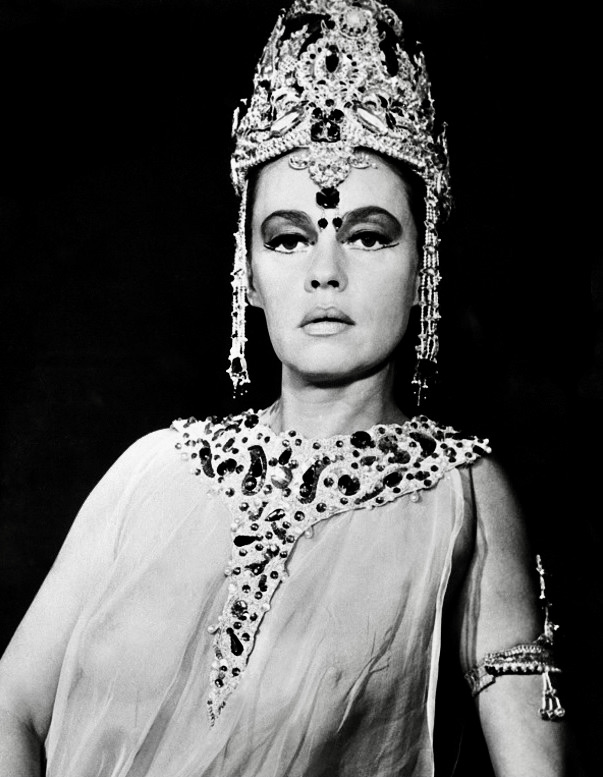
The road to international fame was a long and arduous journey for Jeanne Moreau but it all began in 1948 when she became a stage actress at age 18. She started appearing in films a year later though it wasn’t until 1958 that she emerged as an important French actress, thanks to two Louis Malle features, the noir thriller Elevator to the Gallows and the scandalous romantic drama, The Lovers. More famous career-defining roles followed such as Michelangelo Antonioni’s La Notte (1961), Francois Truffaut’s Jules and Jim (1962), Jacques Demy’s Bay of Angels (1963) and Luis Bunuel’s Diary of a Chambermaid (1964). Yet, in terms of global recognition, she probably reached her peak in the mid-sixties when she appeared in big-budget Hollywood productions like The Victors (1963), The Train (1964) and The Yellow Rolls-Royce (1964). It was during this period that she appeared in Mata Hari, Agent H21 aka Secret Agent FX18 (1964), one of her least known and rarely seen movies.
Continue readingThe Lost Films of Audio-Brandon
Back in the days before the VHS home video market exploded and Blockbuster became the obiquitous rental store, the 16mm film library was still a viable business in the non-theatrical college and educational markets. The decline would begin in the early eighties and by the end of the decade most 16mm distributors would be out of business. But during the peak years, this film format was affordable and easily accessible to all types of organizations (churches, schools, businesses and prisons) and also individuals who ran private film societies. Continue reading