

Pedro Costa’s O Sangre

Vicente (Pedro Hestnes) and Clara (Ines de Medeiros) create their own version of family to combat the darkness in O SANGRE aka Blood (1989), directed by Pedro Costa.

Most film aficionados known that the Cinema Novo movement of the 1960s in Brazil was influenced by both Neorealism and New Wave filmmakers but became an identifiable style of its own. Portugal also had their own Cinema Novo movement in the sixties but it transitioned into a different aesthetic approach in the 1980s known as “The School of Reis,” named after Antonio Reis, a filmmaker and professor at the Lisbon Theater and Film School. Reis influenced a new generation of filmmakers that includes Manuela Viegas, Joaquim Sapinho, Joao Pedro Rodgrigues and Pedro Costa to name a few. Among this group Costa is probably the best known in the U.S. due to his work being exhibited at film festivals and art houses as well as a trilogy of his films known as Letters from Fontainhas being distributed on DVD and Blu-ray by The Criterion Collection. Less known is his 1989 debut feature, O Sangre aka Blood, which Michelle Carey of Senses of Cinema called, “Undoubtedly one of the most remarkable film debuts of the last 20 years.”

Continue reading
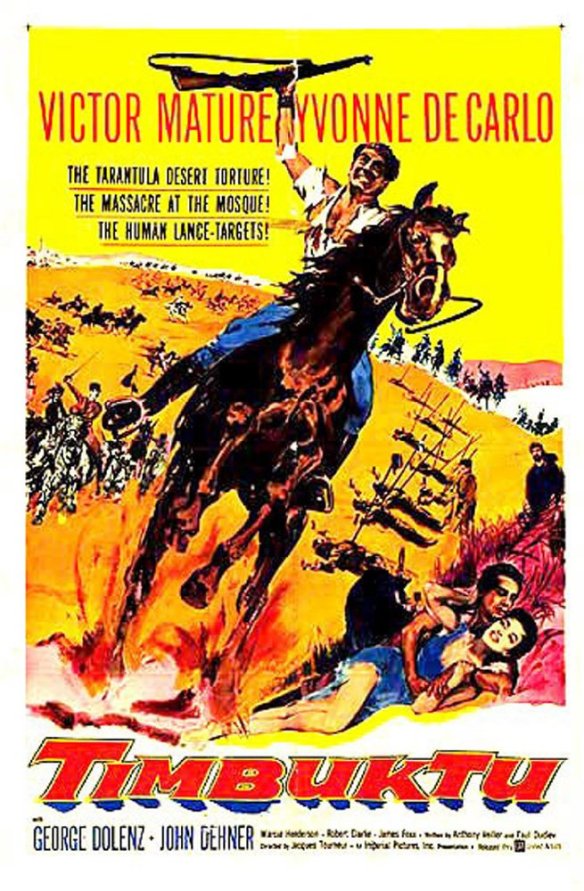
Jacques Tourneur’s Pulp Fiction Pipe Dream

RKO may have been seen as low on the totem pole in the Hollywood hierarchy compared to MGM, Warner Bros. and other larger studios but their importance in film history is assured by a remarkable roster of talent that at one time included such directors as Orson Welles, Alfred Hitchcock and John Ford. One of RKO’s most famous contractees was Jacques Tourneur who secured his reputation in the forties with Cat People (1942), I Walked With a Zombie (1943), The Leopard Man (1943) and Out of the Past (1947).

Tourneur’s work in the early to mid-fifties might not have matched his glory years at RKO but he still managed to turn out occasional gems like the underrated Joel McCrea western, Stars in My Crown (1950), a late period noir (Nightfall, 1956) and a cult horror classic, Curse of the Demon (1958). Even the less distinguished films from his final years are worth a look and Timbuktu (1958) is a genuine curiosity, flaws and all.  Continue reading

There’s No Business like Zombie Business……

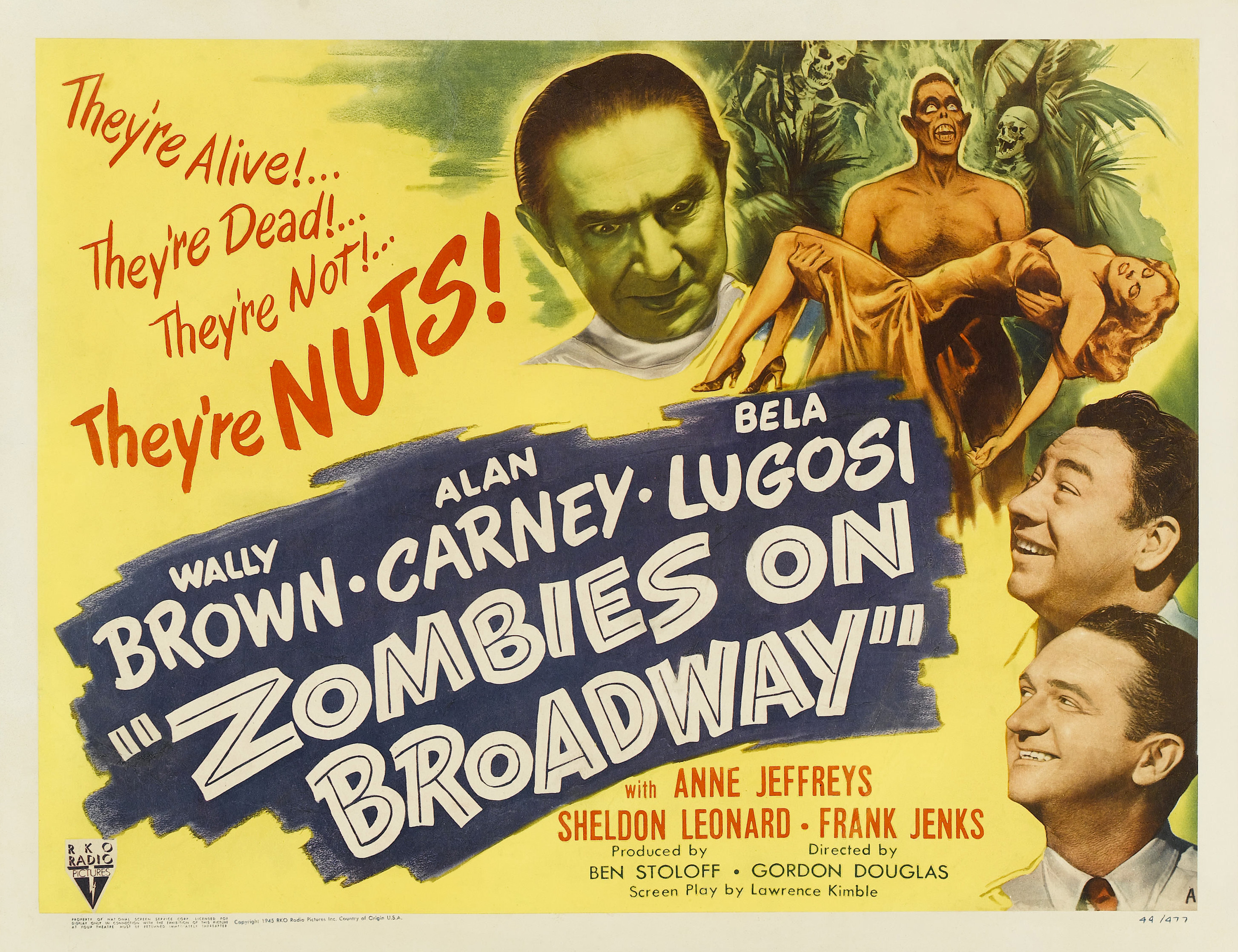
Poster - Zombies on Broadway_02In 1941, the unexpected success of Buck Privates – a whopping $10 million dollar B-movie blockbuster – officially launched the comedy team of Abbott and Costello who became Universal Studios’ most profitable film franchise for more than a decade (The duo made their debut in One Night in the Tropics (1940) in supporting roles but the musical comedy with top billed Allan Jones and Nancy Kelly was not a boxoffice hit). Naturally, it inspired other studios to follow suit but it wasn’t as easy as it looked. Case in point – Wally Brown and Alan Carney (no relation to Art Carney), two former nightclub comedians recruited by RKO for a series of low-budget farces beginning with The Adventures of a Rookie (1943), a blatant attempt to ape the formula of Buck Privates. For critics who thought the humor of Abbott and Costello was déclassé, Zombies on Broadway (194) was a further step down but perfect for eight year old boys who enjoyed the simple concept of two nitwits with one (Brown) assuming superiority over his dim bulb pal (Carney).   Continue reading