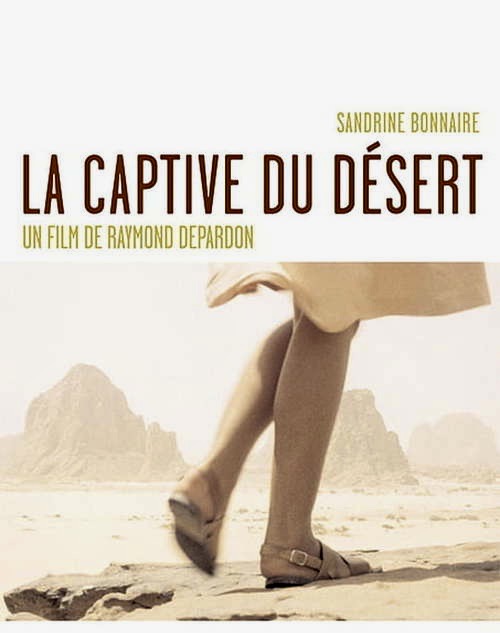
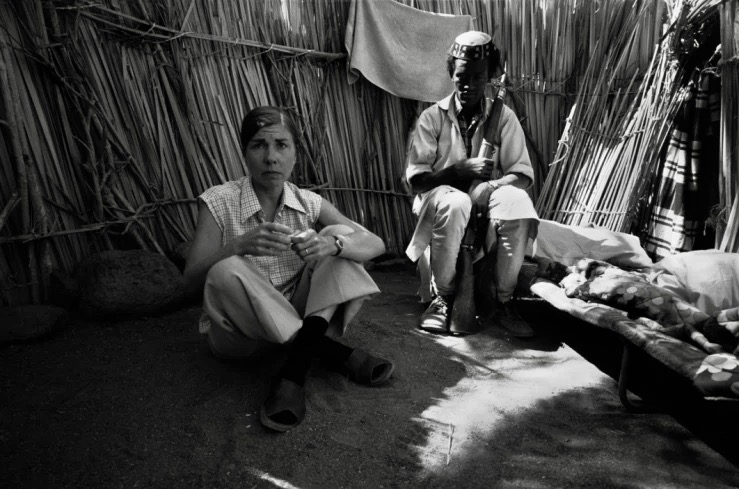
In the Spring of 1974, French archeologist Francoise Claustre along with a young aide and a German doctor and his wife were captured by rebel forces in Chad, Africa while exploring pre-Islamic tombs. The doctor’s wife was killed during the attack but her husband was quickly released after West German officials paid his ransom. The aide later escaped but Claustre remained a hostage of the Maoist rebel leader Hissene Habre and his clan for 33 months. During that time, her husband Pierre, a French official, tried to bargain with the rebels when his government proved inept at handling the situation but he too ended up being captured and held in a different camp in Chad. Renowned photojournalist and documentary filmmaker Raymond Depardon was allowed to interview Francoise during her ordeal for his non-fiction shorts, Tchad 2: L’ultimatum (1975) and Tchad 3 (1976), which were broadcast on French TV and provoked a major public outcry over the entire situation. Finally in January 1977 Libyan leader Muammar Gaddafi brokered a deal with the Chad rebels and the French couple was released and returned to Paris. Interestingly enough, Depardon would return to this subject again in 1990 with La Captive du Desert (Captive of the Desert), a fictionalized account of the Claustre affair which remains one of his few forays into feature film making.
Continue readingTag Archives: Hiroshi Teshigahara
The Mighty Mountain Will Punish the Bad
Many people believe they are masters of their own fates but occasionally mother nature steps in to remind them that there are outside forces they cannot control such as a mountain wilderness or a blizzard or an avalanche. Such is the case in Snow Trail (Japanese title: Ginrei no hate, 1947), an engaging B-movie crime drama in which three bank robbers flee to the snow-covered slopes of Mount Hakuba, located in the northern alps of Nagano Prefecture. With the law in close pursuit, the trio soon find themselves in dire straits with no experience in mountain climbing or dealing with extreme weather conditions. Nature is simply indifference in such matters.
Continue readingArt Direction by Antonio Gaudi

Anyone who has seen a few movies filmed in Barcelona, Spain, has undoubtedly caught a glimpse or maybe even a close-up of one of the architectural wonders created by Antoni (aka Antonio) Gaudi or one of his contemporaries such as Lluis Domenech I Montaner or Josep Puig I Cadafalch in the “Modernisme” movement of 1888-1911. This brief period resulted in awe-inspiring buildings and structures with designs based on organic forms or taken directly from nature – beehives, mushrooms, stalactites – that broke away from conventional design and accented curves and rich ornamentation (broken pieces of colorful ceramic tile worked into wall mosaics). This unique architectural style is an art director’s dream and a natural for the screen, which is why it has been the co-star in countless movies filmed in Barcelona such as Susan Seidelman’s Gaudi Afternoon (2001) and L’Auberge espagnole (2002), in which Gaudi’s still-in-progress La Sagrada Familia (it was started in 1883) is prominently featured.
Continue readingGuilty Bystanders
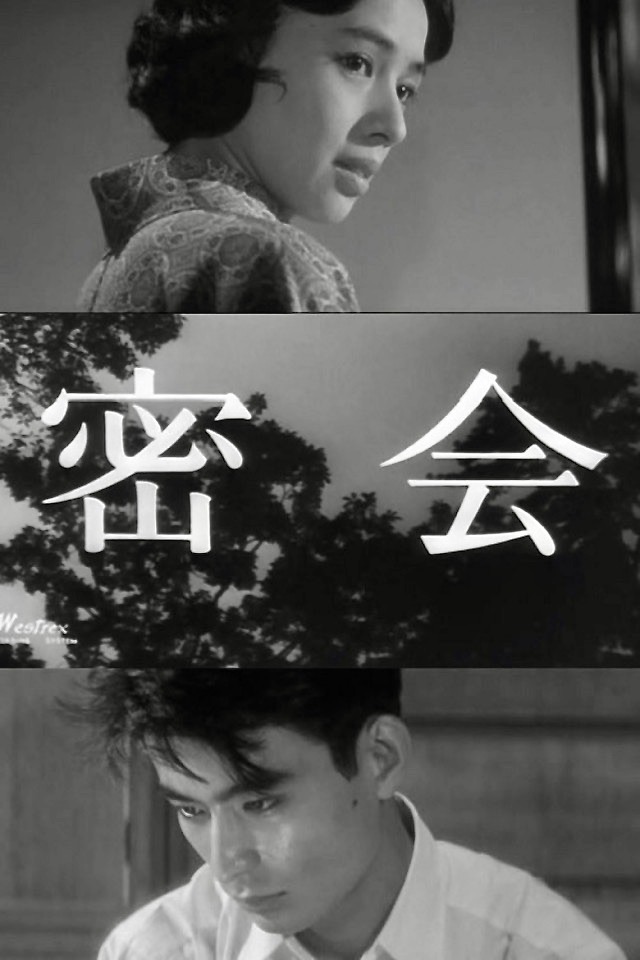
A young couple are enjoying a romantic rendezvous in a hidden grove at a city park at twilight. It turns out to be an illicit affair. The woman is the married wife of a law professor and her lover is one of his students. Their privacy is interrupted by the arrival of a speeding taxi that crashes into an embankment nearby. Inside the driver is seen struggling with the backseat occupant. It ends badly with the driver murdered and his body dragged into the bushes. The killer flees and the young couple are faced with a dilemma. Should they go to the police and risk exposing their affair or remain silent? This is the pressing issue that drives the narrative of The Assignation (Japanese title: Mikkai, 1959), directed by Ko Nakahira.
Continue readingIdentity Disintegration

What would happen if you lost the face you recognize as your own and had to replace it with a new one? Would you have an identity crisis or simply become a different person? Japanese director Hiroshi Teshigahara ponders this unusual dilemma in The Face of Another (1966, Japanese title: Tanin no kao). Continue reading