Gas, Food, Lodging…and Murder

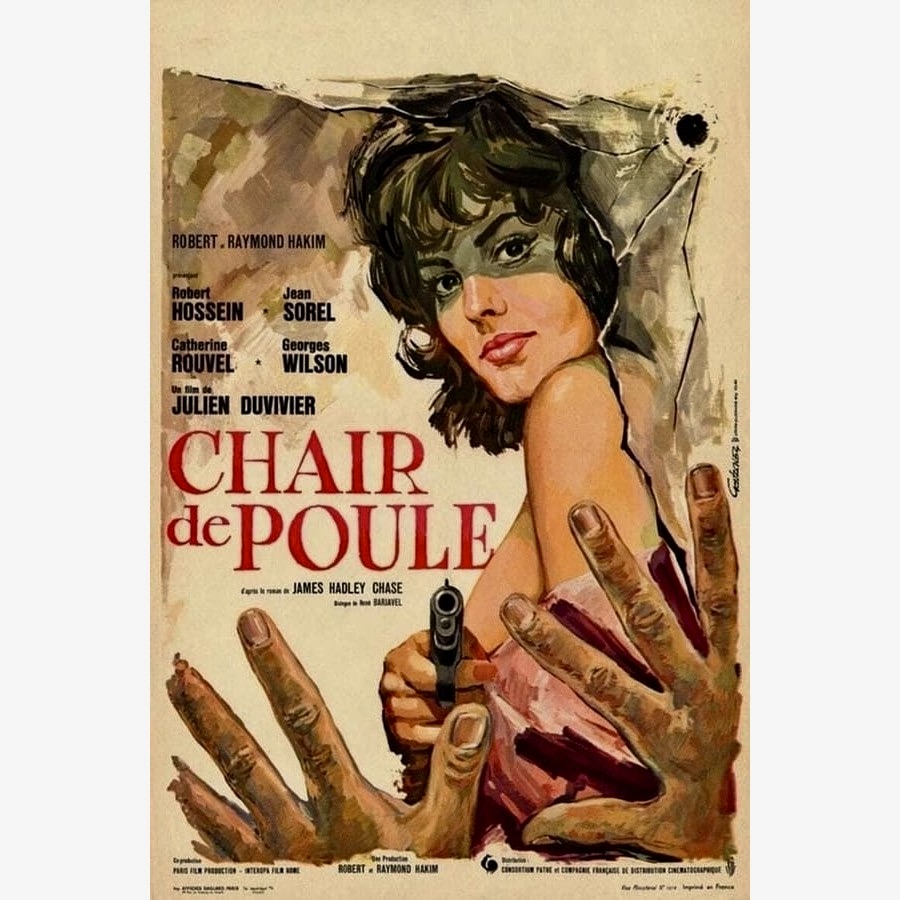
The French film poster for HIGHWAY PICK-UP (1963), a French crime drama directed by Julien Duvivier.

Daniel and Paul are professional locksmiths and good friends who work for the same company. When they mastermind the robbery of a client by breaking into a safe Daniel had previously repaired, the theft goes awry, with the client dying from a blow to the head. Paul escapes but Daniel is shot and injured by the police in the ensuing chase and sentenced to 20 years in prison. After a year in the stir, Daniel escapes by picking the jail cell lock (of course) and tries to elude the authorities in a desert-like region of Alpes-Maritimes in southeastern France. Under an assumed name, he manages to get hired on as an attendant at an isolated gas station run by Thomas and his sexy young wife Maria but Daniel soon realizes he has created a new prison for himself.
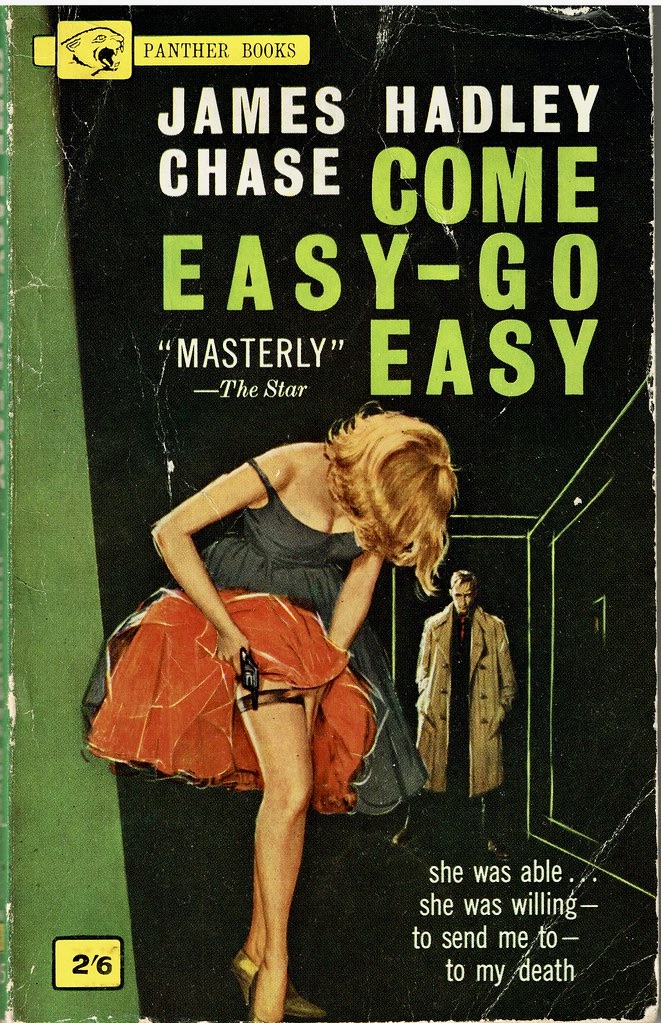
Based on the 1960 crime noir Easy Come, Easy Go by British author James Hadley Chase, Chair de Poule (English title: Highway Pick-Up, 1963) is the penultimate film of the legendary French director Julien Duvivier. If the basic premise sounds like it was inspired by The Postman Always Rings Twice, you wouldn’t be completely wrong. Chase (1906-1985), who used many pseudonyms during his career such as Raymond Marshall and Ambrose Grant, was actually motivated to become a writer after reading James M. Cain’s 1934 novel. Chase’s first novel, No Orchids for Miss Blandish (1939), was an overnight best seller and was adapted into a stage play and two film versions, one in 1948 and one in 1971, under the title The Grissom Gang, which was directed by Robert Aldrich.

Continue reading

A Madcap Chase Across Brazil

On September 6, 2021, France lost one of their biggest cinema icons of the 20th century with the death of Jean-Paul Belmondo at age 88. The actor attained international fame in 1960 for his charismatic performance in Jean-Luc Godard’s Breathless as an amoral car thief on the lam. He was the epitome of bad boy cool in that film and would enhance that screen persona in other crime dramas like Claude Sautet’s Classe Tous Risques (1960) and Jean-Pierre Melville’s Le Doulos (1962). Then, Belmondo reached an even wider international audience with the cross-over commercial hit, That Man from Rio (1964), which was even more accessible to the average moviegoer than Breathless, especially in America.

Continue reading

Jeanne Moreau is Mata Hari

Jeanne Moreau as the famous WWI era spy Mata Hari in Jean-Louis Richard’s 1964 film biography, MATA HARI, AGENT H21.

The road to international fame was a long and arduous journey for Jeanne Moreau but it all began in 1948 when she became a stage actress at age 18. She started appearing in films a year later though it wasn’t until 1958 that she emerged as an important French actress, thanks to two Louis Malle features, the noir thriller Elevator to the Gallows and the scandalous romantic drama, The Lovers. More famous career-defining roles followed such as Michelangelo Antonioni’s La Notte (1961), Francois Truffaut’s Jules and Jim (1962), Jacques Demy’s Bay of Angels (1963) and Luis Bunuel’s Diary of a Chambermaid (1964). Yet, in terms of global recognition, she probably reached her peak in the mid-sixties when she appeared in big-budget Hollywood productions like The Victors (1963), The Train (1964) and The Yellow Rolls-Royce (1964). It was during this period that she appeared in Mata Hari, Agent H21 aka Secret Agent FX18 (1964), one of her least known and rarely seen movies.

Continue reading

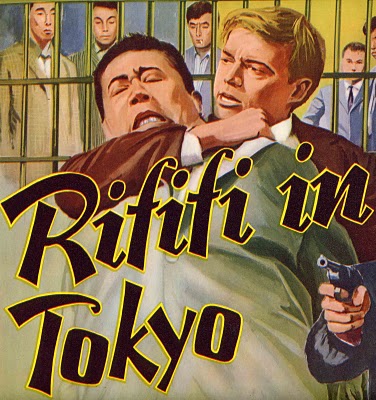
Rififi in Tokyo

Rififi in Tokyo poster

Rififi in Tokyo poster

Rififi, Jules Dassin’s quintessential 1955 noir/heist thriller, had quite an impact on the European crime movie genre in its day, although most of its imitators or similarly inspired creations rarely found distribution in the U.S. except as English-dubbed second features in limited runs in a few major cities like New York. I have yet to read of any major film critics or movie buffs like Quentin Tarantino championing any of the Rififi knockoffs. But for anyone with a soft spot for heist films, you might enjoy sampling some of these lesser efforts, particularly RIFIFI IN TOKYO (1963).      Continue reading