A Nouvelle Vague Musical?

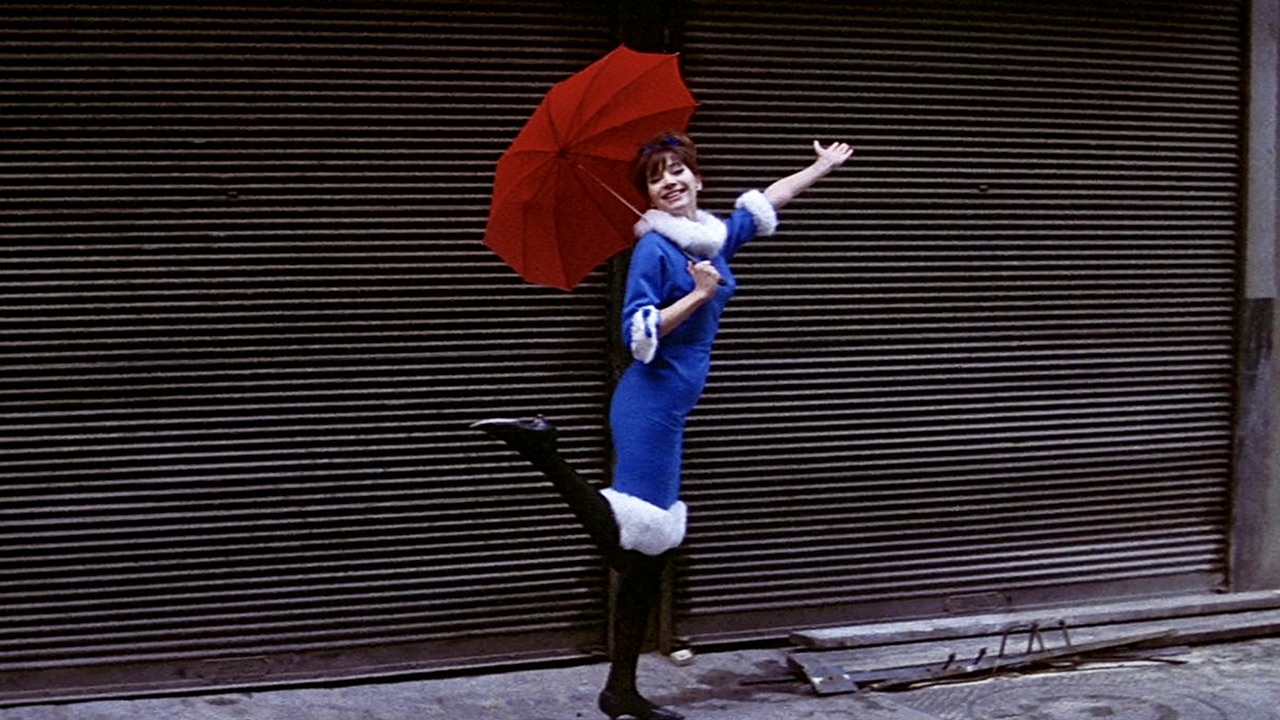
Angela (Anna Karina) imagines she is in a movie musical choreographed by Bob Fosse in A WOMAN IS A WOMAN (1961), directed by Jean-Luc Godard.

Of the more than 120 movies and short films in director Jean-Luc Godard’s oeuvre, there is really nothing like Un Femme est une Femme (English title: A Woman is a Woman, 1961). What other Godard creation could you describe as joyful, lighthearted and consistently playful? A homage to MGM musicals, romantic comedies a la Ernst Lubitsch and Hollywood productions shot in Cinemascope and Eastmancolor, A Woman is a Woman is essentially a valentine to Godard’s muse at the time, Anna Karina. It is also unlike any other musical ever made or even a Nouvelle Vague confection like Jacques Demy’s The Umbrellas of Cherbourg (1964).  Yet, for someone who has never seen a Godard film, it is an accessible entry point to his work and an example of why he was considered so innovative, daring and controversial for his time.

Continue reading
Deciphering a French Film Icon

In 1969 French actor Jean-Louis Trintignant had three films in competition at the Cannes Film Festival, Costa-Garvas’s Z, Giuseppe Patroni Griffi’s Metti, Una Sera a Cena (Love Circle) and Eric Rohmer’s My Night at Maud’s, with the actor garnering critical praise for his performance in all three movies. When asked by an interviewer how it felt to be a potential prize recipient, Trintignant replied, “I’m not an award winner. I don’t have that affect to win Best Actor. You need a mad scene or a drunken scene or something like that. And in the films selected I don’t have any like that. All these roles are rather underwhelming. They’re ambiguous. They are complex but not remarkable. I’m not remarkable.” Typical of Trintignant, his response was self-deprecating but also shrewdly self-aware. The irony is that he did win Best Actor at Cannes for Z that year for playing the steadfast, non-partisan investigator of a highly political case. In fact, he built a career playing characters who were often hard to read, repressed or quietly self-possessed, and he made them endlessly fascinating for the viewer. This is just one of many insights shared by director Lucie Caries in Trintignant by Trintignant, an intimate documentary portrait of the actor that was made for French television in 2021, the year before he died. Even though the documentary is barely an hour in length, it pulls from more than 70 years of archival material, photos, interviews, TV and film clips and comments by fellow actors and directors to help dissect the enigma that is Jean-Louis Trintignant.

Continue reading

A City or a Labyrinth?

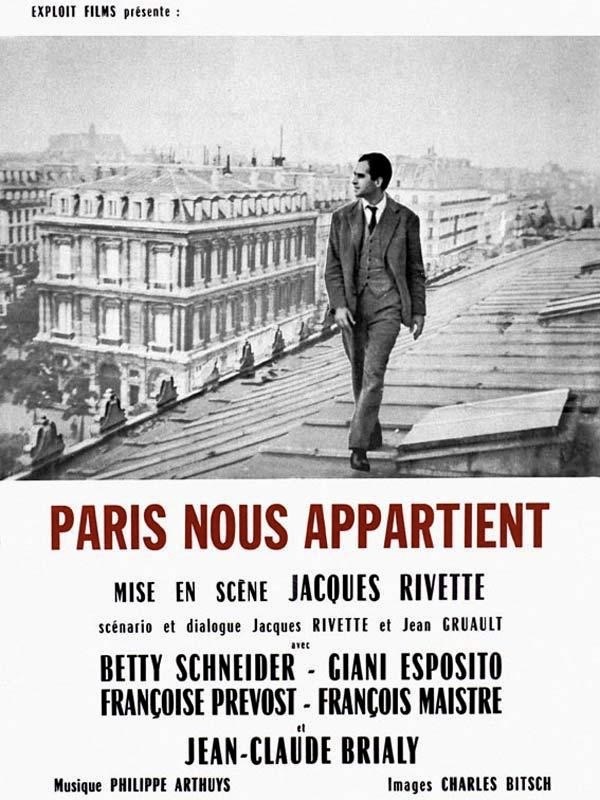
Whether by accident or design, French filmmaker Jacques Rivette is probably the least known member of the influential Nouvelle Vague movement of the late fifties though, like Jean-Luc Godard, Francois Truffaut, Eric Rohmer, and Claude Chabrol, he too was a former writer and film critic for Cashiers du Cinema. He even started production on his first feature length film, Paris Belongs to Us (French title: Paris Nous Appartient), in 1957, before Chabrol, Truffaut and Godard began work on what would become their universally acclaimed debuts of, respectively, Le Beau Serge (1958), The 400 Blows (1959) and Breathless (1960). Yet, despite the artistic and liberating impact the latter three films had on world cinema, Paris Belongs to Us might be the most ambitious, challenging and intellectually provocative film of the whole movement. It is also the darkest, waltzing toward an imagined or possibly real oblivion. The Homeland Security System would give it a code orange classification.       

Continue reading

The Eternal Search for Paradise

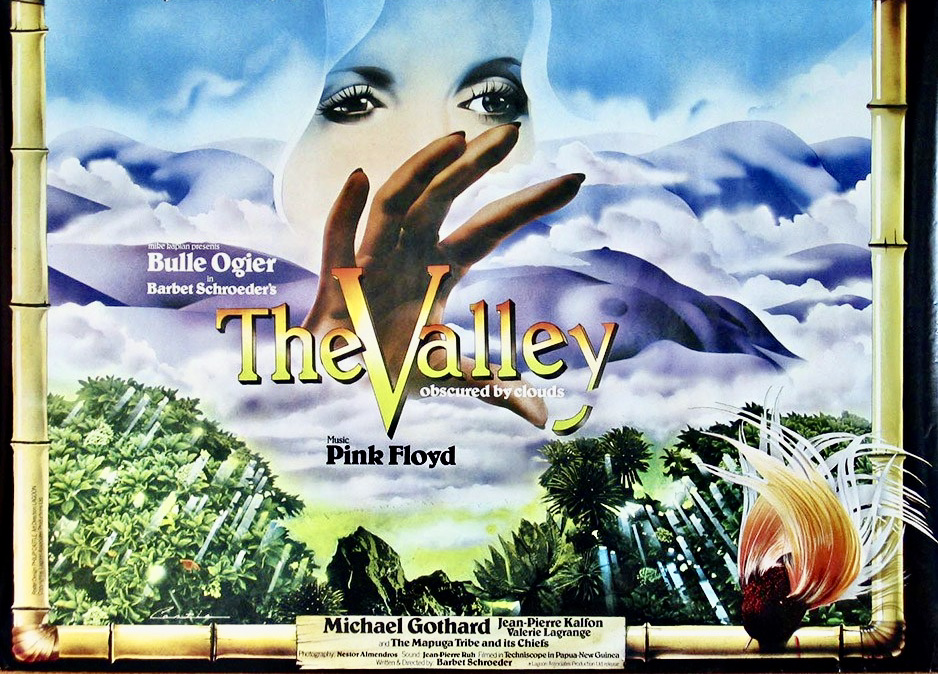
What is it about human nature that makes men want to climb the highest mountains, explore unknown regions in search of a rumored paradise or challenge their perceptions of the world in the name of self-discovery? It is this eternal quest that drives the narrative of  La Vallée (English title: The Valley, 1972), Barbet Schroeder’s second feature film after More (1969), a drug addiction drama that explores a similar theme of people who go too far in seeking ultimate experiences and sensations. Both films were made at a time when the youth culture of the late sixties was becoming more pessimistic and cynical about the hippie lifestyle. While More is a deep dive into hedonism that has the structure of a traditional drama, The Valley is a stranger affair. It combines ethnographic documentary elements with a loose storyline about a small group of hipster explorers who are intent on discovering an unexplored area on a map of Papua, New Guinea that is marked as a valley obscured by clouds.  

Continue reading