
Gas, Food, Lodging…and Murder

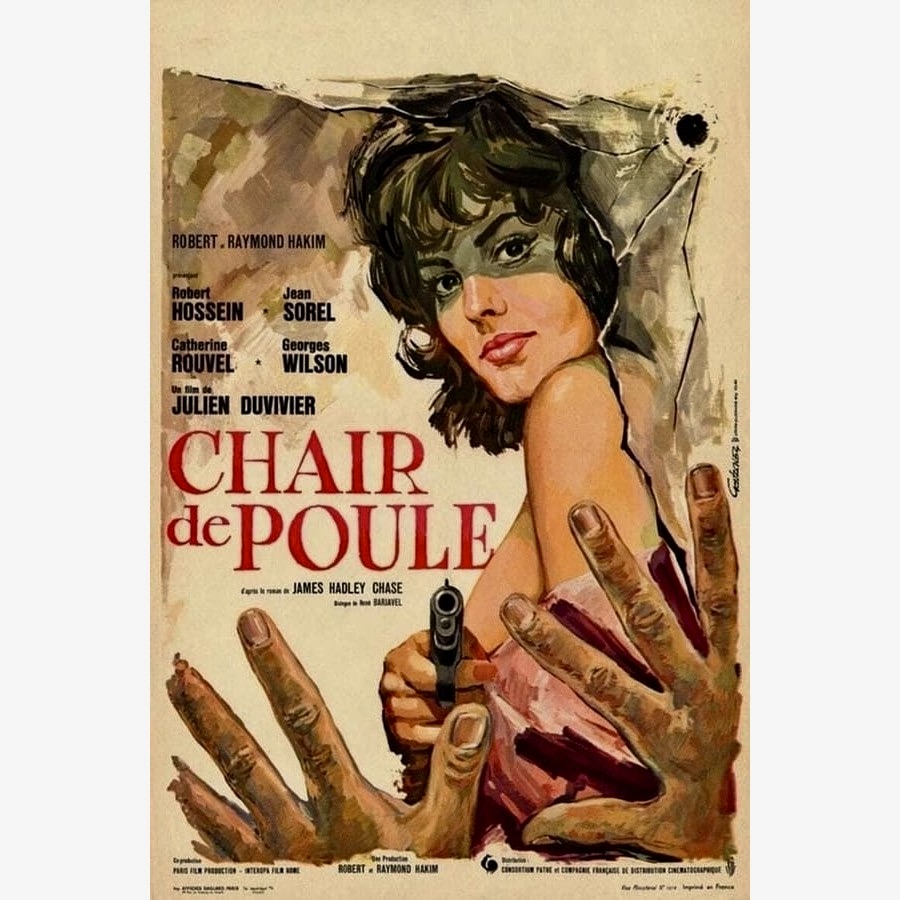
The French film poster for HIGHWAY PICK-UP (1963), a French crime drama directed by Julien Duvivier.

Daniel and Paul are professional locksmiths and good friends who work for the same company. When they mastermind the robbery of a client by breaking into a safe Daniel had previously repaired, the theft goes awry, with the client dying from a blow to the head. Paul escapes but Daniel is shot and injured by the police in the ensuing chase and sentenced to 20 years in prison. After a year in the stir, Daniel escapes by picking the jail cell lock (of course) and tries to elude the authorities in a desert-like region of Alpes-Maritimes in southeastern France. Under an assumed name, he manages to get hired on as an attendant at an isolated gas station run by Thomas and his sexy young wife Maria but Daniel soon realizes he has created a new prison for himself.
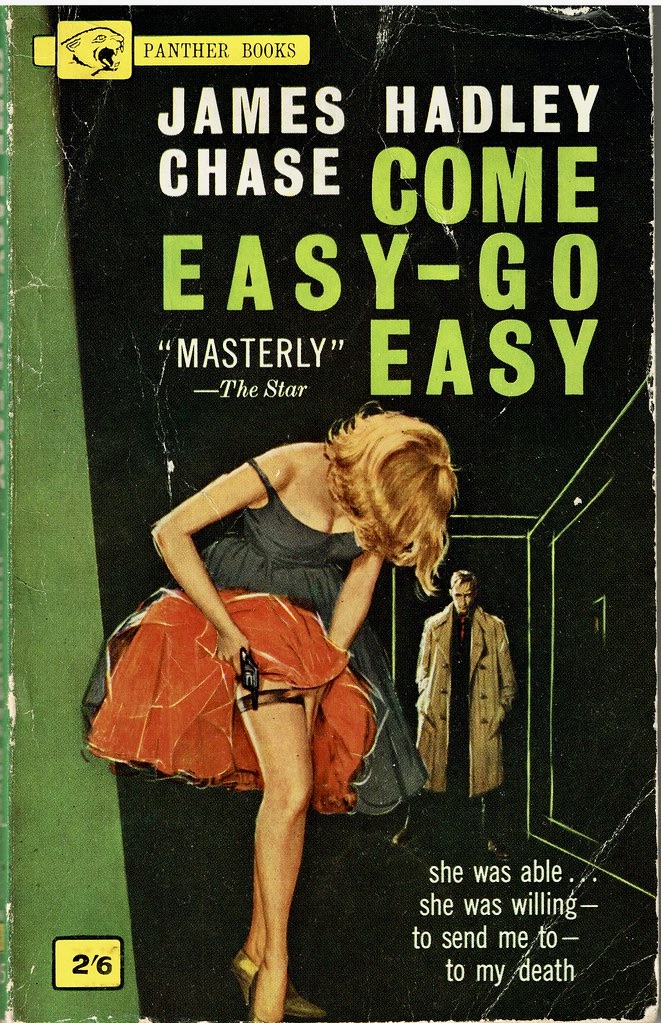
Based on the 1960 crime noir Easy Come, Easy Go by British author James Hadley Chase, Chair de Poule (English title: Highway Pick-Up, 1963) is the penultimate film of the legendary French director Julien Duvivier. If the basic premise sounds like it was inspired by The Postman Always Rings Twice, you wouldn’t be completely wrong. Chase (1906-1985), who used many pseudonyms during his career such as Raymond Marshall and Ambrose Grant, was actually motivated to become a writer after reading James M. Cain’s 1934 novel. Chase’s first novel, No Orchids for Miss Blandish (1939), was an overnight best seller and was adapted into a stage play and two film versions, one in 1948 and one in 1971, under the title The Grissom Gang, which was directed by Robert Aldrich.

Continue reading
Sex Trafficking in Marseilles

Human trafficking is recognized as a form of modern day slavery today but it has been around for decades. In the early 20th century the white slave trade in Europe became a major crime phenomenon in which hundreds of young women went missing only to end up enslaved in prostitution rings. This criminal activity provided the basis for countless melodramas and sexploitation films but one of the most entertaining and accomplished efforts is the French feature Des Femmes Disparaissent (1959), which was released in the U.S. in 1962 as Road to Shame. Women Disappear is a more accurate translation for the original title but the movie is a tautly directed thriller which has the look of a vintage noir with moody black and white cinematography by Robert Juillard (Forbidden Games, Gervaise).

Continue reading

Moving Target

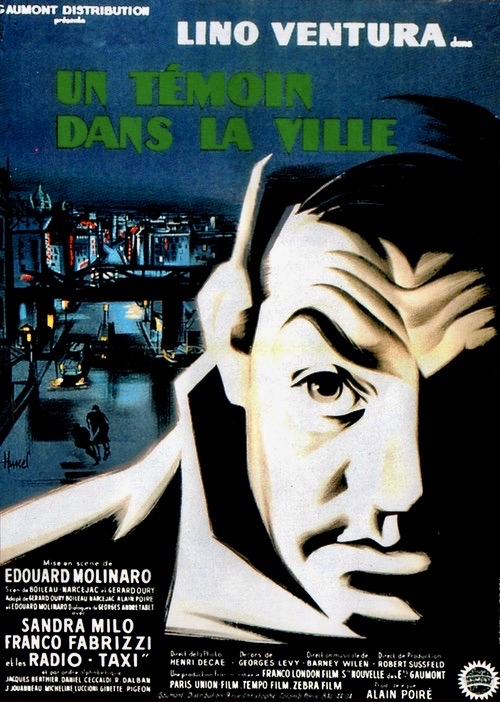
French director/screenwriter Edouard Molinaro may not be a household name in America but practically everyone knows his international breakout hit, La Cage aux Folles, from 1978.  It spawned an equally successful sequel, La Cage aux Folles II (1980), but also became the basis for the smash Broadway musical La Cage aux Folles in 1984 and eventually was remade by director Mike Nichols as The Birdcage in 1996 with Robin Williams, Nathan Lane, Gene Hackman and Dianne Wiest. La Cage aux Folles was no fluke success and Molinaro was already renowned in France for his film comedies such as Male Hunt (1964) with Jean-Paul Belmondo, Oscar (1967) featuring Louis de Funes and the black farce A Pain in the…(1973), which was remade by Billy Wilder as Buddy Buddy (1981). None of this would lead you to believe that Molinaro launched his feature film career with several film noir-influenced thrillers and Un temoin dans la ville (English title: Witness in the City, 1959) is a near masterpiece, deserving to stand alongside Louis Malle’s Elevator to the Gallows (1958), Claude Sautet’s Classe Tous Risques (1960) and Jean-Pierre Melville’s Le Doulos (1962).   Continue reading