Human Cargo

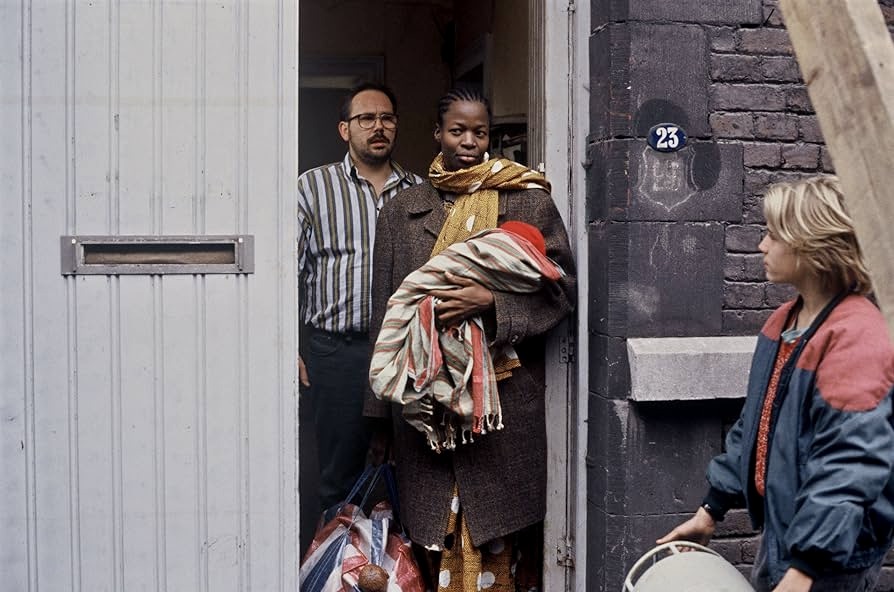
A scene from LA PROMESSE (The Promise, 1996), a Belgium film about an immigrant trafficking business starring Olivier Gourmet (left), Assita Ouedraogo, and Jeremie Renier.

Igor is a fifteen-year old kid who, in some ways, is like most teenagers his age. He likes to have fun hanging out with friends, ride his moped around and work on customizing his go-kart in his spare time. The problem is he doesn’t have much spare time. He works as a mechanic’s apprentice at a gas station but even those hours are cut short by his demanding father Roger, who needs him constantly for jobs involving building renovations, money collection and other activities related to Roger’s exploitation of illegal immigrants. Because of this, Igor has had to grow up fast with his multiple adult responsibilities but he likes the money he makes and the trust his father has placed in him. All of this is about to change when he becomes friendly with Assita, who has arrived with her newborn baby to join her husband, a West African man who does work for Roger. This is the basic set-up for Jean-Pierre and Luc Dardenne’s La Promesse (The Promise), a groundbreaking 1996 film for the brother filmmaking team about the brutal trafficking and mistreatment of undocumented immigrants in Belgium. It also serves as a stark but moving coming-of-age film.

Continue reading

Rave On!

SIRAT (2025), from Spanish director Oliver Laxe, opens with an illegal rave in the desert of Morocco before it transitions into a mysterious and shocking road trip.

We see the hands of roadies placing gigantic audio speakers on top of and beside each other on the arid plains of the Sahara Desert in Morocco. When they are finished, their work is revealed as a literal wall of sound, designed to super-amplify the techno beats of an incognito rave. As the propulsive rhythm floods the desolate location framed by towering red canyon walls, ravers let themselves go in an uninhibited dance frenzy, most of them lost in drug induced or spiritual ecstasy. Yet, among this throbbing mass of humanity, two people have not come to dance. Luis (Sergi Lopez) and his young son Esteban (Bruno Nunez Arjona) have come to distribute flyers for Esteban’s missing sister, who is a fan of raves and could possibly be here. So begins Oliver Laxe’s Sirat (2025), a cinematic journey that is both corporeal and metaphysical as a search for a missing person evolves into a life or death encounter with the unknown.

Continue reading

Smells Like Teen Spirit

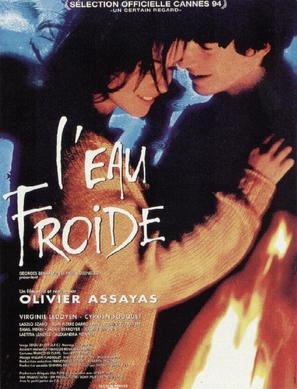
The French film poster for COLD WATER (1994)

Was high school the most emotionally turbulent rite of passage every teenager had to endure? For some, like French director Olivier Assayas, it was a period of time that helped transform him into the person he is today. Those years provided the raw material to create a deeply personal cinematic experience that was not just an artistic triumph in France but earned the director international attention and acclaim. L’eau Froide (English title: Cold Water, 1994) was Assayas’s fifth feature film but he credits it with being the movie that marks his first real breakthrough as a director. The story of Gilles (Cyprien Fouquet), a troubled student from an upper-class family, and his on-again, off-again infatuation with Christine (Virginie Ledoyen), a rebellious sixteen-year-old from a divorced working-class couple, is semi-autobiographical in nature with some incidents taken directly from the director’s life. Assayas would later state, “Cinema has the capacity for making you experience moments, emotion in your life and looking back on it I have the strange feeling that this movie belongs to the seventies.”

Continue reading

A Village Memoir

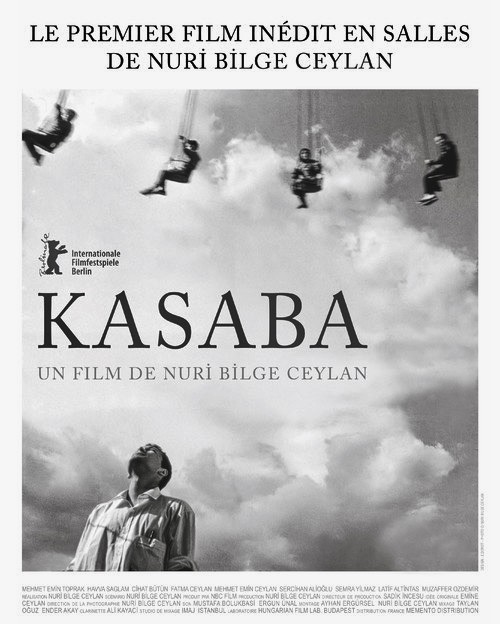
Some of the world’s most famous directors have made autobiographical features at some point in their careers with their childhood, family life or home town as the central focus. We have seen this in Federico Fellini’s Amarcord (1973), Ingmar Bergman’s Fanny and Alexander (1982), Richard Linklater’s Dazed and Confused (1993), Spike Lee’s Crooklyn (1994) and Steven Spielberg’s The Fabelmans (2022). Some directors even made their film debut with an autobiographical feature such as Francois Truffaut with The 400 Blows (1959) and Turkish director Nuri Bilge Ceylan can lay claim to this as well with Kasaba (English title: The Small Town, 1997), which is based on a short story by his sister Emin Ceyland entitled Cornfield. The movie depicts family life in a rural village in Turkey as seen through the eyes of a girl, Asiye, and her younger brother, Ali.  

Continue reading

Scorched Earth

VIDAS SECAS aka BARREN LIVES (1963), a Brazilian film by Nelson Pereira dos Santos.

You don’t have to believe in climate change to experience and understand the devastating effects of a drought. The northeastern part of Brazil is no stranger to this condition which has plagued the region for decades yet people continue to live there. If you are a wealthy landowner, you can survive the seasonal hardships but if you are a poor migrant worker, life is a constant struggle. Vidas Secas (English title: Barren Lives, 1963), directed by Nelson Pereira dos Santos, is the portrait of a family of four and their dog as they wander the arid deserts and sun-baked landscapes of northwestern Brazil in search of work, water and food. Set in 1941 and covering a two-year period in their lives, the film is considered a landmark work in the Cinema Novo movement, which emerged in the late fifties and focused on marginalized communities and people, often using non-professional actors, real settings and black and white cinematography in the manner of Italian Neorealism. 

Continue reading

No Man’s Land

The Hungarian poster for THE RED AND THE WHITE (1967).

Imagine a life during wartime where your country is invaded by foreign forces and your friends and neighbors have either joined the resistance or sided with the enemy in order to save their own skins. The lines were more clearly drawn during the American Civil War where geography, uniforms and flags were the distinguishing physical differences but in Europe, wars and revolutions were much more complicated and confusing for the opposing sides. Consider, for example, The Red and the White (Hungarian title: Csillagosok, Katonak, 1967), directed by Miklos Jancso, in which Hungary collapses into chaos in the aftermath of the Russian Revolution. As depicted by Jansco, the landscape becomes a no man’s land where the roles of the oppressors and the oppressed are constantly switching and non-partisan peasants are caught in the middle with no control over their fates. The result is a visually mesmerizing, almost absurdist view of power changing hands almost as rapidly as gamers in an interactive duel.

Continue reading

…And You Thought Donald Pleasence Was Creepy?

Angela Pleasence stars in the 1974 psychodrama SYMPTOMS, directed by Jose Ramon Larraz.

Angela Pleasence, like her father, has a face made for the cinema though not in the realm of conventional leading ladies. Even as a young actress appearing in bit parts in movies like Here We Go Around the Mulberry Bush (1968) and The Love Ban (1973), she was never a winsome ingénue or the lovable girl next store. Her uniquely peculiar beauty – especially those hungry eyes that bore holes right through you – must have somehow hindered her movie career because her film roles have been few and far between. She is mostly remembered for her television work, particularly her role as Catherine Howard in the 1970 TV mini-series The Six Wives of Henry VIII, but she should have had the film career her father had on the basis of Symptoms (1974) alone.  

Continue reading

No Exit

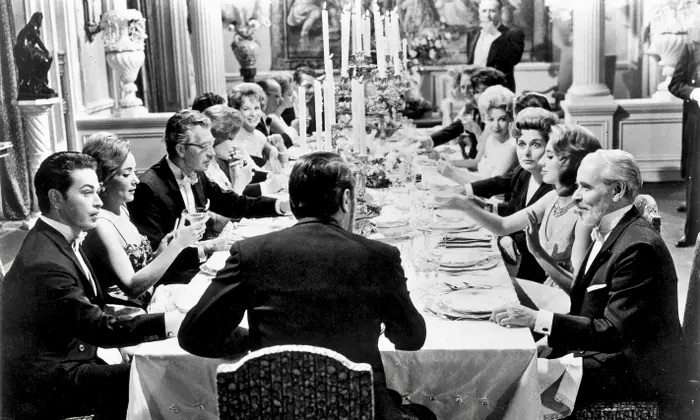
The dinner guests in Luis Bunuel’s THE EXTERMINATING ANGEL (1962) are in for an unpleasant surprise in this strange mixture of surrealism and black comedy.

Almost everyone has attended a dinner party at some point in their lives that was mandatory as well as a memorably bad experience. Maybe it was a communal meal with the boss and co-workers or a formal affair with an annoying in-law or relative. Just be glad you were able to leave the event when it became convenient. The assembled guests in Luis Bunuel’s surreal satire, The Exterminating Angel (1962), don’t have that option but the reasons for their entrapment are never clear.

Continue reading

Happiness is a Thing Called Little Joe

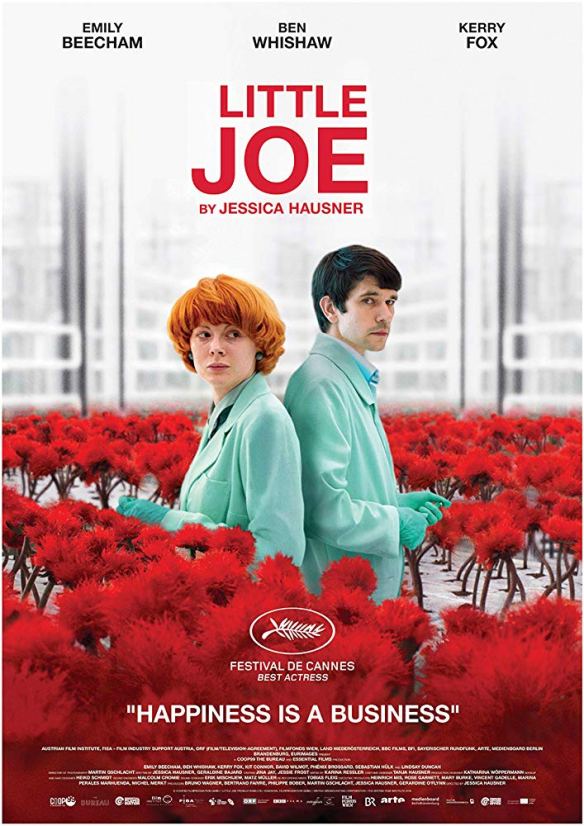
Austrian director Jessica Hausner has been a favorite of the Cannes Film Festival ever since her 45 minute short Inter-View won a Special Mention in 1999. Since then her subsequent feature films, Lovely Rita (2001), Hotel (2004) and Amour fou (2014) have all been nominated for Cannes’ Un Certain Regard Award. And her new feature Little Joe was nominated for the prestigious Palme d’Or award and won the Best Actress award for Emily Beecham. It is also worth noting that all of Hausner’s previous features with the exception of Lourdes (a French language production) have been in German. Little Joe, not to be confused with the 2008 documentary about Warhol star Joe Dallesandro also entitled Little Joe, marks Hausner’s English language debut and it is a remarkably self-assured and hypnotic work that displays none of the usual drawbacks that detract from a director’s first foray into a non-native language production.   Continue reading

A Childhood on the Run

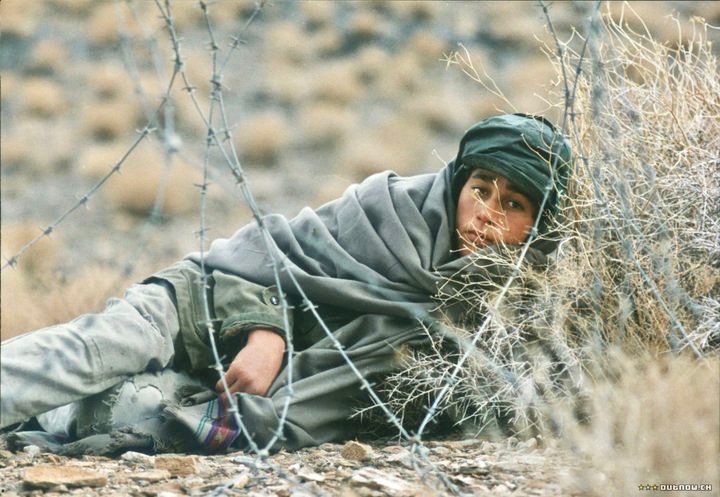
Kaim Alizadeh plays a 14 year old orphan on the run from border guards in Afghanistan in Delbaran (2001) from Iranian director Abolfazl Jalili.

Although released in 2001 and greatly admired by many prominent film critics, Delbaran, directed by Iranian filmmaker Abolfazl Jalili, is not nearly as well known as other Iranian prize winners such as Abbas Kiarostami’s The Wind Will Carry Us (1999) or Mohsen Makhmalbaf’s Kandahar (2001) but deserves to be. The story focuses on Kaim, a fourteen-year-old war orphan trying to survive in a desolate Iranian village near the Afghanistan border. And the film is in the grand tradition of other renowned classics that feature child protagonists caught up in the madness of war such as Rene Clement’s Forbidden Games (1952), Andrei Tarkovsky’s Ivan’s Childhood (1962) and Elem Klimov’s Come and See (1985). The difference is that Delbaran is much more austere and understated than those better known masterworks.

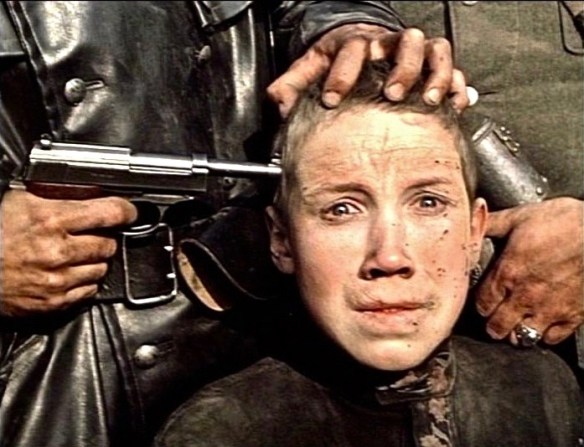
A Russian youth (Aleksey Kravchenko) is captured by German troops in the harrowing WWII drama Come and See (1985), directed by Elem Klimov.

Continue reading