Artist, Prankster and German Visionary

As 2017 drew to a close, Hollywood studios and independent film distributors raced to release their best movies in order to qualify for Oscar consideration. The documentary category in particular was unusually strong that year with such critically acclaimed contenders as JR & Agnes Varda’s Faces Places, Ai Weiwei’s Human Flow and Errol Morris’s The B-Side: Elsa Dorfman’s Portrait Photography. Mostly overlooked among the many offerings, however, was a remarkably diverse portrait of the artist Joseph Beuys (1921-1986) from Germany entitled Beuys (2017), directed by Andres Veiel.

Continue reading
The Education of Miss Blum

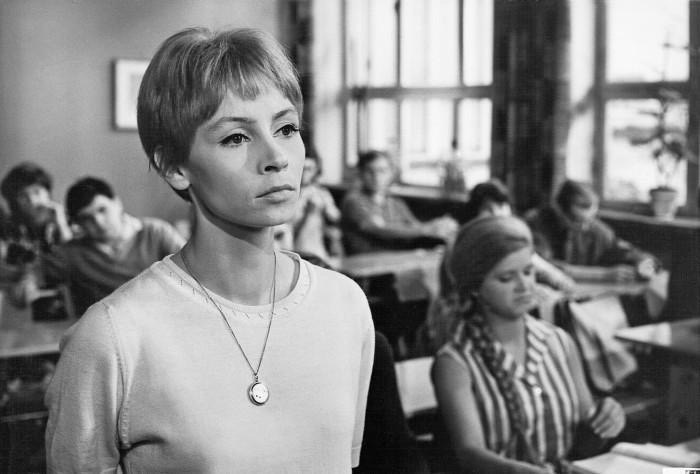
Karla (Jutta Hoffmann) has some doubts about her effectiveness as a teacher in the East Germany drama KARLA (1965), which was banned for many years.

There have been enough movies about teachers facing challenging classroom situations and unsympathetic staff and school board members to comprise a film genre of its own. And it is not limited to just classic flicks from Hollywood like Goodbye, Mr. Chips (1939), Bright Road (1953) The Blackboard Jungle (1955), Up the Down Staircase (1967), To Sir, With Love (1967), Stand and Deliver (1988) and Dead Poets’ Society (1989). Other countries have produced their own cinematic touchstones on the subject such as the U.K. (The Browning Version [1951], If… [1968], The Prime of Miss Jean Brodie [1969]), France (Zero for Conduct [1933], The Class [2008]), Japan (Twenty-Four Eyes [1955] or Russia (Village Teacher [1947]). All of these address numerous issues like juvenile delinquency, racism, illiteracy and the value of mentorship but few, if any, have presented the complex problems facing Karla, the heroine of Herrmann Zschoche’s 1965 East German drama which was extremely controversial in its day.

Continue reading

Abattoir Blues

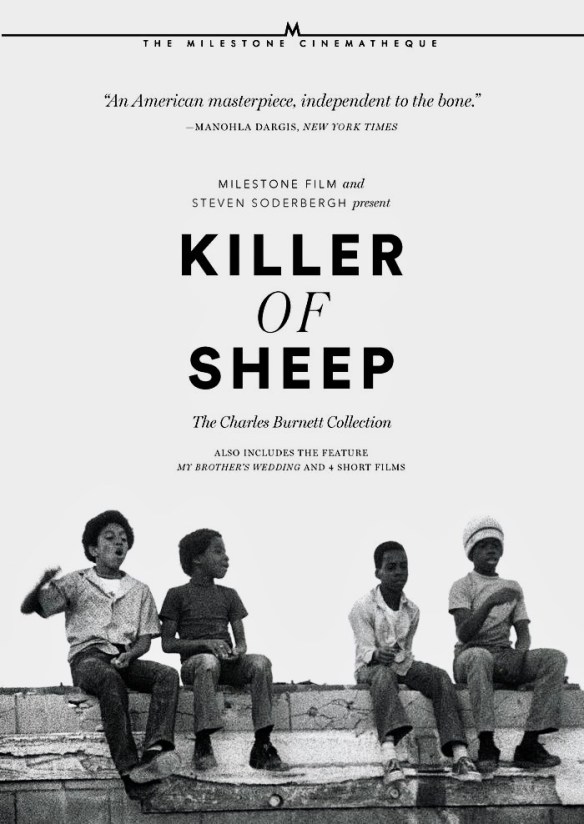
“I wanted to do something that reflected the way people in the community would see themselves. Coming from another place, you can see a much larger picture. But when you’re in a well, you can only see the narrow light above. If you’ve been living like that for a long time, it can have an unproductive effect on you in many ways. So it wasn’t my personal conflicts. It was the conflict of the community.” – Director Charles Burnett in an interview with Filmmaker Magazine about his film Killer of Sheep.

After more than 42 years, Charles Burnett’s Killer of Sheep (1977) is now recognized as a seminal film in the indie film movement of the ‘70s even though it didn’t receive a wide release until 2007 via Milestone Films. In fact, Burnett never really intended for the film to have a theatrical release; he made it as his thesis film at UCLA. But retrospective screenings of the film and the resulting critical acclaim culminated in Killer of Sheep winning the Forum of New Cinema prize at the 1981 Berlin International Film Festival. Other accolades followed such as being selected by the National Film Registry in 1990 for film preservation and winning a special award from the New York Film Critics Circle in 2007. Not bad for a movie shot on 16mm and made for a rock bottom budget of $10,000 from film grants.   Continue reading

Love Hurts

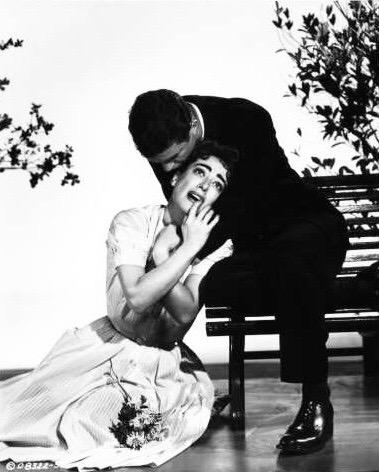
Joan Crawford and Cliff Robertson have a traumatic love affair in Autumn Leaves (1956).

Joan Crawford and Cliff Robertson have a traumatic love affair in Autumn Leaves (1956).

In 1956 directed Robert Aldrich surprised everyone by trying his hand at a “woman’s picture,” a melodramatic soap opera that on the surface appeared to be a complete departure from his previous work which included two westerns (Apache, Vera Cruz), a film noir (Kiss Me Deadly) and a drama (The Big Knife), whose emotional volatility equals the physical violence in the three preceding films.  Continue reading