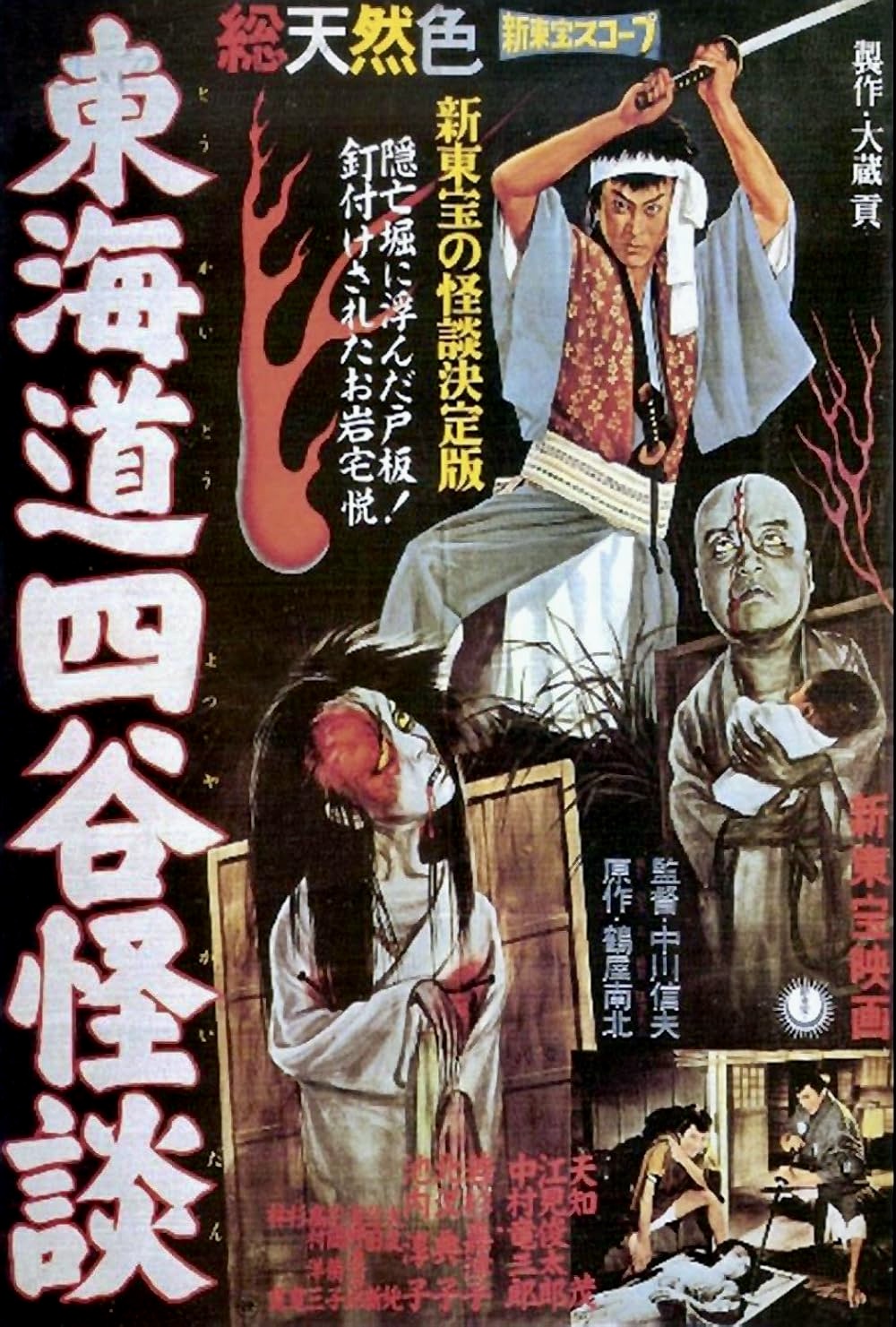
The Japanese film poster for THE GHOST OF YOTSUYA (1959), directed by Nobuo Nakagawa.
Based on a kabuki play written in 1825 by Nanboku Tsuruya, The Ghost of Yotsuya (Japanese Title: Tokaido Yotsuya Kaidan) is one of the most popular and famous of all Japanese ghost stories. It has been filmed countless times over the years but Nobuo Nakagawa’s 1959 version of The Ghost of Yotsuya might be the definitive version. The story is one of fate, passion, betrayal and revenge – all classic themes of kabuki theatre and Greek tragedy.
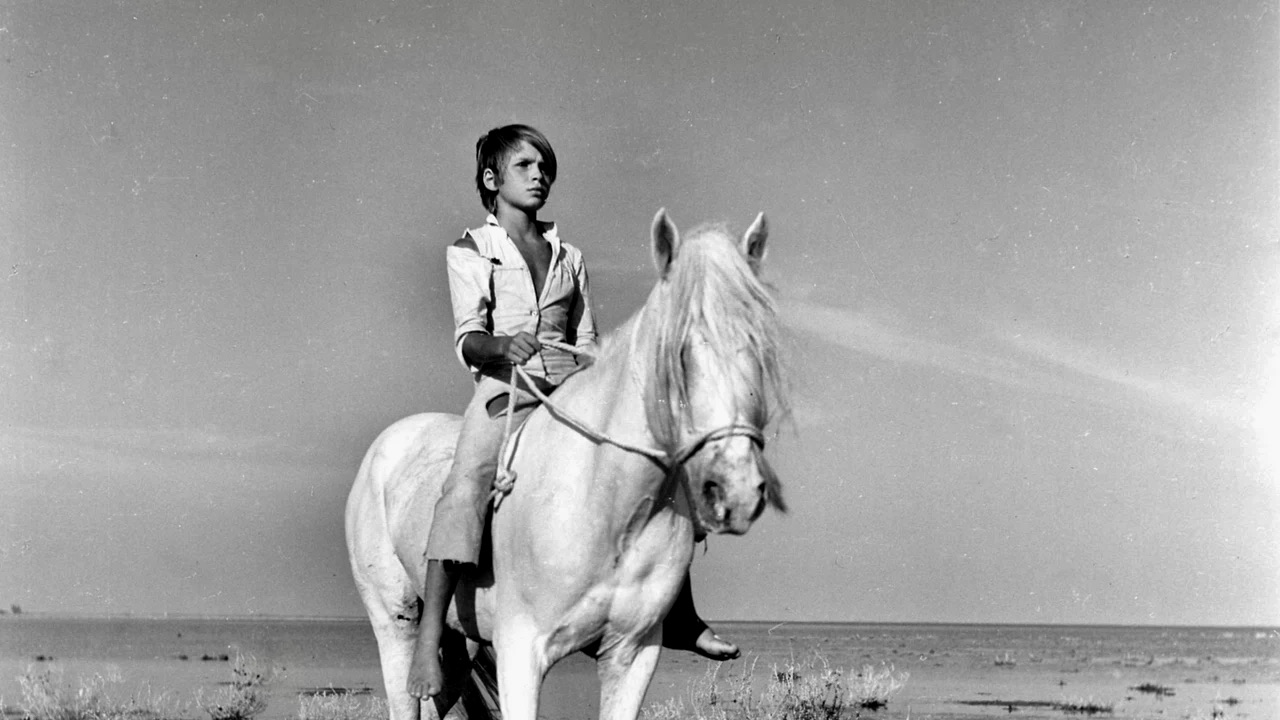
Folco (Alain Emery) forms a bond with a wild stallion in the 1953 French adventure drama WHITE MANE.
When you consider movies made for children and/or family viewing, stories about horses constitute a large portion of the genre, especially in American cinema. My Friend Flicka (1943), Black Beauty (1947), The Story of Seabiscuit (1949), Snowfire (1957), The Sad Horse (1959) and The Black Stallion (1970) are just a few of the more famous titles and some of these have inspired remakes or sequels. Still, one of my favorite films in this category comes from France and is often overlooked today – Crin Blanc: Le Cheval Sauvage (English title: White Mane, 1953), written and directed by Albert Lamorisse (1922-1970).
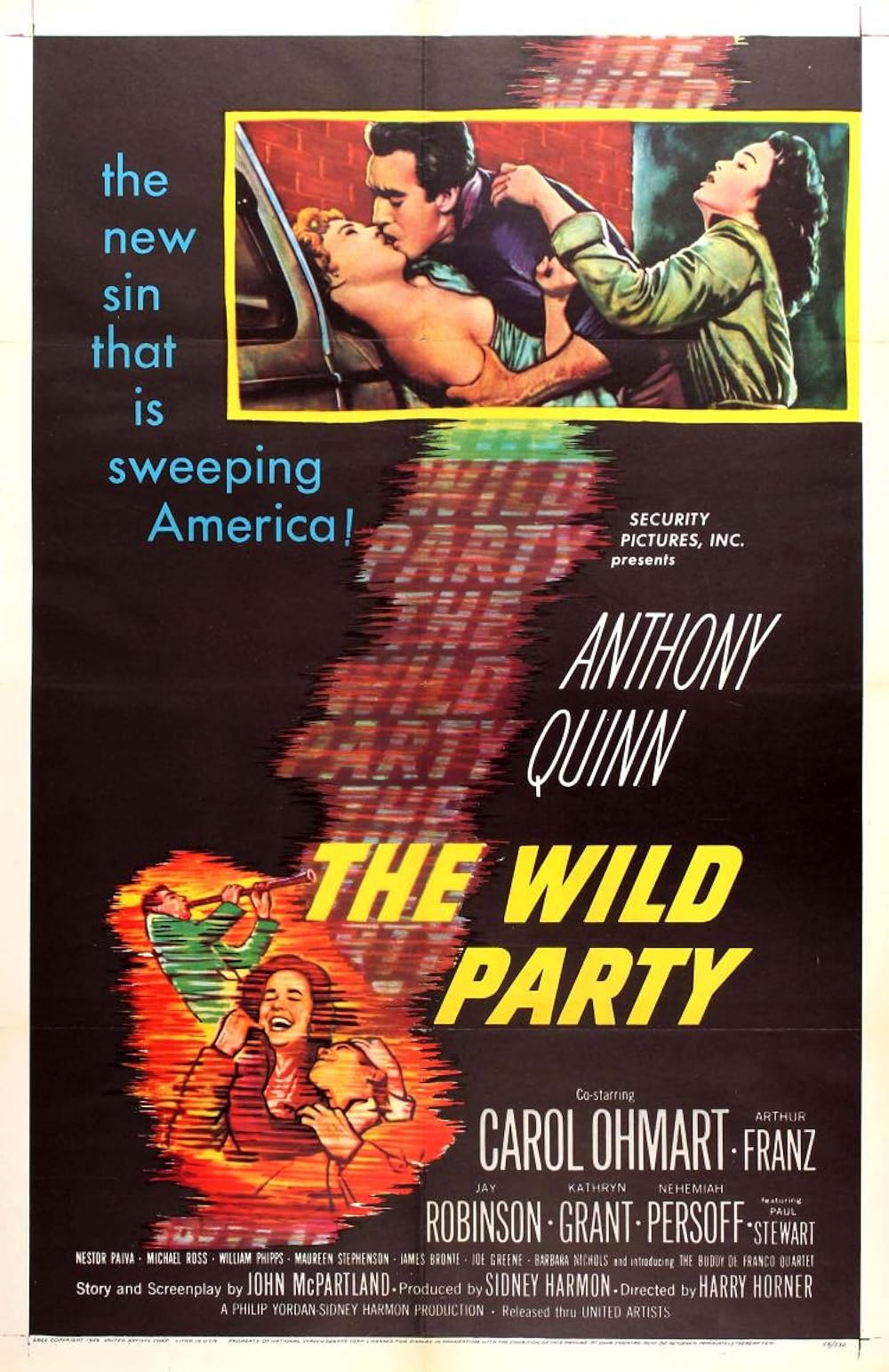
Among the numerous Hollywood films that attempted to explore the subculture of the emerging beatnik and bohemian scene of the late fifties, none is odder or more blatantly miscast than The Wild Party (1956) which casts Anthony Quinn as Tom Kupfen, a former star football player turned full time deadbeat, hanging out at basement jazz clubs and dive bars, looking for action. He’s joined by a motley crew of hipster accomplices that includes Kicks (Nehemiah Persoff), a jazz pianist of some talent, Honey (Kathryn Grant), a spaced-out former girlfriend, and Gage (Jay Robinson), a switchblade-toting psychopath.
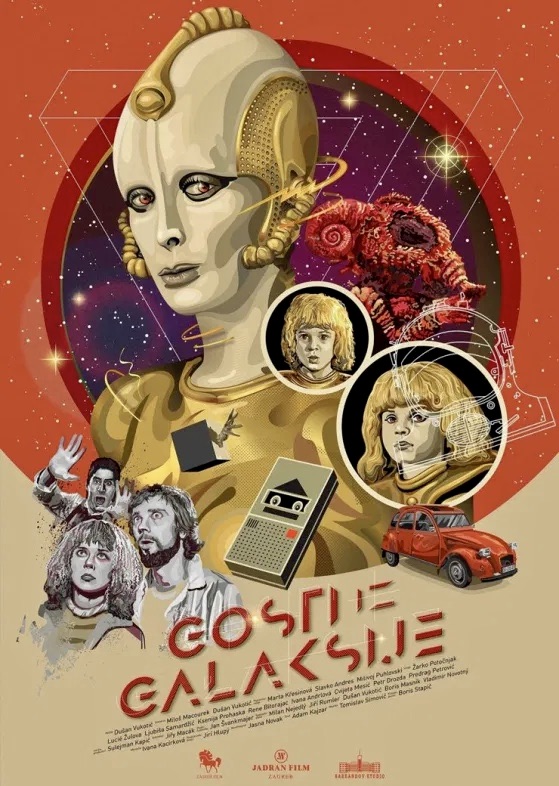
The Yugoslavian film poster for the 1981 science fiction fantasy VISITORS FROM THE ARKANA GALAXY.
I always welcome the opportunity to learn new words and I discovered one today from an unlikely source – Visitors from the Arkana Galaxy (1981), a science fiction fantasy from Yugoslavia. In the movie, an aspiring writer questions a psychiatrist about the possibility of fictional characters from a story becoming real creations through the power of thought. The psychiatrist calls it Tellurgy – a non-existence word – but Tulpa is a noun that has the same meaning and refers to a being or object that is created in the imagination by visualization techniques. There have certainly been other movies to explore this phenomenon – Forbidden Planet (1956), Stranger Than Fiction (2006), Ruby Sparks (2019) – but Visitors of the Arkana Galaxy takes the concept in unexpected directions, employing genre parody, surrealism and a healthy dose of black comedy.
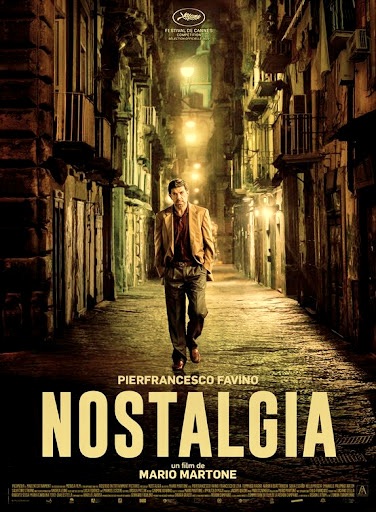
In Italy and most of Europe Mario Martone is well known and highly regarded as a director, screenwriter and producer who first rose to prominence in the theater world. He formed Falso Movimento, his first theater company, in 1979 and made his debut as a director of operas in 1989 with the world premier of Lorenzo Ferrero’s Charlotte Corday. However, it was in the 1990s that Martone emerged as one of the leading film directors of the new wave of Neopolitan cinema that produced such major talents as Paolo Sorrentino and Toni Servillo. Martone is still relatively unknown in the U.S. but his 2022 feature Nostalgia garnered critical acclaim on the art house circuit and continued Martone’s fascination with the city of Naples, where he was born in 1959. Based on a novel by Ermanno Rea, the film is a slow burn character study of Felice Lasco, an expatriate living in Cairo, Egypt, who returns to his childhood home of Naples after a 40-year hiatus.
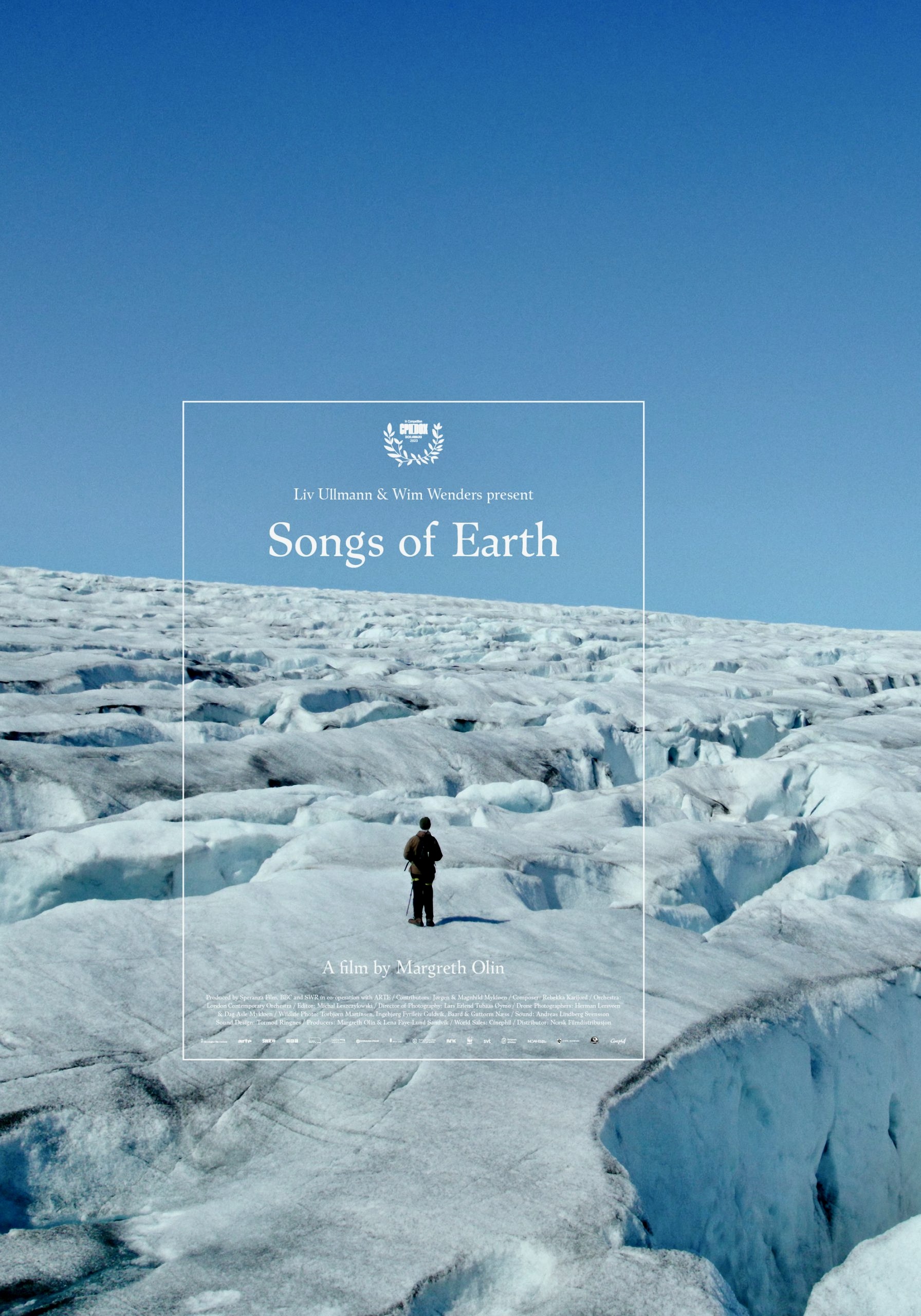
Olden, Norway might not be a place you have ever heard of or know anything about but it is located in one of the most stunning and pristine natural settings on the planet. Situated at the mouth of the Oldeelva River and close to the Jostedal glacier, the largest inland glacier in Europe, the small village of less than 600 inhabitants is nonetheless a top travel destination for tourists who travel to Norway. It is also the childhood home of filmmaker Margreth Olin, who has made a film about it entitled Fedrelandet (English title: Songs of Earth, 2023) except it is no conventional documentary. Although it does showcase the awe-inspiring beauty of the region, it is much more intimate in scope since the emphasis is on Olin’s relationship with her parents and how growing up in Olden affected her feelings about nature and her place in the world.
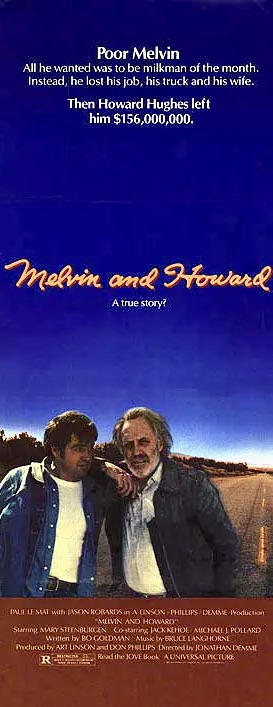
Over the years there have been numerous biographies written about aviation legend/studio mogul/eccentric billionaire Howard Hughes; everything from fake ones like Clifford Irving’s Autobiography of Howard Hughes to definitive accounts such as Howard Hughes: His Life and Madness by Donald L. Bartlett and James B. Steele. In contrast, there have been very few motion pictures about him. Martin Scorsese’s The Aviator (2004), based on the Bartlett & Steele biography, is the only feature film about his life to date. There was also a TV movie, The Amazing Howard Hughes (1977), with Tommy Lee Jones in the title role, and Jonathan Demme’s Melvin and Howard (1980), a quirky docudrama/comedy about Melvin E. Drummar (Paul Le Mat), a Utah man who claimed Hughes (Jason Robards Jr.) named him in his will after rescuing him in the Nevada desert.
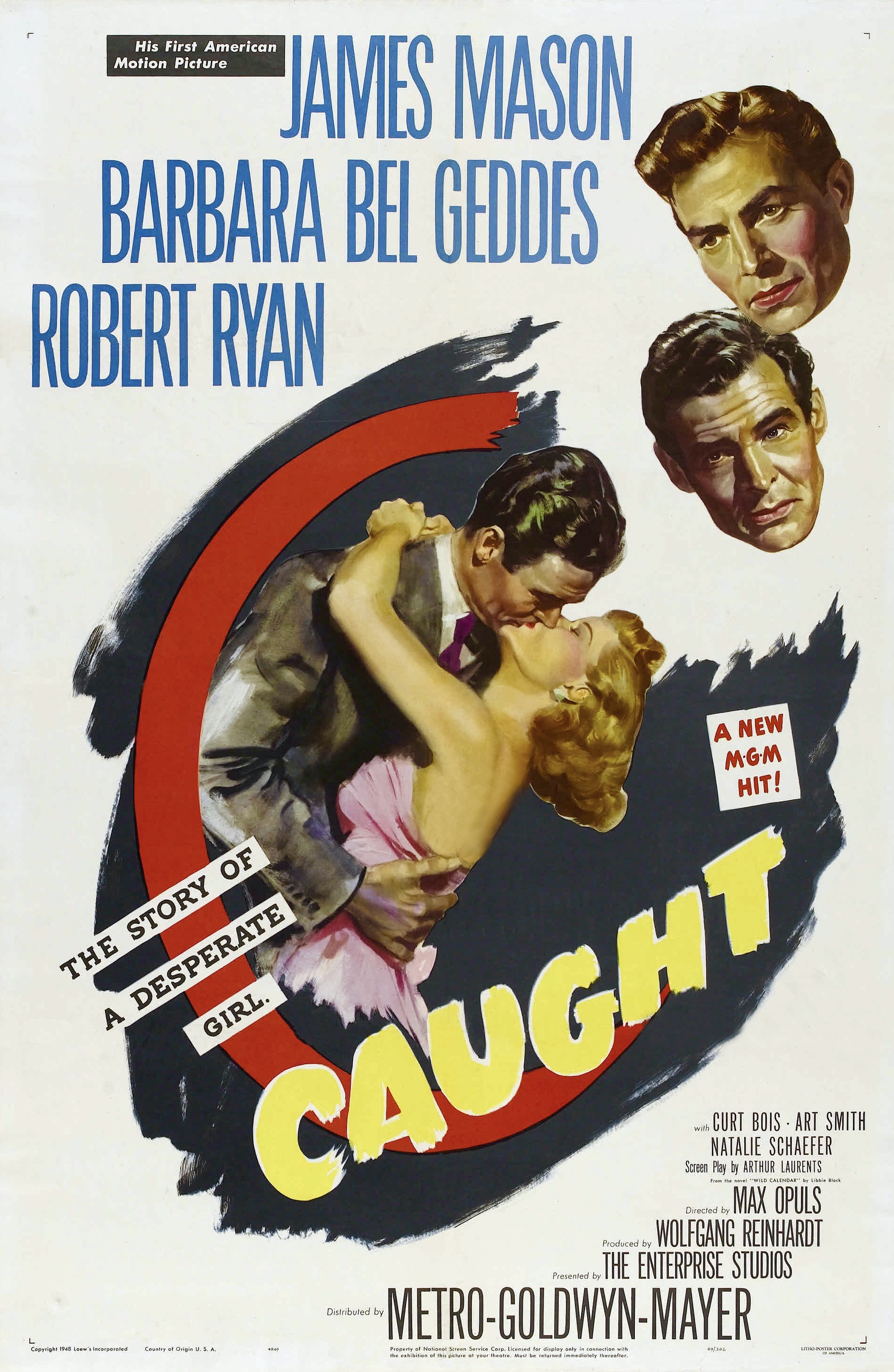
Strangely enough, my favorite film about Howard Hughes isn’t a biopic at all but a noir-like melodrama featuring a character who was clearly inspired by the megalomaniac tycoon – Caught (1949), by German director Max Ophuls. Smith Ohlrig, the business tycoon modeled on Hughes, may not resemble him in terms of a biographical profile but on a psychological level he is the epitome of Hughes in the way he interacted with women, his employees and industry rivals.
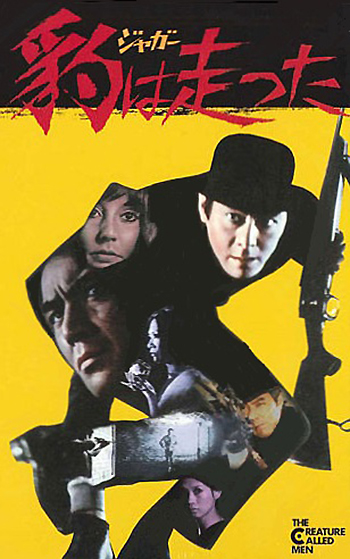
The film poster for JAGA WA HASHITTA (1970), a Japanese film that is also known as THE CREATURE CALLED MAN.
In the late 1960s and early 1970s Toho Studios began toying with some of its genre offerings by slipping some social or political references into the narratives while adding additional cinematic influences. A prime example of this is the 1970 Japanese film Jaga Wa Hashitta (English title: The Creature Called Man), an offbeat actioner about rival hit men with obvious references to the James Bond spy series as well as American crime thrillers.
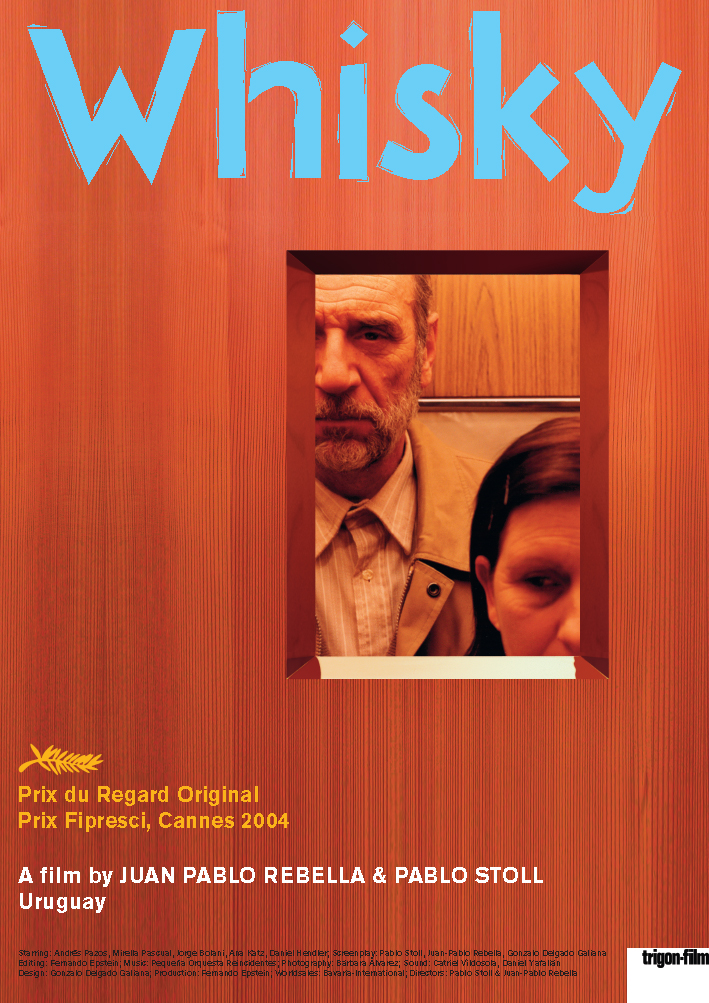
What was the last movie you saw from Uruguay? I was not sure I had ever even seen a film from that country until I recalled watching La Noche de 12 Anos (English title: A Twelve-Year Night) in 2018. Directed by Alvaro Brechner, it was the story of three political prisoners from the National Liberation Movement aka Tupamaros in Uruguay who were systematically tortured in jail during the military dictatorship of the country in 1973. The only other film I recall that was specific to Uruguay was Costa-Gavras’s State of Siege (1972), a Kafka-like drama based on the real-life kidnapping and assassination of Daniel A. Mitrione, a government official with the United States Agency for International Development. But Costa-Gavras’s film was actually shot in Chile, not in Montevideo where the events took place, and was primarily a French production so it doesn’t really qualify as a Uruguayan production…which brings me to Whisky, a 2004 film by Uruguay filmmakers Juan Pablo Rebella and Pablo Stoll. Whisky could not be more different than the politically charged A Twelve-Year Night and offers instead a subtle, bittersweet character study directed in the deadpan absurdist style of Aki Kaurismaki (Ariel, Le Havre) or similar kindred spirits like Roy Andersson (Songs from the Second Floor, About Endlessness) or Jim Jarmusch (Stranger Than Paradise, Dead Man).
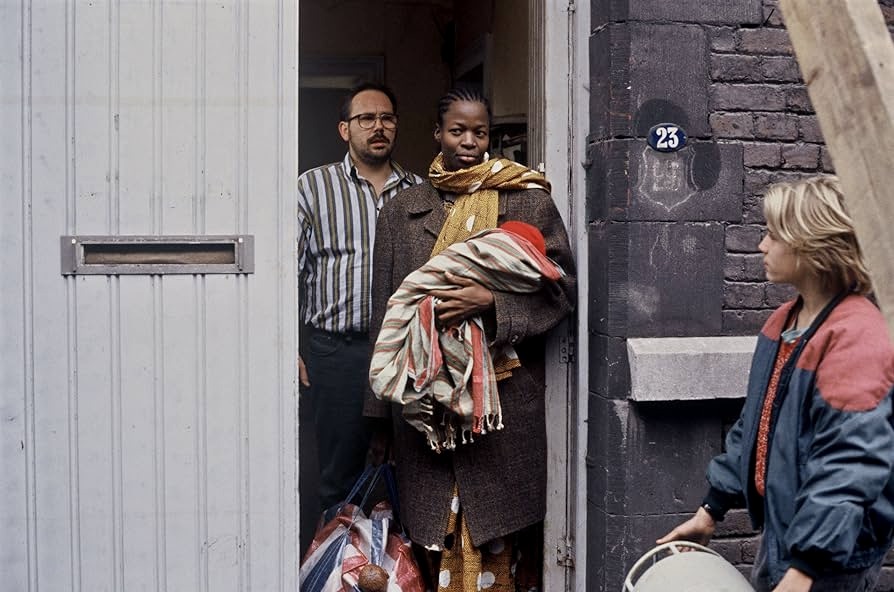
A scene from LA PROMESSE (The Promise, 1996), a Belgium film about an immigrant trafficking business starring Olivier Gourmet (left), Assita Ouedraogo, and Jeremie Renier.
Igor is a fifteen-year old kid who, in some ways, is like most teenagers his age. He likes to have fun hanging out with friends, ride his moped around and work on customizing his go-kart in his spare time. The problem is he doesn’t have much spare time. He works as a mechanic’s apprentice at a gas station but even those hours are cut short by his demanding father Roger, who needs him constantly for jobs involving building renovations, money collection and other activities related to Roger’s exploitation of illegal immigrants. Because of this, Igor has had to grow up fast with his multiple adult responsibilities but he likes the money he makes and the trust his father has placed in him. All of this is about to change when he becomes friendly with Assita, who has arrived with her newborn baby to join her husband, a West African man who does work for Roger. This is the basic set-up for Jean-Pierre and Luc Dardenne’s La Promesse (The Promise), a groundbreaking 1996 film for the brother filmmaking team about the brutal trafficking and mistreatment of undocumented immigrants in Belgium. It also serves as a stark but moving coming-of-age film.

 Cinema Sojourns