The Ballad of Hank McCain

John Cassavetes stars in the title role of MACHINE GUN MCCAIN (1969) aka Gli Intoccabili, an Italian crime drama directed by Giuliano Montaldo.

Lean, mean and paranoid, convict Hank McCain (John Cassavetes) is sprung from prison by West Coast mobster Charlie Adamo (Peter Falk) to rob a Las Vegas casino that is owned by an East Coast Mafia boss in the same syndicate. Adamo’s underhanded attempt to muscle in on his fellow gangster’s territory ignites a gangland war between factions with McCain caught in the middle and running for his life after he successfully pulls off a $2 million dollar heist. Along the way, McCain is double-crossed by his own son, hooks up with Irene (Britt Ekland), a bar hostess, is briefly reunited with his former mistress Rosemary (Gena Rowlands) and goes down fighting in a genuine noir finale. Although it didn’t get any respect from the critics or even much notice from film reviewers at the time, Machine Gun McCain (Italian title: Gli Intoccabili, 1968) is a remarkably taut, fast-paced B-movie crime thriller that is as feral and cagey as its title hero. Cassavetes imbues his role with a pent-up intensity that threatens to explode at any moment and often does. It’s one of his best performances and demonstrates why he was more in-demand as an actor in Hollywood instead of a director.

Continue reading
The Vows Not Taken

The Polish film poster for THE CONTRACT aka Kontrakt (1980)

I remember the first time I heard about Polish director Krzysztof Zanussi. Friends of mine in Seattle were attendees at the annual Seattle International Film Festival and saw one of his films there in the early 1980s and raved about it. They became fans after that and tried to see everything he did that received distribution in their city. Unfortunately, outside of film festivals, few of his movies enjoyed wide (or any) distribution in the U.S. with the exception of a few art house dates in major cities like New York and Chicago. The first and only Zanussi film I saw was The Catamount Killing, which was released in 1974, but I only caught up with it on VHS in the mid-eighties. It is that rare anomaly in his career – a low-budget crime drama filmed in Burlington, Vermont with an English-speaking cast – and was not a success or even characteristic of his work with the possible exception of one of its themes – guilt and how it can destroy relationships. Only recently I have discovered some streaming sources for Zanussi’s work and my first foray into his past filmography is the 1980 made-for-Polish television satire Kontrakt (English title: The Contract), which was filmed in and around Warsaw and features an international cast of Polish, English and French actors including Leslie Caron in a key role.

Continue reading

Three Nuts in Search of a Dolt

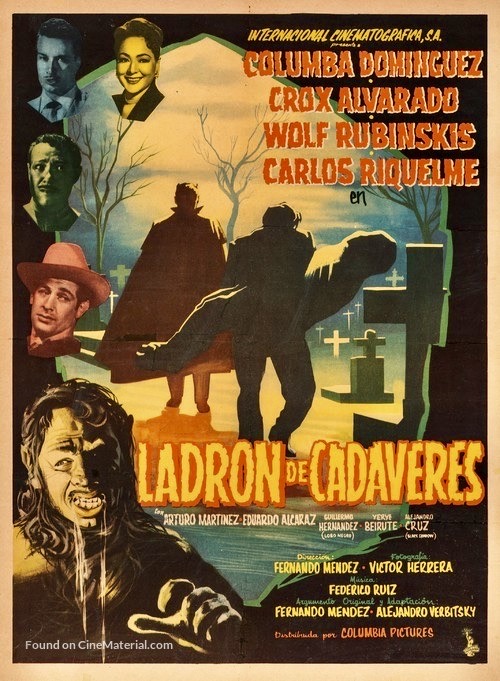
What makes a mad scientist mad? Is it the realization that his skill set is not sufficient to achieve the medical breakthroughs he envisions or the fact that the medical community is too unenlightened to understand his genius? In the case of Don Panchito aka The Professor (Carlos Riquelme) it’s a little bit of both. His goal is to build a master race of super beings with the help of his two assistants but so far the experiments aren’t working. The Professor has been kidnapping world class athletes and wrestlers and transplanting monkey brains into their bodies (yes, that again) but so far none have survived. Maybe the problem is that he needs a stronger body so his quest continues in Ladron de Cadaveres (English title: The Body Snatcher, 1957), the first Mexican horror/fantasy genre film to combine mad scientists, brain transplants and wrestlers in an audience pleasing formula that would soon inspire a series of movies pitting the popular wrestler El Santo against a variety of supernatural creatures.

Continue reading

Fate, Coincidence and Missed Opportunities

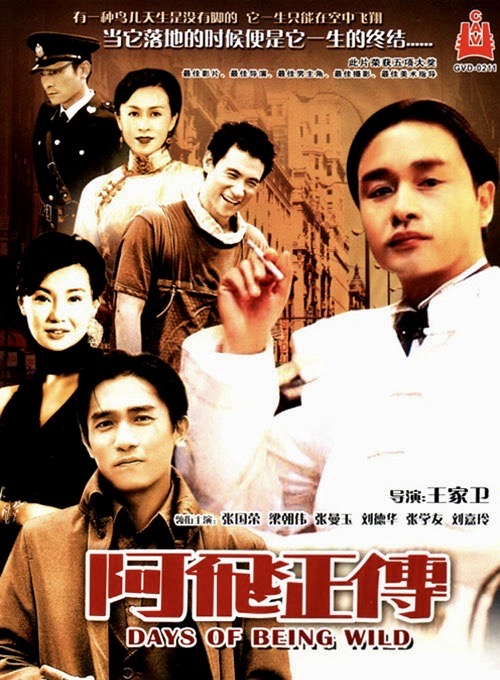
Most cinephiles remember the first time they saw a film by Hong Kong director Wong Kar-Wai. For me it was Ah Fei Jing Juen (English title: Days of Being Wild, 1990), which I rented on VHS from Blast-Off Video in Atlanta, Georgia. The owner, Sam Patton, encouraged me to watch it and it was a revelation, not like his usual recommendations which were more likely to be softcore exploitation films like Doris Wishman’s Deadly Weapons (1974) starring Chesty Morgan and her 73 inch bust or a bizarre obscurity like The Manipulator aka B.J. Lang Presents (1971) with Mickey Rooney at his most demented. What I saw was nothing like what I had seen coming out of the Hong Kong film industry at that time – mostly martial arts action films and kinetic crime thrillers such as John Woo’s The Killer (1989). No, Days of Being Wild is a lush, sensual cinematic poem, a visually innovative tale of unrequited longing, one-sided relationships and melancholy reflections on life as it was in Hong Kong in 1960, the year the movie takes place. 

Continue reading

A Twist of Dickens

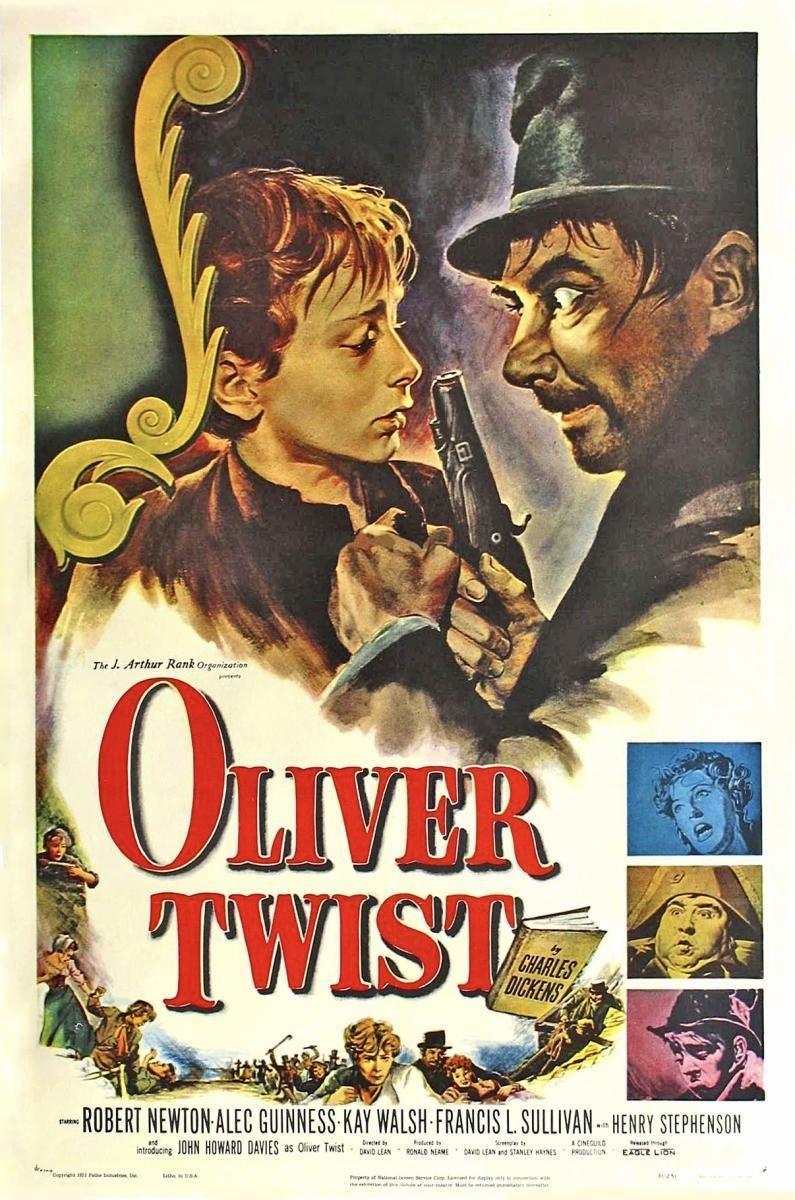
With the release of Brief Encounter in 1945, David Lean became the preeminent British director of his generation. But the critical and popular success of that bittersweet postwar romance (it won the Grand Prize at the Cannes Film Festival and garnered three Oscar nominations) was overshadowed by an even greater achievement, his film adaptation of Charles Dickens’s Great Expectations (1946). The latter secured his reputation on an international scale and received five Oscar nominations, winning statuettes for Best Art Direction and Best Cinematography. What to do for an encore? Instead of moving in a new direction, Lean surprised everyone by agreeing to do another Charles Dickens adaptation – a film version of Oliver Twist (1948).

Continue reading

Nazi Zombies, White Slave Traders, Cannibal Cults and More from Eurocine

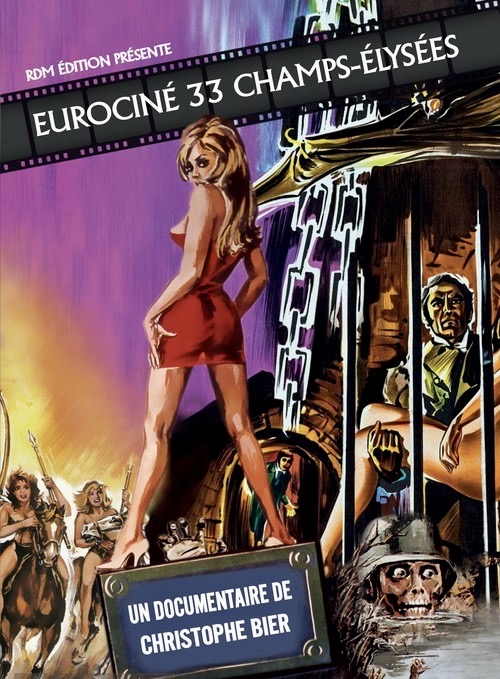
Exploitation films in every imaginable genre from the late fifties to the mid-eighties attracted a specific kind of viewer that enabled U.S. companies like American International Pictures (AIP) and Crown International Pictures to become profitable enterprises through drive-in and grindhouse saturation and later the VHS market. By spicing up their low-budget productions with more sex, violence and subject matter Hollywood avoided, these minor players provided a wildly diverse alternative to mainstream commercial cinema but it wasn’t unique to America alone. Europe also got into the act and the French company Eurocine went from obscurity to cult status for some of its more infamous hits like The Awful Dr. Orlof (1962), Red Hot Zorro (1972), White Cannibal Queen (1980) and Zombie Lake (1982). A behind-the-scenes look at the company’s history and Marius Lesoeur, the man who made it an international brand, is the focus of Eurocine 33 Champs-Elysees (2013), an entertaining and often amusing French documentary which is named after the company’s address in Paris.

Continue reading

A Monument to Objectivism

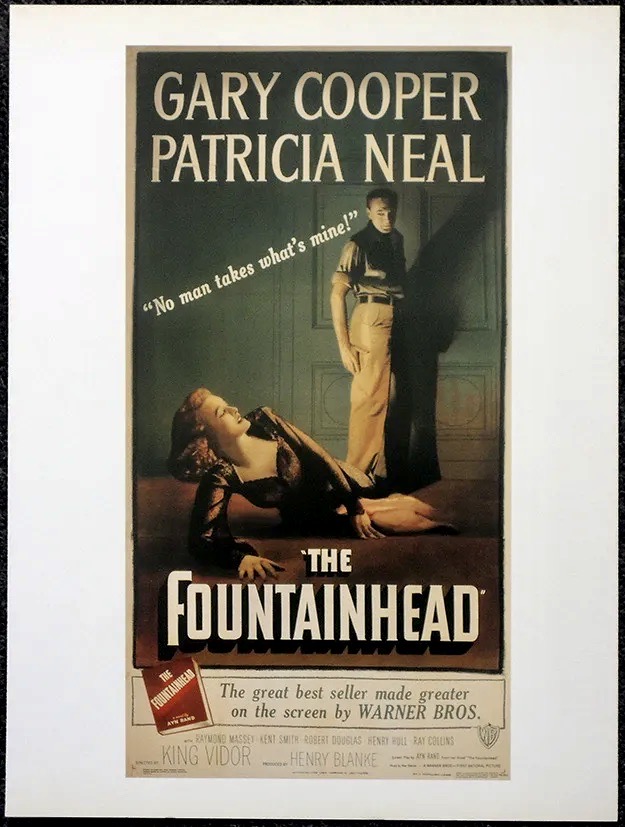
If you look up the word melodrama in the Merriam-Webster Dictionary, the description reads “a work (such as a movie or play) characterized by extravagant theatricality.” The Oxford Learner’s Dictionaries offers a similar definition: “a story, play, or novel that is full of exciting events and in which the characters and emotions seem too exaggerated to be real.” Some popular examples of this in the movies would have to include The Bad and the Beautiful (1952), The Barefoot Contessa (1954) and The Best of Everything (1959). But they are some films in this category that are so excessive in tone and style that they belong in their own category of extreme melodrama. Among the more glaring examples of this are Douglas Sirk’s Written on the Wind (1956), The Caretakers (1963), which is set in a psychiatric hospital where Joan Crawford teaches karate, the Tinseltown expose The Oscar (1966), and four films – yes, four! – from director King Vidor: Duel in the Sun (1946), Beyond the Forest (1949) with Bette Davis, Ruby Gentry (1952) starring Jennifer Jones, and my personal favorite, The Fountainhead (1949), which scales dazzling heights in operatic excess.

Continue reading

The Double Life of Tokiko

By day Tokiko (Kinuyo Tanaka) works as a typist in a business firm but after dark she frequents the favorite haunts of gangsters with her yakuza boyfriend in DRAGNET GIRL (1933), directed by Yasujiro Ozu.

Tokiko works as a typist in a business office where Okazki, the owner’s son, is the office manager. He is smitten with his employee and often flirts with her behind closed doors in his private office. Tokiko manages to keep him at bay even though he showers her with gifts and offers her an engagement ring. What Okazki doesn’t know is that Tokiko leads a completely different life after work when she sheds her office worker identity and transforms into a chic underworld player with a gangster boyfriend, Joji. Tokiko not only supports Joji with her day job but also serves as his partner in crime in various money-making schemes. From this brief description you probably wouldn’t suspect that the Japanese crime drama, Hijosen no Onna (English title: Dragnet Girl, 1933), was directed by the celebrated Yasujiro Ozu, but it is an early and surprising entry in his filmography before he became famous for his portraits of Japanese family life in such post-WW2 movies as Late Spring (1949), Early Summer (1951) and his 1953 masterpiece, Tokyo Story.

Continue reading

A Village Memoir

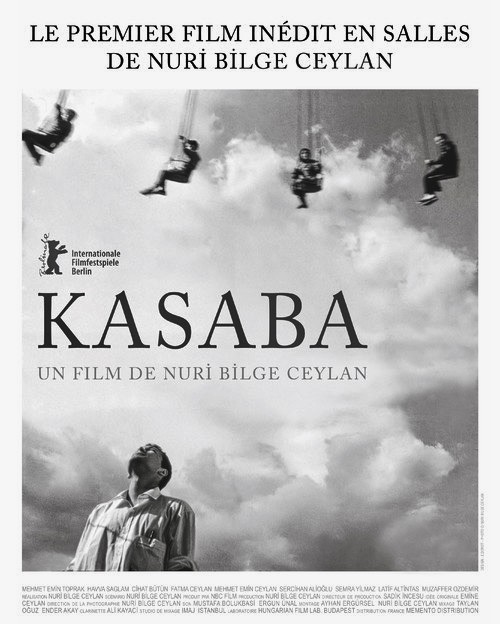
Some of the world’s most famous directors have made autobiographical features at some point in their careers with their childhood, family life or home town as the central focus. We have seen this in Federico Fellini’s Amarcord (1973), Ingmar Bergman’s Fanny and Alexander (1982), Richard Linklater’s Dazed and Confused (1993), Spike Lee’s Crooklyn (1994) and Steven Spielberg’s The Fabelmans (2022). Some directors even made their film debut with an autobiographical feature such as Francois Truffaut with The 400 Blows (1959) and Turkish director Nuri Bilge Ceylan can lay claim to this as well with Kasaba (English title: The Small Town, 1997), which is based on a short story by his sister Emin Ceyland entitled Cornfield. The movie depicts family life in a rural village in Turkey as seen through the eyes of a girl, Asiye, and her younger brother, Ali.  

Continue reading

The Rotten Are Coming for You!

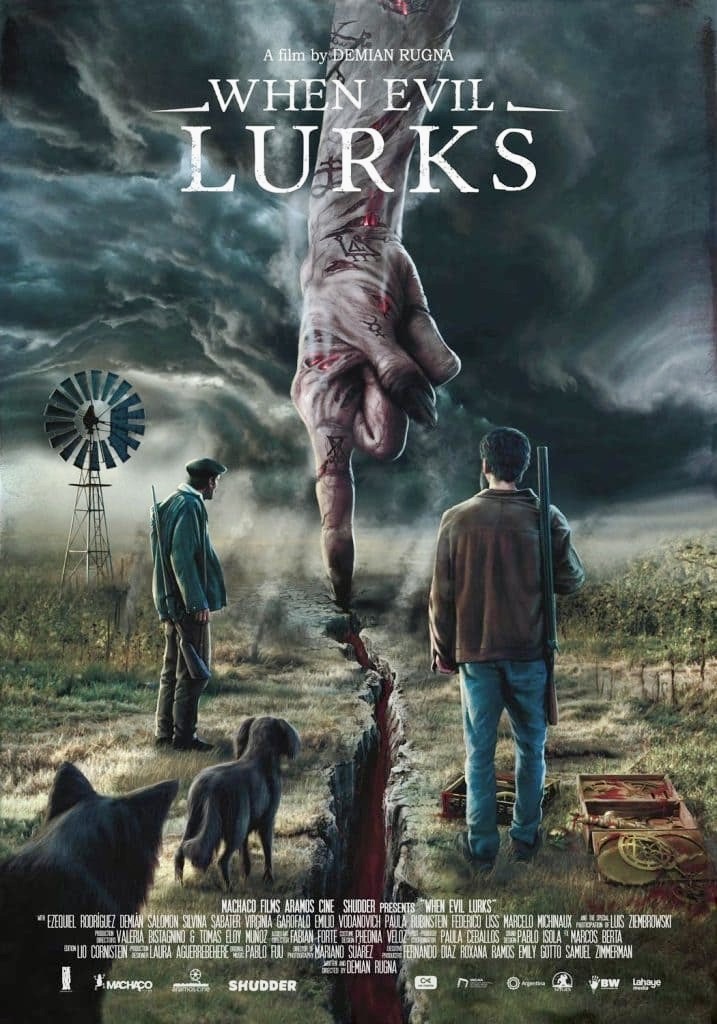
For my annual Halloween horror pick, I am highlighting a contemporary film, one that is currently playing in theaters, and not a horror classic from the past. Cuando Acecha la Maldad (U.S. title, When Evil Lurks, 2023) is the sixth feature film for Argentine director Demian Rugna, which includes his 2011 movie Malditos Sean! (U.S. title, Cursed Bastards), co-written and directed with Fabian Forte. This is a movie about demonic possession but it has little in common with the most famous film in that horror subgenre, The Exorcist (1973), with one exception: we never learn how or why the evil entity goes about choosing the victim that launches the ensuring madness. The nightmare starts with a bang – literally – as two farmer brothers Pedro (Ezequiel Rodriguez) and Jimi (Demian Salomon) hear gunshots on their neighbor’s property. When they investigate the following day, they discover that a member of their neighbor’s family is a “rotten,” a possessed being, and no one knows how to deal with it. When the brothers ask wealthy landowner Ruiz (Luis Ziembrowski) and his pregnant wife for help, they inadvertently set in motion a series of actions that not only release the evil spirit but help it spread like a virus.  

Continue reading