People tend to forgive artistic geniuses for their human imperfections when their talent is so monumental – this could also apply to any super-celebrity with landmark achievements in any field from sports to politics to music – but at a certain point, there is a limit to what society will tolerate. The protagonist of Baal, a 1970 film adaptation of the Bertolt Brecht play, is the embodiment of this. A former office clerk turned itinerant poet and musician, Baal’s work propels him to the level of a literary icon, beloved by the intelligentsia and the common man. He could care less because he hates everything, including the society that helped shape his talent. More importantly, he hates himself and that self-destructive urge informs his every act, making him one of the most nihilistic and anti-social characters even conceived for the stage or screen.
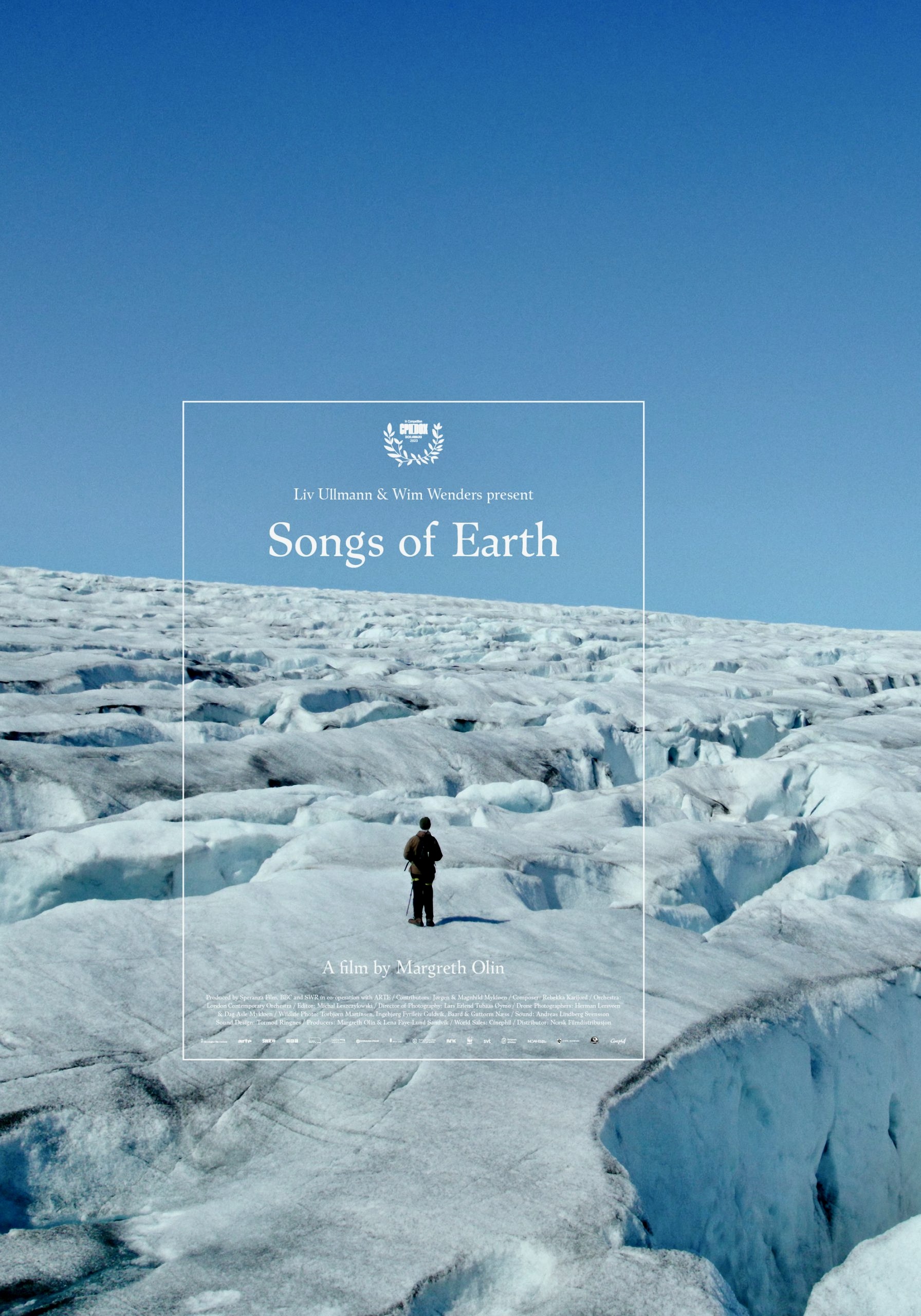
Olden, Norway might not be a place you have ever heard of or know anything about but it is located in one of the most stunning and pristine natural settings on the planet. Situated at the mouth of the Oldeelva River and close to the Jostedal glacier, the largest inland glacier in Europe, the small village of less than 600 inhabitants is nonetheless a top travel destination for tourists who travel to Norway. It is also the childhood home of filmmaker Margreth Olin, who has made a film about it entitled Fedrelandet (English title: Songs of Earth, 2023) except it is no conventional documentary. Although it does showcase the awe-inspiring beauty of the region, it is much more intimate in scope since the emphasis is on Olin’s relationship with her parents and how growing up in Olden affected her feelings about nature and her place in the world.
By the time Wim Wenders won the Palme d’Or at Cannes for Paris, Texas in 1984, he was well established as an internationally renowned director. He made his first big splash on the world stage in the early 1970s along with other New German Cinema directors (Werner Herzog, R.W. Fassbinder, etc.) with films such as The Goalie’s Anxiety at the Penalty Kick (1972) and Alice in the Cities (1974). Wenders had also dabbled with non-fiction-like formats in early experimental shorts, music videos and the Cannes-focused TV documentary of various film directors in Chambre 666 (1982). Yet, it was Tokyo-Ga 1985), the feature length portrait he made directly after Paris, Texas, that really triggered Wenders’s interest in not just non-fiction filmmaking but in Japan cinema and culture, especially the works of Yasujiro Ozu.
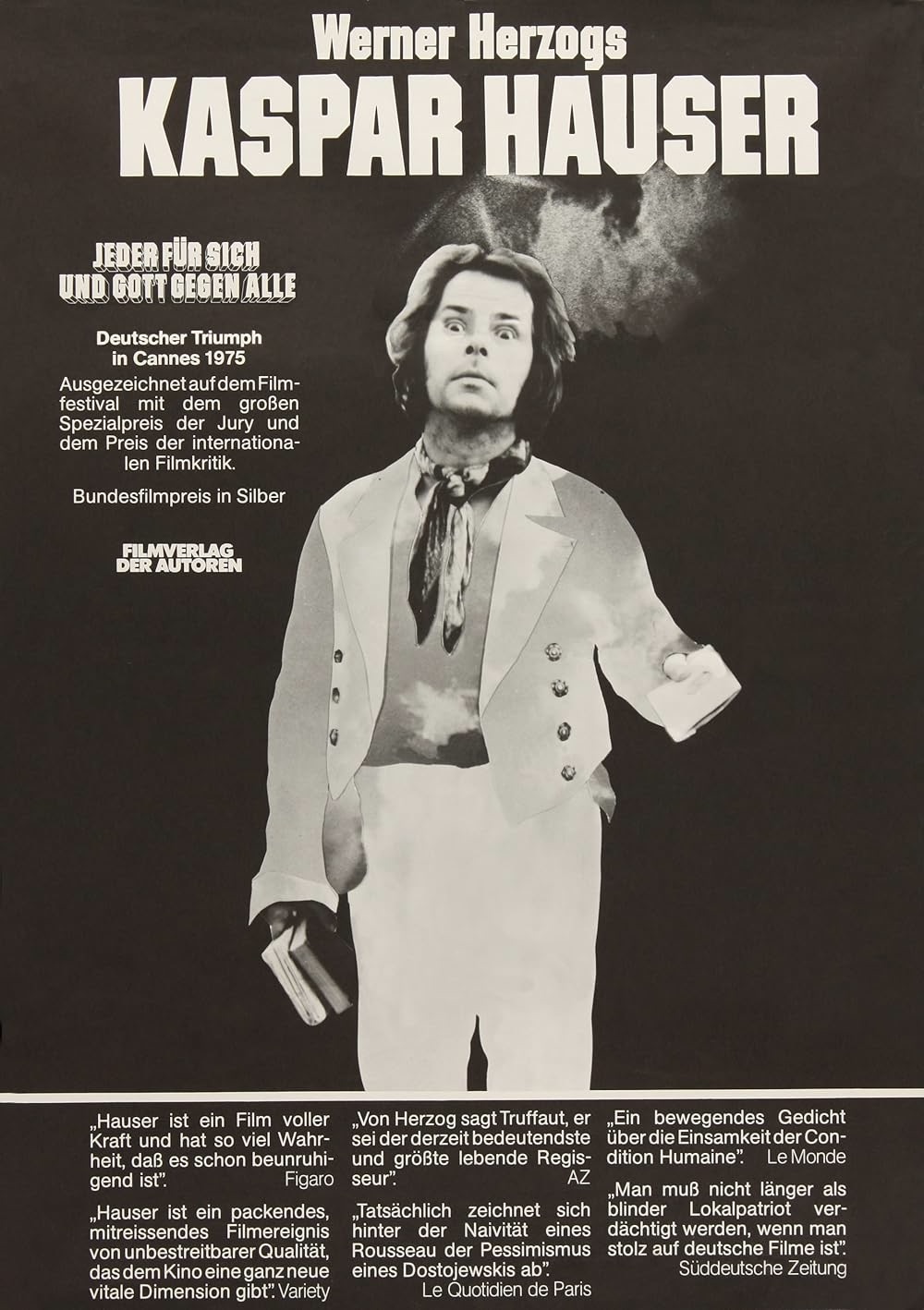
The German film poster for THE ENIGMA OF KASPAR HAUSER aka Every Man for Himself and God Against All (1974).
In May 1828 a young man appeared in a town square in Nuremberg, Germany carrying a prayer book and two letters written by his former caretaker. He spoke very little and was unable to answer any questions about his identity, where he came from or why he was there. One of the letters stated that he had come to the city to meet the captain of the 6th cavalry regiment with the hope of becoming a cavalryman. The other letter claimed he had been born in 1812 and had been raised in complete isolation from other people although he had been taught rudimentary reading and writing skills. His name was Kaspar Hauser but his mysterious nature and childlike presence baffled the townspeople and he was housed as a vagabond at the local prison until he was made a ward of the city and put under the protective care of Lord Stanhope, a wealthy aristocrat. Stanhope devoted himself to Hauser’s further education and re-entry into society and the young man’s bizarre demeanor aroused the curiosity of the public as well as doctors, professors and members of the clergy. Unfortunately, Hauser’s life came to an abrupt end in April 1833 when the mysterious man who first brought him to Nuremberg returned and stabbed him to death, escaping without a trace. The case has been a source of fascination for years in Germany and numerous films, television series and made-for-TV movies have been made about him but The Enigma of Kaspar Hauser aka The Mystery of Kaspar Hauser aka Every Man for Himself and God Against All (German title: Jeder fur Sich und Gott Gegen Alle, 1974), directed by Werner Herzog, is probably the most famous and critically acclaimed of all the versions made to date.
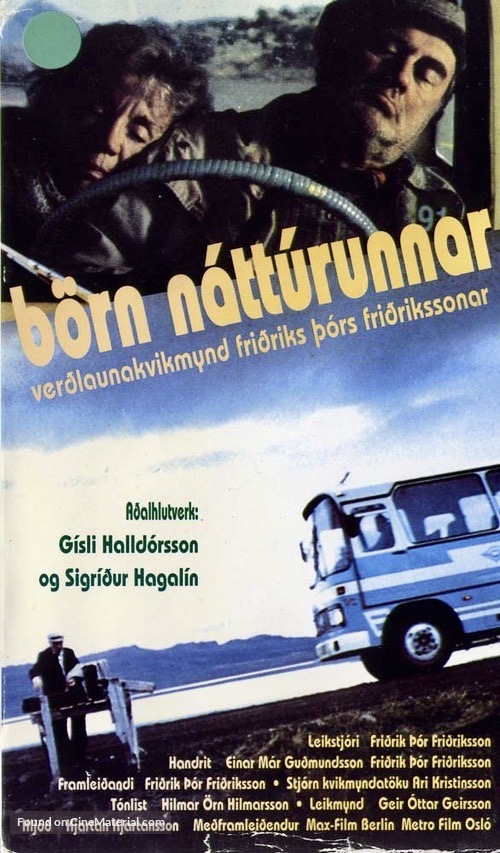
The original film poster for Children of Nature (1991), an Oscar nominee from Iceland.
Films about aging and the elderly are not that prevalent in Hollywood’s yearly production schedule of new films for obvious reasons. It is not a subject that most moviegoers seeking escapism, especially younger viewers, want to contemplate. It is also a risky commercial proposition unless the film is a heartwarming drama with broad appeal (Driving Miss Daisy, 1989) or a feel-good comedy like Harold and Maude (1970), which was a box office flop on its initial release before it went on to become a profitable cult hit. Of course, some of the undisputed masterpieces of 20th century cinema have focused on senior citizens like Vittorio De Sica’s Umberto D (1952), Yasujiro Ozu’s Tokyo Story (1953), and Ingmar Bergman’s Wild Strawberries (1957) but these are not mass appeal attractions but the favorites of a niche art house audience. Fridrik Thor Fridriksson’s Children of Paradise aka Born Natturunnar (1991) is certainly a film that belongs in this latter grouping but is distinctly different in tone, combining social realism with deadpan humor and a touch of magical realism.
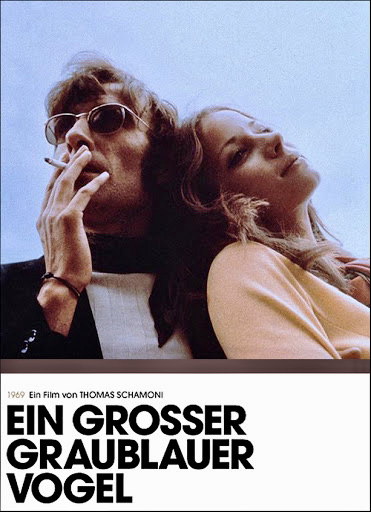
The New German Cinema of the late sixties-early seventies introduced the world to some of the most original and provocative filmmakers of the 20th century such as Rainer Werner Fassbinder, Wim Wenders, Werner Herzog and Volker Schlondorff, but some of pioneers never attracted much attention outside their own country and their films are in danger of being forgotten. Among them are Helma Sanders-Brahms, Peter Lilienthal, Hans W. Geissendorfer and Thomas Schamoni, who is probably the most obscure of them all. Schamoni worked for most of his career in television, turning out documentaries and made-for-TV movies, but in 1970 he directed his only feature film, A Big Grey-Blue Bird (German title: Ein grober graublauer Vogel). A lo-fi mashup of sci-fi and spy genre elements reminiscent of Jean-Luc Godard’s Alphaville (1965), it is a playful and surprisingly entertaining cinematic “experiment” that should have found a wider audience.
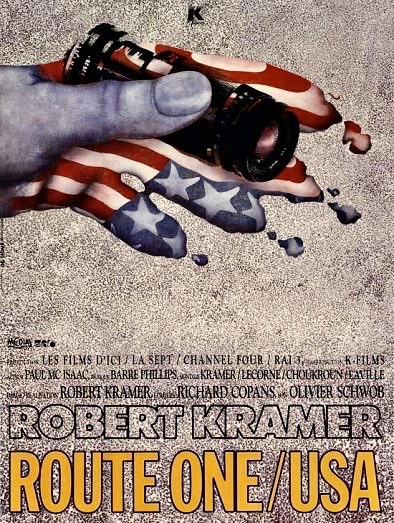
Route One is a historic American highway with a rich history spanning three centuries. It starts in Key West, Florida and ends in Fort Kent, Maine and some of the cities along the way include Miami, Washington, New York City and Boston. Filmmaker Robert Kramer decided to travel the entire route in 1988 with his friend Paul McIsaac and make a film about the journey. Part of his intent was to explore and document the lives and mind set of the people he met along the way but also to come to terms with his own feelings about America after living abroad for almost a decade. The completed film, Route One USA (1989), is a fascinating mosaic of American culture and much more than just a time capsule since it reveals the roots of the polarization and fragmentation that is affecting our country today. Continue reading →



 Cinema Sojourns