Building the Ultimate Superhero

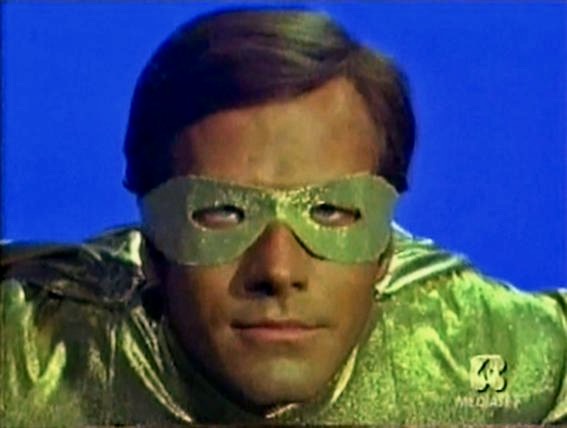
Richard Harrison plays a banker who gets transformed into a superhero against his will in the 1968 fantasy adventure FANTABULOUS INC.

Richard Harrison is not a name most moviegoers in the U.S. are probably familiar with but film buffs around the world know him as one of the American actors who relocated to Italy in the early sixties and enjoyed a long and prolific career there in B-movie fare and low-budget genre films. In a career of more than 100 feature films, there may not be a bona fide classic among them but there are several cult gems and entertaining oddities to enjoy and one of my favorites is La Donna, il Sesso e il Superuomo (English title: Fantabulous Inc., 1968), directed by Sergio Spina. Although it is usually classified as a Eurospy flick released in the wake of the James Bond craze, it is actually a fantasy/adventure/satire that sends up the whole concept of the superhero in comic books and films. It also works as a subversive cautionary tale about the dangers of fascism delivered in the form of a comic cartoon.

Continue reading
Revenge in Four Acts

The Italian film poster for DEATH SENTENCE (1968)

Film historians estimate that probably more than 550 spaghetti westerns were made in Europe (mostly Italy and Spain) during the height of that cinematic craze between 1961 to 1977. More than fifty per cent of those offerings were mostly forgettable programmers or mediocre genre fare or outright junk. And probably less than twenty-five per cent of the movies were high water marks or masterworks such as the Sergio Leone ‘Dollars’ trilogy and Once Upon a Time in the West (1968), Sergio Corbucci’s Django (1966) and The Great Silence (1968) and Sergio Sollima’s The Big Gundown (1967). Yet, there were still more than a handful of spaghetti westerns that were stylish examples of the form or offbeat and imaginative enough to warrant special attention and one of those is Sentenza di Morte (English title: Death Sentence, 1968), directed by Mario Lanfranchi.

Continue reading

Comic Strip Addiction

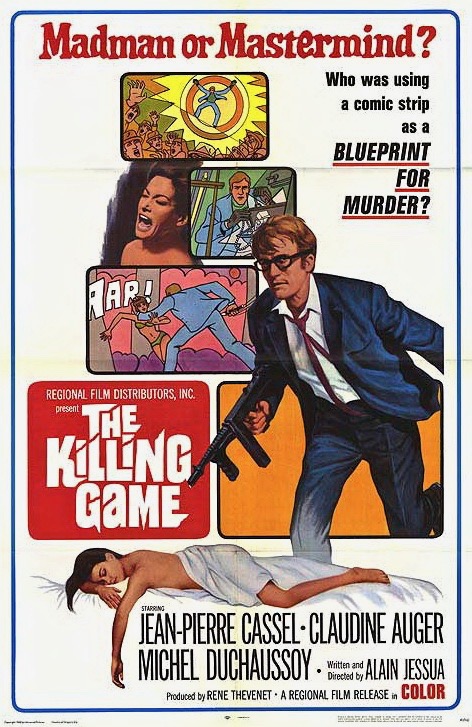
If you went by title alone, Alain Jessua’s Jeu de Massacre (released as The Killing Game in the U.S. and as Comic Book Hero in other territories) suggests it might be a murder mystery or a James Bond-like spy thriller which was still in vogue at the time of the film’s release in 1967. Instead, the film is a witty black comedy about the addictive power of pulp fiction – in this case, a superhero comic book – to ignite dangerous fantasies in readers whose grasp on reality is fragile.   Continue reading

James Bond’s Lesser Known Sibling

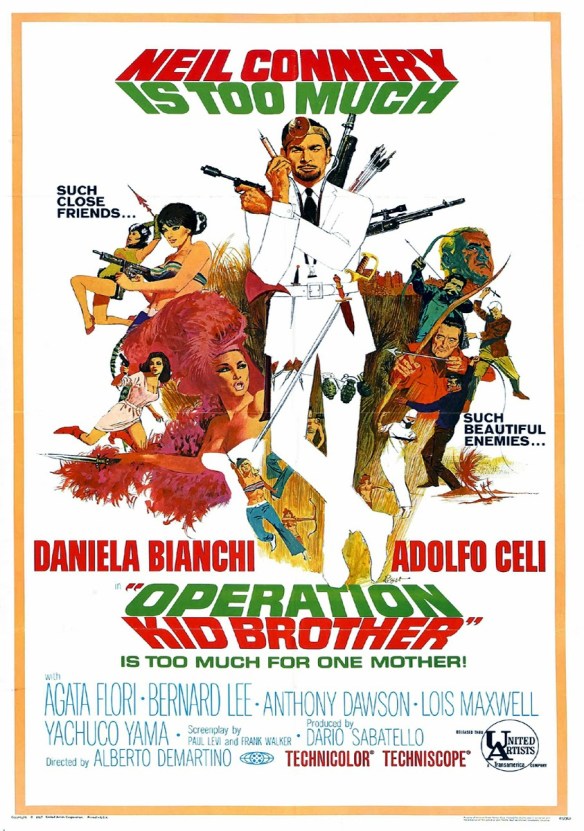
The James Bond film craze of the 1960s was responsible for launching a secret agent/spy movie sub-genre that thrived for more than a decade. Some of the imitators like Our Man Flint (1966) and The Silencers (1966) even spawned mini-franchises but the majority of them were strictly B-movies with international casts and exotic locations. One of the more obscure and unusual entries is Operation Kid Brother (1967), which is an entertainingly bad knockoff and sports a genuine Sean Connery-007 connection. It stars younger sibling Neil Connery in his screen debut.    Continue reading

Tinto Brass Directs a Spaghetti Western

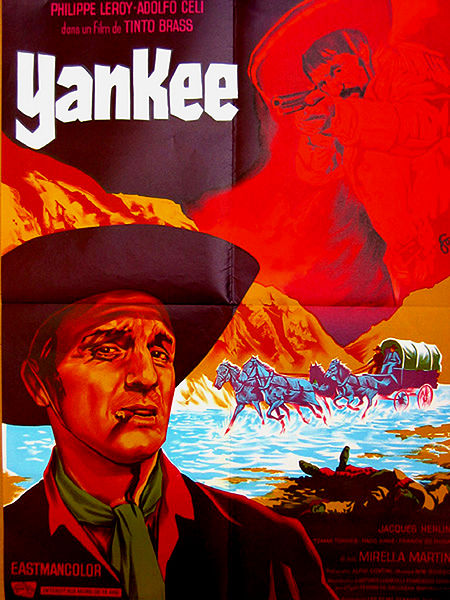
Yankee film poster 1966If U.S. moviegoers are familiar with the name Tinto Brass at all, it is probably due to the infamous 1979 epic Caligula which featured world renowned actors (Peter O’Toole, Helen Mirren, John Gielgud, Malcolm McDowell, etc.) and hardcore sex scenes (which were later added by producer/Penthouse tycoon Bob Guccione against the wishes of Brass who disowned the film). Brass had already established himself as a master of art house erotica/perversity with 1976’s Salon Kitty about a brothel in WWII Berlin where the prostitutes were undercover spies. But after Caligula, Brass seemed much happier directing more modestly budgeted, softcore adaptations of literary works like The Key (1983, based on the novel by Jun’ichiro Tanizaki) and Paprika (1991, inspired by the novel Fanny Hill), which showcased his increasing obsession with shapely female bottoms.

In retrospect, his early career is a contemplation of the paths not taken: documentary (Ca ira, il fiume della rivolta aka Thermidor, 1964), avant-garde cinema (L’urlo aka The Howl, 1970) and eccentric genre offerings such as Col cuore in gola aka Deadly Sweet, 1967). Of the latter, Yankee (1966), the only spaghetti western ever directed by Brass, is definitely worth a look.   Continue reading