Balancing Act

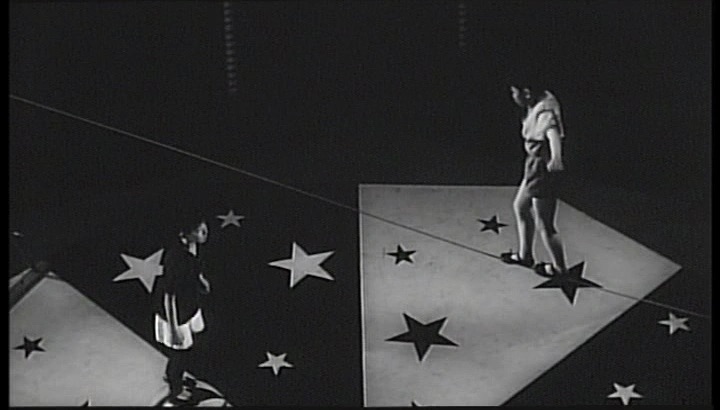
When was the last time you went to the circus? For most people, that form of popular entertainment has changed drastically over the years and is now more likely to be a showcase for human acts like Cirque de Soleil than one featuring performing animals (dancing elephants, lion taming, horses leaping through hoops of fire, etc). But there was a time from the late 19th to the middle of the 20th century when circuses were the ultimate family entertainment. Movies, in particular, captured the golden age of the circus in a variety of genres that ranged from big screen spectacles (The Greatest Show on Earth [1952], Circus World [1964]) to slapstick comedies (The Circus [1928], At the Circus [1939]) to Walt Disney fare (Dumbo [1941], Toby Tyler or Ten Weeks with a Circus [1960]) to horrific murder mysteries (Circus of Horrors [1960, Berserk [1967]). Yet, there are few, if any, that merge fantasy and reality in the style of Japanese director Kaizo Hayashi’s Nijisseiki Shonen Dokuhon (English title: Circus Boys, 1989). This balancing act is also matched metaphorically through the two main protagonists who must learn to come to terms with gravity, whether it is riding an elephant, walking a tightrope or finding stability in their lives.

Continue reading

Kiju Yoshida’s Escape from Japan

The Japanese poster for ESCAPE FROM JAPAN (1964)

The Japanese New Wave of the late 1950s/early 1960s introduced the world to a number of rising directors who are now icons of cinema like Nagisa Oshima, Hiroshi Teshigahara, Shohei Imamura and Masahiro Shinoda but it has only been in recent years that Yoshishige Yoshida aka Kiju Yoshida has started to receive the belated acclaim he deserves. His 220-minute masterpiece Eros + Massacre (1969), which told the parallel stories of two student activists and Sakae Osugi, an anarchist and free love advocate, startled critics with its radical take on sex and politics, not to mention a fragmented narrative approach with unusual camera compositions of widescreen black and white imagery. Long before that, Yoshida learned his trade at Shochiku Studio at a time when the company began making films about the disaffected post-war generation such as Oshima’s Cruel Story of Youth (Seishun Zankoku Monogatari, 1960) and Good-for-Nothing (Rokudenashi, 1960), Yoshida’s debut film about an aimless youth and his attraction to the secretary of a rich friend’s father. The director would eventually part ways with Shochiku over creative differences and start his own production company in 1964 but his final movie for the studio, Escape from Japan (Nihon Dasshutsu, 1964), shows Yoshida imposing his own aesthetic and stylistic approach to what is essentially a B-movie melodrama.

Continue reading

Identity Disintegration

A wealthy chemist who was disfigured in an explosion undergoes plastic surgery in the 1966 Japanese film, The Face of Another.

What would happen if you lost the face you recognize as your own and had to replace it with a new one? Would you have an identity crisis or simply become a different person? Japanese director Hiroshi Teshigahara ponders this unusual dilemma in The Face of Another (1966, Japanese title: Tanin no kao). Continue reading

Beware of Japanese Cats

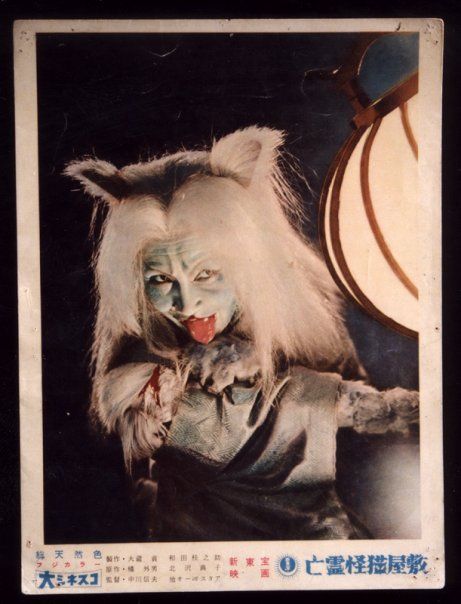
The avenging cat witch ghost is the star of Nobuo Nakagawa’s Black Cat Mansion aka Borei Kaibyo Yashiki (1958).

Every national cinema has their own homegrown subgenres and mythology when it comes to horror films and I think Japan has some of the most unique and bizarre creatures of all such as the hopping Umbrella ghost from Yokai hyaku monogatari (1968, aka The Hundred Monsters) or the rampaging stone idol of the Majin trilogy which began in 1966. Yet, in terms of eerie beauty and supernatural creepiness, I’m drawn to the bakeneko-mono stories from Japanese folklore with their shape-shifting cat demons and one of my favorites is Borei Kaibayo Yashiki (1958, aka Black Cat Mansion aka Mansion of the Ghost Cat).     Continue reading