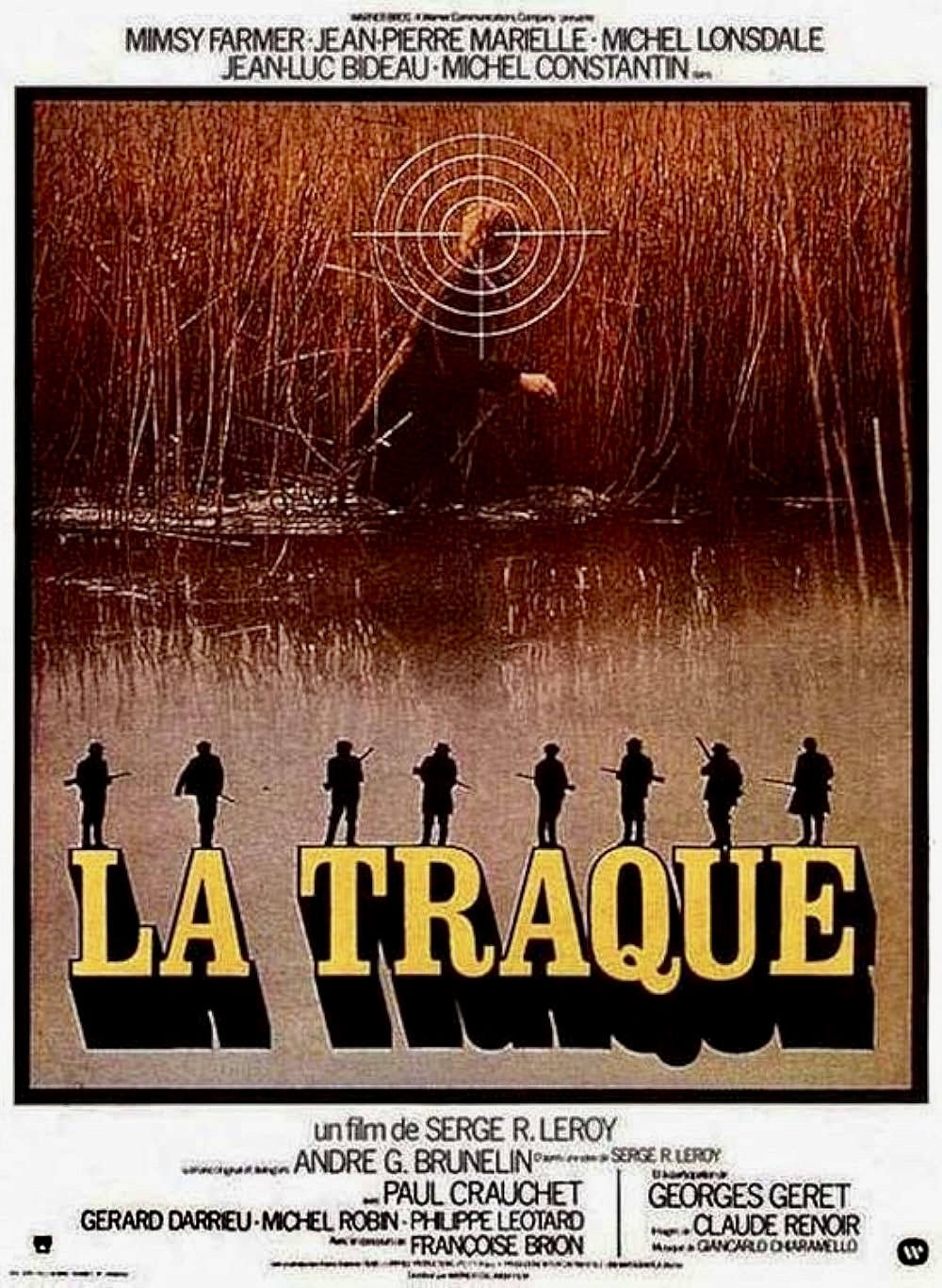
What happens when you get a bunch of men together, some of them armed with flasks of brandy or whiskey, give them guns and set them loose in the forest? It sounds like a lethal combination but it doesn’t have to be and rarely is in the world of experienced outdoorsmen. At the movies, though, it’s a different story as witnessed by so many thrillers about hunting parties and their targets. Certainly the many film adaptations of Richard Connell’s short story The Most Dangerous Game is a famous example but there are also variations such as armed officers hunting a prisoner (Antonio Isasi-Isasmendi’s A Dog Called Vengeance, 1977), men hunting each other (Carlos Saura’s The Hunt, 1967), men and women stalking each other (Elio Petri’s The 10th Victim, 1965) or men hunting women (the Australian revenge flick Fair Game, 1986). La Traque (aka The Track), a French film by Sergio Leroy, fits into the last category, but it is not a predictable genre entertainment, a satire or a blatant exploitation film.
Continue readingTag Archives: Michel Constantin
Mining for B-Movie Gold
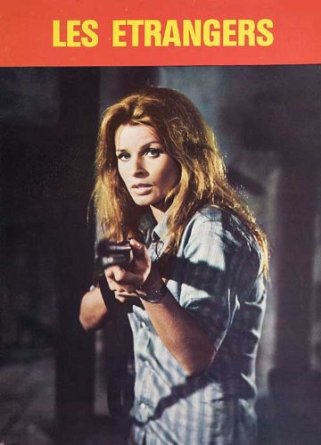
It’s a rare thing when a crime thriller departs from the usual formulaic expectations and rewards the viewer with a much more unpredictable and entertaining twist on a familiar genre. Such is the case with Les étrangers (aka The Strangers, 1969), which begins with a carefully planned diamond heist in a remote desert town that goes spectacularly awry before transitioning into a deadly game of cat and mouse between a fleeing fugitive and a couple that offer him temporary shelter. This is a superior B-movie that feels like an A-picture with its iconic international cast of actors from France (Michel Constantin), Austria (Senta Berger), Spain (Julián Mateos) and South Africa (Hans Meyer), a spaghetti western-flavored score by Michel Magne and Francoise de Roubaix, and atmospheric cinematography by Marcel Grignon, who received an Oscar nomination for Is Paris Burning? (1967) and filmed such cult favorites as Roger Vadim’s Vice and Virtue (1963) and Walerian Borowczyk’s The Beast (1975). Continue reading
Spies “R” Us
The success of the James Bond series, beginning in 1962 with Dr. No, had an amazing impact on the international film world. For almost a decade or more, hundreds of imitations from Asia, Europe, the U.S. and other parts of the world flooded the market. The majority of these were formulaic, action-oriented B movies like Kiss Kiss – Bang Bang and Secret Agent Super Dragon (both 1966) but occasionally a few would depart from the heroic fantasy scenarios to present much more realistic depictions of the espionage underworld such as The Spy Who Came in from the Cold (1965), based on John le Carré’s novel, and The Quiller Memorandum (1966) with a screenplay by Harold Pinter.
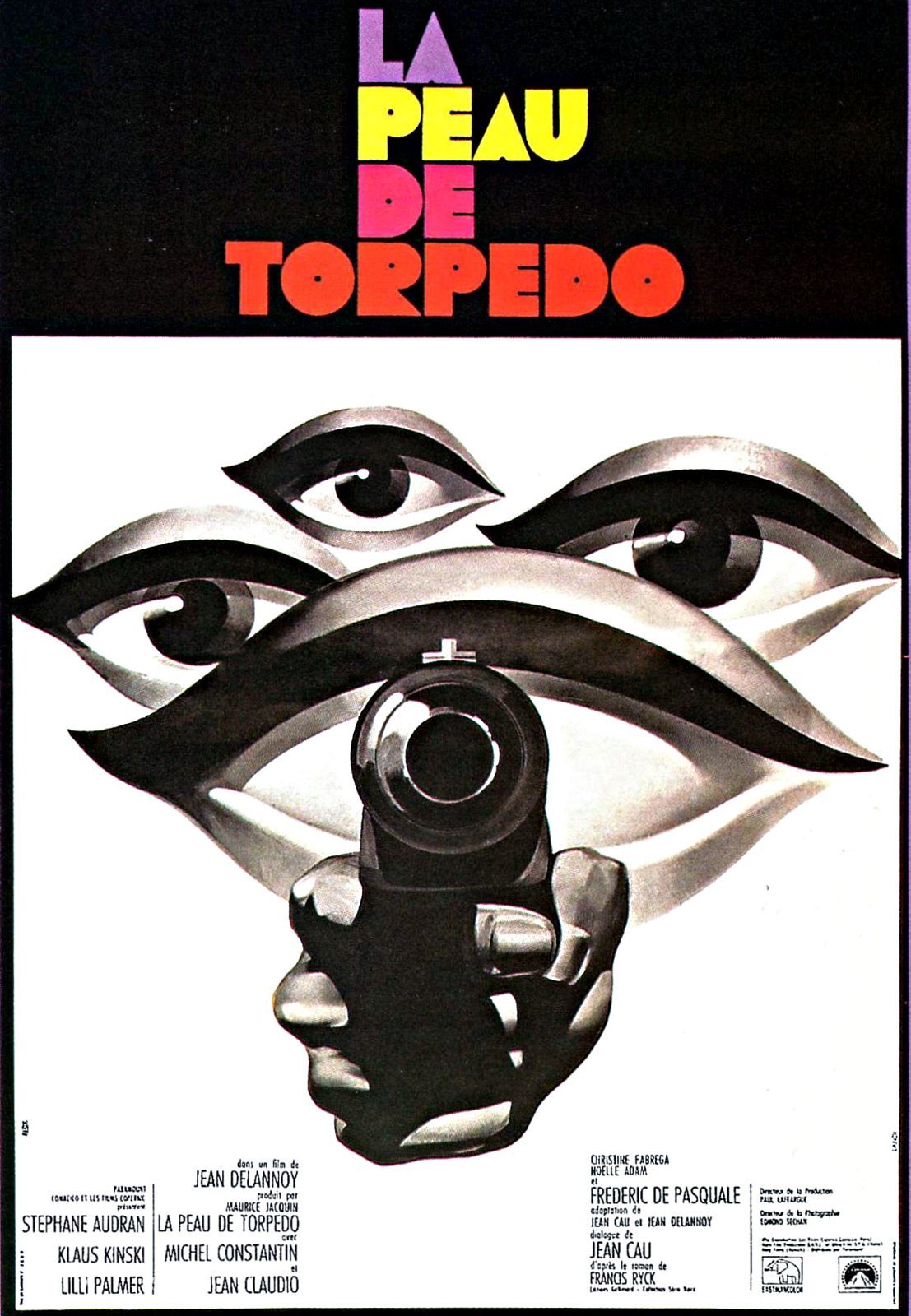
Jean Delannoy’s La Peau de Torpedo (1970) doesn’t fit comfortably into either camp even though it does traffic in the grim, Cold War paranoia associated with le Carré’s novels while spinning a wildly improbable tale that makes the Roger Moore 007 adventures seem almost plausible in comparison. What makes the film worth seeing besides the eclectic international cast that includes Stéphane Audran, Lilli Palmer, Michel Constantin, and Klaus Kinski is the unconventional story arc which begins like a routine espionage thriller and then unravels spectacularly about thirty minutes into the film with an act of violence that injects a welcome note of unpredictability into the rest of the proceedings.