
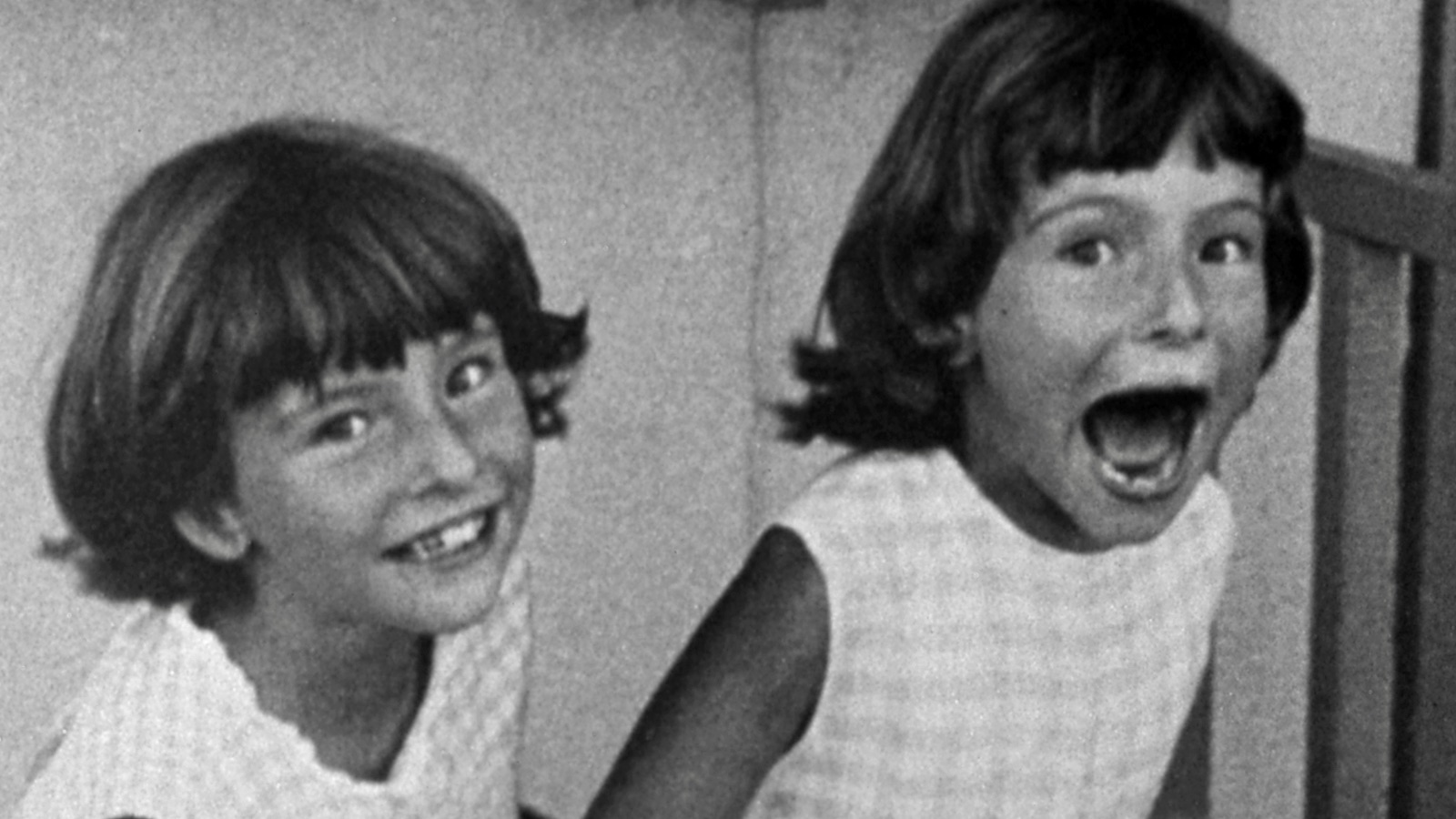
In 1977 journalists became fascinated with a story about six-year-old twin sisters in San Diego who spoke in a language no one could understand but was the sole means of communication between the two girls. Their names were Gracie and Ginny Kennedy but they called themselves Poto and Cabengo in their nonsensical form of speaking. Had they actually created a secret language for themselves or was it just meaningless blather? The girls became a media sensation and speech therapists at the Children’s Hospital in San Diego studied their language in hopes of determining whether the girls’ interaction was a case of arrested idioglossia, a phenomenon in which twins (or individuals) create a private language with a unique vocabulary and syntax (most children grow out of it at age 3 but the twins were a rare exception). French filmmaker Jean-Pierre Gorin had recently moved from Paris to the University of California at San Diego for a faculty position when he first heard about the twins. He immediately decided that Gracie and Ginny would be ideal subject matter for his first solo directorial effort but the result entitled Poto and Cabengo (1979) could not really be classified as a documentary. Instead, it is a highly personal non-fiction portrait that is closer to an experimental film than anything else and Gorin’s involvement with the twins and their family become just one aspect of the movie’s multi-layered narrative interests.
Continue reading
 Cinema Sojourns