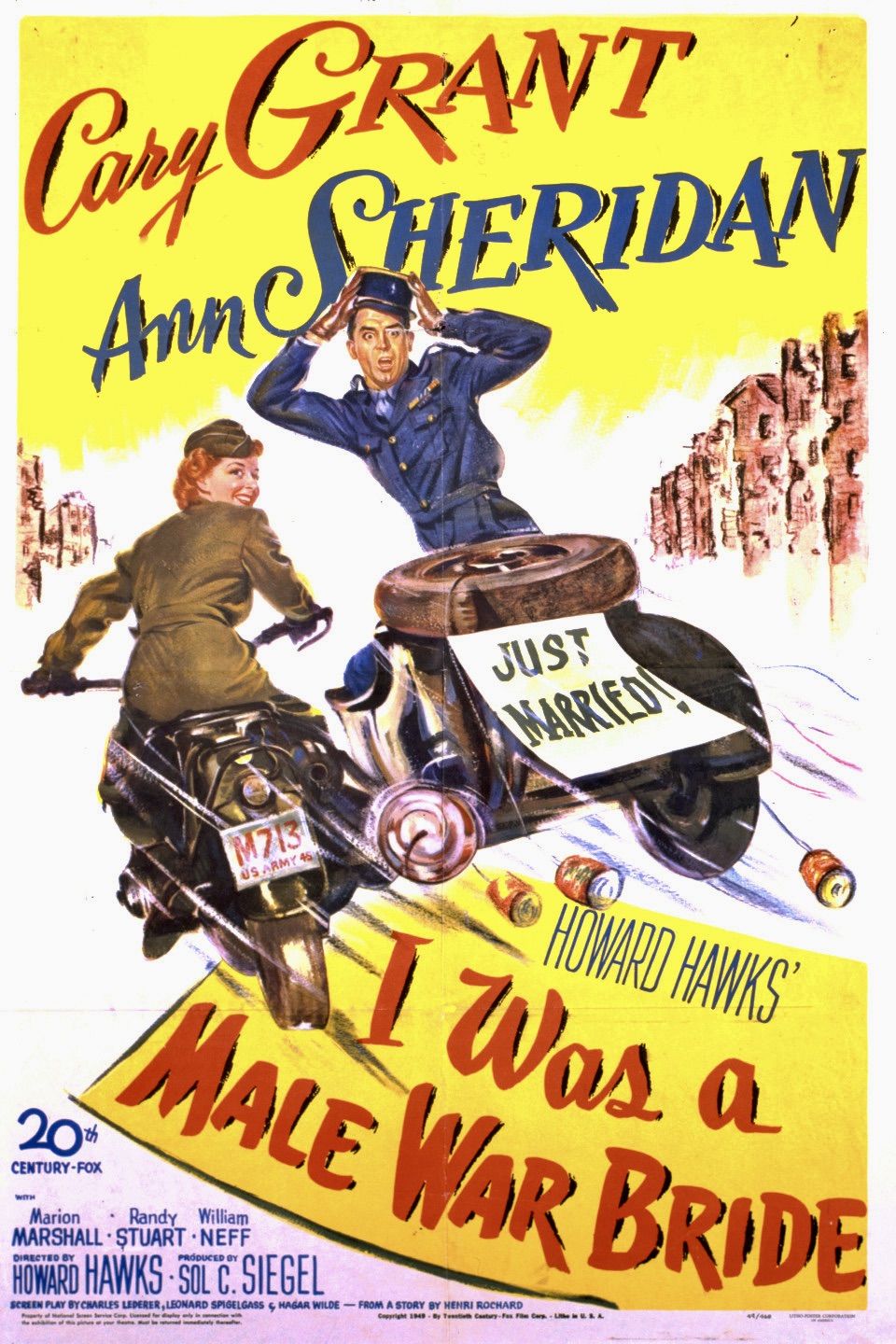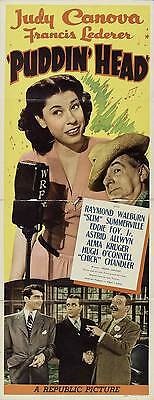
There are certain movie titles that make you pause and consider the mystery, allure or absurdity of their meaning. They can promise so much and deliver so little like Billy the Kid vs. Dracula (1966) or She Gods of Tiger Reef (1958). Or they can overdeliver on their promise to an astonished but grateful audience as in Russ Meyer’s infamous Faster, Pussycat! Kill! Kill! (1965). They can also mislead and confound you with wording so vague or fanciful that you have no earthly idea what it’s about as in Lord Love a Duck (1966), The Day the Fish Came Out (1967), or All the Fine Young Cannibals (1960), which inspired the name of the Brit pop trio that had a hit with “She Drives Me Crazy.” Then there are those completely frank and unambiguous titles that reveal the pure essence of the film in a no-nonsense manner – Teenagers from Outer Space (1959) and I Was a Male War Bride (1940). Or titles that are so much fun to say that you simply love saying them out loud just to hear the sound of them rolling off your tongue like Rat Pfink a Boo Boo (1966) or Puddin’ Head (1941).
Continue readingTag Archives: Lina Wertmuller
On the Loose in Amsterdam
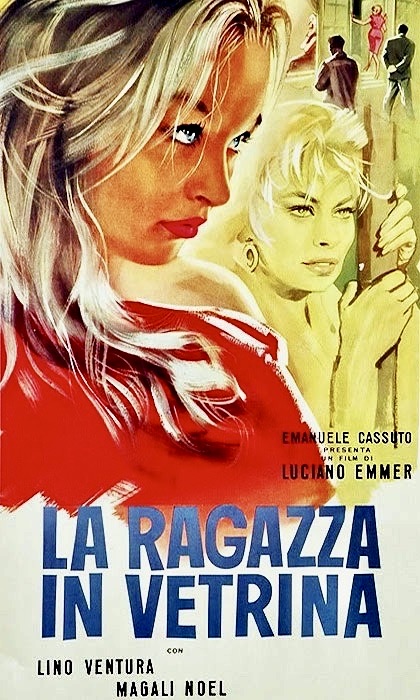
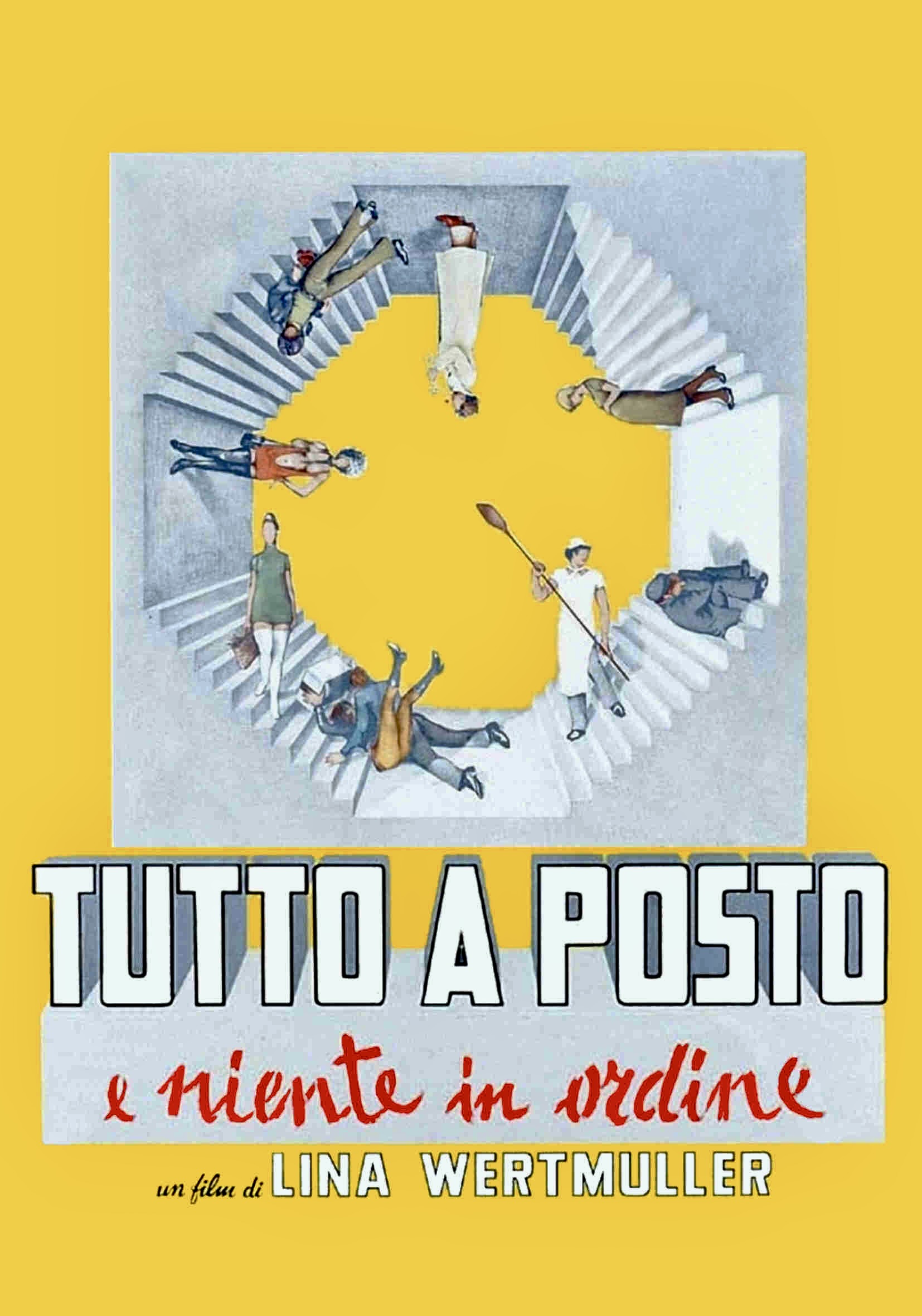
The controversial problem of immigration in Italy has been a problem for decades, not just with internal migration of workers from the south to the north, but also with the influx of refugees from Africa and other areas around the Mediterranean. Not surprisingly, there have been numerous Italian films to address this situation over the years but only a handful of them have received praise and recognition outside their own country. Among them are Pietro Germi’s Il Cammino della Speranza (The Path of Hope, 1950), in which a group of Sicilian workers try to emigrate illegally to France, I Magliari (The Swindlers, 1959), Francesco Rosi’s drama about an out-of-work Italian miner (Renato Salvatore) in Germany, and Lina Wertmuller’s Tutto a Posto e Niente in Ordine (All Screwed Up, 1974), which focuses on immigrants from southern Italy trying to find work in Milan. To this short list, I would like to add Luciano Emmer’s rarely seen La Ragazza in Vetrina (The Girl in the Picture Window, 1961), a tale about two immigrant miners in Belgium who enjoy a weekend getaway in Amsterdam.
Continue readingPietro Germi’s Sicilian Marriage Farce
One doesn’t usually expect a film about infidelity, divorce and murder to be a comedy but that’s one reason Divorzio all’italiana (English title: Divorce, Italian Style, 1961) directed by Pietro Germi, became an unexpected international hit. A caustic satire about the Italian male – or more specifically, Sicily’s male dominated culture – the film also poked fun at Italy’s hypocritical judicial system which can forgive crimes of passion but not legally recognize divorce as a solution for failed marriages. Another factor in the movie’s success was Marcello Mastroianni’s beautifully rendered portrayal of the preening, self-absorbed protagonist, a performance which not only won him an Oscar nomination for Best Actor (the first time in Academy Award history that the lead in a foreign language film received that honor) but still ranks as one of the actor’s key films, following closely on the heels of Fellini’s La Dolce Vita (1960) and Antonioni’s La Notte (1961).
Continue readingThe Cinema Art House Visionary
When did movie theaters specializing in repertory cinema, foreign language films and alternatives to Hollywood mass-produced entertainments become an option for movie lovers in the U.S.? Some might think it all began with the Landmark Theater chain, founded in 1974, which eventually expanded into a network of 46 cinemas in 26 markets. No, the concept of the art house cinema can be traced back to 1952 when the Beekman Theater on Manhattan’s East Side opened and turned movie-going into an event. The man behind the venue was Donald Rugoff and his entrance into the world of film exhibition was due to his father Edward’s partnership with Herman Becker; the two men had built up a small empire of theaters across New York City during the days of the nickelodeon and vaudeville. Rugoff would soon have a major impact on movie-going, film distribution and film culture in the 1960s and 1970s but he is virtually forgotten today. Ira Deutchman, a former employee of Cinema V, Rugoff’s trail-blazing film distribution company, is bound to correct that situation with his fascinating, warts-and-all homage, Searching for Mr. Rugoff (The documentary was completed in 2019 and is finally screening and streaming at various venues).
Continue reading12 Italian Directors on 12 Italian Cities
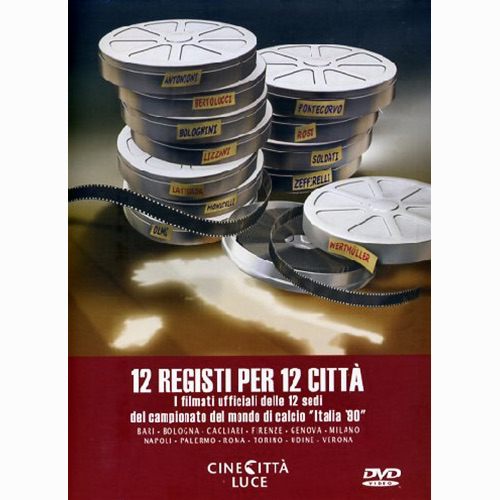
In 1989 Istituto Luce, the oldest public institution devoted to film production, distribution and archival material in Italy, produced an omnibus film consisting of 12 segments entitled 12 Registi per 12 Citta (12 Directors for 12 Cities). A documentary/travelogue hybrid, the film was made as a promotional vehicle in support of the 1990 FIFA World Cup in Rome and part of its intent was to lure tourists to Italy, particularly to the cities showcased in the film. The title is not completely accurate; thirteen directors, not twelve, contributed to the project if you count Giuseppe Bertolucci, the younger brother of Bernardo Bertolucci, who co-directed the Bologna section with Bernardo. 12 Registi per 12 Citta is also unconventional in its presentation with each director approaching his subject in his own unique way and the selected cities include some offbeat choices like Udine and Cagliari as well as some major omissions. What, no Venice?
Continue reading