Autobiography of a Sleepwalker

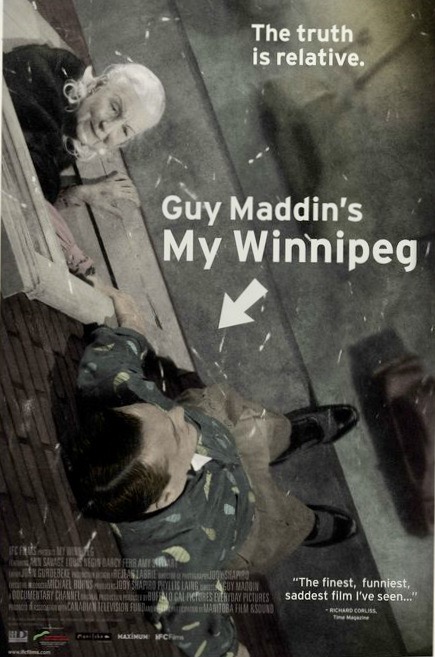
How does a filmmaker begin to craft an autobiographical film of his or her own life? Many renowned directors have tackled it but usually by using a fictionalized version of themselves under a different name though many of the incidents depicted are true. Francois Truffaut did it with The 400 Blows (1959) as did George Lucas with American Graffitti (1973) and Sam Fuller in The Big Red One (1980). Even more recently Steven Spielberg re-imagined his childhood and teenage years in The Fabelmans (2022). But no one has ever made a more personal and dreamlike meditation on their roots than what Guy Maddin accomplishes with My Winnipeg (2007), which is set in the city where the Canadian director was born and resided for much of his life. Narrated by Maddin in a voice that sounds half asleep, half awake, our somnambulistic guide creates his own mythology about himself, his family and his home town that is utterly unique. Plus, his narrator approach is totally fitting for a city that allegedly has more sleepwalkers among its residents than any other major city.

Continue reading
Georgia on My Mind

Images from the 1930 film SALT FOR SVANETIA, filmed in the Republic of Georgia.

Svaneti is not a planet in the solar system or some alternate universe out of a science fiction fantasy but it might as well be. In truth, it is a remote region located in the northwestern part of the Republic of Georgia on the southern slopes of the Caucasus Mountain range. For centuries the area was cut off from civilization due to its inaccessible location in the mountains plus the extreme weather, that usually included eight straight months of snowfall, also made it unwelcoming. After Georgia was invaded and annexed by the Soviet Union in 1922, the region was subjected to Stalin’s five-year plan (1928-1932), which was created to spawn agriculture collectives across the nation and introduce large-scale industrialization. But Svaneti was so isolated from the rest of the world that it took a while for Soviet workers to reach the area and Jim Shvante (Marili svanets) [English title: Salt for Svanetia (1930)] is a portrait of the lives and traditions of the Ushkul tribe in that inhospitable domain before the Soviets arrived to develop it. The result is not a typical documentary but more of a folk culture microcosm as captured by some wildly creative ethnographic filmmaker. 

Continue reading

East German Film Rarities

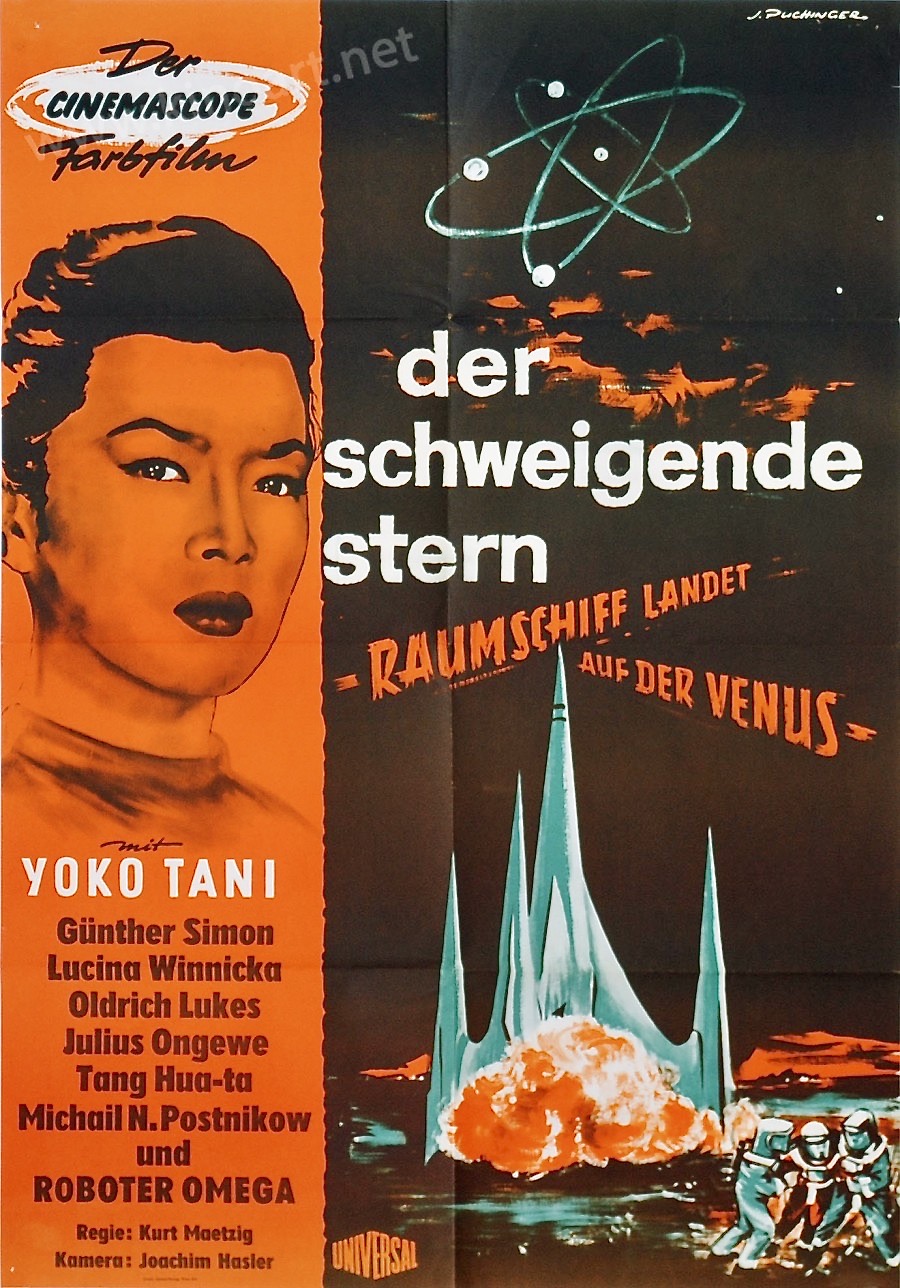
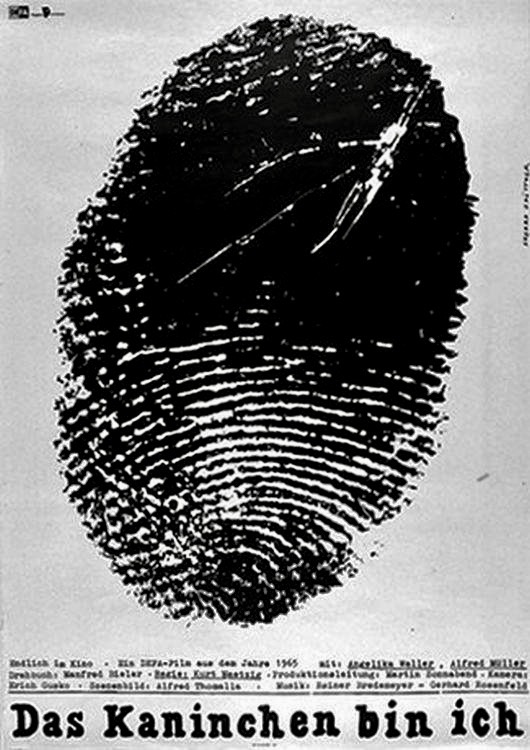
While most hardcore film buffs are well versed in the movies of Fritz Lang, Robert Siodmak, F.W. Murnau and their latter compatriots Werner Herzog, R.W. Fassbinder, Wim Wenders and Volker Schlondorff, directors such as Kurt Maetzig, Joachim Kunert and Gerhard Klein are completely unknown or unfamiliar to Western audiences for an obvious reason. They worked for DEFA (Deutsche Film Aktiengesellschaft), the nationalized film industry of East Germany, and as a result, very few of their movies were distributed outside of socialist countries during the Cold War Era when DEFA was in its prime. A rare exception was Kurt Maetzig’s Der Schweigende Stern aka The Silent Star, a science fiction adventure which was released in the U.S. in an edited, English dubbed version as First Spaceship on Venus in 1962. Much more complex and thematically intriguing is Maetzig’s Das Kaninchen Bin (English title: The Rabbit is Me, 1965) along with Joachim Kunert’s Das Zweite Gleis (English title: The Second Track, 1962) and Gerhard Klein’s Die Fall Gleiwitz (English title: The Gleiwitz Case, 1961).

Continue reading

Fritz Lang’s Two-Part Indian Epic

The film industry is rife with tales about directors who struggled and failed to bring their dream projects to the screen and the subject would make a fascinating, behind-the-scenes non-fiction book about the precarious nature of moviemaking. Among the more famous examples are Orson Welles, who pitched a film version of Joseph Conrad’s Heart of Darkness to RKO executives, who instead chose Welles’ second idea, Citizen Kane,  Josef von Sternberg’s ambitious 1937 production of I, Claudius, which was started but never completed due to disagreements between the director and Charles Laughton plus the injury of leading lady Merle Oberon in a car accident, and Robert Altman, who wanted to make a film version of the 1997 documentary Hands on a Hard Body and had even cast it but died before production could begin. Yet, for all the films-that-might-have-been, there are many examples of directors who finally succeeded in making their passion projects and one of them is Fritz Lang. His lifelong desire to make a film of the 1917 novel, The Indian Tomb, written by his former wife Thea Von Harbou, was finally realized in the late 1950s when he started production on a lavish movie adaptation that would be released in two parts as The Tiger of Eschnapur and The Indian Tomb, both 1959.

Continue reading

Climb Every Mountain

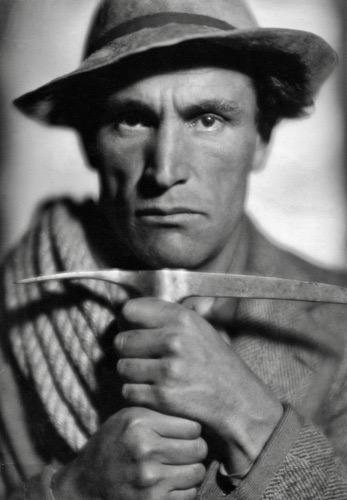
Luis Trenker – Alpinist, film director, architect, actor. photographer: Atelier Binder – property of Ullstein Bild – Atelier Binder/Everett Collection

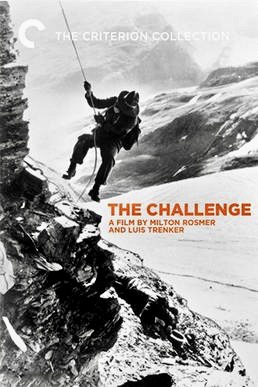
Rarely seen in the U.S. and not one of the better known films about a famous mountain-climbing expedition, The Challenge (1938) is an intriguing bridge between the German mountain films of Arnold Fanck (White Hell of Pitz Palu, 1929) and contemporary man-against-nature survival tales such as Philipp Stozl’s Northface (2008), where two Germans and two Austrians try to scale the Eiger in Switzerland, and Kevin Macdonald’s documentary reenactment Touching the Void (2003), the ill-fated trek by Joe Simpson and Simon Yates up the face of the Siula Grande in the Peruvian Andes. Luis Trenker, one of the stars of The Challenge, was honored in person at the Telluride Film Festival in 1983 at age 90 and Turner Classic Movies aired the film in one of their Telluride programming tributes in 2010. The Challenge was also offered on The Criterion Channel.   Continue reading