
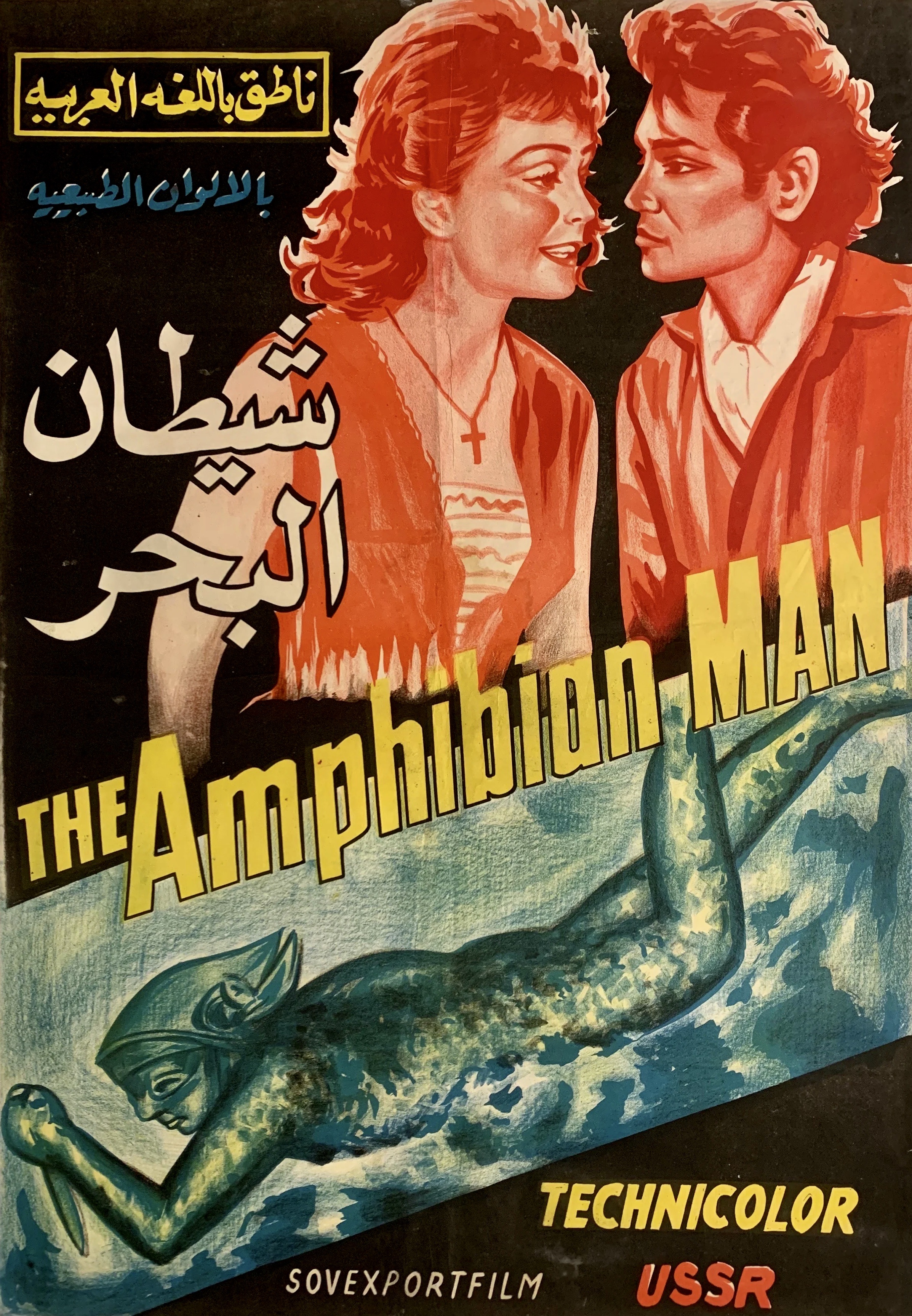
Science fiction and fantasy films have always been a popular staple of Russian cinema but, during the first half of the 20th century, very few of these genre films found theatrical distribution in the U.S. Among the handful that did make to American screens are Yakow Protazanov’s Aelita, the Queen of Mars (1924), Vasily Zhuravlyou’s Cosmic Journey (1936), Planeta Bur aka Planet of Storms (1962), which producer/director Roger Corman raided twice, using footage from it for Voyage to the Prehistoric Planet (1965) and Voyage to the Planet of Prehistoric Women (1968), and Ilya Muromets (1956), an epic fairy tale adventure from director Aleksandr Ptushko that was released in an edited, English-dubbed version entitled The Sword and the Dragon. Some Russian fantasy titles later popped up on American television and second-run houses in poor quality English language dubs like Sampo aka The Day the Earth Froze (1959) but my all-time favorite from this period is Chelovek-Ambibiya (English title: Amphibian Man, 1961), co-directed by Vladimir Chebotaryov and Gennadiy Kazqanskiy.
Continue reading

 Cinema Sojourns