Max Ophuls’ Caught

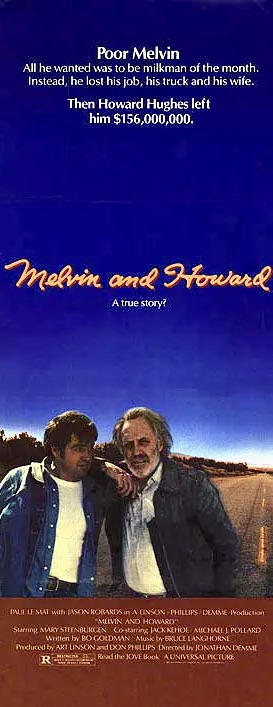
Over the years there have been numerous biographies written about aviation legend/studio mogul/eccentric billionaire Howard Hughes; everything from fake ones like Clifford Irving’s Autobiography of Howard Hughes to definitive accounts such as Howard Hughes: His Life and Madness by Donald L. Bartlett and James B. Steele. In contrast, there have been very few motion pictures about him. Martin Scorsese’s The Aviator (2004), based on the Bartlett & Steele biography, is the only feature film about his life to date. There was also a TV movie, The Amazing Howard Hughes (1977), with Tommy Lee Jones in the title role, and Jonathan Demme’s Melvin and Howard (1980), a quirky docudrama/comedy about Melvin E. Drummar (Paul Le Mat), a Utah man who claimed Hughes (Jason Robards Jr.) named him in his will after rescuing him in the Nevada desert.
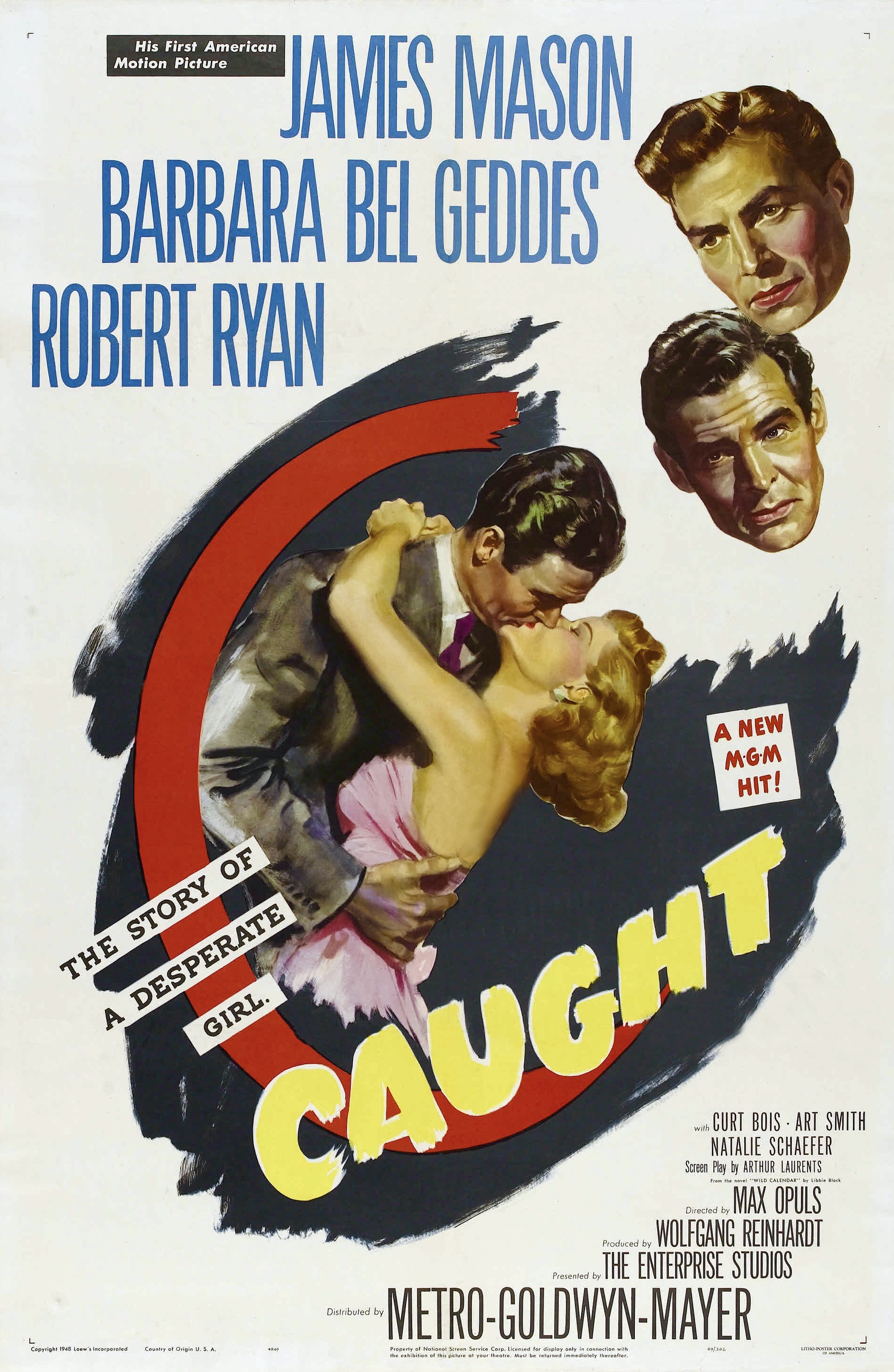
Strangely enough, my favorite film about Howard Hughes isn’t a biopic at all but a noir-like melodrama featuring a character who was clearly inspired by the megalomaniac tycoon – Caught (1949), by German director Max Ophuls. Smith Ohlrig, the business tycoon modeled on Hughes, may not resemble him in terms of a biographical profile but on a psychological level he is the epitome of Hughes in the way he interacted with women, his employees and industry rivals.

Continue reading
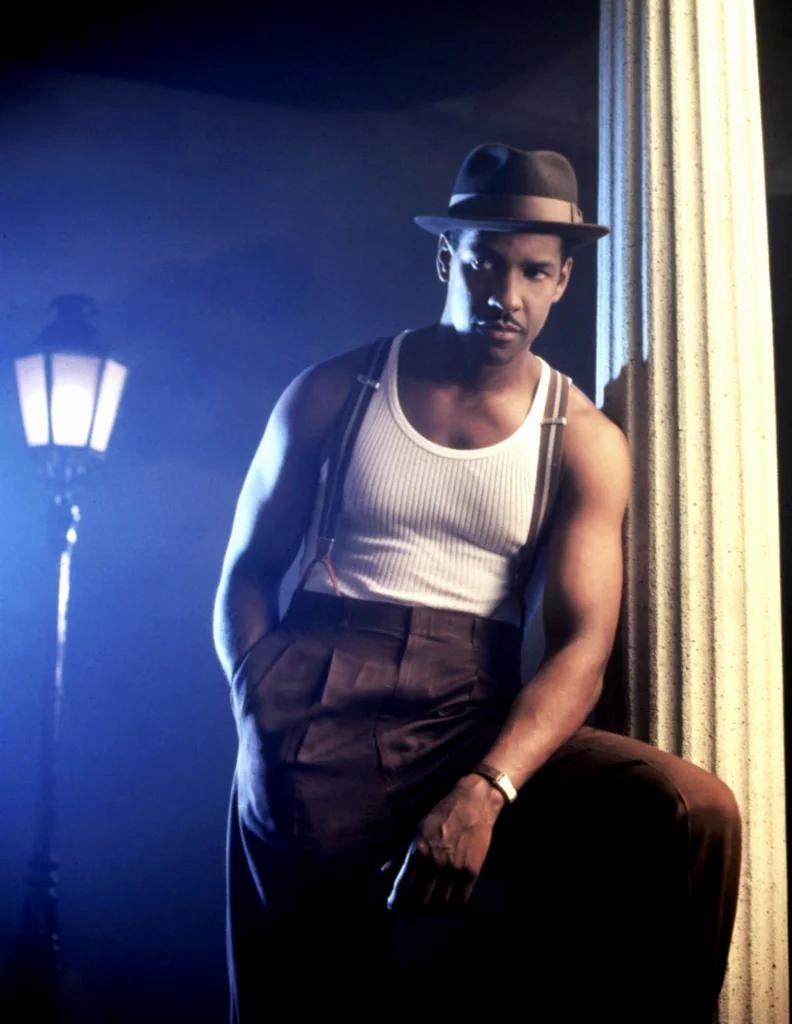
Easy Rawlins: Private Eye

Denzel Washington plays Easy Rawlins, an amateur detective in the 1995 film adaptation of the Walter Mosley crime novel DEVIL IN A BLUE DRESS, directed by Carl Franklin.

For avid readers of mystery and crime novels, the stories of African-American novelist Walter Mosley featuring his detective hero Easy Rawlins were a unique and welcome addition to an overly familiar genre. And it was no surprise when Devil in a Blue Dress, the first of a quartet of novels featuring Rawlins, was optioned by a Hollywood studio and later brought to the screen in 1995 by director Carl Franklin and Denzel Washington, who not only played the lead but helped finance it; it was the first film for his production company, Mundy Lane.

Continue reading

Vagabond Screwballs

Slither (1973) is a film of firsts in many ways. It marked the directorial debut of Howard Zieff, who would go on to become one of the most sought-after comedy directors in Hollywood during the ’70s (Hearts of the West [1975], House Calls [1978], Private Benjamin [1980]). It featured the first screenplay by W. D. Richter who would later pen the 1978 remake of Invasion of the Body Snatchers, the 1979 remake of Dracula, and Brubaker [1980] as well as direct the cult film, The Adventures of Buckaroo Banzai Across the 8th Dimension [1984]. And it was James Caan’s first starring role after his critically acclaimed success in The Godfather [1972] and the beginning of his reign as a Hollywood leading man after struggling to break through in smaller scale movies like Rabbit, Run [1970] and T.R. Baskin [1971].   Continue reading

Battle of the Bands Throwback

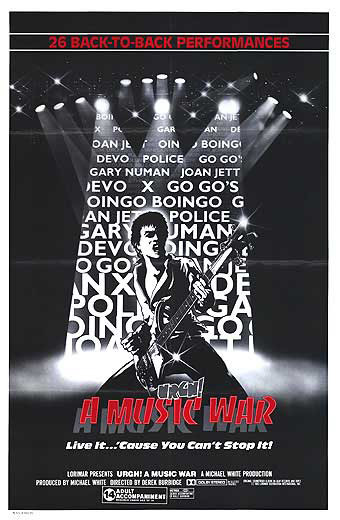
Among the many titles being released through the no-frills Warner Archive Collection are a few oddball orphans and obscurities that didn’t get much love the first time around such as 1971’s Dusty and Sweets McGee, a docudrama of Los Angeles heroin addicts, Carny (1980) starring The Band’s Robbie Robertson, Jodie Foster and Gary Busey, the eccentric Italian sci-fi thriller Wild, Wild Planet (1966) and The Cats aka The Bastard (1968), a Eurocrime drama with Rita Hayworth and Klaus Kinski. These are definitely worth a look but the one that has the potential to make you pogo is Urgh! A Music War (1981), a compilation concert film featuring 33 live music acts recorded in different cities in the U.S. (Los Angeles, New York) and Europe (London; Portsmouth, England, Fréjus, France). Some of the more famous groups featured include X, Devo, The Police, The Go-Gos and The Dead Kennedys but there are also now forgotten acts like Chelsea, John Cooper Clarke and The Alley Cats. And for some reason, Splodgenessabounds, who performed “Two Little Boys,” were completely omitted from the Warner Archive DVD-R.   Continue reading

Fishing with Dynamite

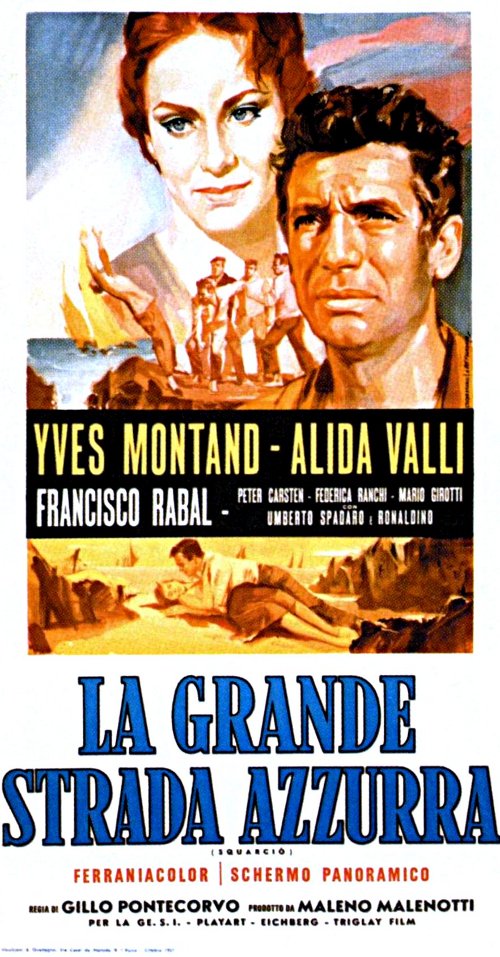
La_grande_strada_azzurra_plakat_itaGillo Pontecorvo began as a documentarian and his interest in social and political issues was already evident in early works like Giovanni (1955), which follows a textile laborer and her female co-workers through punishing work conditions into a full-blown protest against the factory owners. So it comes as no surprise that his first feature length film, The Wide Blue Road (aka La Grande Strada Azzurra, 1957), has an underlying social agenda even if it looks like a slice-of-life melodrama on the surface.   Continue reading