Charlotte Rampling’s Wild Card

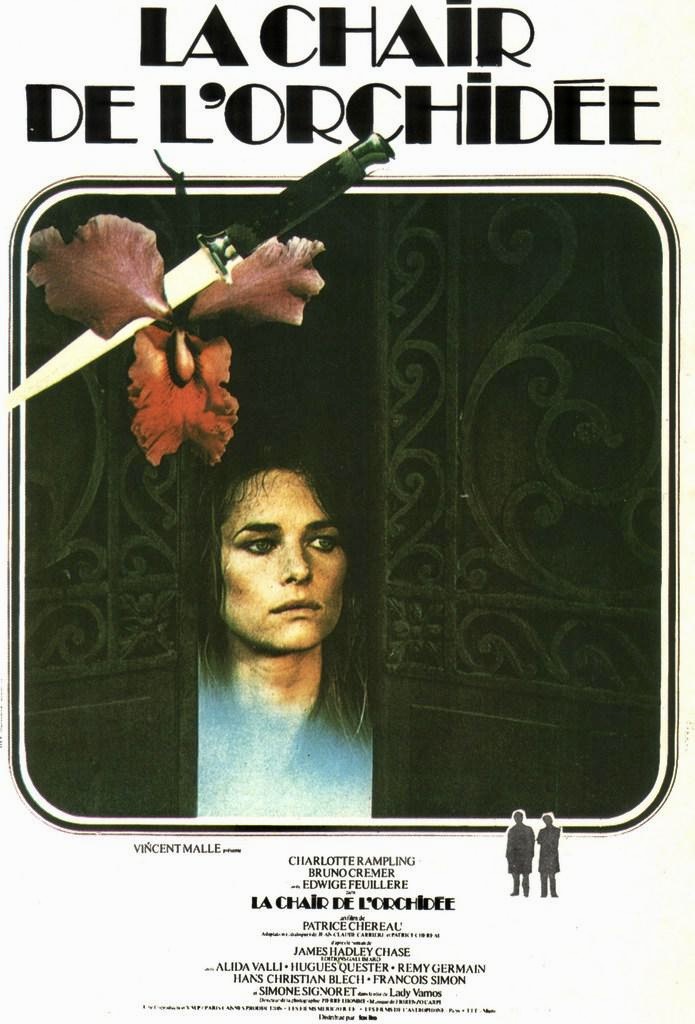
The French film poster for the 1975 thriller THE FLESH OF THE ORCHID, directed by Patrice Chereau.

Charlotte Rampling has been an international star since the mid-1970s when she appeared in Zardoz (1974), The Night Porter (1974) and Farewell, My Lovely (1975), but during her early career, critics were more likely to comment on her beauty and sex appeal over her acting talent. It wasn’t until she began appearing in the films of Francois Ozon (Under the Sand [2000], Swimming Pool [2003]) and other independent, cutting-edge directors like Dominik Moll (Lemming, 2005) and Laurent Cantet (Heading South, 2005) that Rampling finally came into her own as a critically acclaimed actress and cult favorite. She has rarely steered clear of edgy material or doing nude scenes or choosing unconventional roles over more audience friendly fare and her movies from the late sixties through the mid-nineties reflect this. Some were pretentious misfires like The Ski Bum (1971) or eccentric one-offs (Yuppi du, 1975) or mainstream showcases for her talent such as Woody Allen’s Stardust Memories (1980) and Sidney Lumet’s The Verdict (1982). Yet, even her lesser known work from this period is often worth seeking out and La Chair de I’orchidee (English title, The Flesh of the Orchid, 1975), the debut film of French director Patrice Chereau, is certainly a wild card. A psychological thriller that seems to take place in an alternate universe where everyone is misanthropic, corrupt, greedy or violent, Chereau’s first film is based on a 1948 pulp fiction novel by James Hadley Chase.

Continue reading
No Exit

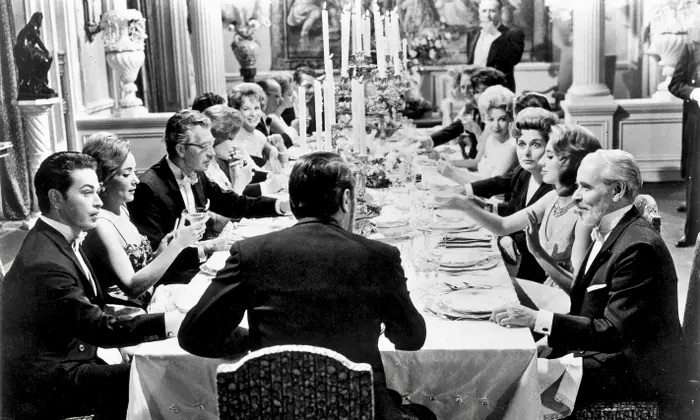
The dinner guests in Luis Bunuel’s THE EXTERMINATING ANGEL (1962) are in for an unpleasant surprise in this strange mixture of surrealism and black comedy.

Almost everyone has attended a dinner party at some point in their lives that was mandatory as well as a memorably bad experience. Maybe it was a communal meal with the boss and co-workers or a formal affair with an annoying in-law or relative. Just be glad you were able to leave the event when it became convenient. The assembled guests in Luis Bunuel’s surreal satire, The Exterminating Angel (1962), don’t have that option but the reasons for their entrapment are never clear.

Continue reading

A Marriage of Convenience?

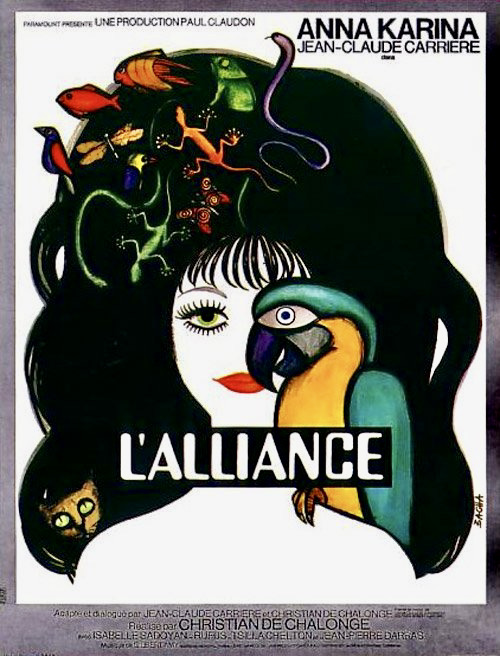
Almost everyone has a good reason for why they want to get married but for Hugues, there is a very specific need. He wants to find a woman with a place of her own, preferably one with ample square footage that includes a sitting room and a large, walk-in closet. Love or companionship isn’t a main objective. Nor does he have any particular preferences concerning the woman’s appearance or personality as long as she is close to the same age. Strangely enough, Hugues finds the ideal candidate through the Duvernet Agency, a professional matchmaker. Jeanne is not only lovely and charming, if a bit elusive, and she has never been married before. Plus, she resides in a sprawling ground floor apartment once owned by an uncle. What could be better?  So begins 1970’s L’Alliance (also known as The Wedding Ring), an exceedingly peculiar tale that slowly lures the viewer down a rabbit hole.

Continue reading