Geisha Purgatory

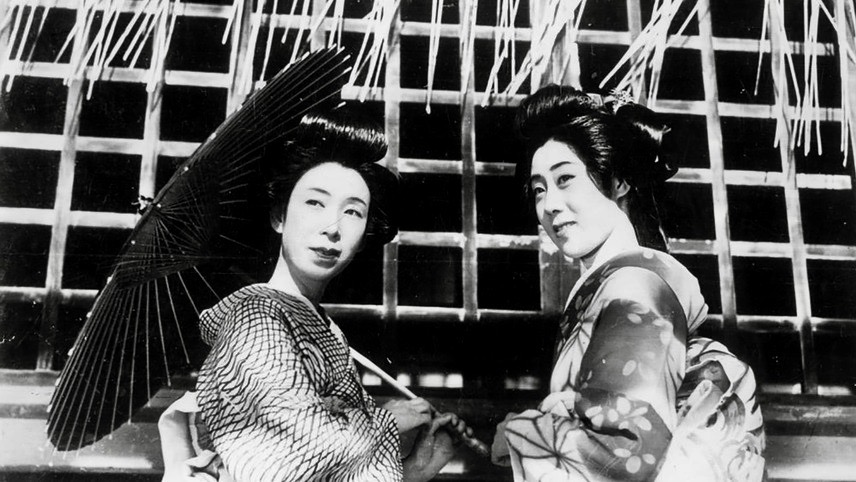
Umekichi (Yoko Umemura, left) and Omocha (Isuzu Yamada) are two sisters enmeshed in the geisha life in Kyoto but couldn’t be more different from each other in Kenji Mizoguchi’s SISTERS OF THE GION (1936).

When it comes to equality between the sexes, do you think life has improved for women over the past 100 years? According to a June 2023 poll by CNBC, the best countries for women in terms of equality and work opportunities are (in this order) Iceland, Norway, Finland, New Zealand and Sweden. The UK is further down in the 15th position and the U.S. is surprisingly ranked at the 46th slot out of 146 countries. Of course, the places where women are treated like second class citizens or worse is no surprise. A poll on the Global Citizen website in 2021 shows the ten worst places for gender equality led by Afghanistan and followed by Syria, Yemen, Pakistan, Iraq, the South Sudan and other African countries. And what about Japan? Despite its reputation as a sophisticated culture and a major world power, the country is still a patriarchal society where women continue to serve the men who hold the power. Japanese director Kenji Mizoguchi has often examined and critiqued the kind of society that forces women to give up any independence and make constant sacrifices for their men which is why the director is often considered a proto-feminist in cinema circles. Yet, in Mizoguchi’s long career of almost 100 features and short films, the demeaning patriarchy of Japan has often been a running theme in his work and it created considerable controversy in his country early in his career, emerging most strongly in two of his finest movies, Naniwa Hika (English title: Osaka Elegy, 1936), which was banned by censors in 1940 for displaying “decadent tendencies,” and Gion no Shimai (English title: Sisters of the Gion, 1936), which is even angrier and more despairing than the later.
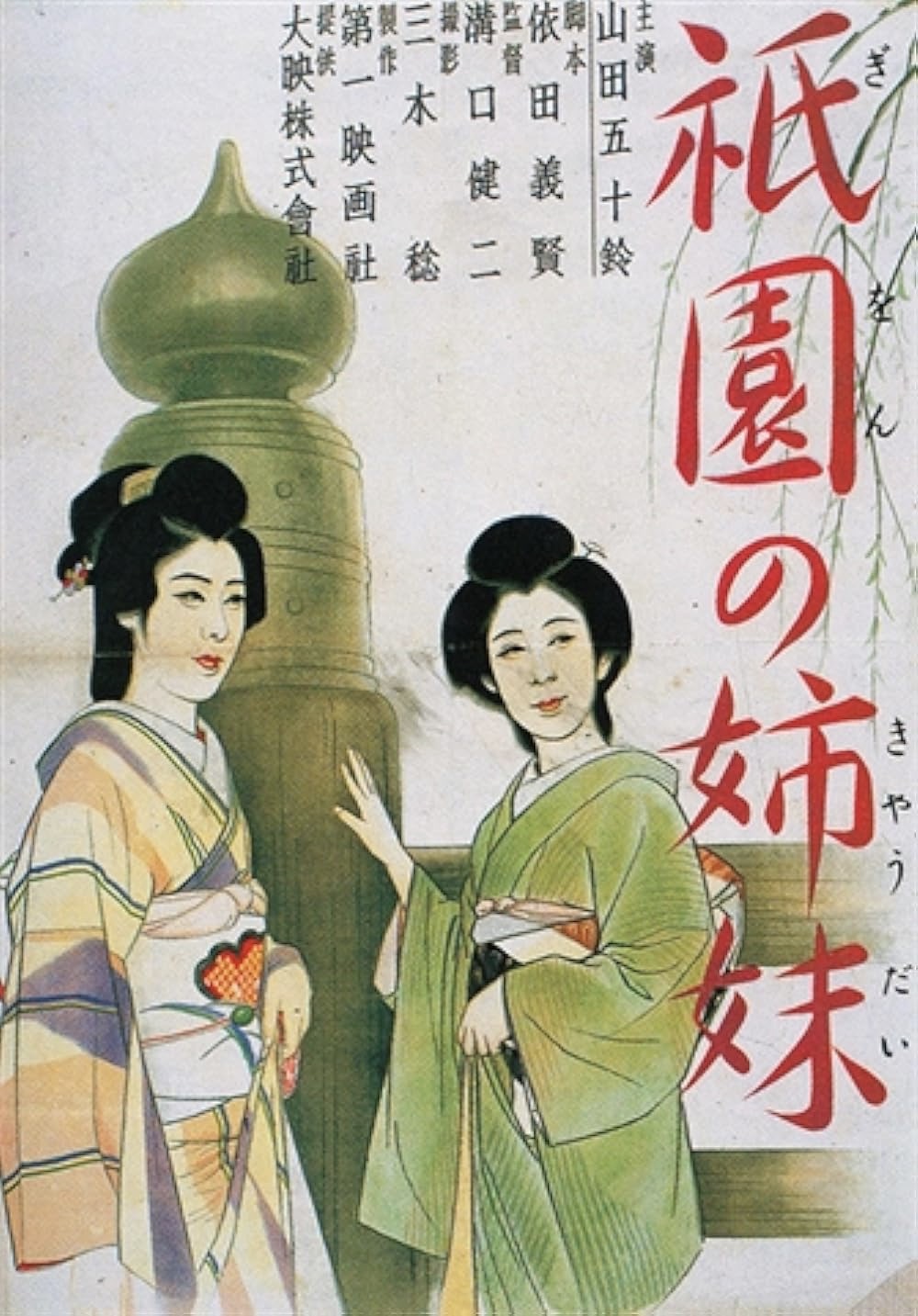
The Japanese fllm poster of SISTERS OF THE GION (1936).
Continue reading

The Double Life of Tokiko

By day Tokiko (Kinuyo Tanaka) works as a typist in a business firm but after dark she frequents the favorite haunts of gangsters with her yakuza boyfriend in DRAGNET GIRL (1933), directed by Yasujiro Ozu.

Tokiko works as a typist in a business office where Okazki, the owner’s son, is the office manager. He is smitten with his employee and often flirts with her behind closed doors in his private office. Tokiko manages to keep him at bay even though he showers her with gifts and offers her an engagement ring. What Okazki doesn’t know is that Tokiko leads a completely different life after work when she sheds her office worker identity and transforms into a chic underworld player with a gangster boyfriend, Joji. Tokiko not only supports Joji with her day job but also serves as his partner in crime in various money-making schemes. From this brief description you probably wouldn’t suspect that the Japanese crime drama, Hijosen no Onna (English title: Dragnet Girl, 1933), was directed by the celebrated Yasujiro Ozu, but it is an early and surprising entry in his filmography before he became famous for his portraits of Japanese family life in such post-WW2 movies as Late Spring (1949), Early Summer (1951) and his 1953 masterpiece, Tokyo Story.

Continue reading

Wolves, Pigs and Men

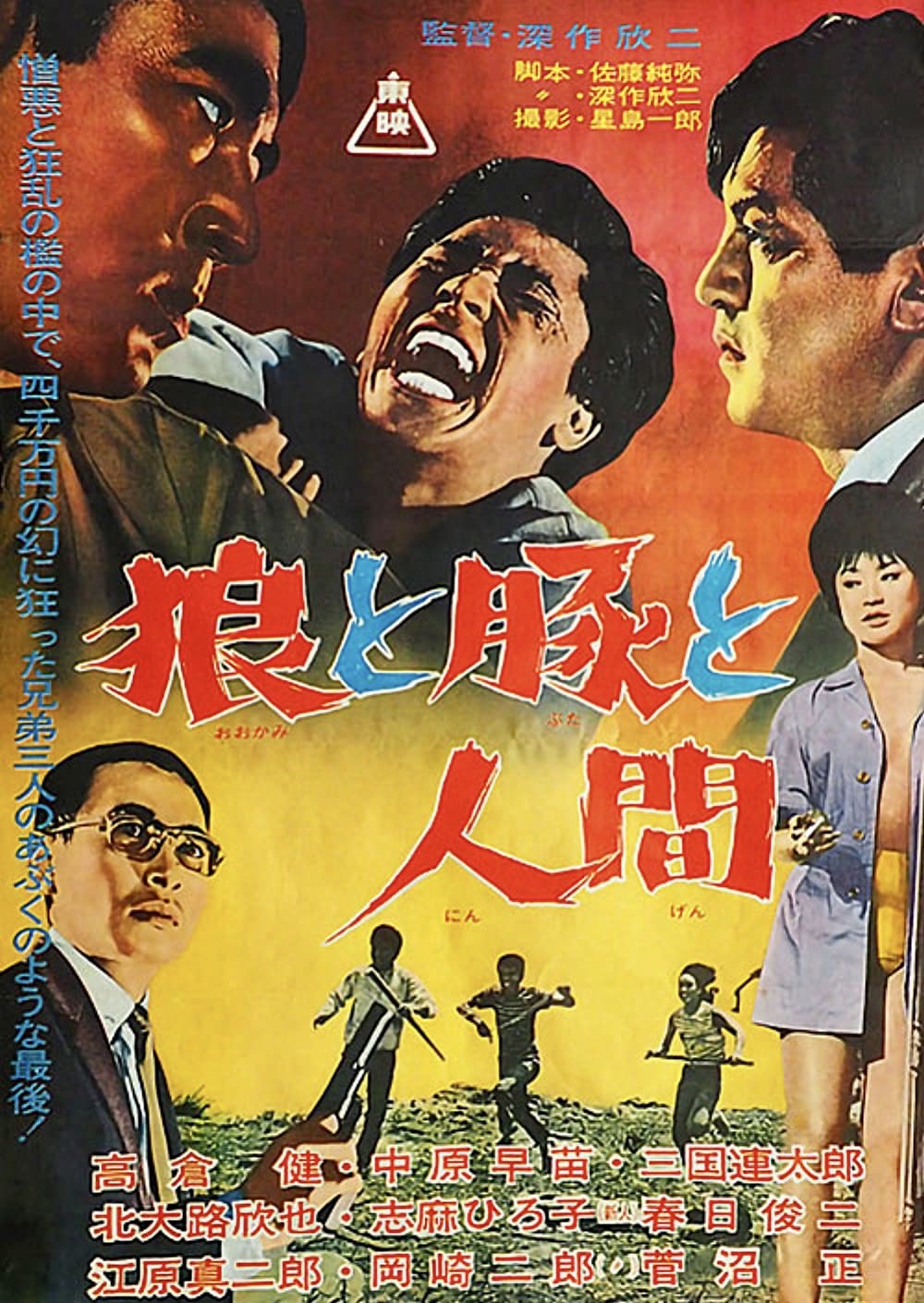
The Japanese film poster for WOLVES, PIGS AND MEN (1964).

Among the many post-WW2 Japanese filmmakers who emerged in the 1960s and hit their stride in the seventies, Kinji Fukasaku was one of the most prominent and critically acclaimed directors in his own country but didn’t start to acquire a growing fan base in the U.S. until after 2000 when some of his masterworks began to appear on DVD such as the yakuza epic Battles Without Honor and Humanity aka The Yakuza Papers (1973), which launched a five-film franchise, and Battle Royale (2000), a controversial futuristic fable about institutionalized violence against problem teenagers. Over the years, Fukasaku has dabbled in numerous film genres from historical drama (Under the Flag of the Rising Sun, 1972) to sci-fi (Message from Space, 1978) and comedy (Fall Guy, 1982), but he is best known from his crime dramas, especially those which popularized the jitsuroku eiga genre. His documentary-like dramatizations based on real crimes often depicted yakuza figures as ruthless men operating without “honor and humanity” (in the title words of his breakthrough film). Even prior to his trend-setting crime thrillers of the mid-seventies, Fukasaku was turning out edgy, innovative work and Okami to Buta to Ningen (English title: Wolves, Pigs and Men) from 1964 is an explosive, nihilistic tale which qualifies as a rough-hewn, early masterpiece.

Continue reading

The Faithful and the Faithless

The Japanese film poster for THIS TRANSIENT LIFE (1970).

Some people believe in heaven and the afterlife while others are convinced that human life is temporal and when it ends nothing remains but a corpse. A dramatization of those opposing views in a film would be a challenging task for any director but Japanese director Akio Jissoji confronts a number of philosophical and religious matters by exploring Buddhist thought and practices versus human desire in Mujo (English title: This Transient Life, 1970). The result is a fascinating and visually innovative character study that manages to balance the sacred and the profane in one of the most overlooked Japanese films of the 70s which is finally starting to receive its due thanks to resurfacing on Blu-ray in recent years.

Continue reading

The Haunted Cornea

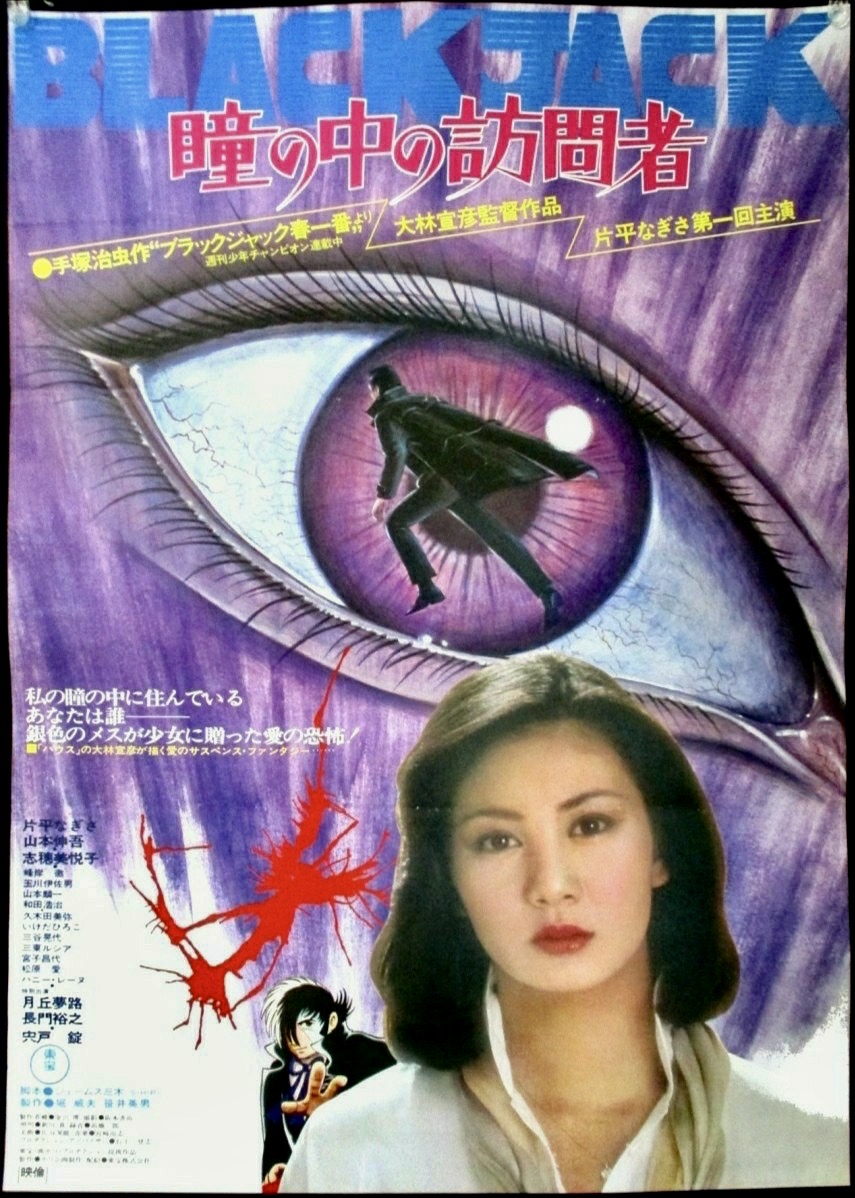
The Japanese film poster for THE VISITOR IN THE EYE aka Hitomi no naka no Houmonsha (1977), directed by Nobuhiko Obayashi.

When Nobuhiko Obayashi’s Hausu (English title: House) opened in Japan in 1977, it proved to be a surprise hit with audiences but not Japanese film critics and it didn’t attract any attention in the U.S. until it was rediscovered in 2009 as possibly the weirdest WFT cult movie since El Topo (1970), Eraserhead (1977) or Repo Man (1984). Originally intended for teenagers, particularly girls, House pits a bunch of young female schoolgirls against a demonic entity and the result is a frenzy of nightmarish images including flying decapitated heads, a cannibalistic piano, a satanic cat, and laughing watermelons to name a few. Obayashi’s subsequent film, Hitomi no naka no houmonsha (English title: The Visitor in the Eye, 1977) isn’t nearly as wild and raucous but it shares the same demented fairy tale ambiance of House and was overshadowed by its predecessor. 

Continue reading

The Mighty Mountain Will Punish the Bad

The Japanese film poster for Ginrei no hate aka SNOW TRAIL (1947).

Many people believe they are masters of their own fates but occasionally mother nature steps in to remind them that there are outside forces they cannot control such as a mountain wilderness or a blizzard or an avalanche. Such is the case in Snow Trail (Japanese title: Ginrei no hate, 1947), an engaging B-movie crime drama in which three bank robbers flee to the snow-covered slopes of Mount Hakuba, located in the northern alps of Nagano Prefecture. With the law in close pursuit, the trio soon find themselves in dire straits with no experience in mountain climbing or dealing with extreme weather conditions. Nature is simply indifference in such matters.  

Continue reading

The Sociopath’s Playbook

The Japanese film poster for THE BEAST SHALL DIE (1959), directed by Eizo Sugawa.

According to the Oxford Dictionary, a sociopath is a person who has a personality disorder which causes them to behave in an aggressive, violent or unpleasant way towards other people. The general opinion among psychiatrists is that sociopaths are not born that way, which is usually the case with psychopaths. Instead, sociopaths are shaped by their environment and experiences. A classic example of this is profiled in Eizo Sugawa’s Yaju Shisubeshi (English title: The Beast Shall Die). The protagonist of this 1959 psychological thriller is Date Kunihiko (Tatsuya Nakadai), a quiet, well-mannered graduate student who is exceptionally gifted as a writer and athlete. Behind his benign façade, however, is a cunning sociopath with a plan that slowly reveals itself as the film unfolds. As portrayed by Nakadai, Date is a truly chilling figure and one of his least known but most potent early performances. It deserves to be included with his more celebrated work in such Japanese masterpieces as Masaki Kobayashi’s The Human Condition (1959-1961), Kihachi Okamoto’s The Sword of Doom (1966) and numerous collaborations with Akira Kurosawa such as Sanjuro (1962), High and Low (1963) and Kagemusha (1980).

Continue reading

Good Cop, Bad Cop

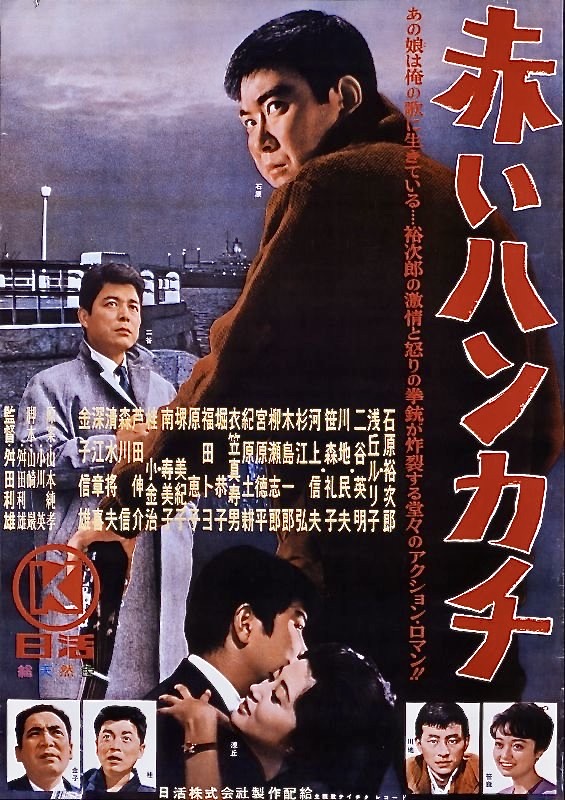
The Japanese film poster for RED HANDKERCHIEF (1964)

Among the major film studios in Japan, Nikkatsu is generally regarded as the oldest but it almost didn’t survive the post-WW2 years after shutting down production in 1942. When it relaunched in 1954, audience tastes had changed and so had the moviegoing public, which was younger and hungry for films that reflected the problems, attitudes and pop culture of their generation. As a result, the studio began to churn out different kinds of films – yakuza and cop thrillers, youth rebellion dramas and frenetic comedies/musicals – that were partially inspired by American genre films and the rise of rebel icons like James Dean and Elvis Presley. Often categorized as “Nikkatsu Action Cinema,” these films experienced a surge of popularity in the late 50s as such directors as Seijun Suzuki, Shohei Imamura, Koreyoshi Kurahara and Toshio Masuda emerged as the most creative filmmakers at Nikkatsu during the post-war new wave. Masuda, in particular, was one of the most commercially successful filmmakers at the studio and helped actor Yujiro Ishihara achieve major stardom after their first collaboration Rusty Knife (1958), a gritty crime drama about a volatile street tough who crosses the mob. They went on to make 25 features together but, curiously enough, one of their most successful films, Akai Hankachi (Red Handkerchief, 1964), is almost forgotten and difficult to see outside of Japan.

Continue reading

Subterranean Homesick Blues

The Japanese film poster for Yatsuhaka-mura aka VILLAGE OF EIGHT GRAVESTONES (1977)

Not all homecomings are happy affairs and, if you want to experience one that makes a good argument against family reunions, consider Yatsuhaka-mura (Japanese title, Village of Eight Gravestones, 1977), which presents the ancestral homestead as a cursed place with a dark history. Tatsuya (played by former pop singer Ken’ichi Hagiwara), the film’s protagonist, was taken away from his mountain village by his mother when he was just a child but when he returns after many years, he feels like the ultimate outsider as he reconnects with family he never really knew. Not only is his village isolated and mired in the past but it sits upon a network of underground caves and tunnels, which hold the key to a family secret.

Continue reading

The Cult of Kaze

There are good cults and bad cults and the cult of Kaze is a bit of both worlds. Not really a recognized cult, it is instead an informal club of ten women who are united in sisterhood over a common cause which they hope will result in their liberation from a certain Mr. Kaze, a handsome, successful executive in the television industry. The bad part of their mutual solidarity is that the women want Kaze to die and they aim to kill him. Why? Because nine of the women have had affairs with and been discarded by this man and the tenth woman, Futaba Kaze, is his wife and has suffered from his serial unfaithfulness for years. As you would expect from this set-up, Kuroi jûnin no onna (The English title translates as Ten Dark Women or Ten Women in Black), directed by Kon Ichikawa in 1961, is a feminist revenge film but it is also so much more than that.

Continue reading