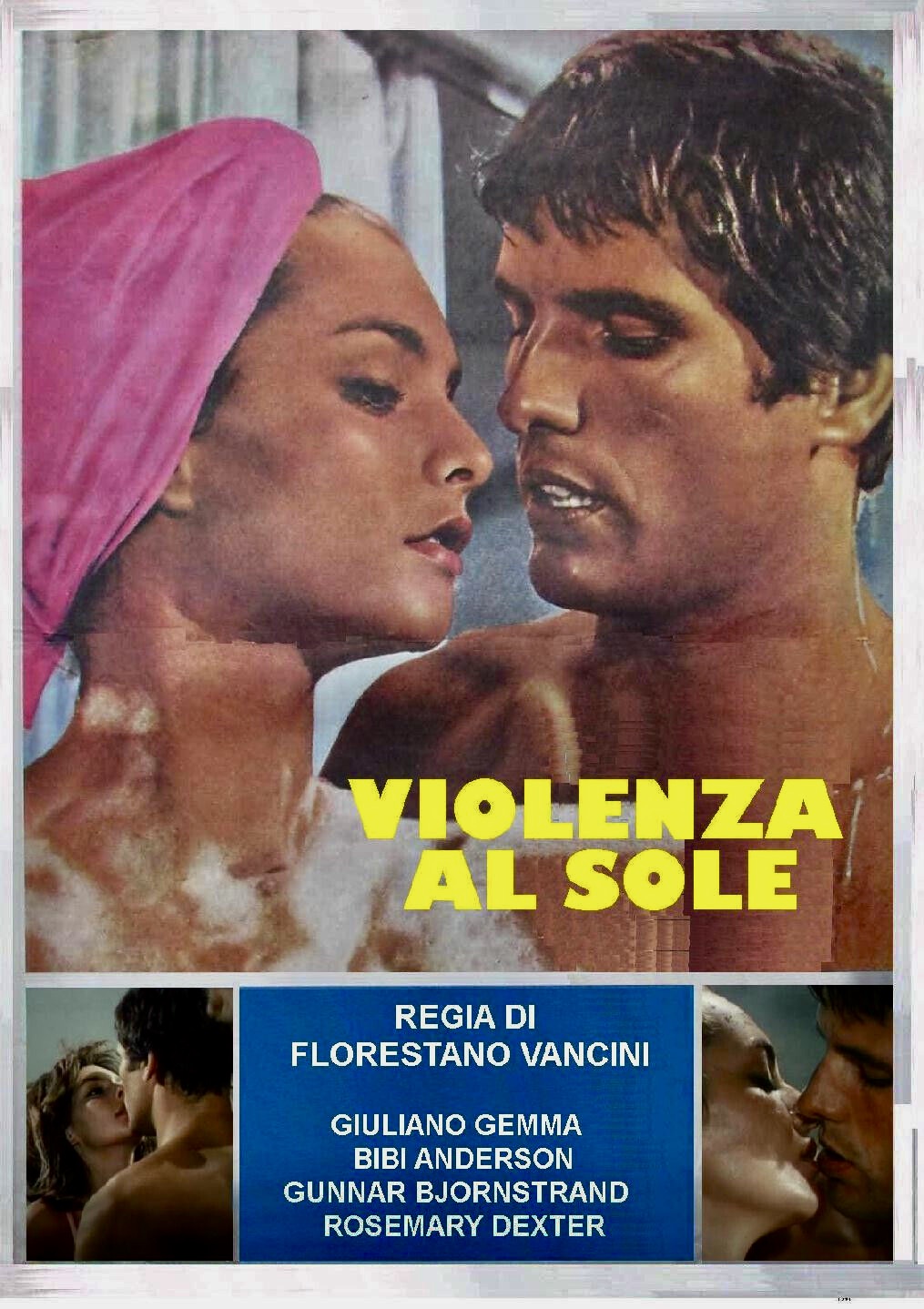
Violenza al Sole aka Blow Hot, Blow Cold

An Italian film poster for the 1969 film BLOW HOT, BLOW COLD.

During the peak years of the Italian film industry in the 1960s and 70s, there were numerous films released which never received a theatrical release in the U.S. and are completely unknown to American audiences. Of course, some of these are forgettable but there are several that deserve a second chance at being re-discovered and Violenza al Sole (English title: Violence in the Sun aka Blow Hot, Blow Cold aka Hot Blood in the Veins, 1969), directed by Florestano Vancini, is a prime example. It is also a fascinating anomaly in the careers of the four main actors, Giuliano Gemma, Rosemary Dexter, and two stars who are most often associated with director Ingmar Bergman, Bibi Andersson and Gunnar Bjornstrand.

Continue reading
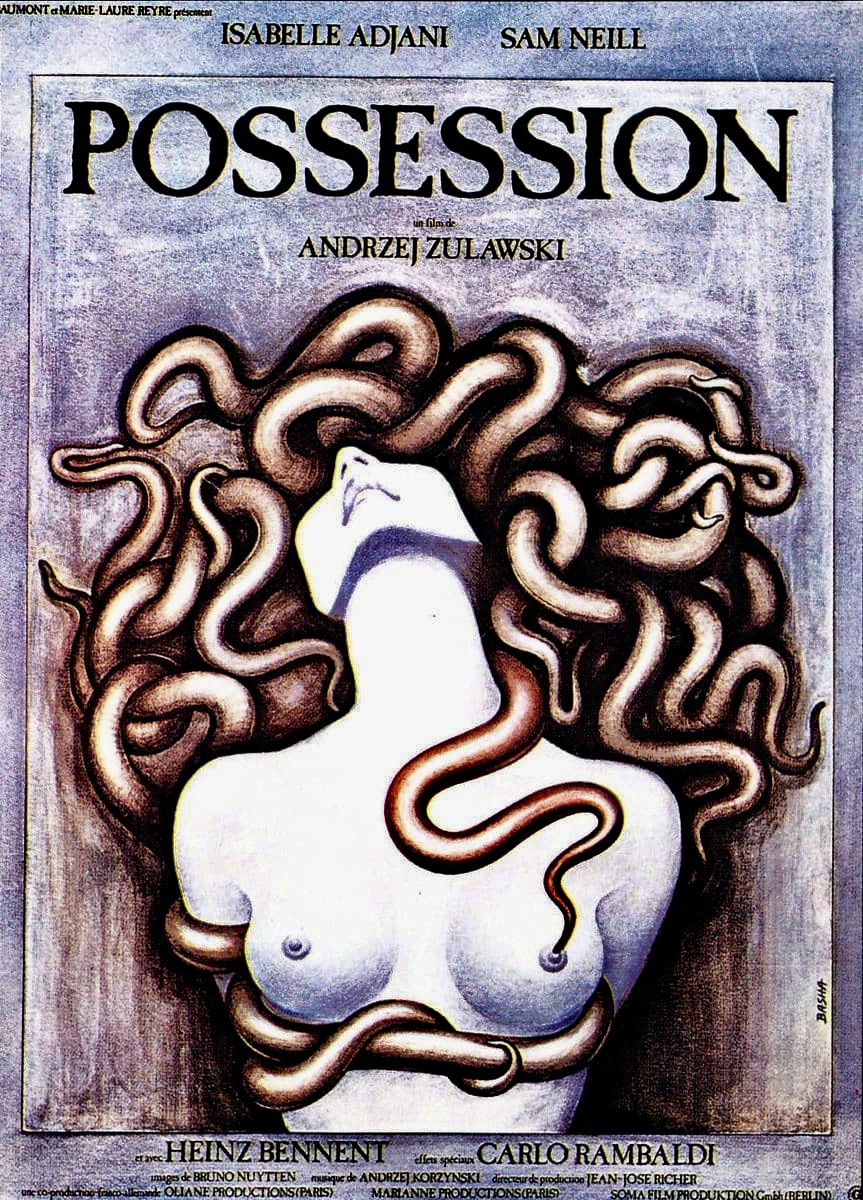
Breaking Up is Hard to Do

In The Devil’s Dictionary, a satirical lexicon written by Ambrose Bierce which was first published in 1906 under the title The Cynic’s Word Book, marriage is described as “The state or condition of a community consisting of a master, a mistress and two slaves, making in all, two.” While it may be an amusing if not particularly favorable definition of what should be a sacred union between two people, it does reflect a negative viewpoint embraced by some who have suffered through it. Possession (1981), directed and co-written by Andrzej Zulawski with Frederic Tuten, takes this conceit a step further, depicting the institution of marriage as not just a form of slavery but the embodiment of hell on earth.

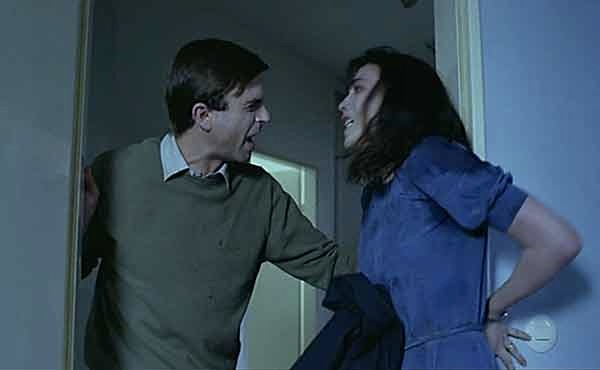
Mark (Sam Neill) confronts Anna (Isabelle Adjani) over her reasons for wanting to end their marriage in POSSESSION (1981).
Continue reading

Eva Malmborg, Crime Reporter

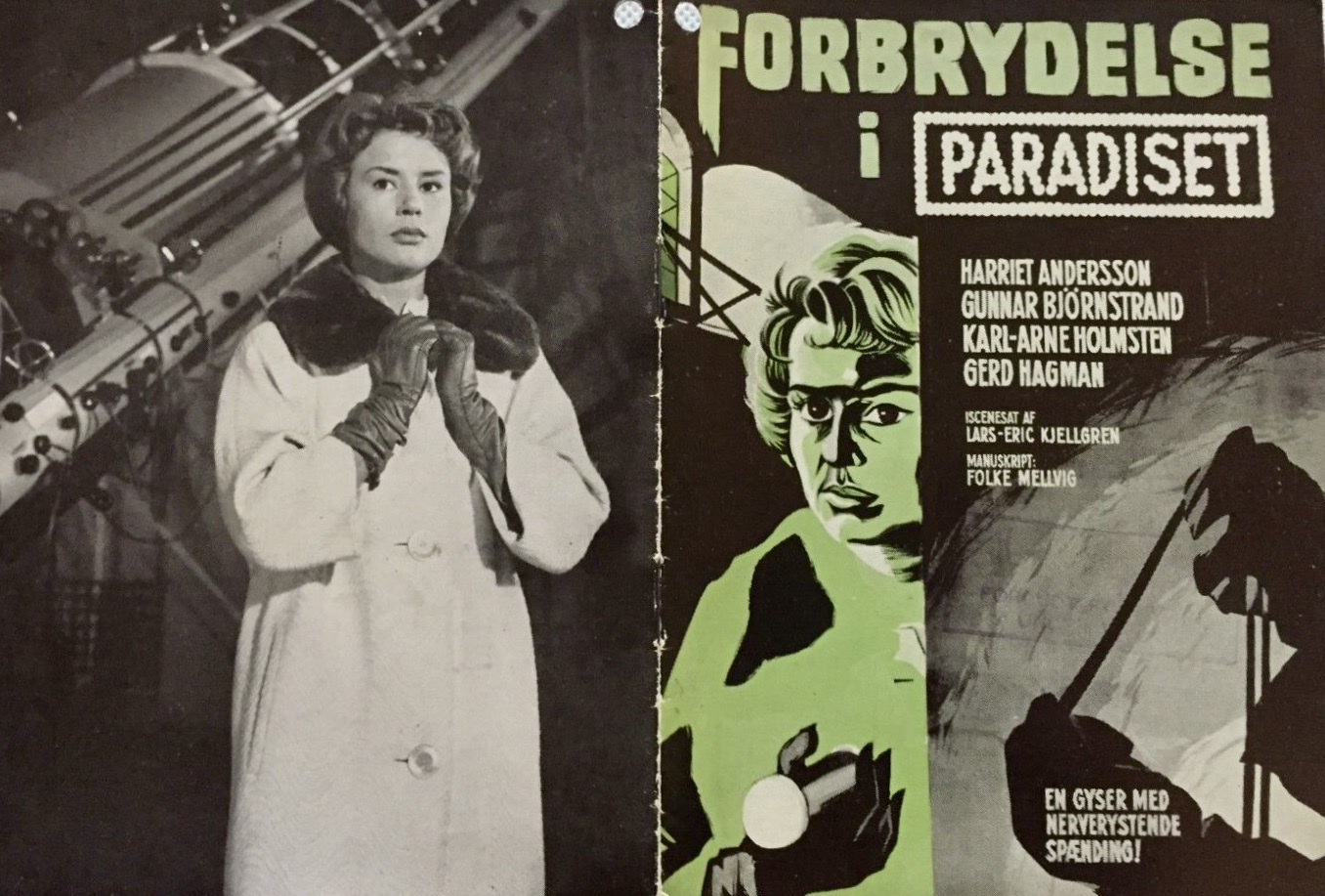
Harriet Andersson stars in the 1959 Swedish mystery thriller CRIME IN PARADISE, represented here by a Danish publicity promotion.

Swedish actress Harriet Andersson is best known for her many film collaborations with director Ingmar Bergman but, even after she became a celebrated star in the mid-fifties with her breakout role in Bergman’s Summer with Monica (1953) and the award-winning Smiles of a Summer Night (1955), she continued to appear in a wide variety of films and not just art-house fare. She could play anything from sexy sirens to fiercely independent, working class women to romantic heroines and one of her more entertaining efforts is her performance as Eva Malmborg, a fledgling reporter who helps solve a famous robbery/murder in the 1959 genre thriller Brott I Paradiset (English title: Crime in Paradise), directed by Lars-Eric Kjellgren.

Continue reading

A Danish Original and a Canadian Remake

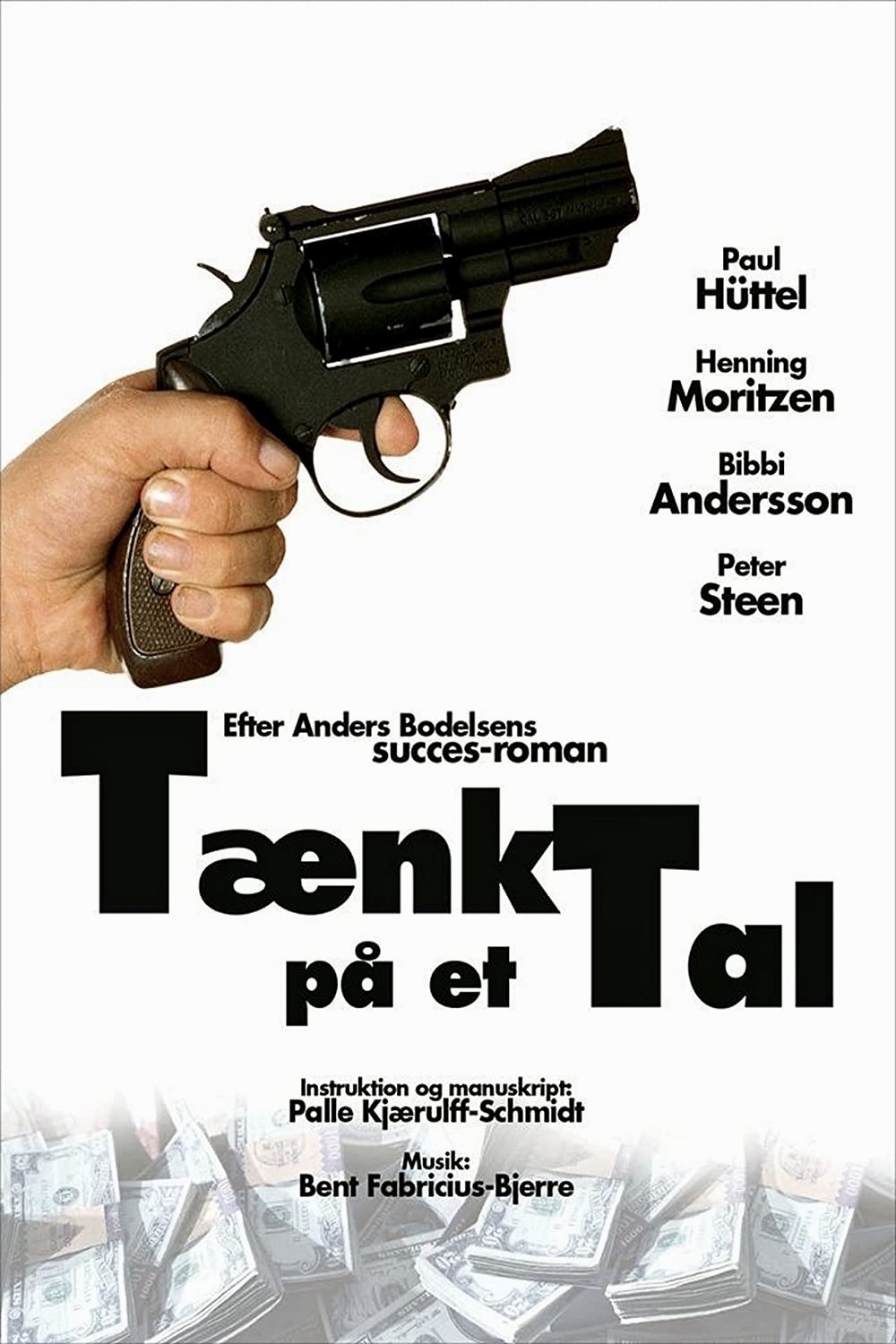
The Danish film poster for THINK OF A NUMBER (1969), which was remake as THE SILENT PARTNER in 1979.

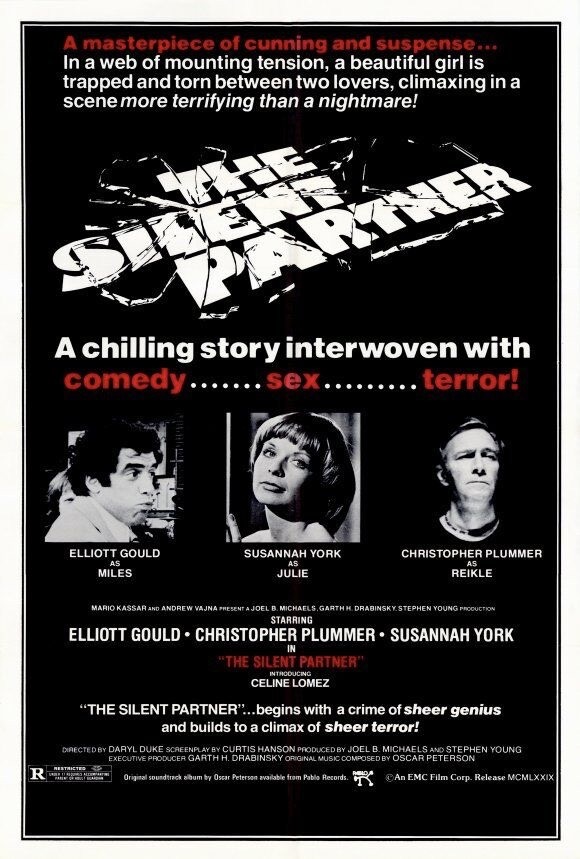
In March 1979 a small scale but offbeat and ingenious little crime drama entitled The Silent Partner slipped into U.S. theaters without any advance word. A Canadian tax shelter write-off, the movie might have passed unnoticed if it hadn’t been for a handful of U.S. film critics who championed the release such as Roger Ebert of The Chicago Sun-Times, who called it “a thriller that was not only intelligently and well acted and very scary, but also had the most audaciously clockwork plot I’ve seen in a long time…it’s worthy of Hitchcock.” And Janet Maslin of The New York Times called it “a dense, quirky, uncommonly interesting movie, this time with a high quotient of suspense.” 

Over the years The Silent Partner has built up a considerable fan base and has become a welcome Yuletide viewing alternative (it is set during the Christmas season) to the umpteenth airings of It’s a Wonderful Life and A Christmas Carol. What most American viewers don’t realize is that The Silent Partner is a remake of the 1969 Danish thriller Think of a Number (Taenk pa et tal), directed by Palle Kjaerulff-Schmidt.

Continue reading

Music Can Change Your Life

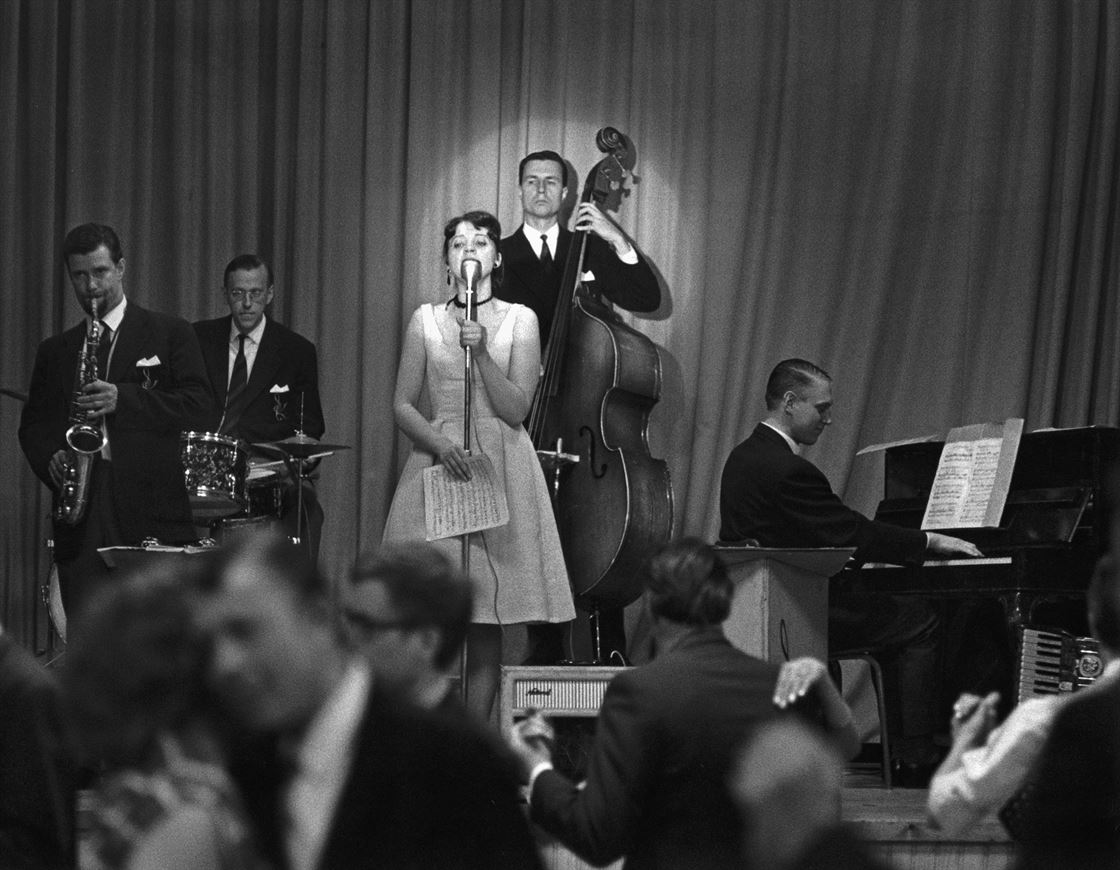
Gunnel (Eva Remaeus) serenades a dance hall with her accompanying musicians in SVEN KLANG’S COMBO, a 1976 Swedish film about a small town Dixieland band.

Group dynamics are always a fascinating topic for stories, especially when the focus is the workplace or some social situation. Consider this scenario, for instance, involving a small traveling band that specializes in Dixieland-style dance numbers and popular big band favorites. When a new musician joins their group with innovative musical ideas and the talent to execute them, not everyone is going to be immediately smitten. Such is the case with Sven Klang’s Combo (aka Sven Klangs Kvintett, 1976), a Swedish film by Stellan Olsson, which follows a fateful year in the life of a provincial quintet. They lose a member but gain a hip, new saxophone player from the big city who is heavily influenced by the bebop sounds of Charlie Parker, Dizzy Gillespie and others. The result is a bittersweet but often amusing look at how some bands either make the decision to go professional (if they are good enough) or content themselves playing for fun the rest of their lives. 

Continue reading

Off the Grid

The Swedish film poster for The Outlaw and His Wife (1918).

A master of 20th century cinema, the Swedish director and actor Victor Sjöström is best remembered for his moving performance as the elderly physician reflecting on his life in Wild Strawberries (1957). As a director, his highly acclaimed 1921 adaptation of Selma Lagerlöf’s novel The Phantom Carriage convinced MGM mogul Louis B. Mayer to bring him to America where Sjöström directed the prestigious projects He Who Gets Slapped (1924), with Lon Chaney, and two starring Lillian Gish, The Scarlet Letter (1926) and The Wind (1928), arguably the pinnacle of his Hollywood tenure. While The Outlaw and His Wife (1918) is not as well known, it is considered by many film historians to be Sjöström’s silent-era masterpiece and, nearly a century after its release, is enjoying a revival that should elevate its stature in the director’s pantheon.

Continue reading

My Name is Ivan

“My discovery of Tarkovsky’s first film was like a miracle. Suddenly, I found myself standing at the door of a room the keys of which had, until then, never been given to me. It was a room I had always wanted to enter and where he was moving freely and fully at ease. I felt encouraged and stimulated: someone was expressing what I had always wanted to say without knowing how. Tarkovsky is for me the greatest, the one who invented a new language, true to the nature of film, as it captures life as a reflection, life as a dream.” – Ingmar Bergman

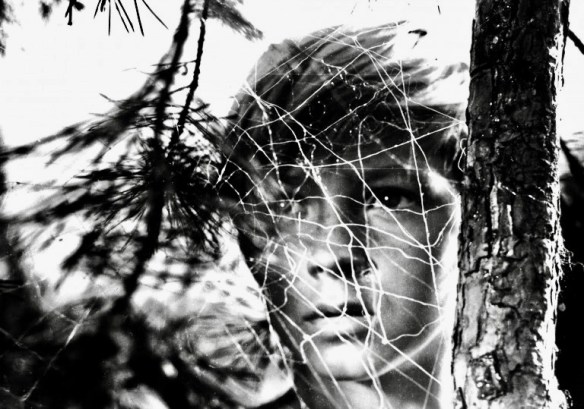
Nikolai Burlyaev gives a stunning performance as a war refugee turned Russian spy in Ivan’s Childhood (1962), the feature film debut of director Andrei Tarkovsky.

A harrowing yet poetic account of war seen through the eyes of a twelve year old boy, Ivan’s Childhood aka My Name is Ivan (1962) was Andrei Tarkovsky’s first feature film and one that had a major impact on Russian cinema and the international film world (It won the Golden Lion at the 1962 Venice International Film Festival). Continue reading

In the Land of Mah-Na Mah-Na

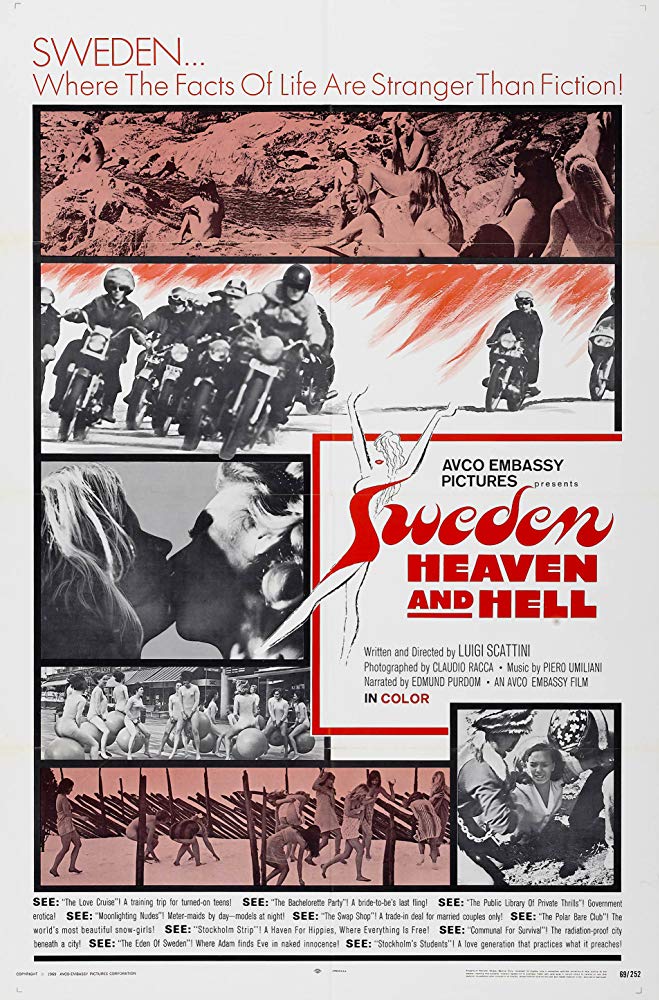
Between 1967 and 1974 Sweden emerged as the most progressive and liberal nation in the world due to a government that supported a wide variety of social and political interests such as women’s rights, anti-war advocacy and the environmental movement along with a relaxed attitude about sex. Films like Mac Ahlberg’s I, a Woman (1965), Vilgot Sjoman’s I Am Curious (Yellow) from 1967, and Joseph Sarno’s Inga (1968) also helped confirm Sweden’s image as an epicenter of sexual freedom so it was inevitable that such a situation would inspire a moralistic backlash. What no one expected was that it would come from Italy in the form of a Mondo Cane-like documentary directed by Luigi Scattini entitled Sweden: Heaven and Hell (1968).  Continue reading

A Time for Demonic Visitations

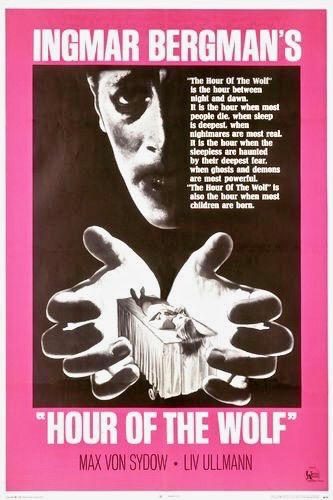
“According to the ancient Romans, the Hour of the Wolf means the time between night and dawn, just before the light comes, and people believed it to be the time when demons had a heightened power and vitality, the hour when most people died and most children were born, and when nightmares came to one.”

Setting the stage for what will follow with this ominous introduction, Ingmar Bergman’s 1968 feature Hour of the Wolf (Swedish title: Vargtimmen) is probably the closest the director has ever come to making a horror film, one that crosses over into the realm of the supernatural. Continue reading

Gabriel Axel’s The Red Mantle

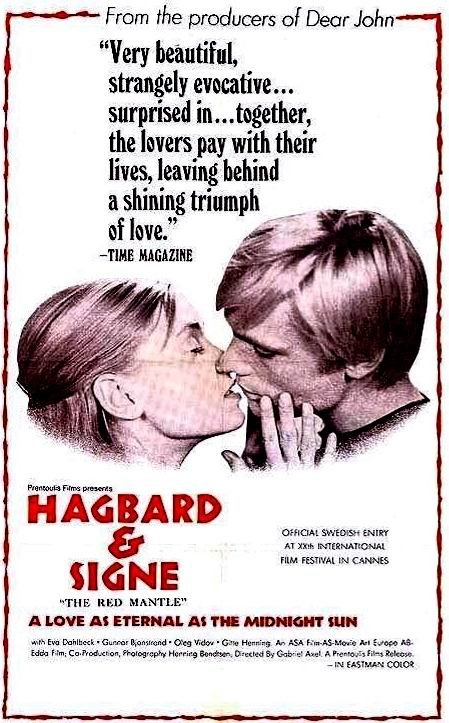
The name Gabriel Axel might not be familiar to most American moviegoers but many are familiar with his 1987 film Babette’s Feast which became a surprise art house hit and won the Oscar for Best Foreign Language Film, beating out Louis Malle’s Au Renoir les Enfants. Ironically, Axel was almost 70 and at the end of his filmmaking career when he experienced a career resurgence. But the film that is considered his first international art house breakthrough is Den Rode Kappe (1967), which was released in Europe as Hagbard and Signe and is best known under the title The Red Mantle in the U.S. The poster above with the awkwardly edited quote – and movie spoiler – from Time magazine also includes the reference “From the producers of Dear John” which means nothing to anyone today but that film was a slightly risque art film in its day (due to the nudity) and a nominee for Best Foreign Language Film of 1965 (It lost to Elmar Klosand and Jan Kadar’s The Shop on Main Street). Continue reading