Geisha Purgatory

Umekichi (Yoko Umemura, left) and Omocha (Isuzu Yamada) are two sisters enmeshed in the geisha life in Kyoto but couldn’t be more different from each other in Kenji Mizoguchi’s SISTERS OF THE GION (1936).

When it comes to equality between the sexes, do you think life has improved for women over the past 100 years? According to a June 2023 poll by CNBC, the best countries for women in terms of equality and work opportunities are (in this order) Iceland, Norway, Finland, New Zealand and Sweden. The UK is further down in the 15th position and the U.S. is surprisingly ranked at the 46th slot out of 146 countries. Of course, the places where women are treated like second class citizens or worse is no surprise. A poll on the Global Citizen website in 2021 shows the ten worst places for gender equality led by Afghanistan and followed by Syria, Yemen, Pakistan, Iraq, the South Sudan and other African countries. And what about Japan? Despite its reputation as a sophisticated culture and a major world power, the country is still a patriarchal society where women continue to serve the men who hold the power. Japanese director Kenji Mizoguchi has often examined and critiqued the kind of society that forces women to give up any independence and make constant sacrifices for their men which is why the director is often considered a proto-feminist in cinema circles. Yet, in Mizoguchi’s long career of almost 100 features and short films, the demeaning patriarchy of Japan has often been a running theme in his work and it created considerable controversy in his country early in his career, emerging most strongly in two of his finest movies, Naniwa Hika (English title: Osaka Elegy, 1936), which was banned by censors in 1940 for displaying “decadent tendencies,” and Gion no Shimai (English title: Sisters of the Gion, 1936), which is even angrier and more despairing than the later.
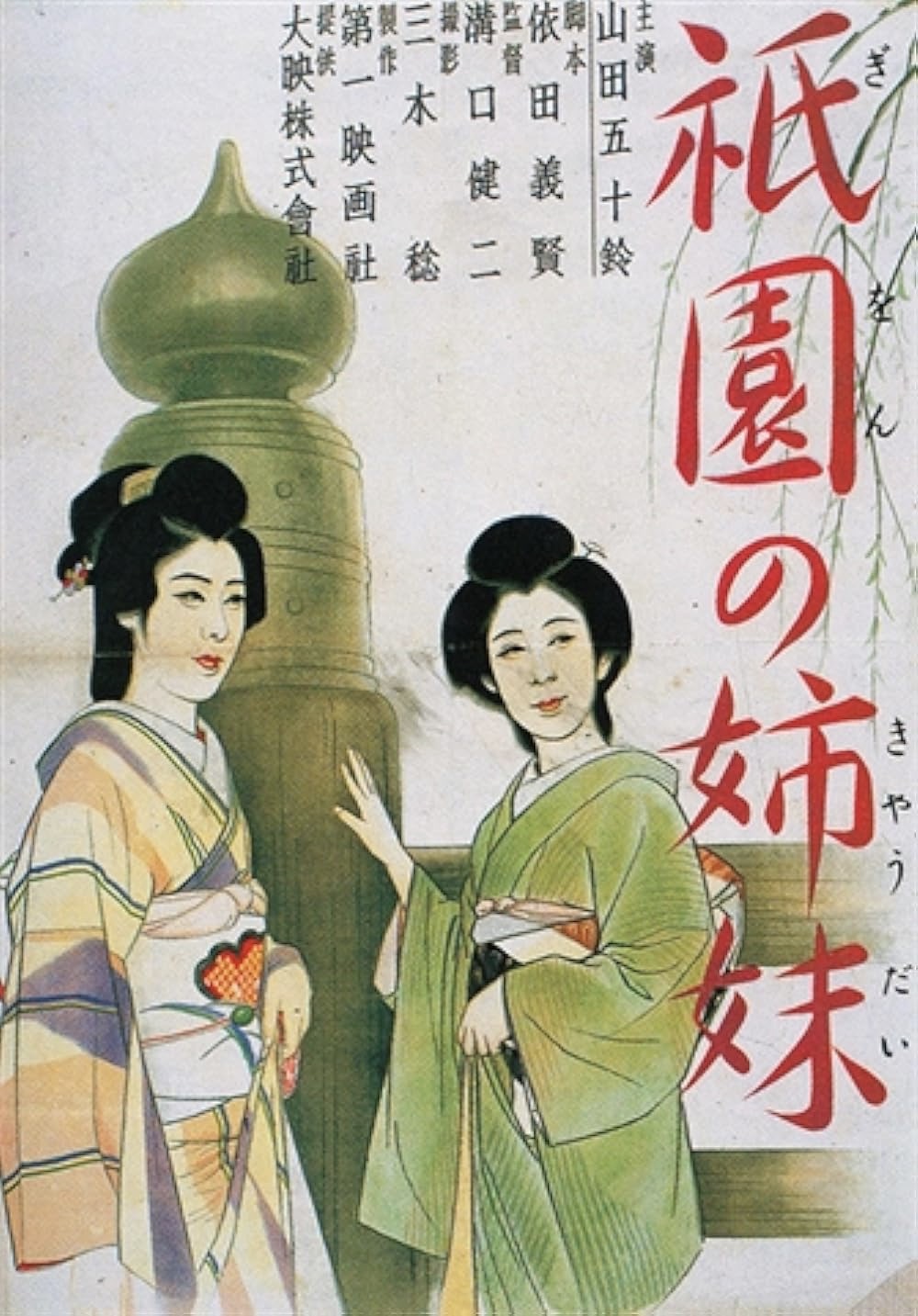
The Japanese fllm poster of SISTERS OF THE GION (1936).
Continue reading

The Double Life of Tokiko

By day Tokiko (Kinuyo Tanaka) works as a typist in a business firm but after dark she frequents the favorite haunts of gangsters with her yakuza boyfriend in DRAGNET GIRL (1933), directed by Yasujiro Ozu.

Tokiko works as a typist in a business office where Okazki, the owner’s son, is the office manager. He is smitten with his employee and often flirts with her behind closed doors in his private office. Tokiko manages to keep him at bay even though he showers her with gifts and offers her an engagement ring. What Okazki doesn’t know is that Tokiko leads a completely different life after work when she sheds her office worker identity and transforms into a chic underworld player with a gangster boyfriend, Joji. Tokiko not only supports Joji with her day job but also serves as his partner in crime in various money-making schemes. From this brief description you probably wouldn’t suspect that the Japanese crime drama, Hijosen no Onna (English title: Dragnet Girl, 1933), was directed by the celebrated Yasujiro Ozu, but it is an early and surprising entry in his filmography before he became famous for his portraits of Japanese family life in such post-WW2 movies as Late Spring (1949), Early Summer (1951) and his 1953 masterpiece, Tokyo Story.

Continue reading

Postcards from the Edge: Louis Malle in India

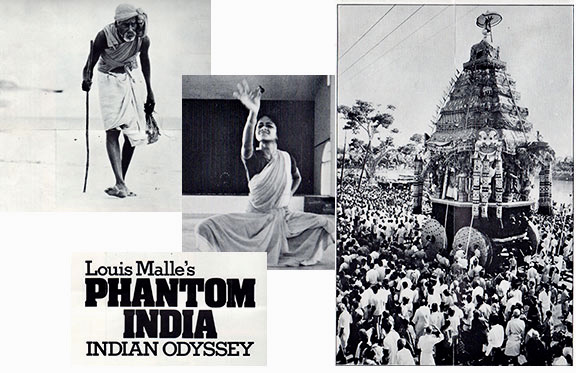
Unaccountably missing or overlooked on most reviewers’ top DVD releases of 2007 was a remarkable set from Eclipse (Criterion’s no frills, affordable editions division) – The Documentaries of Louis Malle. Among the 7 titles featured were the relatively obscure God’s Country [broadcast on PBS in 1986, but filmed in 1981], And the Pursuit of Happiness [1986, also made for television), Place de la republique [1974] featuring man-in-the-street interviews on a busy Parisian boulevard, Humain, trop humain [1974], a fascinating time capsule of French auto workers with industrial noise and Godard-like imagery and the 18 minute short Vive le tour [1962]. But the real highlights of the collection were Phantom India [1969], a 378 minute portrait of that nation that was distributed theatrically as a 7-episode series, and Calcutta [1969], which was filmed at the same time but released separately (It was nominated for a Golden Palm at the Cannes Film Festival). To call both films an overwhelming experience is an understatement to say the least.

Continue reading

Othello, King of Bebop

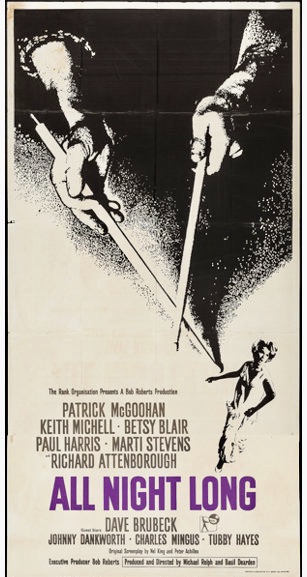
Attempts to bring Shakespeare to the masses can be ill-advised and most film adaptations of the Bard’s work are either faithful copies of the stage plays such as Laurence Olivier’s Henry V (1944) and Richard III (1955) that preserve the language of the original or creative interpretations that either result in a broader appeal (Baz Luhrmann’s Romeo + Juliet, 1996) or earn the wrath of the Shakespeare purists without appealing to anyone else. All Night Long (1962), which updates Othello to London’s West End in the early sixties and transforms the Moor of Venice into a renowned jazz pianist known as Aurelius Rex (Paul Harris), falls into the latter category.      Continue reading

Akira Kurosawa’s Record of a Living Being

The Japanese film poster for I Live in Fear (1955), directed by Akira Kurosawa and starring Toshiro Mifune.

One of the first Japanese commercial features to directly address the fear of nuclear holocaust and the implications of the atom bomb, Record of a Living Being, which is better known as I Live in Fear (1955, aka Ikimono no Kiroku) was an unusual and unexpected movie for director Akira Kurosawa. He had recently completed Seven Samurai (1954), a huge box office and critical success in both Japan and around the world, but his new work was much smaller in scale compared to that sprawling period epic.   Continue reading

Dusan Makavejev for Beginners

How to describe this blast of creative anarchy from 1965? Fascinating and engaging on so many levels, Man is Not a Bird (aka Covek nije tica, 1965) could be seen as a political parable or a social satire or an offbeat romantic drama or an attempt to merge documentary and fiction in some new form of Eastern European neorealism. Continue reading