The Game of Adultery

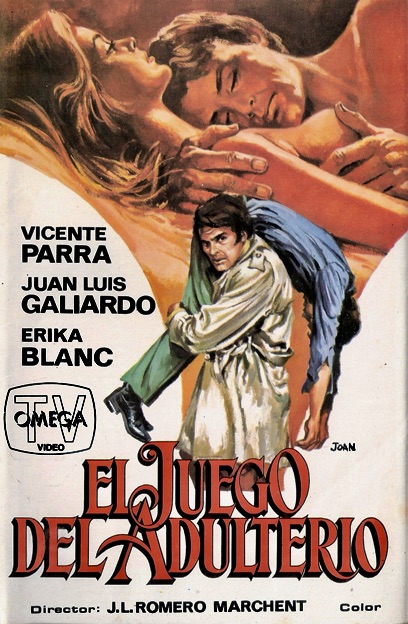
The Spanish film poster for THE GAME OF ADULTERY (1973).

Giallo thrillers and spaghetti westerns are generally considered genres created by the Italian film industry but producers and filmmakers in other European countries also created their own versions in these categories, especially in Spain. Director/Screenwriter Joaquin Luis Romero Marchent, a native of Madrid, is best known for his Spanish take on wild west oaters but he did make a film that could be classified as a giallo. El Juego del Adulterio (English title: The Game of Adultery aka The Deadly Triangle, 1973) is blessed with a title that sounds like an erotic melodrama or maybe a softcore soap opera for the grindhouse crowd. It definitely has elements of that but is actually a psychological thriller crossed with a murder mystery.

Continue reading
Henri-Georges Clouzot’s Le Corbeau

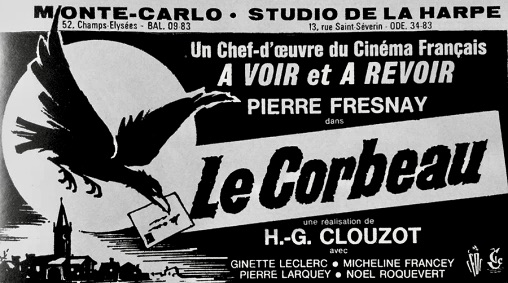
In a small village in rural France, an anonymous writer sends a series of poison-pen letters to selected residents. Signed with the mysterious name of “Le Corbeau”, the letters accuse the new physician in town, Dr. Remy Germain (Pierre Fresnay), of adultery and performing abortions. While the townspeople are scandalized by this information, it soon becomes apparent that Dr. Germain is not the only target of this vicious character assassination and that other respected members of the community will soon be victimized, their most shameful secrets exposed to all by “The Raven.” Soon, the villagers begin turning on each other, creating an atmosphere of increasing paranoia and mistrust that culminates in murder, suicide and an angry mob scene. There might not be a more misanthropic view of humanity than Le Corbeau (aka The Raven, 1943), directed by Henri-Georges Clouzot (The Wages of Fear, 1953), but the movie is not only a dark, brilliantly conceived melodrama which unfolds like a suspense thriller but a cautionary character study of how fear of others brings out the worst in everyone.

Continue reading

Moving Target

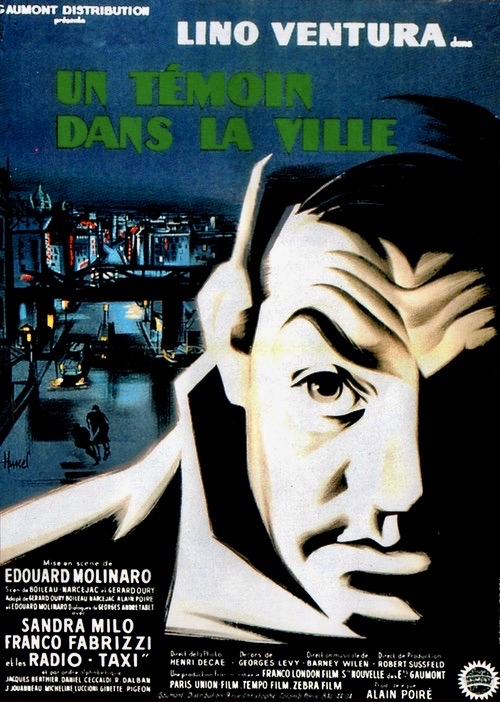
French director/screenwriter Edouard Molinaro may not be a household name in America but practically everyone knows his international breakout hit, La Cage aux Folles, from 1978.  It spawned an equally successful sequel, La Cage aux Folles II (1980), but also became the basis for the smash Broadway musical La Cage aux Folles in 1984 and eventually was remade by director Mike Nichols as The Birdcage in 1996 with Robin Williams, Nathan Lane, Gene Hackman and Dianne Wiest. La Cage aux Folles was no fluke success and Molinaro was already renowned in France for his film comedies such as Male Hunt (1964) with Jean-Paul Belmondo, Oscar (1967) featuring Louis de Funes and the black farce A Pain in the…(1973), which was remade by Billy Wilder as Buddy Buddy (1981). None of this would lead you to believe that Molinaro launched his feature film career with several film noir-influenced thrillers and Un temoin dans la ville (English title: Witness in the City, 1959) is a near masterpiece, deserving to stand alongside Louis Malle’s Elevator to the Gallows (1958), Claude Sautet’s Classe Tous Risques (1960) and Jean-Pierre Melville’s Le Doulos (1962).   Continue reading

Ernesto Gastaldi’s Seminal Giallo

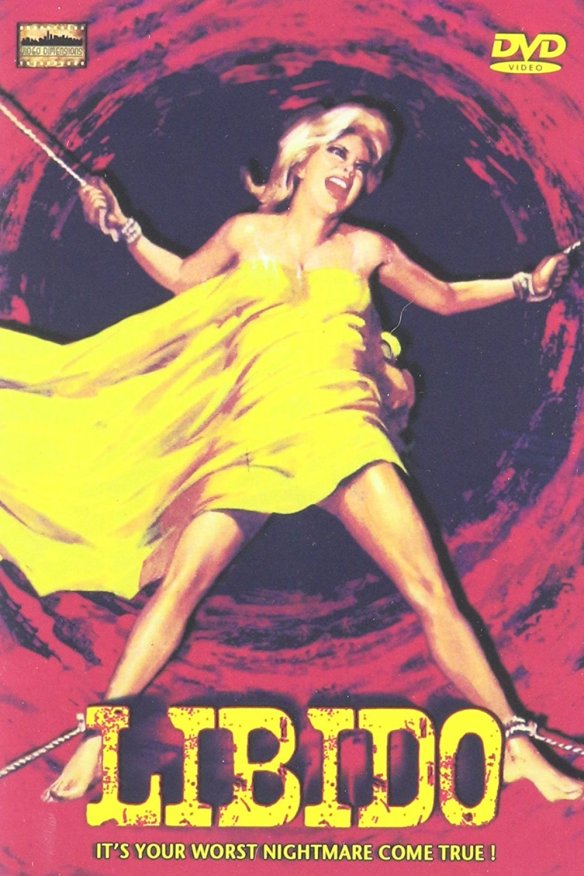
With a tumultuous background of waves crashing against a rocky coast, a descriptive statement from Sigmund Freud on the meaning of libido scrolls down the screen. Part of the Austrian psychoanalyst’s quotation defines libido as “the energy, regarded as a quantitative magnitude… of those instincts which have to do with all that may be comprised under the word ‘love.’” But the film that follows is not about love but rather the perversion of it starting with an opening sequence in which a child witnesses the aftermath of his father’s violent S&M session with a female companion, an incident that scars him for life.     Continue reading

The Secret Cinema Experiment (Feb. 1980 – Dec. 1981, Athens, Ga.)

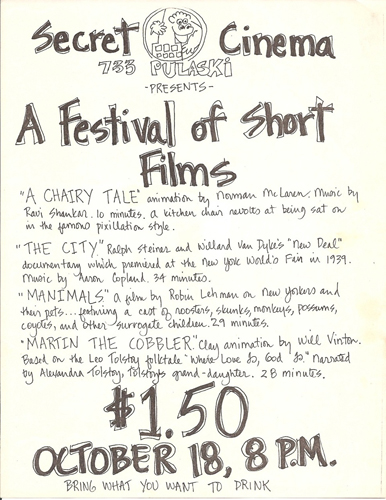
Secret Cinema program Oct. 1980Have you ever had a fantasy about running and programming your own repertory cinema? Any self-proclaimed film buff probably has and for me it became a slowly emerging fantasy from the time I was seven or older. Unlike those kids who wanted to be firemen, astronauts, professional athletes or other revered professions, I pictured myself as a movie theater owner who could show what I wanted and print availability or attendance was never a concern. While this fantasy faded over the years as I became aware of the realities and headaches of film distribution and theater management, the love of programming movies always stayed with me and for a brief period (Feb. 1980 – Dec. 1981), I ran an invitation only film series out of my home in Athens, Ga. on Pulaski Street that I called Secret Cinema. Continue reading