
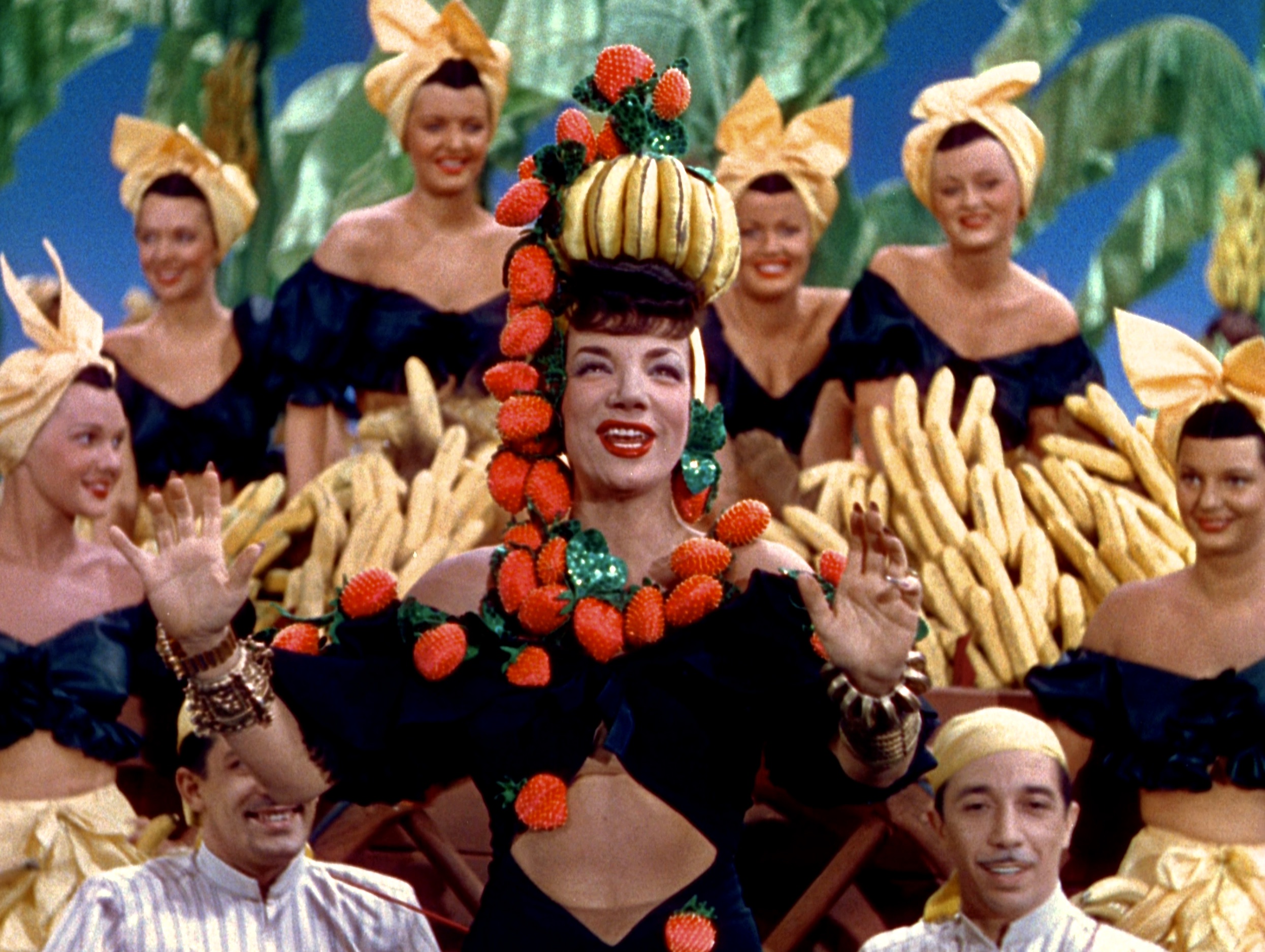
Going Bananas!

Carmen Miranda and chorus girls performing “The Lady in the Tutti Frutti Hat” from THE GANG’S ALL HERE (1943), directed by Busby Berkeley.

In the early 1970s midnight movies became a craze after the Elgin Theatre in New York discovered a surprise hit with Alejandro Jodorowsky’s El Topo (1970). Soon other theatres across the country launched their own midnight film series and movies like Night of the Living Dead (1968), Pink Flamingos (1972), The Harder They Come (1972) and Harold and Maude (1972) began to attract audiences that missed those movies during their limited initial release. Some of those early midnight movie choices were surprising and included Hollywood classics like Walt Disney’s Fantasia (1940), the rock ‘n’ roll satire The Girl Can’t Help It (1956) and the WW2 era musical The Gang’s All Here (1943). Yet, when you consider the fact that a lot of those early midnight movie screenings were attended by younger audiences, many high on pot or other substances, it starts to make sense. The Gang’s All Here, in particular, with its eye-popping dayglo Technicolor hues, surreal art direction and outlandish dance choreography is as psychedelic and mind-blowing as the “trip sequence” in Kubrick’s 2001: A Space Odyssey (1968).

Continue reading
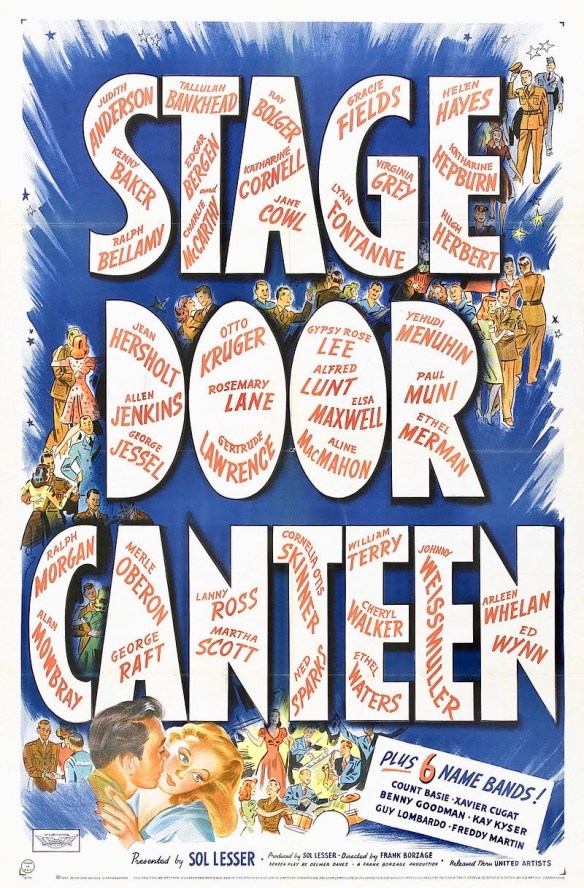
For the Boys

Between 1941 and 1945 as World War II engulfed the world most major studios in Hollywood demonstrated their patriotism by producing numerous flag-waving musicals in support of the troops and to raise money for the war effort. Warner Bros. was represented by This is the Army (1943), Thank Your Lucky Stars (1943) and Hollywood Canteen (1944); Paramount served up Star Spangled Rhythm (1942) and Here Come the Waves (1944); Universal had a major hit with Buck Privates (1941) starring Abbott & Costello and The Andrew Sisters; 20th-Century-Fox unveiled the mind-warping visual excess of Busby Berkeley’s The Gangs All Here (1943) and MGM brought their signature gloss and glamor to Thousands Cheer (1943) and Anchors Aweigh (1945). But probably one of the biggest extravaganzas of all in terms of star cameos and musical guests was Stage Door Canteen (1943), released by United Artists.   Continue reading

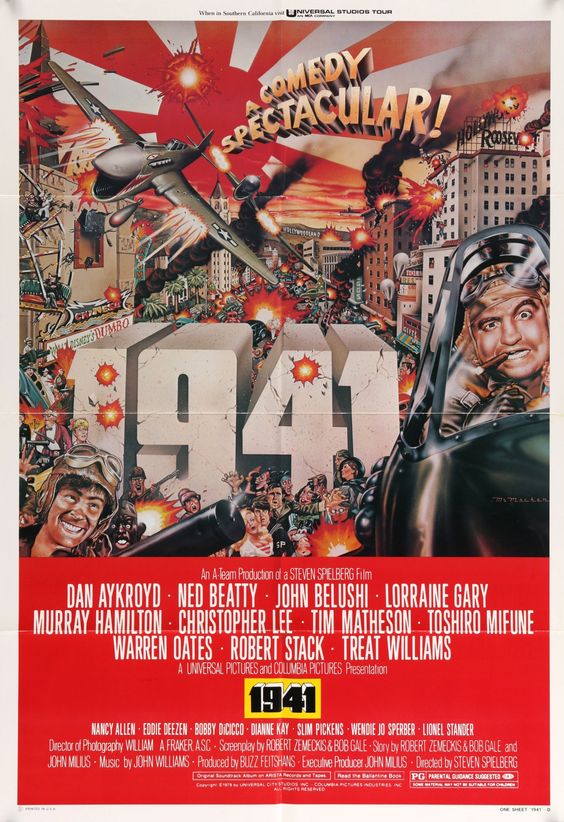
A $20 Million Cinematic Landmark to Slapstick

When Steven Spielberg’s 1941 opened in December 1979, it was mostly savaged by the critics though a few rose to its defense like Pauline Kael who wrote, “…the film overall is an amazing, orgiastic comedy, with the pop culture of an era compacted into a day and a night. There are such surprising slapstick payoffs that the film’s commercial failure in this country didn’t make much sense.” When I caught up with 1941 in a repertory screening in 1982, I had to concur with Kael that Spielberg’s comic epic was unfairly maligned and great fun if you just go with the chaotic flow of it.   Continue reading