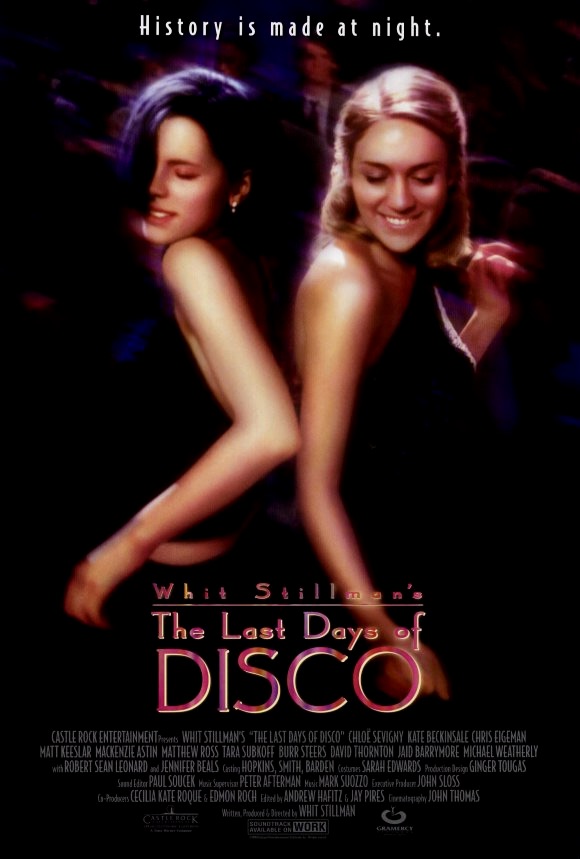
When writer-director Whit Stillman made his film debut in 1990 with Metropolitan, he stood out from other filmmakers of his generation by creating a witty comedy-drama that felt like a drawing room farce from another era, one that might have been co-written by Oscar Wilde and Jane Austin. A Harvard graduate who worked in both journalism and publishing ventures in New York City, Stillman has built a successful career as an indie filmmaker who specializes in highly educated, well-heeled character portraits drawn from his own experiences. These protagonists, usually young, upwardly mobile yuppies from wealthy families and graduates from some Ivy League college, has led some critics to label him the WASP alternative to Woody Allen’s brand of urban tales. This sort of specialized focus might seem too self-absorbed and unhip compared to the work of filmmaking peers like Spike Lee and Steven Soderbergh, but look closer and you’ll see that Stillman is crafting a kind of late 20th century chamber play which addresses social mores, class differences, economic disparity and city life as it relates to a very specific demographic. And in his third feature film, The Last Days of Disco (1998), it proves to be a sexy, romantic, poignant and often hilarious group portrait with a distinctive literary quality (Whitman would subsequently turn the screenplay into the novel, The Last Days of Disco, With Cocktails at Petrossian, which was published in 2000).
Continue readingTag Archives: Barcelona
Under Surveillance

We will probably never know the exact number of Nazi war criminals who escaped from Germany in the aftermath of WW2 and made their way to South America but some of the more infamous ones are Adolf Eichmann, who was later captured in Buenos Aires, brought to trial in Israel and executed in 1962, and Josef Schwammberger, who was arrested in Argentina and returned to West Germany for a trial in 1992 (he was sentenced to life in prison and died there). At the same time, there have been reports that as many as 9,000 Nazi officers and collaborators found a safe haven in countries like Brazil and Paraguay under new identities and were never arrested for their war crimes. This unsettling realization inspires the narrative of Philippe Condroyer’s A Man to Kill (French title: Un Homme a abattre, 1967), a fictional espionage thriller that focuses on a suspected concentration camp officer who resurfaces in Barcelona years later as a low profile German architect.
Continue readingFreaking Out in Franco Era Spain
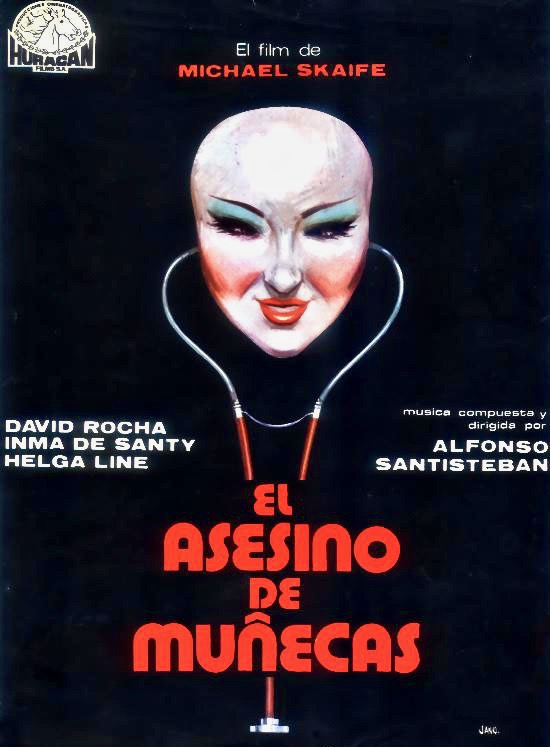
Not all film preservationists are focused on saving and restoring lost classics of silent and early cinema like Abel Gance’s Napoleon (1927) or overlooked noir indies from Hollywood’s golden era such as Richard Fleischer’s Trapped (1949). Mondo Macabro, which has been around since 2003 or so, is dedicated to introducing movie lovers to fringe cinema from around the world – obscure genre films that run the gamut from horror to sexploitation to art house oddities from countries as far flung as Japan, Latvia and South Africa. Among some of their offbeat releases are Lady Terminator (1989), a cheesy Indonesian rip-off of James Cameron’s The Terminator, The Living Corpse (1967), a vampire thriller from Pakistan, and Strip Tease (1963), a melancholy French drama starring Nico (of The Velvet Underground) with music by Serge Gainsbourg and Alain Goraguer. The company’s most recent release on Blu-Ray, The Killer of Dolls (El asesino de manecas, 1975), is easily one of their most peculiar and transgressive acquisitions to date. Continue reading