Deciphering a French Film Icon

In 1969 French actor Jean-Louis Trintignant had three films in competition at the Cannes Film Festival, Costa-Garvas’s Z, Giuseppe Patroni Griffi’s Metti, Una Sera a Cena (Love Circle) and Eric Rohmer’s My Night at Maud’s, with the actor garnering critical praise for his performance in all three movies. When asked by an interviewer how it felt to be a potential prize recipient, Trintignant replied, “I’m not an award winner. I don’t have that affect to win Best Actor. You need a mad scene or a drunken scene or something like that. And in the films selected I don’t have any like that. All these roles are rather underwhelming. They’re ambiguous. They are complex but not remarkable. I’m not remarkable.” Typical of Trintignant, his response was self-deprecating but also shrewdly self-aware. The irony is that he did win Best Actor at Cannes for Z that year for playing the steadfast, non-partisan investigator of a highly political case. In fact, he built a career playing characters who were often hard to read, repressed or quietly self-possessed, and he made them endlessly fascinating for the viewer. This is just one of many insights shared by director Lucie Caries in Trintignant by Trintignant, an intimate documentary portrait of the actor that was made for French television in 2021, the year before he died. Even though the documentary is barely an hour in length, it pulls from more than 70 years of archival material, photos, interviews, TV and film clips and comments by fellow actors and directors to help dissect the enigma that is Jean-Louis Trintignant.

Continue reading
In the Shadows of the OAS

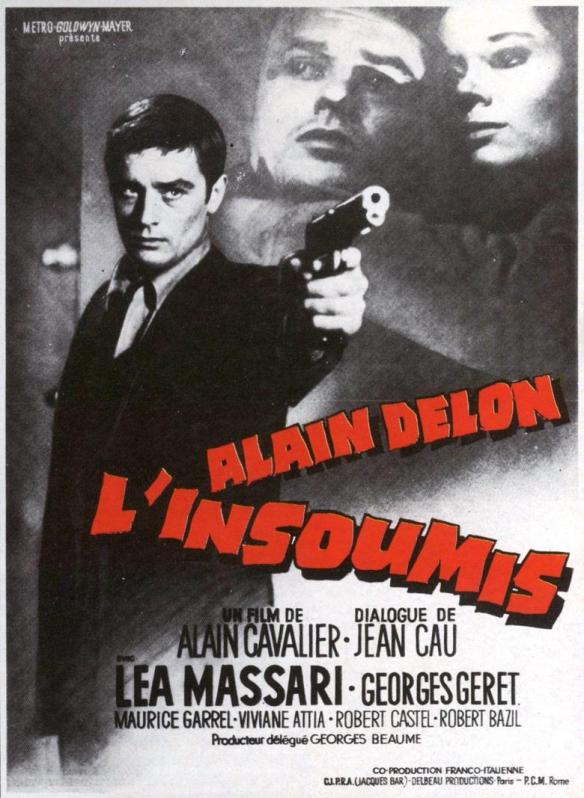
L'Insoumis (1964)L’insoumis (1964) aka The Unvanquished is a relatively unknown but deeply compelling and haunting French film from director Alain Cavalier that aired several years ago on TCM in an English language version titled Have I the Right to Kill? (It was originally distributed by MGM in the U.S.) Shot in glorious black and white by master cinematographer Claude Renoir, the film plays like a politically-charged film noir and it could easily be the best of Alain Delon’s early performances. In the other key role, Lea Massari, the beautiful Italian actress who is best known as the warm, charismatic mother in Louis Malle’s Murmur of the Heart (1971), has rarely been more appealing.  Continue reading

Mining for B-Movie Gold

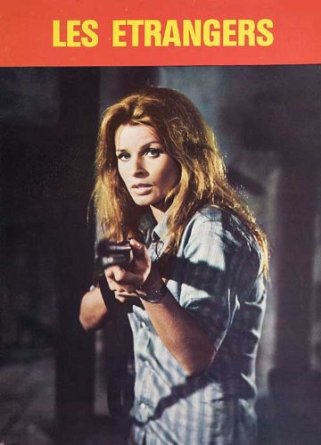
Senta Berger is in charge in Jean-Pierre Desagnat's Les Etrangers (1969)

Senta Berger is in charge in Jean-Pierre Desagnat’s Les Etrangers (1969)

It’s a rare thing when a crime thriller departs from the usual formulaic expectations and rewards the viewer with a much more unpredictable and entertaining twist on a familiar genre. Such is the case with Les étrangers (aka The Strangers, 1969), which begins with a carefully planned diamond heist in a remote desert town that goes spectacularly awry before transitioning into a deadly game of cat and mouse between a fleeing fugitive and a couple that offer him temporary shelter. This is a superior B-movie that feels like an A-picture with its iconic international cast of actors from France (Michel Constantin), Austria (Senta Berger), Spain (Julián Mateos) and South Africa (Hans Meyer), a spaghetti western-flavored score by Michel Magne and Francoise de Roubaix, and atmospheric cinematography by Marcel Grignon, who received an Oscar nomination for Is Paris Burning? (1967) and filmed such cult favorites as Roger Vadim’s Vice and Virtue (1963) and Walerian Borowczyk’s The Beast (1975).     Continue reading