The Suburban Sex Underground

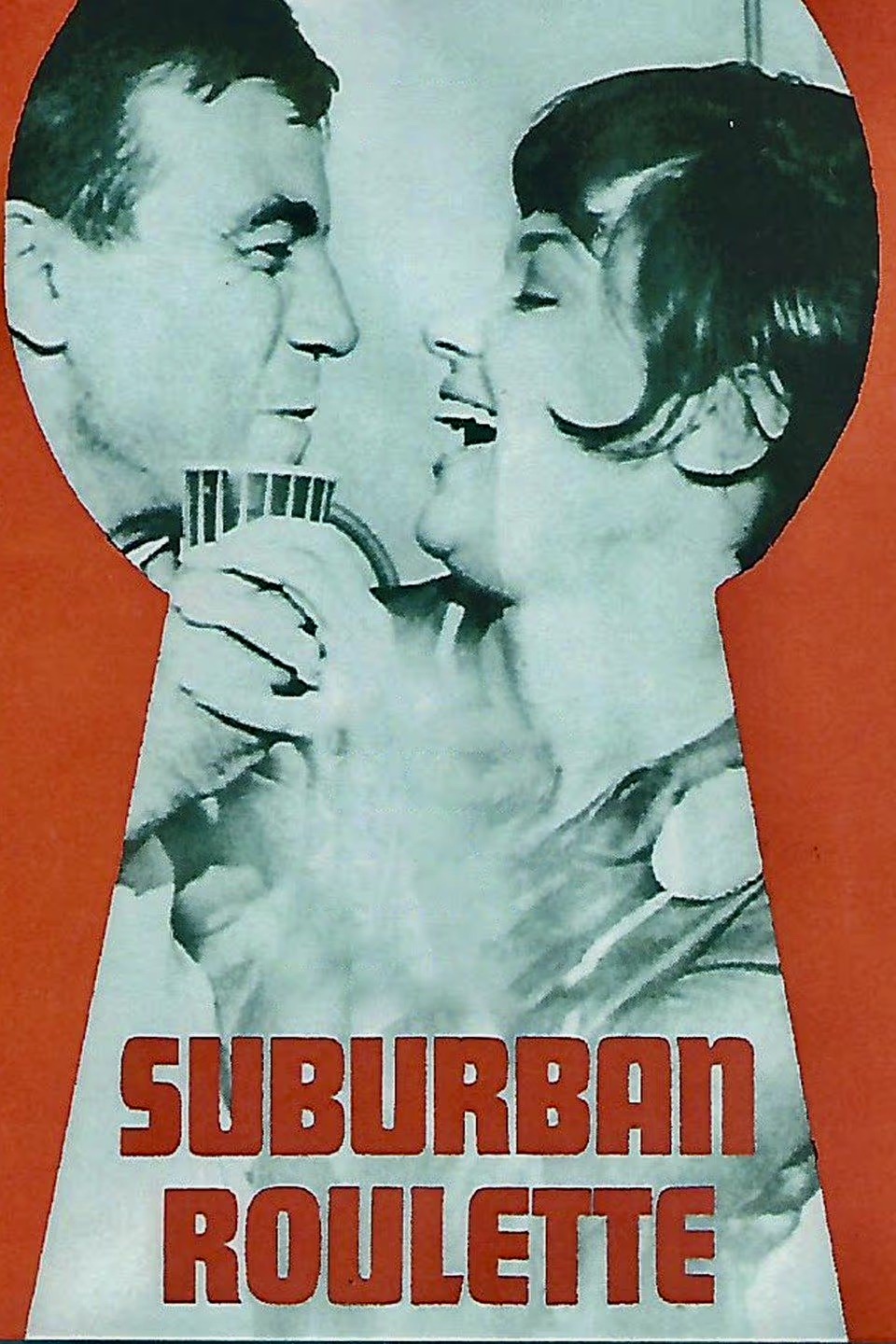
When did mate swapping parties and swinging singles soirees in suburbia in America become a social phenomenon? Some say it began during the Korean War (1950-1953) among married couples on army bases and then spread to the suburbs. One thing is certain: stories about such behavior began to appear in paperback novels, tabloid exposes and the media in the fifties and were common knowledge for most people by the time John Updike’s 1968 novel Couples was published (it focused on the lives of ten sexually active couples in a small town in Massachusetts). But even before Updike’s critically acclaimed work, sexploitation films in the sixties had been mining this subject matter in adult fare like Wife Swappers (1965), Unholy Matrimony (1967), Andy Millgan’s Depraved! (1967) and Suburban Roulette (1967), directed by Herschell Gordon Lewis.
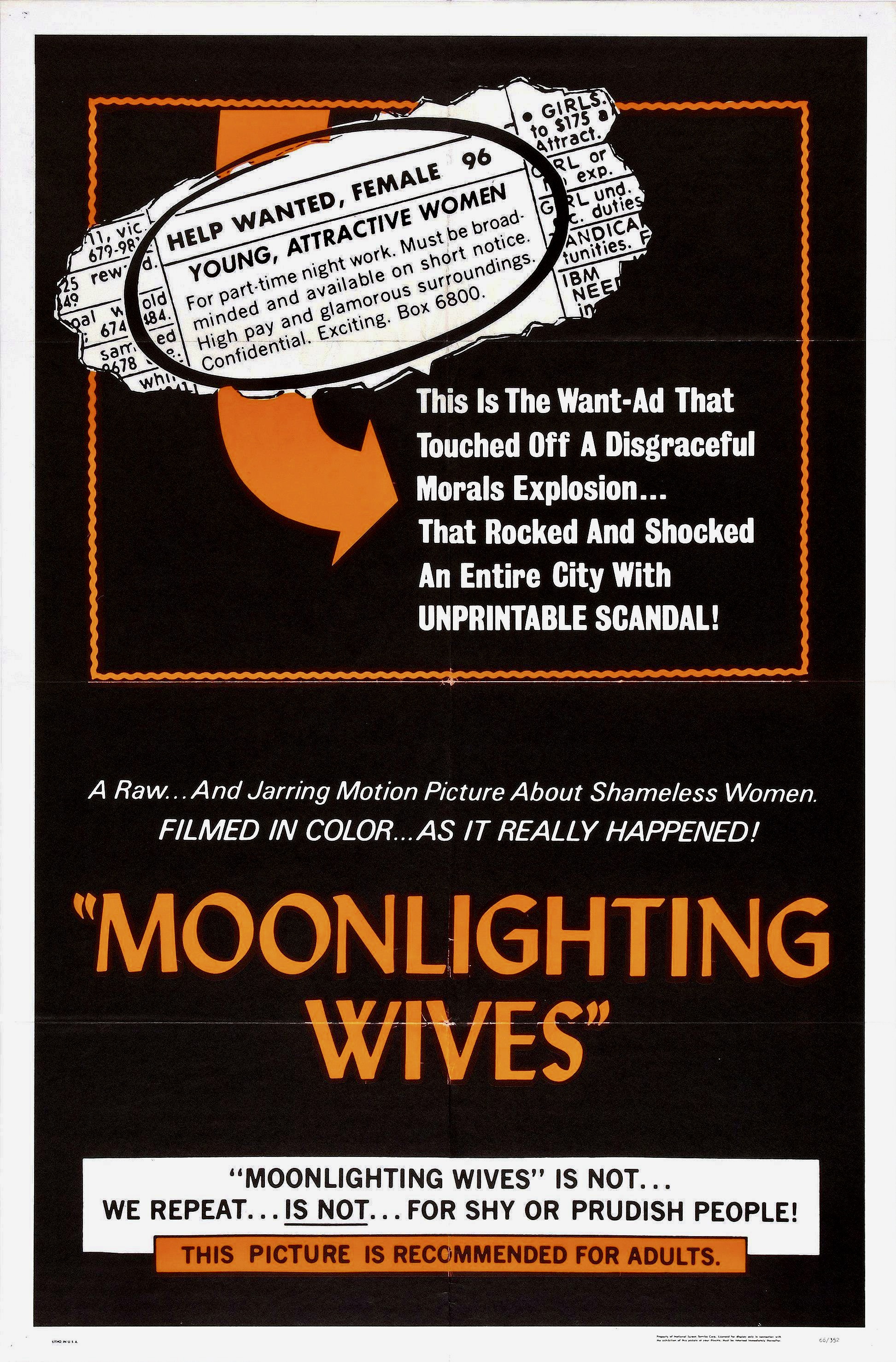
The often overlooked master of the form, however, was Joseph W. Sarno, who made his directorial debut with Nude in Charcoal (1961) and scored a drive-in hit with Sin in the Suburbs (1964), which delved into the secret sex orgies of masked participants in suburbia. Even more groundbreaking was Moonlighting Wives (1966), his first feature in color, which expanded on the swinging singles scene by combining it with a tale about a prostitution ring masterminded by a housewife in a middle class community.

Continue reading

In the Doghouse

Sigrid, a part-time cashier and psychology student, wants some romance in her life and feels empowered to arrange a meet-up on the Tinder dating app with Christian. They meet for drinks at a café and Christian turns out to be handsome, charming in his own shy way, a perfect gentleman and, as we learn later, independently wealthy. The date goes well and the couple go back to Christian’s home and spend the night together but, in the morning, Sigrid realizes they are not alone. She is greeted by his dog Frank, who is actually a man in a dog costume. But this is not a prank or performance art. This is the real world inside Christian’s domain. At this point any sensible person would flee the premises, right? And Sigrid does at first. Of course, the viewer already knows from the opening frames of Good Boy (2022), written and directed by Norwegian filmmaker Viljar Boe, that Christian is eccentric. Who else would fix a gourmet meal of steak, roasted potatoes and asparagus for their pretend dog and serve it in a doggie. bowl? And if Christian seems odd, what does that say about the guy in the dog suit?

Continue reading

Easy Rawlins: Private Eye

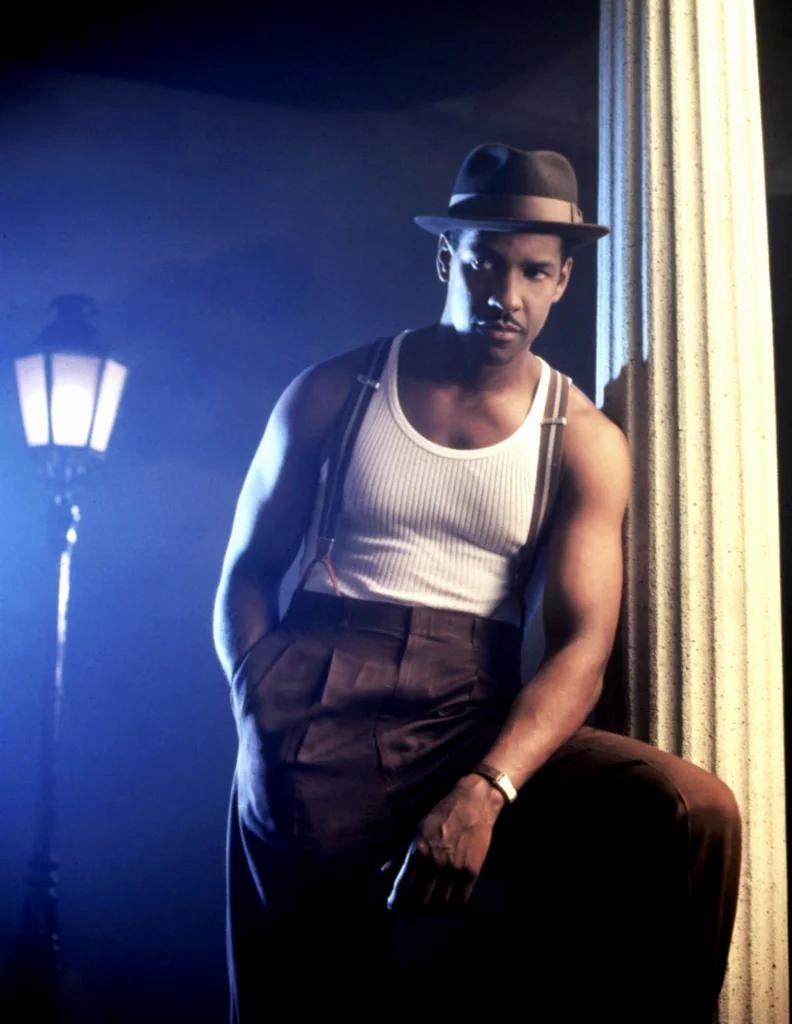
Denzel Washington plays Easy Rawlins, an amateur detective in the 1995 film adaptation of the Walter Mosley crime novel DEVIL IN A BLUE DRESS, directed by Carl Franklin.

For avid readers of mystery and crime novels, the stories of African-American novelist Walter Mosley featuring his detective hero Easy Rawlins were a unique and welcome addition to an overly familiar genre. And it was no surprise when Devil in a Blue Dress, the first of a quartet of novels featuring Rawlins, was optioned by a Hollywood studio and later brought to the screen in 1995 by director Carl Franklin and Denzel Washington, who not only played the lead but helped finance it; it was the first film for his production company, Mundy Lane.

Continue reading

Intertwined Destinies

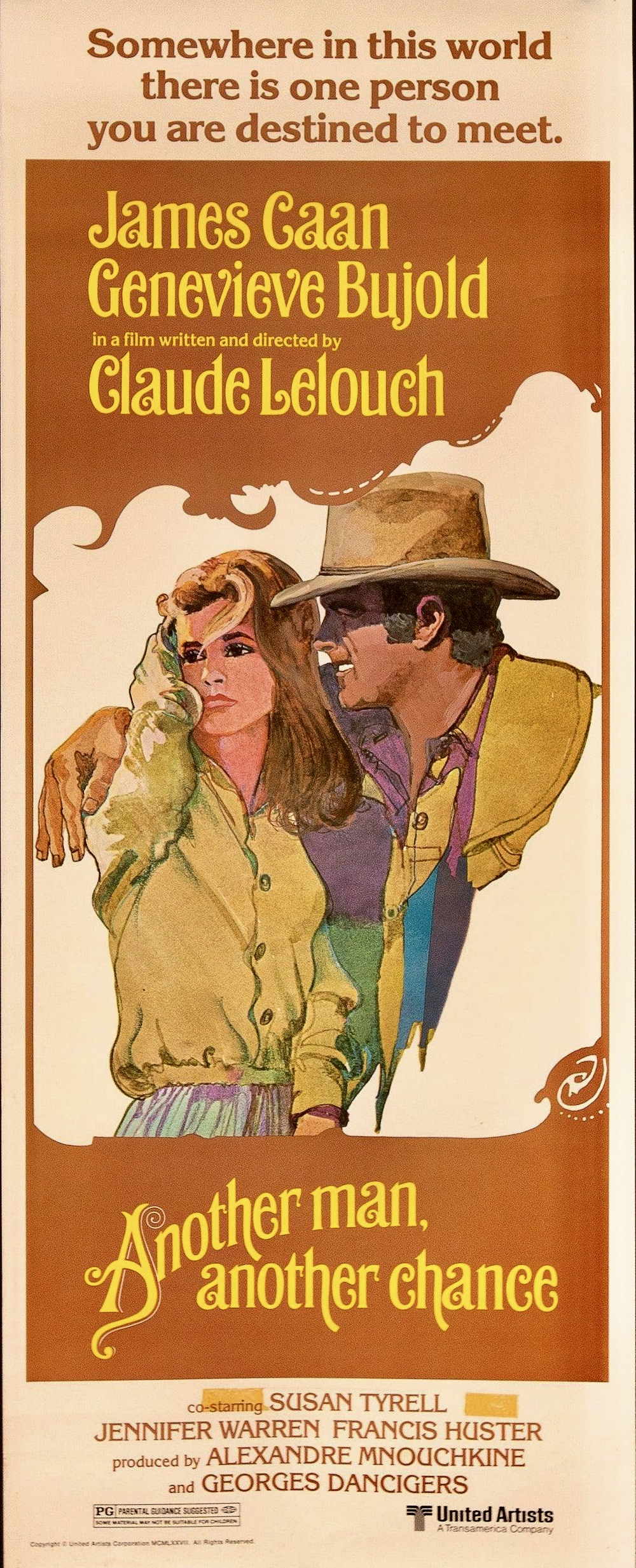
The American West as seen through the eyes of a French filmmaker provides a curious and offbeat approach to the genre in Another Man, Another Chance (1977), directed by Claude Lelouch, whose most famous film remains his breakout 1966 art house hit, A Man and a Woman; it also won the Oscar for Best Foreign Language Film. Unlike most Hollywood produced Westerns, Another Man, Another Chance relies less on the traditional attributes of the form and presents instead a slow burn love story shaped by the turbulent events of the 1870s in both Europe and the U.S. Similar to the narrative structure of A Man and a Woman and other Lelouch films such as And Now My Love (1974) in which fate brings together two people over the passage of time, the movie provides parallel narratives in which the story’s two main protagonists eventually emerge and find each other.

Continue reading

Joe Orton’s Impolite Farce

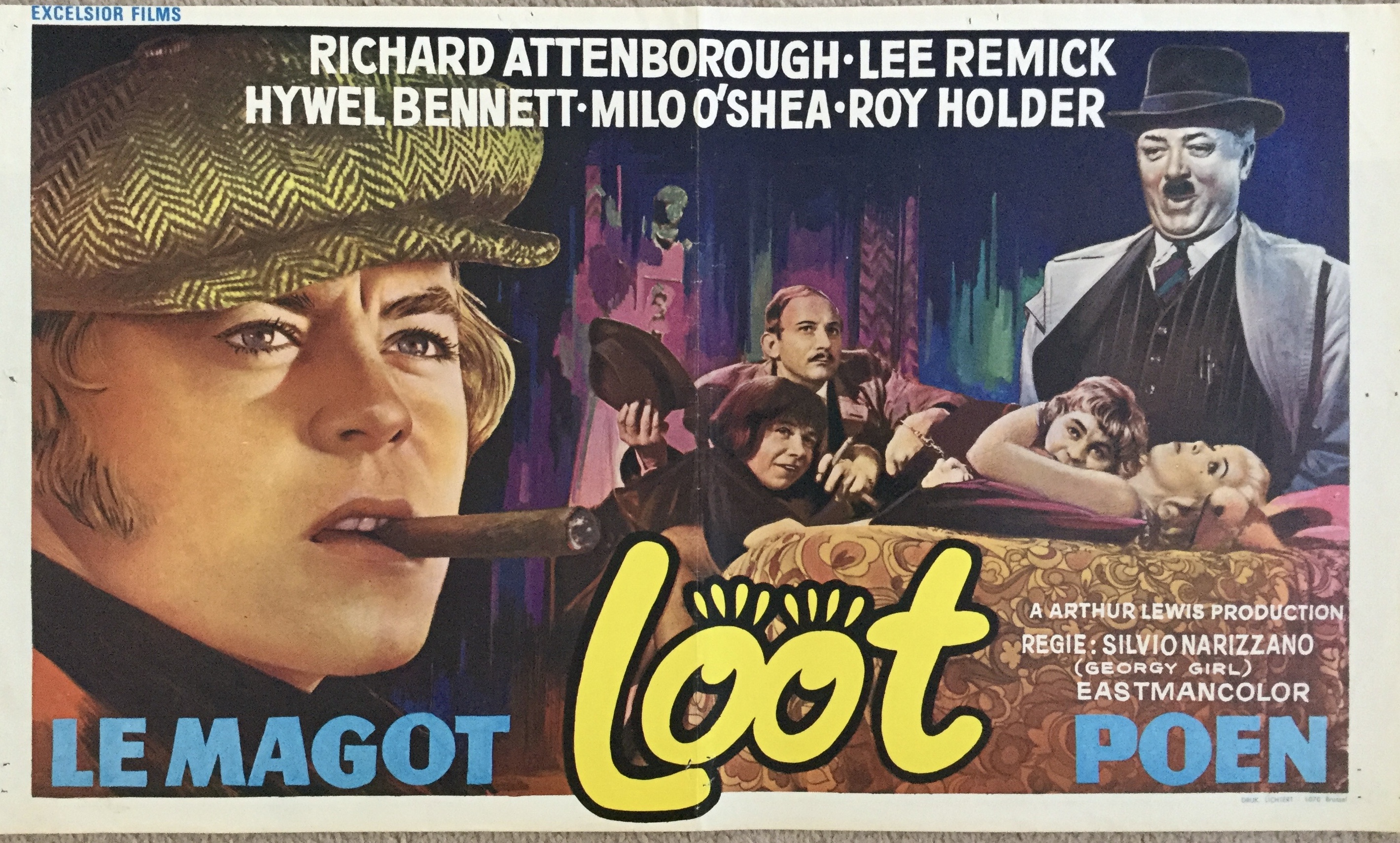
Black comedy may be an acquired taste but it still takes a clever and wickedly funny practitioner of the form to pull it off and Joe Orton was one of the best. The enfant terrible of British theatre in the sixties, Orton’s promising career was cut short in 1967 when he was bludgeoned to death by his lover Kenneth Halliwell. This final curtain, along with the events that led up to it, were covered in detail in John Lahr’s excellent biography of the acclaimed playwright Prick Up Your Ears, which was adapted to the screen in 1987 by Stephen Frears from a screenplay by Alan Bennett and featured Gary Oldman as Joe Orton. While Frears’ biopic was a fascinating character study, it didn’t really delve into the nuts and bolts of Orton’s craft or why such stages farces as Entertaining Mr. Sloane and What the Butler Saw became such popular and scandalous causes celebres among theatre critics and playgoers. The only thing that can really do justice to Orton’s particular brand of outrageous comedy and satire is a first rate production of one of his plays. A film adaptation would be much trickier because so much of Orton’s humor involves language – its proper and improper usage, double entendres, slang, class accents and other specifics. Of course, that didn’t stop filmmakers from attempting to bring his work to the screen and Loot became the second Orton play to receive the big screen treatment in 1970 (Entertaining Mr. Sloane, another Orton play adapted to film, had been released earlier in 1970).

Continue reading

Man of Mystery

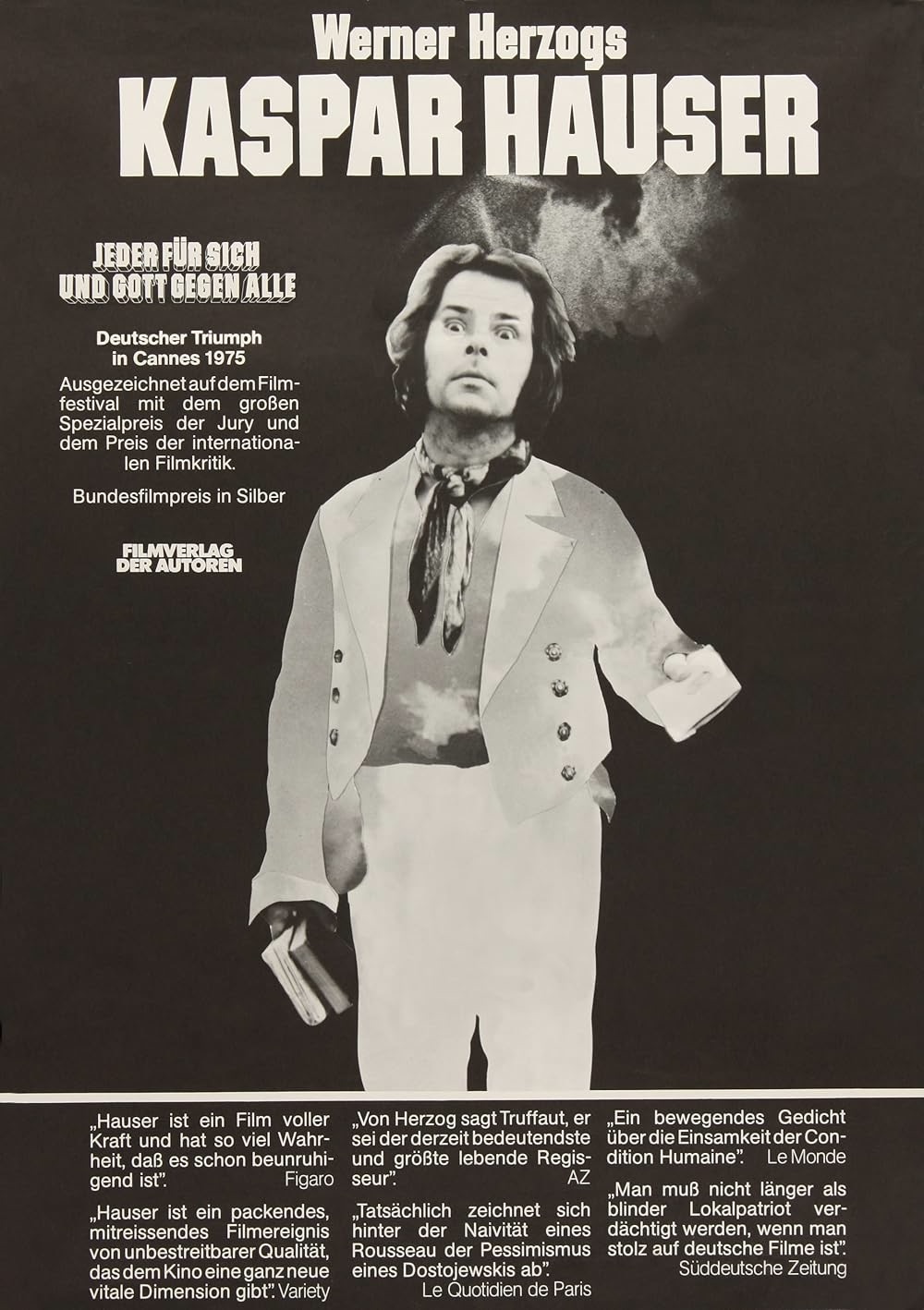
The German film poster for THE ENIGMA OF KASPAR HAUSER aka Every Man for Himself and God Against All (1974).

In May 1828 a young man appeared in a town square in Nuremberg, Germany carrying a prayer book and two letters written by his former caretaker. He spoke very little and was unable to answer any questions about his identity, where he came from or why he was there. One of the letters stated that he had come to the city to meet the captain of the 6th cavalry regiment with the hope of becoming a cavalryman. The other letter claimed he had been born in 1812 and had been raised in complete isolation from other people although he had been taught rudimentary reading and writing skills. His name was Kaspar Hauser but his mysterious nature and childlike presence baffled the townspeople and he was housed as a vagabond at the local prison until he was made a ward of the city and put under the protective care of Lord Stanhope, a wealthy aristocrat. Stanhope devoted himself to Hauser’s further education and re-entry into society and the young man’s bizarre demeanor aroused the curiosity of the public as well as doctors, professors and members of the clergy. Unfortunately, Hauser’s life came to an abrupt end in April 1833 when the mysterious man who first brought him to Nuremberg returned and stabbed him to death, escaping without a trace. The case has been a source of fascination for years in Germany and numerous films, television series and made-for-TV movies have been made about him but The Enigma of Kaspar Hauser aka The Mystery of Kaspar Hauser aka Every Man for Himself and God Against All (German title: Jeder fur Sich und Gott Gegen Alle, 1974), directed by Werner Herzog, is probably the most famous and critically acclaimed of all the versions made to date.

Continue reading

Fotoromanzi Fantasy

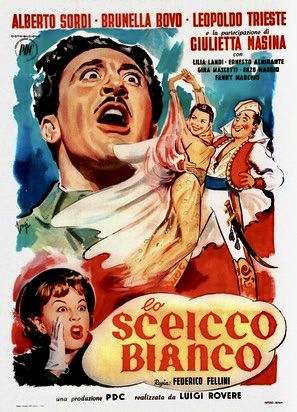
“With Paisan, I knew that I wanted to be a film director. I thought maybe this was where my future was, not as a journalist. It was with The White Sheik that I knew I was a film director.” – Federico Fellini (from I, Fellini by Charlotte Chandler)

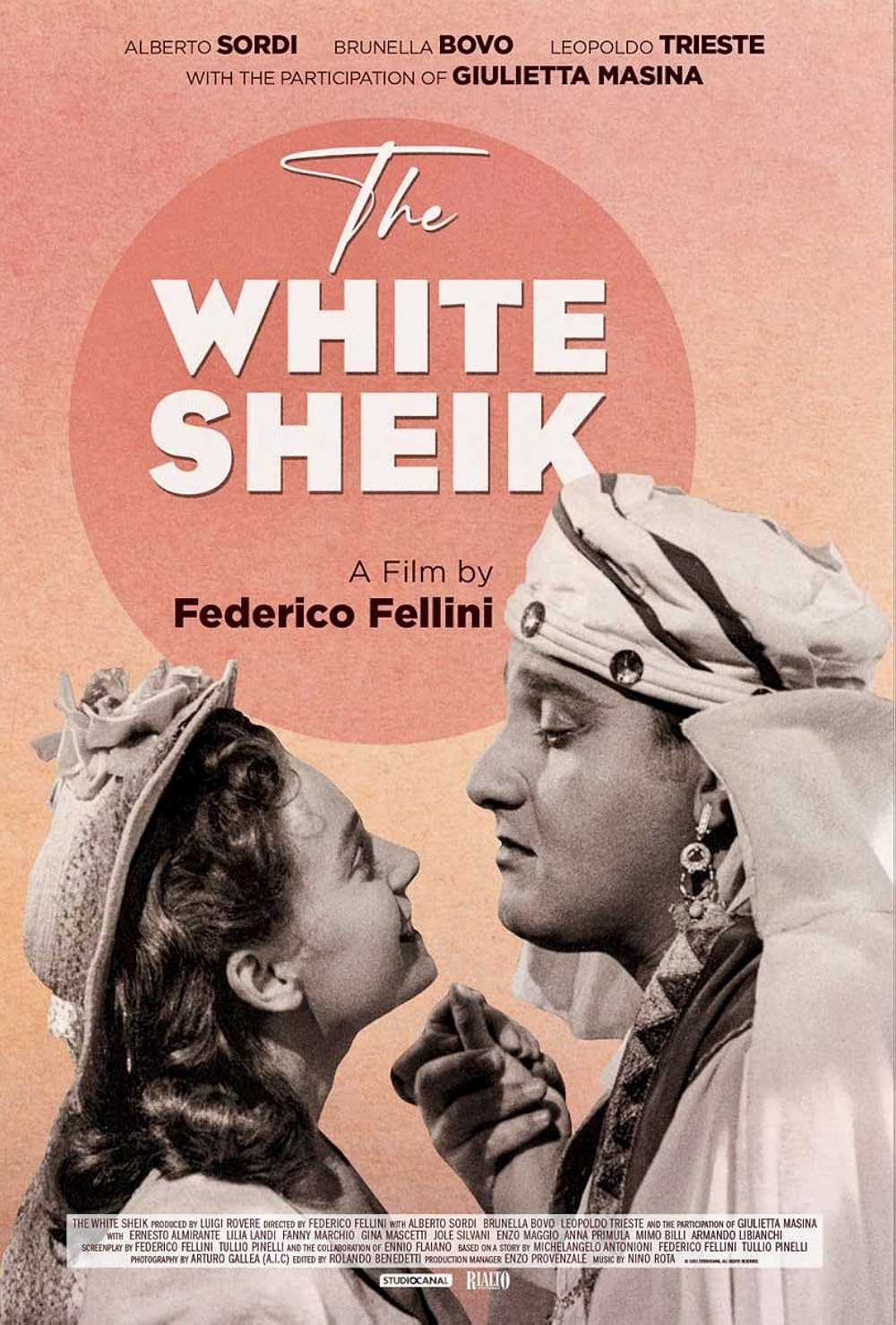
In The White Sheik (Italian title: Lo Sceicco Bianco, 1952), Fellini’s first solo directorial effort (he co-directed Variety Lights with Alberto Lattuada the previous year) he drew upon his experiences as a journalist and script writer to tell a bittersweet story about a provincial newlywed couple vacationing in Rome for their honeymoon. Wanda (Brunella Bovo), the young bride, is a naive romantic, prone to impulsive behavior and passionate fantasies. She is also an avid fan of fotoromanzi (a comic book with photo captions instead of cartoon drawings) and is secretly infatuated with “The White Sheik,” the hero of her favorite series.

Continue reading