The Virgin of Nuremberg

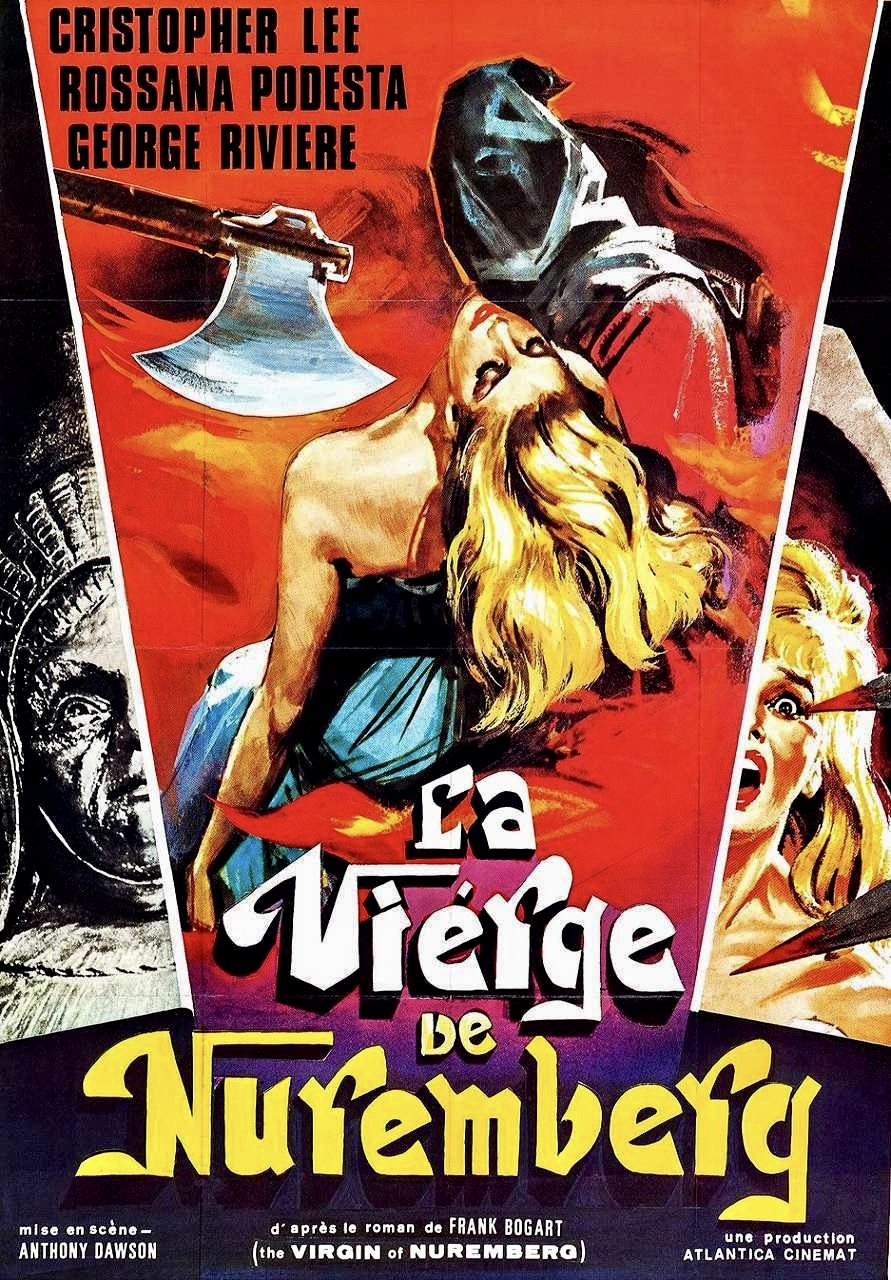
The Italian film poster for THE VIRGIN OF NUREMBERG which is also known as HORROR CASTLE (1963), starring Rossana Podesta.

Mary, the wife of German aristocrat Max Hunter, is visiting her husband’s ancestral castle for the first time and is completely unsettled by the mansion’s violent past; 300 years earlier it was the home of “The Punisher”, a sadistic fiend who tortured and killed women deemed guilty of adultery. One room of the mansion even serves as a shrine to the past with its museum-like displays of the family implements of torture. The castle’s domestic staff is no less intimidating with Erich, a disfigured servant, and Marta, a grim-faced housekeeper with a flair for morbid stories, in constant attendance. Left alone by her husband while he conducts business away from home, Mary tries to suppress her mounting terror as reports of a missing servant girl lead to rumors of “The Punisher” and his return from the grave.
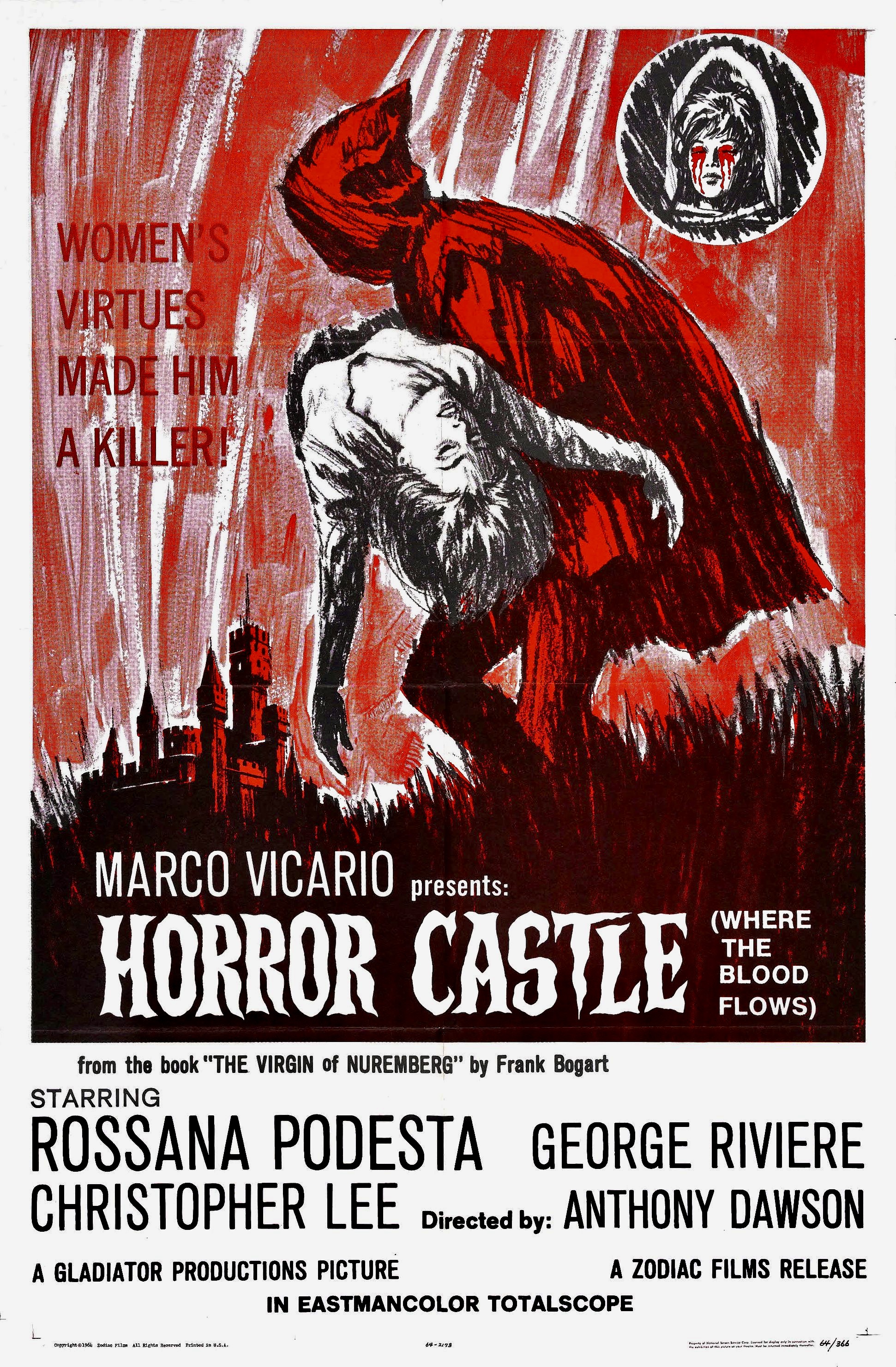
The opening sequence of the Italian film La Vergine di Norimberga (U.S. release title, Horror Castle (1963) could be a primer for Gothic horror films with every cliche of the genre on display. A dark, stormy night. A creepy castle. A frightened woman in a nightgown exploring the darkened corridors by candlelight. Where it departs from the predictable formula is in the dramatic payoff – the gruesome discovery of a mutilated woman locked inside an iron maiden, “The Virgin of Nuremberg” (the original Italian title of the film).

Continue reading
Pack Mentality

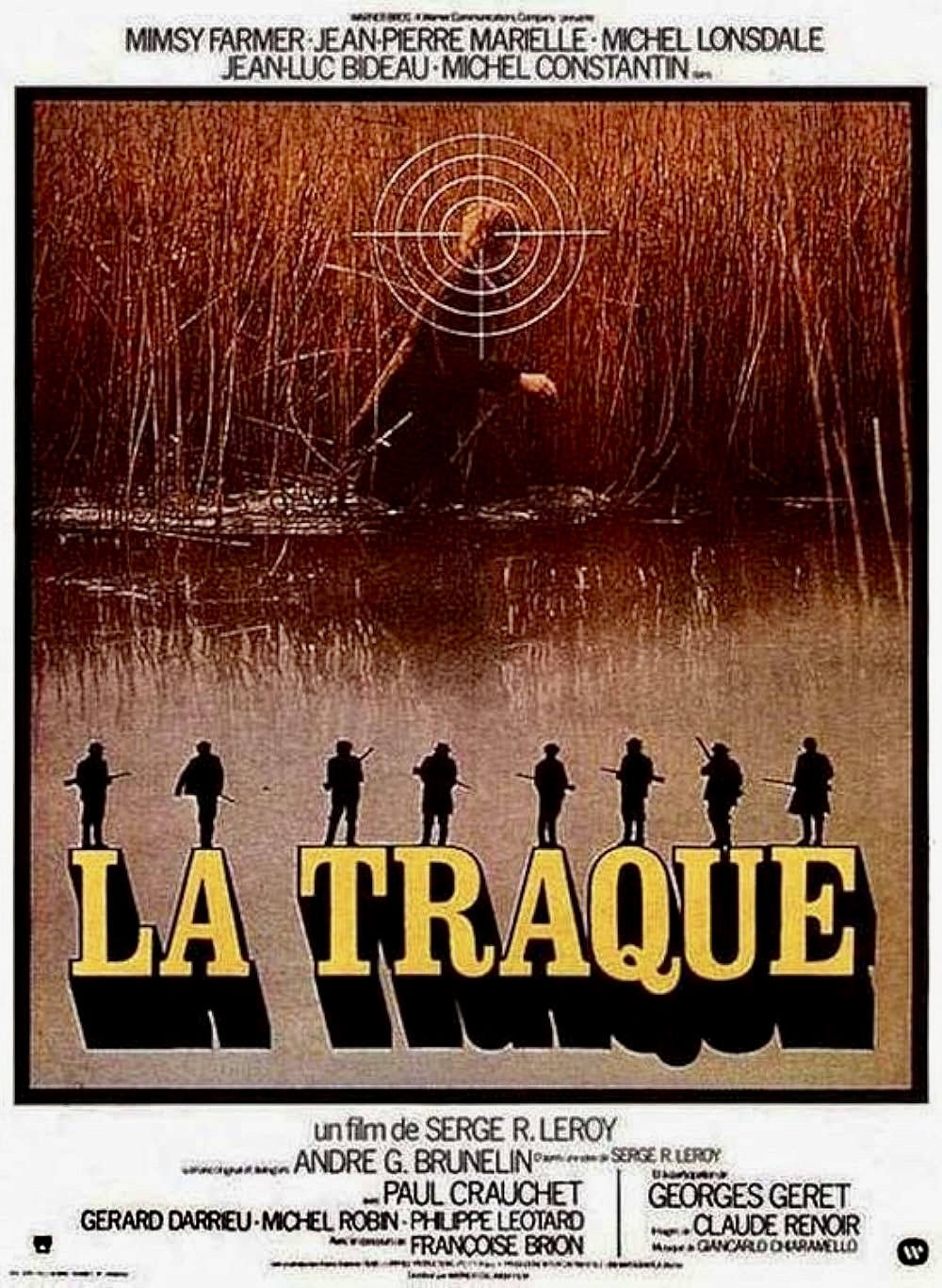
What happens when you get a bunch of men together, some of them armed with flasks of brandy or whiskey, give them guns and set them loose in the forest? It sounds like a lethal combination but it doesn’t have to be and rarely is in the world of experienced outdoorsmen. At the movies, though, it’s a different story as witnessed by so many thrillers about hunting parties and their targets. Certainly the many film adaptations of Richard Connell’s short story The Most Dangerous Game is a famous example but there are also variations such as armed officers hunting a prisoner (Antonio Isasi-Isasmendi’s A Dog Called Vengeance, 1977), men hunting each other (Carlos Saura’s The Hunt, 1967), men and women stalking each other (Elio Petri’s The 10th Victim, 1965) or men hunting women (the Australian revenge flick Fair Game, 1986). La Traque (aka The Track), a French film by Sergio Leroy, fits into the last category, but it is not a predictable genre entertainment, a satire or a blatant exploitation film.

Continue reading

Portable Grindhouse: The Lost Art of the VHS Box

Fantagraphics Books, which was founded in 1976 by Gary Groth and Michael Catron, has always been one of the most creative and unique publishers of graphic novels, manga, comic strip anthologies and alternative comics like the Hernandez brothers’ Love and Rockets and Jay Disbrow’s The Flames of Gyro. The focus of the company has always been comics and graphic art but occasionally a one-of-a-kind anomaly will pop up in their release schedule such as Portable Grindhouse: The Lost Art of the VHS Box by Jacques Boyreau, which first appeared in their Fall 2009 catalog. With its oversized VHS box design complete with slipcase and fetishized detail, right down to the FBI warning and reminder to “Keep out of direct sunlight,” Portable Grindhouse is a must-have collectible for any movie buff.

Continue reading

Space Oddity

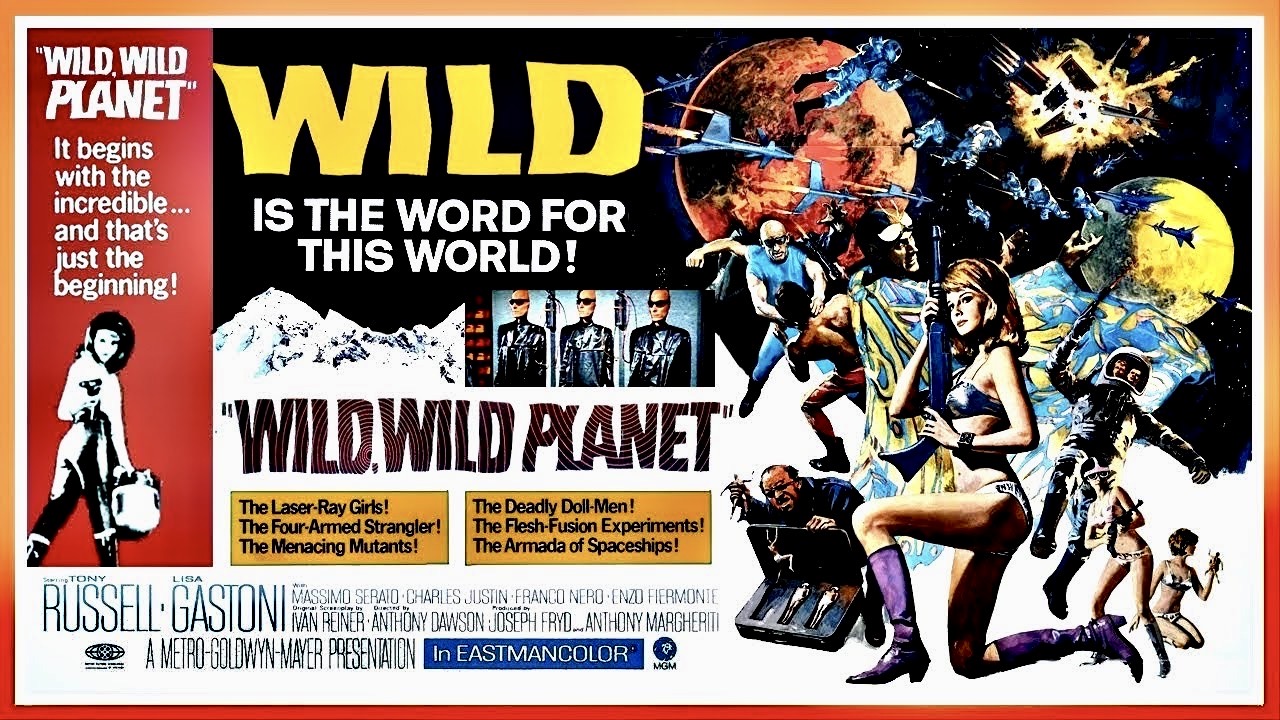
Androids with four arms! Curvaceous, lifelike inflatable women! Bald interplanetary kidnappers dressed in dark raincoats and wearing shades! Human mutants and laboratory rejects! A bizarre space-age cabaret where all of the performers are dressed as giant butterflies! These are just a few of the sights you’ll see on The Wild, Wild Planet (1966), a groovy Italian science-fiction adventure directed by Antonio Margheriti. 

Continue reading

The Lovely Bones

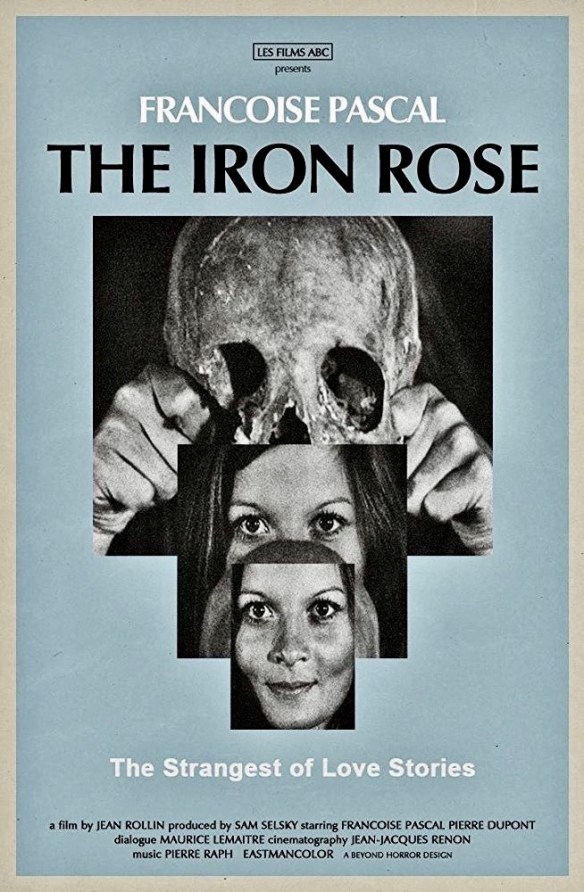
Often relegated to the ranks of sexploitation filmmakers, French director Jean Rollin has enjoyed a critical reassessment in recent years that he never experienced during his prolific filmmaking years in France, where he was mostly dismissed by the country’s leading critics. Many of his films utilized horror film conventions (graveyards, vampires, zombies) as well as exploitation tactics (gore and nudity) but combined them in a way that were uniquely his own. The Iron Rose (1973, aka La rose de fer), however, was a complete departure from Rollin’s previous efforts and was unlike anything he would ever attempt again. Closer in form to an experimental film than something that would fit comfortably into the horror genre, the movie is a macabre mood piece with poetic touches that recalls the films of Jean Cocteau and Georges Franju.   Continue reading

In the Land of Mah-Na Mah-Na

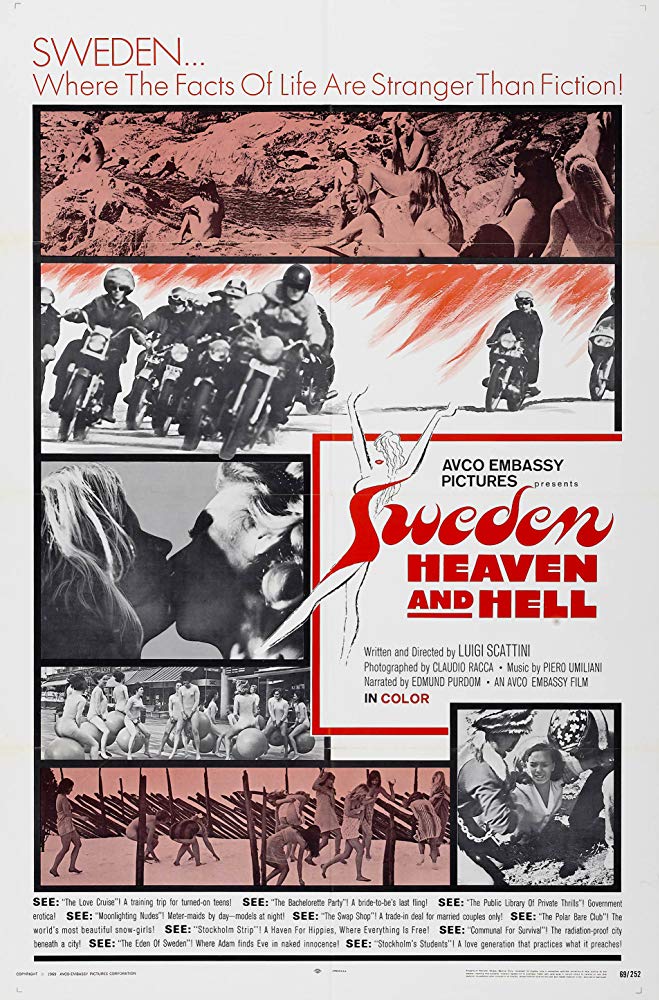
Between 1967 and 1974 Sweden emerged as the most progressive and liberal nation in the world due to a government that supported a wide variety of social and political interests such as women’s rights, anti-war advocacy and the environmental movement along with a relaxed attitude about sex. Films like Mac Ahlberg’s I, a Woman (1965), Vilgot Sjoman’s I Am Curious (Yellow) from 1967, and Joseph Sarno’s Inga (1968) also helped confirm Sweden’s image as an epicenter of sexual freedom so it was inevitable that such a situation would inspire a moralistic backlash. What no one expected was that it would come from Italy in the form of a Mondo Cane-like documentary directed by Luigi Scattini entitled Sweden: Heaven and Hell (1968).  Continue reading

It Was a Dark and Stormy Night….

This one sentence synopsis should sound familiar. A group of travelers are stranded during a severe storm at a creepy mansion where the hosts are the most unsettling part of the experience. It’s an audience-pleasing premise has served countless mystery thrillers and horror-comedies from James Whale’s The Old Dark House (1932) to The Rocky Horror Picture Show (1975) to Stuart Gordon’s Dolls (1987). But The Unnaturals (1969), directed by Antonio Margheriti, is one of the few dark and stormy night movies that stands out from the pack by virtue of its genre resistant narrative which begins as a decadent character study, slowly morphs into a supernatural thriller and signs off as an apocalyptic morality tale. Continue reading

Ernesto Gastaldi’s Seminal Giallo

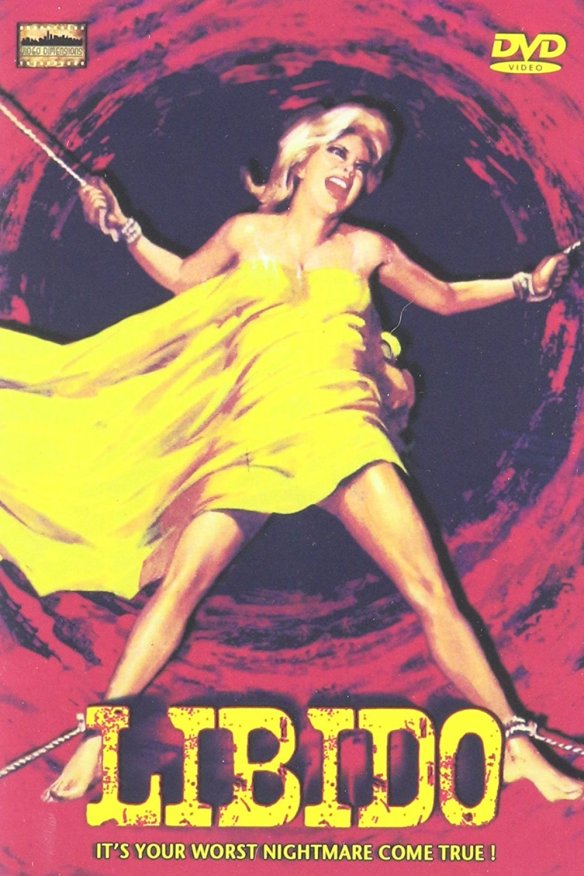
With a tumultuous background of waves crashing against a rocky coast, a descriptive statement from Sigmund Freud on the meaning of libido scrolls down the screen. Part of the Austrian psychoanalyst’s quotation defines libido as “the energy, regarded as a quantitative magnitude… of those instincts which have to do with all that may be comprised under the word ‘love.’” But the film that follows is not about love but rather the perversion of it starting with an opening sequence in which a child witnesses the aftermath of his father’s violent S&M session with a female companion, an incident that scars him for life.     Continue reading

Ilya Muromets vs. the Dragon

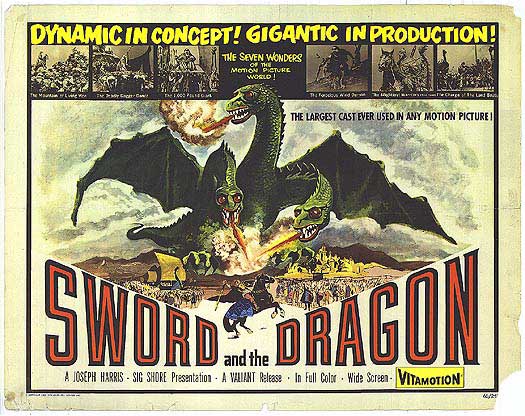
The Sword and the DragonThere is no doubt that my love of all things bizarre, unusual, and other-worldly was influenced to some degree by viewing at an early age Forbidden Planet, This Island Earth, The Wolf Man, I Married a Witch, The Wizard of Oz and Walt Disney animated films such as Pinocchio and Fantasia. But Hollywood films weren’t the only ones to fire my imagination and, thanks to some adventurous distributors in the fifties and sixties, I was exposed to a number of offbeat international features that were circulated in English-dubbed versions for kiddie matinees. Some were completely re-edited for American audiences but still cast a strange spell, regardless of their quality.    Continue reading