
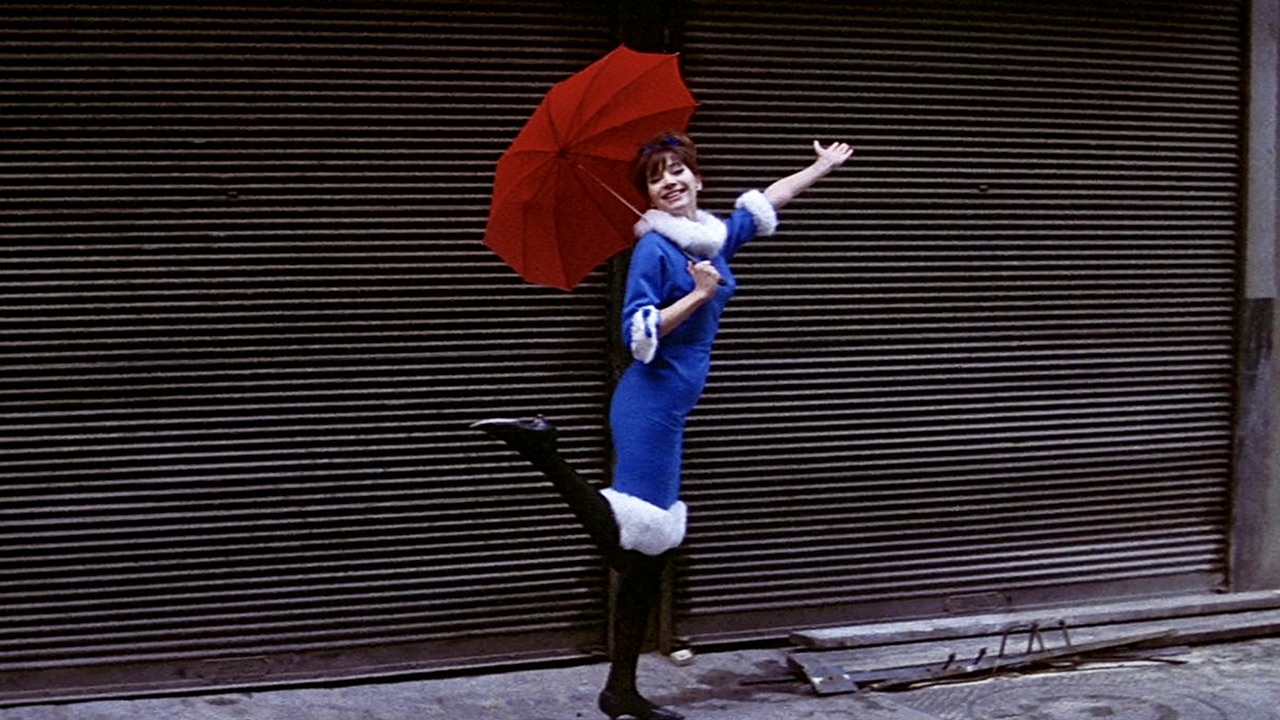
A Nouvelle Vague Musical?

Angela (Anna Karina) imagines she is in a movie musical choreographed by Bob Fosse in A WOMAN IS A WOMAN (1961), directed by Jean-Luc Godard.

Of the more than 120 movies and short films in director Jean-Luc Godard’s oeuvre, there is really nothing like Un Femme est une Femme (English title: A Woman is a Woman, 1961). What other Godard creation could you describe as joyful, lighthearted and consistently playful? A homage to MGM musicals, romantic comedies a la Ernst Lubitsch and Hollywood productions shot in Cinemascope and Eastmancolor, A Woman is a Woman is essentially a valentine to Godard’s muse at the time, Anna Karina. It is also unlike any other musical ever made or even a Nouvelle Vague confection like Jacques Demy’s The Umbrellas of Cherbourg (1964).  Yet, for someone who has never seen a Godard film, it is an accessible entry point to his work and an example of why he was considered so innovative, daring and controversial for his time.

Continue reading
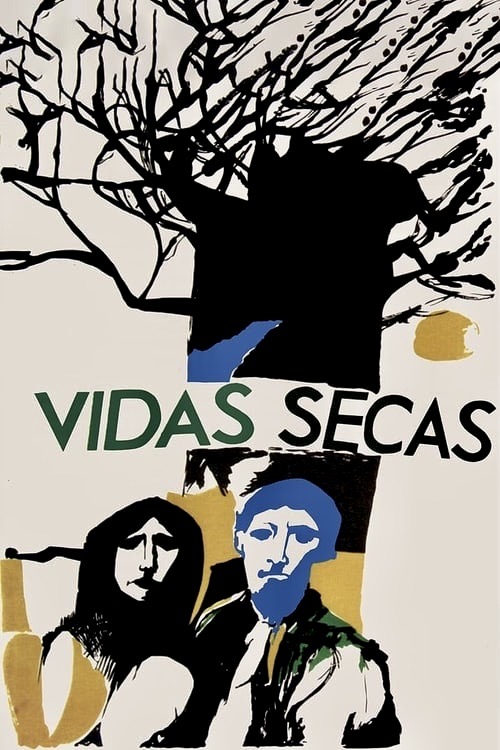

Scorched Earth

VIDAS SECAS aka BARREN LIVES (1963), a Brazilian film by Nelson Pereira dos Santos.

You don’t have to believe in climate change to experience and understand the devastating effects of a drought. The northeastern part of Brazil is no stranger to this condition which has plagued the region for decades yet people continue to live there. If you are a wealthy landowner, you can survive the seasonal hardships but if you are a poor migrant worker, life is a constant struggle. Vidas Secas (English title: Barren Lives, 1963), directed by Nelson Pereira dos Santos, is the portrait of a family of four and their dog as they wander the arid deserts and sun-baked landscapes of northwestern Brazil in search of work, water and food. Set in 1941 and covering a two-year period in their lives, the film is considered a landmark work in the Cinema Novo movement, which emerged in the late fifties and focused on marginalized communities and people, often using non-professional actors, real settings and black and white cinematography in the manner of Italian Neorealism. 

Continue reading

Adrift in a L.A. Haze

Anouk Aimée in Jacques Demy's Model Shop (1969)

Anouk Aimée in Jacques Demy’s Model Shop (1969)

Los Angeles has served as the backdrop for countless Hollywood movies but in Jacques Demy’s Model Shop (1969), the French director’s first and only American film (if you don’t count the 1984 made-for-TV movie Louisiana), the city becomes the real protagonist. With its sprawling urban landscape, oil derricks, desolate beaches and constant traffic, it  provides a vivid canvas for a contemporary love story about romantic longing, missed connections and unrealized dreams. Film writer Clare Stewart referred to the film in the film journal Senses of Cinema as “a road movie that doesn’t go anywhere” but that’s not a putdown. It’s an apt description of what Demy was trying to create here – a drifting, dreamy mood piece.   Continue reading