
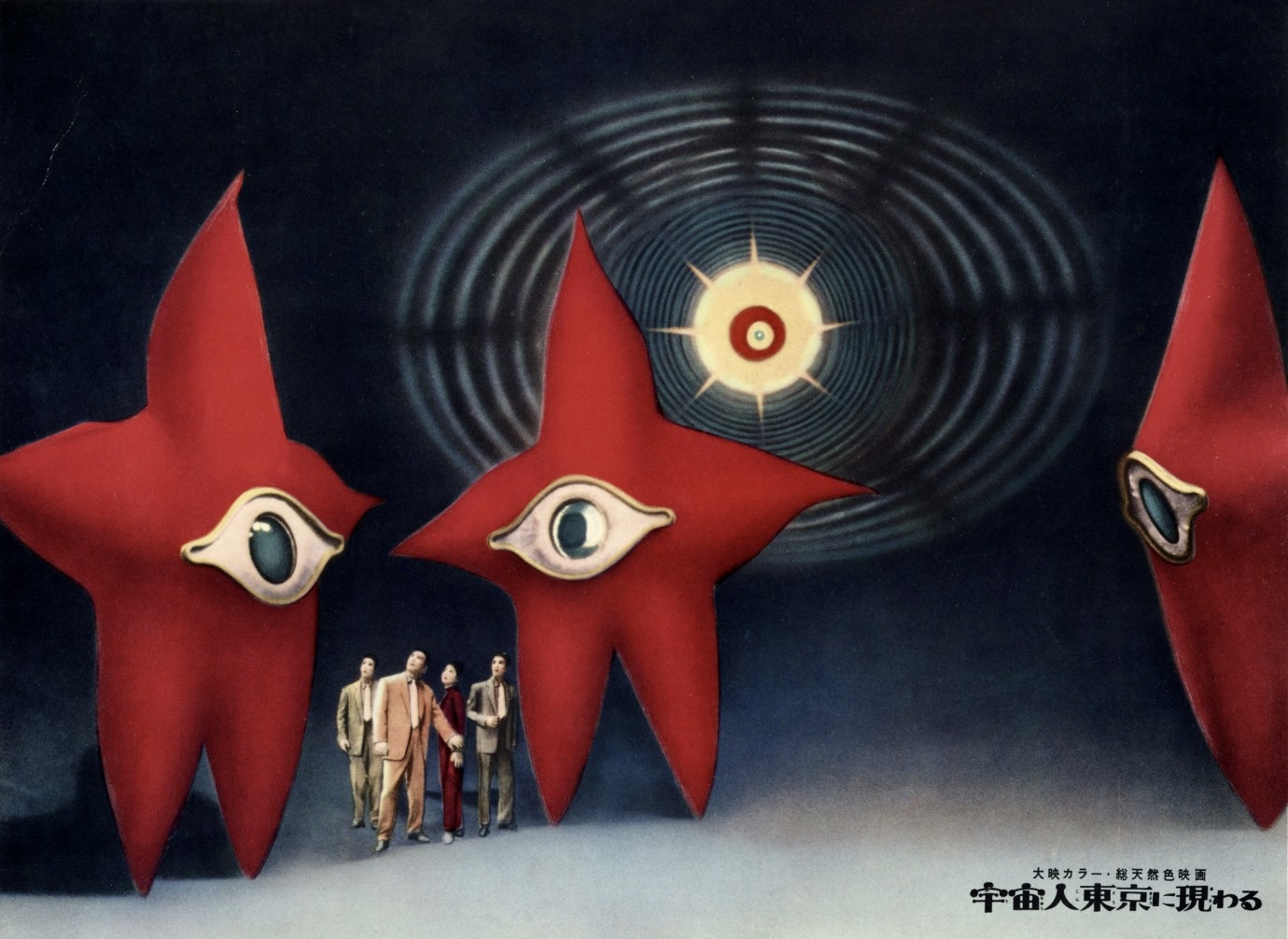
The early 1950s is generally regarded as the time when science fiction truly became a popular and profitable film genre thanks to a number of pioneering efforts from Hollywood such as The Day the Earth Stood Still (1951), The Thing from Another World (1951), The Man from Planet X (1951), It Came from Outer Space (1953) and Invaders from Mars (1954). Other countries quickly followed suit producing their own sci-fi entries but Japan was a latecomer in this regard. It wasn’t until 1956 when Daiei Studios released the first Japanese movie to address the subject of UFOs and extraterrestrials – Uchujin Tokyo ni Arawaru aka Spacemen Appear in Tokyo, directed by Koji Shima. The film was a commercial failure and quickly vanished from cinemas before turning up seven years later on American television screens in an English-dubbed version known as Warning from Space. Unfortunately, this altered version for TV syndication with its pan-and-scan format deviating from the original presentation was intended for juvenile audiences. The original 1956 Japanese version, however, is a fascinating and important genre entry in the development of the science fiction film and deserves to be better known today. (When I refer to Warning from Space throughout the following article, I am talking about the Japanese version).
Continue reading
 Cinema Sojourns