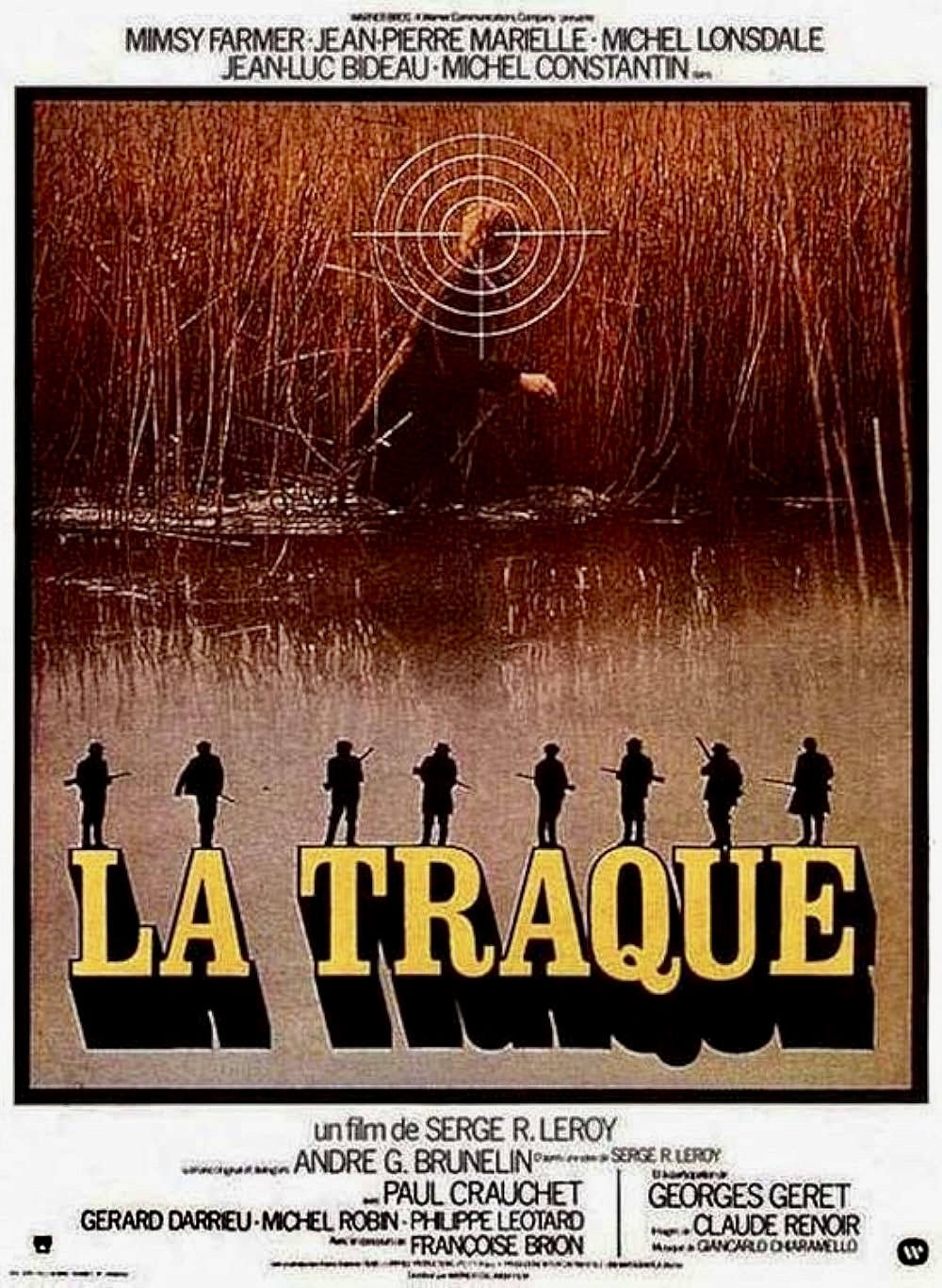
What happens when you get a bunch of men together, some of them armed with flasks of brandy or whiskey, give them guns and set them loose in the forest? It sounds like a lethal combination but it doesn’t have to be and rarely is in the world of experienced outdoorsmen. At the movies, though, it’s a different story as witnessed by so many thrillers about hunting parties and their targets. Certainly the many film adaptations of Richard Connell’s short story The Most Dangerous Game is a famous example but there are also variations such as armed officers hunting a prisoner (Antonio Isasi-Isasmendi’s A Dog Called Vengeance, 1977), men hunting each other (Carlos Saura’s The Hunt, 1967), men and women stalking each other (Elio Petri’s The 10th Victim, 1965) or men hunting women (the Australian revenge flick Fair Game, 1986). La Traque (aka The Track), a French film by Sergio Leroy, fits into the last category, but it is not a predictable genre entertainment, a satire or a blatant exploitation film.
Continue readingTag Archives: The Most Dangerous Game
The Inscrutable Wanderer
BJ is not a typical private detective by anyone’s standards. He doesn’t own a car and walks or jogs everywhere. Nor does he carry a gun (although he might steal one from any thug that threatens him) or play the tough guy in the brutal manner of Mike Hammer (Ralph Meeker in Kiss Me Deadly). In fact, when he is first introduced in Yokohoma BJ Blues, directed by Eiichi Kudo, he seems like some eccentric drifter who occasionally moonlights as a singer in an after-hours club, where he works for tips. But working as a private detective is his main gig and this 1981 feature is certainly one of the most offbeat and low-key detective dramas you will probably ever see and, even for Japanese viewers, it could be an endurance test or a fascinating hybrid.
Continue readingVintage Peplum
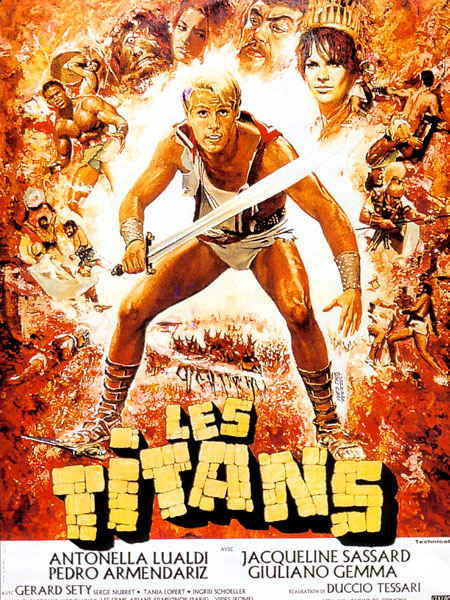
Remember the Italian sword and sandal films (known as peplum in their native land) that enjoyed a brief period of popularity in the U.S. from around 1958 to 1964? There was never any question about the appeal. What’s not to like about muscle-bound super heroes, beautiful, curvaceous slave girls, princesses and evil queens, despicable, hiss-worthy villains, amazing feats of strength, epic battle scenes, exotic dance sequences, bizarre tortures and stylized sadism, picturesque locations, atmospheric set design, and disaster film calamities (earthquakes, volcanoes, storms)? Continue reading
The Games People Play According to Eloy de la Iglesia
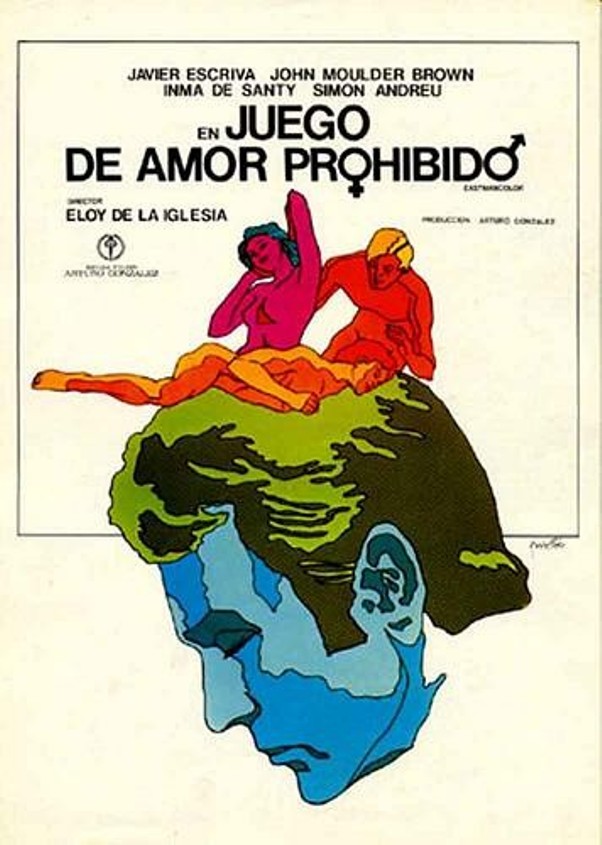
Two college students, Miguel (John Moulder-Brown) and Julia (Inma de Santis), take advantage of a school holiday to run off together for parts unknown. Their plan is to shack up somewhere where their parents can’t find them but their impromptu road trip takes an unexpected detour. The young lovers soon find themselves prisoners at a sequestered mansion and estate under the control of Don Luis (Javier Escrivá), an aristocrat with a passionate love of fine arts and the music of Richard Wagner. He also happens to be one of their professors at college and the one who picked up the hitchhikers while he was blasting “Ride of the Valkyries” from his car stereo. This is the set-up for Eloy de la Iglesia’s Forbidden Love Game (Spanish title: Juego de amor prohibido, 1975) but if you think you know what’s coming, you’re probably mistaken. Continue reading