
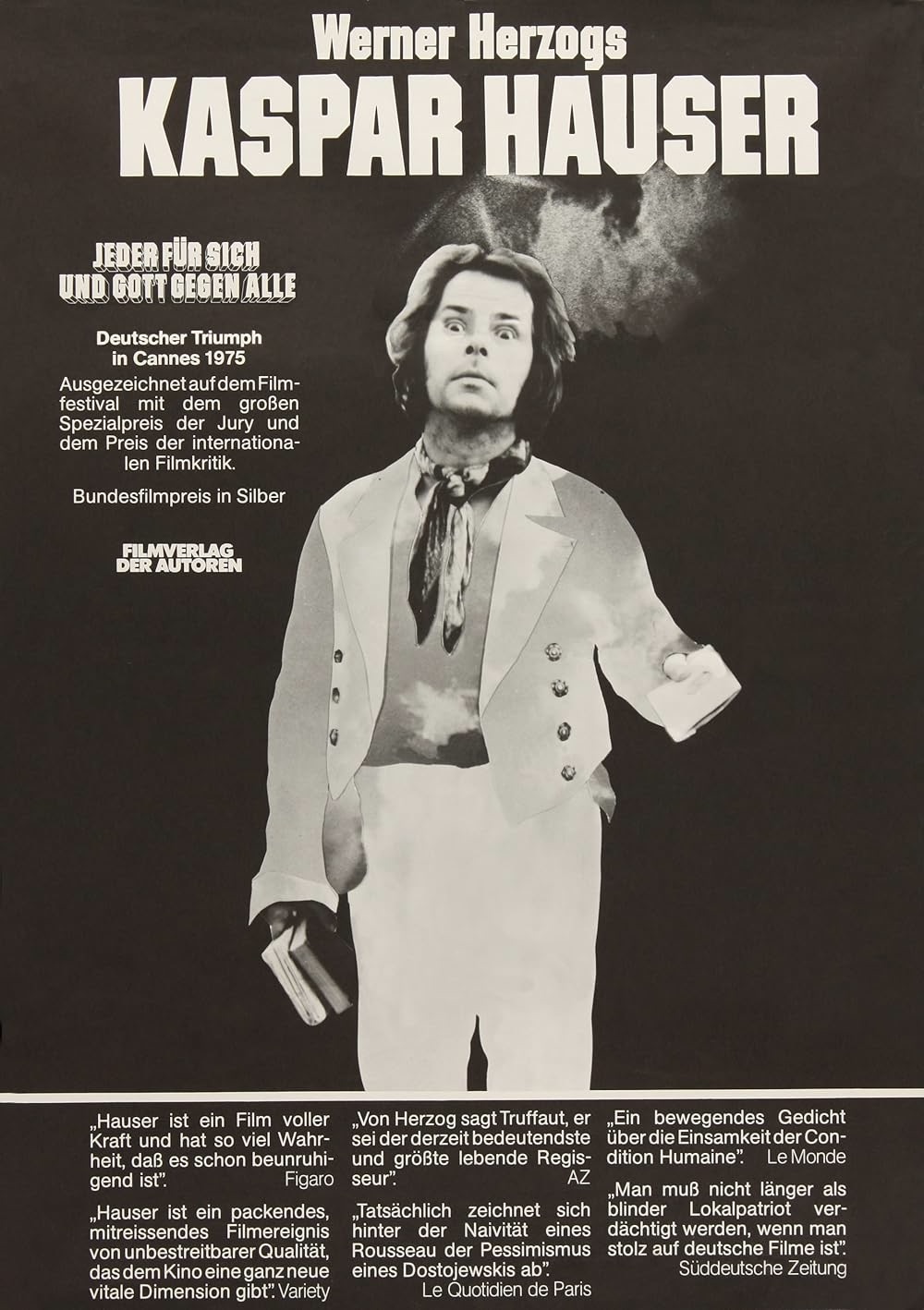
In May 1828 a young man appeared in a town square in Nuremberg, Germany carrying a prayer book and two letters written by his former caretaker. He spoke very little and was unable to answer any questions about his identity, where he came from or why he was there. One of the letters stated that he had come to the city to meet the captain of the 6th cavalry regiment with the hope of becoming a cavalryman. The other letter claimed he had been born in 1812 and had been raised in complete isolation from other people although he had been taught rudimentary reading and writing skills. His name was Kaspar Hauser but his mysterious nature and childlike presence baffled the townspeople and he was housed as a vagabond at the local prison until he was made a ward of the city and put under the protective care of Lord Stanhope, a wealthy aristocrat. Stanhope devoted himself to Hauser’s further education and re-entry into society and the young man’s bizarre demeanor aroused the curiosity of the public as well as doctors, professors and members of the clergy. Unfortunately, Hauser’s life came to an abrupt end in April 1833 when the mysterious man who first brought him to Nuremberg returned and stabbed him to death, escaping without a trace. The case has been a source of fascination for years in Germany and numerous films, television series and made-for-TV movies have been made about him but The Enigma of Kaspar Hauser aka The Mystery of Kaspar Hauser aka Every Man for Himself and God Against All (German title: Jeder fur Sich und Gott Gegen Alle, 1974), directed by Werner Herzog, is probably the most famous and critically acclaimed of all the versions made to date.
Continue reading


 Cinema Sojourns