
A Nouvelle Vague Musical?

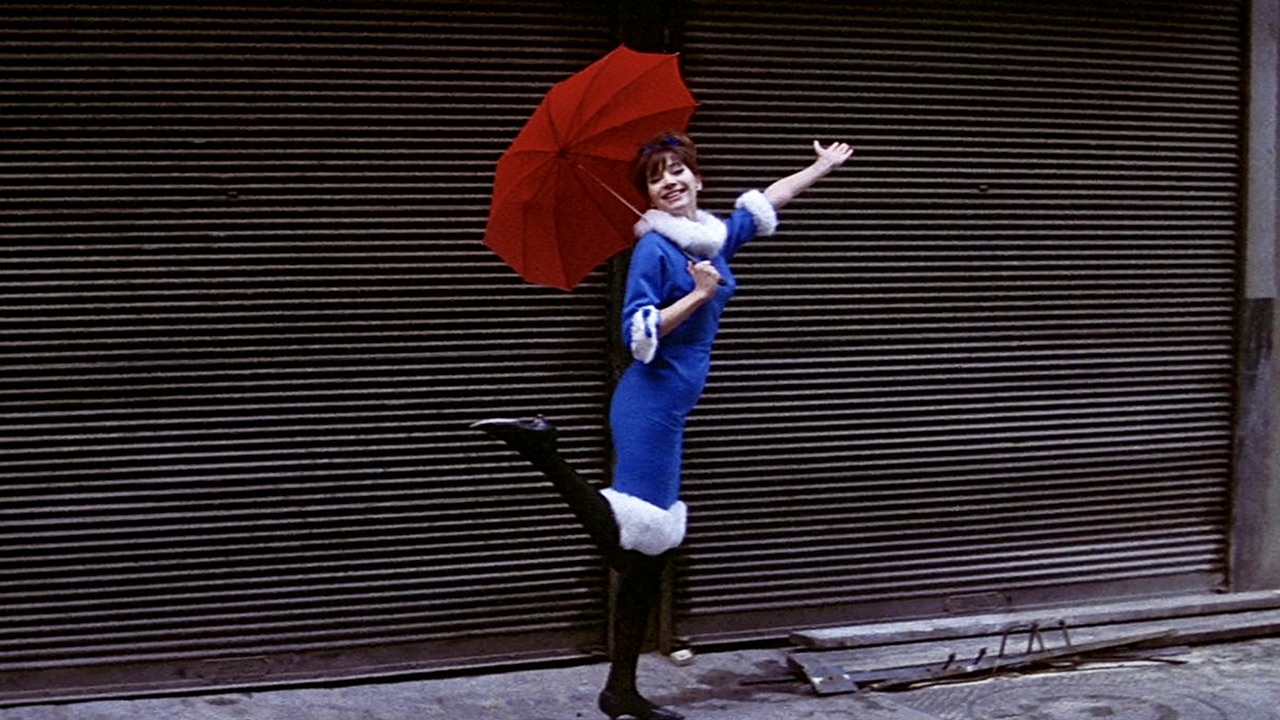
Angela (Anna Karina) imagines she is in a movie musical choreographed by Bob Fosse in A WOMAN IS A WOMAN (1961), directed by Jean-Luc Godard.

Of the more than 120 movies and short films in director Jean-Luc Godard’s oeuvre, there is really nothing like Un Femme est une Femme (English title: A Woman is a Woman, 1961). What other Godard creation could you describe as joyful, lighthearted and consistently playful? A homage to MGM musicals, romantic comedies a la Ernst Lubitsch and Hollywood productions shot in Cinemascope and Eastmancolor, A Woman is a Woman is essentially a valentine to Godard’s muse at the time, Anna Karina. It is also unlike any other musical ever made or even a Nouvelle Vague confection like Jacques Demy’s The Umbrellas of Cherbourg (1964).  Yet, for someone who has never seen a Godard film, it is an accessible entry point to his work and an example of why he was considered so innovative, daring and controversial for his time.

Continue reading
Fashion in the Nuclear Age

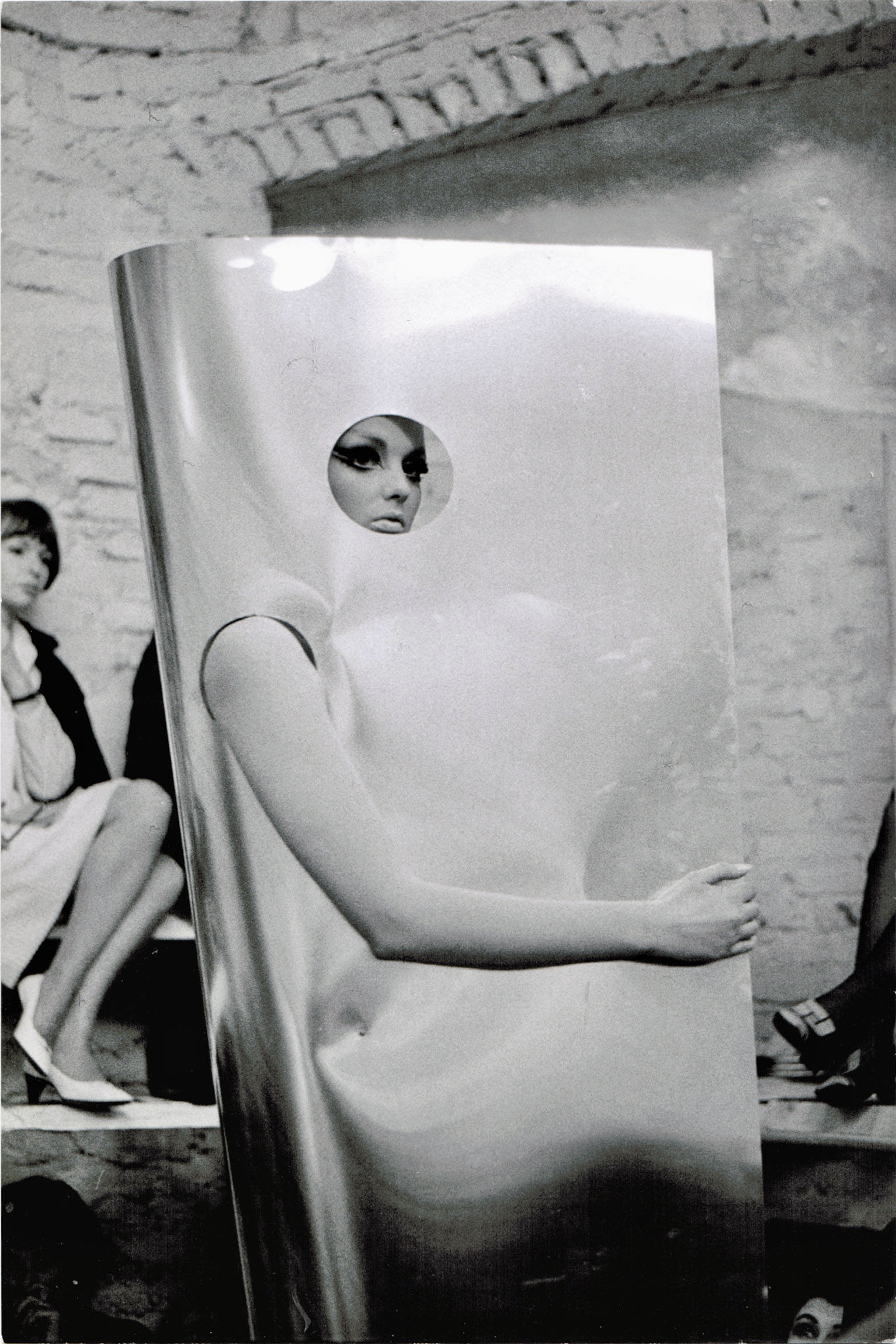
Models wearing metal sculptures as clothes are featured in a bizarre fashion show in the opening to William Klein’s WHO ARE YOU, POLLY MAGGOO? (1966).

The fashion industry has always been fair game as a target for satirists but the majority of movies about the fashion world have mostly been glamorizations of it (Funny Face, The Devil Wore Prada) or serious validations of the business like the 1995 documentary Unzipped featuring designer Isaac Mizrahi or The September Issue (2007), which focuses on Anna Wintour, editor-in-chief of Vogue. It is much harder to come up with memorable satires on the subject although the supremely silly Zoolander (2001) is fun and Robert Altman’s Ready to Wear aka Pret-a-Porter (1994) is an amusing minor trifle. One of the few exceptions is Qui Etes-Vous, Polly Maggoo? (English title: Who Are You, Polly Maggoo?, 1966), the feature film debut of renowned photographer William Klein, which brilliantly skewers the profession while dazzling you with its visual inventiveness and giddy high spirits.

Continue reading

Milanese Malaise

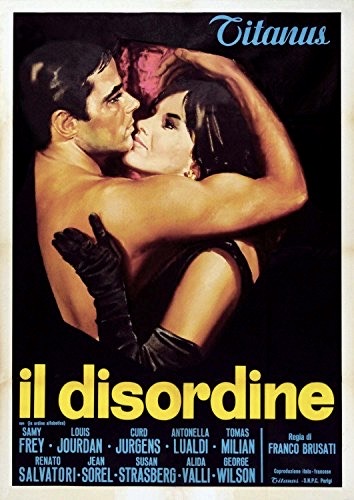
The Italian film poster for DISORDER (1962).

Any art house patron in the early sixties must have thought modern society was headed toward a complete collapse as witnessed by the emptiness of life and the bored, amoral behavior of characters in films like Federico Fellini’s La Dolce Vita (1960). That film was mostly a portrait of wealthy, jaded Romans and ambitious social climbers that was probably the most famous in a wave of films that viewed Italian society as a lost and alienated culture. Michelangelo Antonioni’s L’Avventura (1960), La Notte (1961) and L’Eclisse (1962) offered similar views of a world where modern progress and technology had a dehumanizing effect on relationships while Antonio Pietrangeli’s I Knew Her Well (Italian title, Lo la conoscevo bene, 1965) focused on a naïve working class woman who seeks an acting career in Rome but finds herself exploited and eventually discarded by the people that profession attracts. Less well known, Franco Brusati’s Il Disordine (Disorder, 1962) differs from the above films in that it depicts both upper class and economically strapped folks in Milan who share the same sense of disillusionment and despair over their lot in life. Also, it is almost epic in scale and more tragic and heartfelt than the aforementioned titles. 

Continue reading