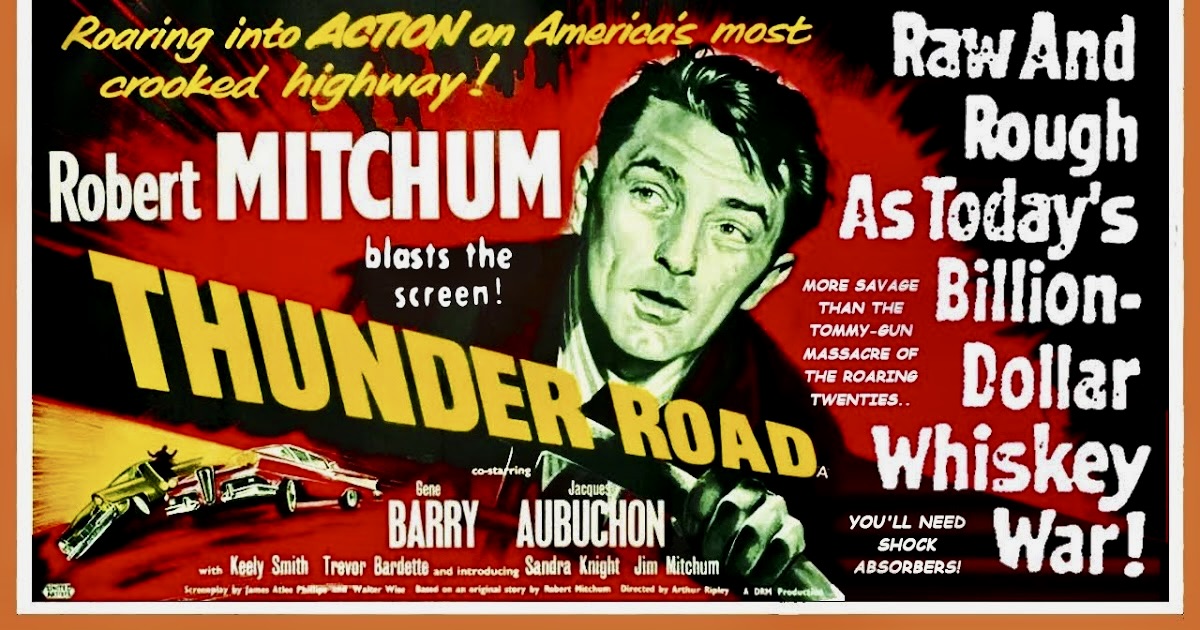
White Lightning Was His Load

One of the all-time great drive-in movies and probably the best film you’ll ever see about Tennessee moonshiners and their midnight runners, Thunder Road (1958) is an impressive achievement for Robert Mitchum. He wrote the original story, produced the film, and starred in it. He also wrote “Whippoorwill,” (It is performed in the film by Keely Smith, an ex-wife and former singer for Louis Prima and his band), sang the title song “The Ballad of Thunder Road” on the 45 hit single (but not the film – Randy Sparks sings it on the soundtrack) and chose his real-life son Jim to play his brother in the film! One thing Robert Mitchum didn’t do, however, was drive his car into those killer power lines at the film’s electrifying climax. That job fell to stunt driver Carey Loftin.

Continue reading
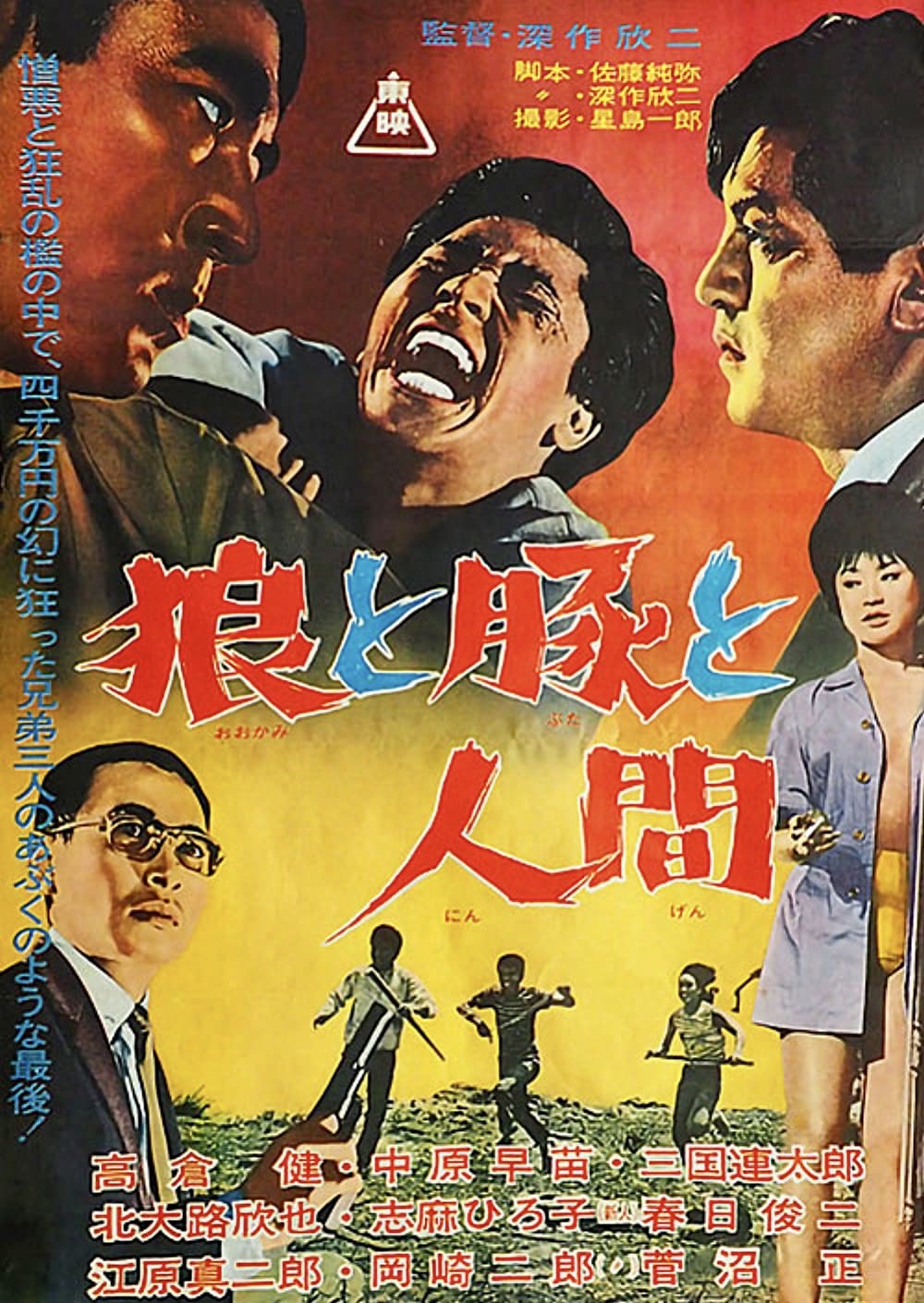
Wolves, Pigs and Men

The Japanese film poster for WOLVES, PIGS AND MEN (1964).

Among the many post-WW2 Japanese filmmakers who emerged in the 1960s and hit their stride in the seventies, Kinji Fukasaku was one of the most prominent and critically acclaimed directors in his own country but didn’t start to acquire a growing fan base in the U.S. until after 2000 when some of his masterworks began to appear on DVD such as the yakuza epic Battles Without Honor and Humanity aka The Yakuza Papers (1973), which launched a five-film franchise, and Battle Royale (2000), a controversial futuristic fable about institutionalized violence against problem teenagers. Over the years, Fukasaku has dabbled in numerous film genres from historical drama (Under the Flag of the Rising Sun, 1972) to sci-fi (Message from Space, 1978) and comedy (Fall Guy, 1982), but he is best known from his crime dramas, especially those which popularized the jitsuroku eiga genre. His documentary-like dramatizations based on real crimes often depicted yakuza figures as ruthless men operating without “honor and humanity” (in the title words of his breakthrough film). Even prior to his trend-setting crime thrillers of the mid-seventies, Fukasaku was turning out edgy, innovative work and Okami to Buta to Ningen (English title: Wolves, Pigs and Men) from 1964 is an explosive, nihilistic tale which qualifies as a rough-hewn, early masterpiece.

Continue reading

The Secret World of Cenci and Leonora

An eerie promotional image from the 1968 film SECRET CEREMONY starring Mia Farrow and Elizabeth Taylor, directed by Joseph Losey.

Pretentious art house bomb, neglected masterpiece or inscrutable personal project for Joseph Losey? Secret Ceremony (1968) had the misfortune to follow Boom! (1968), the director’s notoriously lambasted film adaptation of Tennessee Williams’ The Milk Train Doesn’t Stop Here Anymore starring the world’s most famous celebrity couple at the time, Richard Burton and Elizabeth Taylor. Equally challenging for mainstream audiences, Secret Ceremony was promoted as a kinky psychodrama with lesbian overtones and such tag lines as “It’s time to speak of unspoken things” and “No one admitted the last 12 minutes.” Yet, despite the presence of Elizabeth Taylor, Robert Mitchum and Mia Farrow, who had just appeared in the as-yet-unreleased Rosemary’s Baby the same year, the movie was too strange, decadent and moody to hold the attention of moviegoers and critics expecting a more traditional genre film.

Continue reading